Your employer moved your work site or changed your shift hours, and your hardship license still lists the old route. Most states require a formal amendment before you drive the new path — driving unapproved routes triggers revocation even when the trip is work-related.
When Your Approved Route No Longer Matches Your Actual Commute
Your hardship license lists a specific route from your home address to your employer's original location. Your employer relocated the office, changed your assigned work site, or moved you to a different shift with a new start time. The physical commute changed but the permit documentation did not.
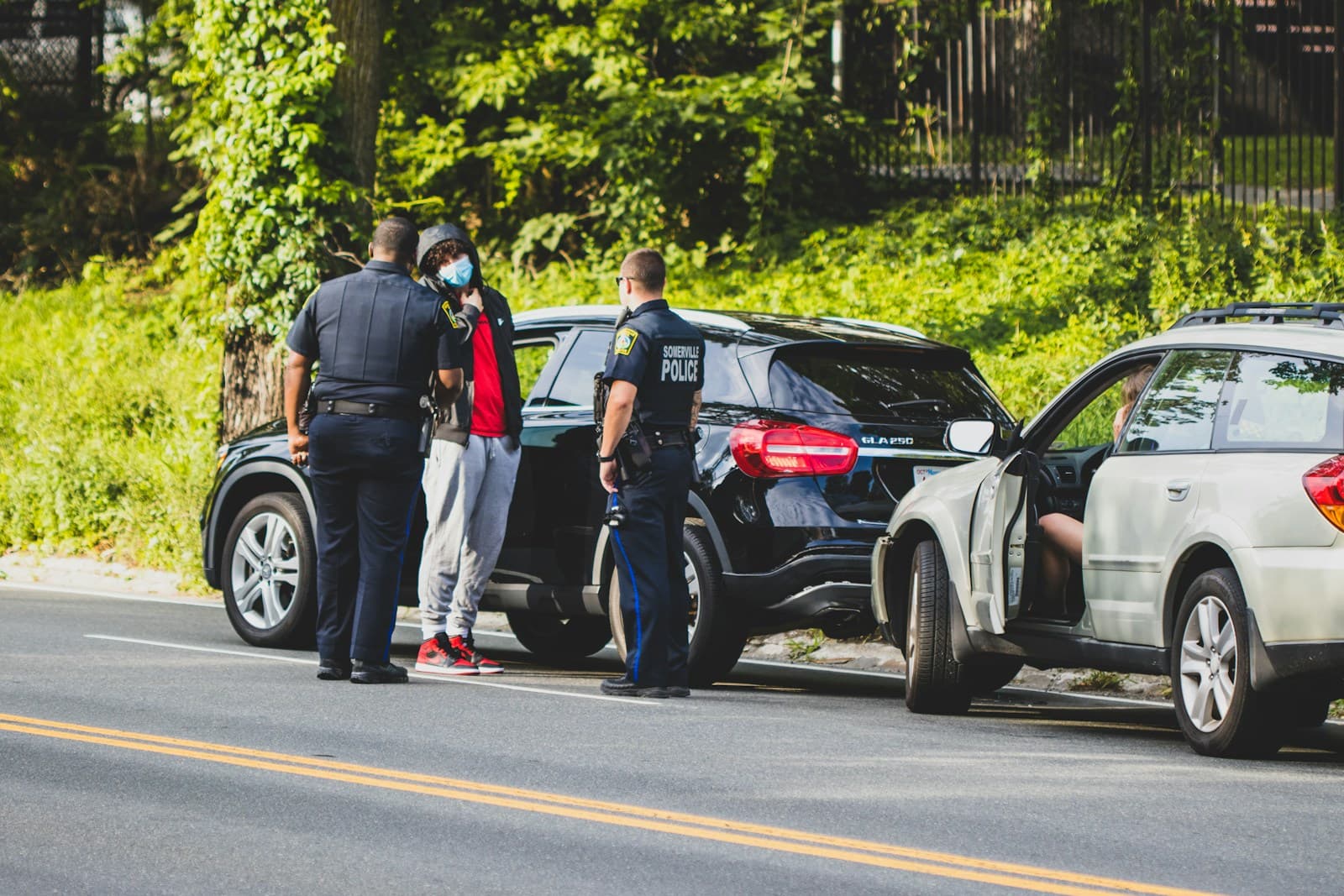
Most states treat this as driving outside approved restrictions. The work purpose remains valid, but the route and timing specifications no longer match what the court or DMV approved. Law enforcement and compliance officers verify hardship permits against the documented restrictions during traffic stops. A mismatch between your stated destination and your permit's approved route creates a violation flag even when you're genuinely driving to work.
Some states allow minor route deviations for traffic, construction, or safety without requiring amendment. Colorado and Texas courts typically interpret "reasonable deviation" to include alternate routes that serve the same approved destination. Other states — Illinois, Wisconsin, Florida — require exact compliance with documented routes and interpret any unapproved path as a restriction violation. The safest assumption: if your daily drive no longer follows the route your employer verified in the original hardship application, you need a formal amendment before using the new path.
What Triggers the Need for a Route Amendment
Employer relocation to a new physical address always requires amendment. Your hardship permit lists the employer's street address as the approved destination. Driving to a different address — even for the same employer, same job, same work hours — falls outside the documented restriction.
Shift time changes that move your commute outside approved hours require amendment in most states. Your permit specifies the window during which work-related driving is allowed: typically your shift start time minus 30-60 minutes through shift end time plus 30-60 minutes. A schedule change from day shift to night shift moves your driving window entirely. Even a two-hour schedule adjustment can push your commute outside the approved timeframe.
Job site reassignments within the same company require amendment when the new site is at a different location. Construction workers, field service technicians, healthcare workers, and retail employees assigned to multiple store locations face this frequently. Your permit covers the location your employer documented in the verification letter. Driving to a second site — even when your employer assigns it — requires adding that location to your approved destinations before the first trip.
Work-from-home arrangements that reduce commute frequency do not require amendment, but returning to in-office work after a remote period does if the office location changed during the remote interval. Your permit remains valid for the approved route even when you don't use it daily. Resuming use of an outdated route after a gap triggers the same compliance risk as never amending it in the first place.
Compare car insurance rates in your state
Get quotes from licensed carriers — no obligation, no spam, results in minutes.
Get Your Free Quote✓ No Obligation Required✓ Licensed Carriers Only✓ Available Nationwide✓ Free to Compare
How to File a Route Amendment in Your State
The amendment process varies by state and by the authority that issued your original permit. Court-issued permits typically require a motion filed with the same court that granted the original hardship license. Bring a copy of your original court order, a new employer verification letter documenting the updated work site and route, and a completed amendment petition form if your county provides one. Most courts schedule a brief hearing within 10-20 business days. Some counties allow administrative amendments without a hearing when the only change is the route and the work purpose remains identical.
DMV-issued permits typically require submitting an amendment application to the same licensing office that processed your original hardship application. Required documentation usually includes a new employer verification letter on company letterhead, an updated route map showing the new path, proof that your underlying suspension status hasn't changed, and the amendment processing fee. Processing time ranges from same-day approval in states with online amendment systems to 15-30 business days in states requiring manual review.
Employer verification letters for amendments must document the same details the original letter provided: your job title, work schedule including days and hours, the specific work site address, whether the job requires driving during work hours, and confirmation that driving is essential to maintaining employment. The letter should explicitly state that this is an amendment to the previously verified employment and reference the date of the original verification letter if possible.
Some states allow proactive multi-site approval in the original hardship application. If your job requires rotating between multiple work locations, document all sites in the initial employer verification letter and request approval for all locations simultaneously. This avoids the need for amendments each time your assignment changes, though it typically requires more detailed documentation upfront showing that all listed sites are genuine work locations you'll use regularly.
The Risk of Driving Unapproved Routes Before Amendment
Driving outside your approved restrictions is grounds for immediate hardship license revocation in most states. Courts and DMVs treat restriction violations as evidence you cannot comply with conditional driving privileges. A single traffic stop on an unapproved route — even without any other traffic violation — can trigger revocation proceedings.
The violation is strict liability in most jurisdictions. Your intent, the work-related nature of the trip, and your employer's verification of the new site are not defenses to the violation itself. The permit lists specific routes and times. Driving outside those parameters violates the permit terms regardless of why the route changed or whether the trip served an approved purpose.
Revocation typically reinstates the full underlying suspension period. If you were 8 months into a 12-month DUI suspension and your hardship license is revoked for a route violation, you return to fully suspended status and must serve the remaining 4 months without any driving privileges. Some states reset the hardship eligibility waiting period, requiring you to wait an additional 30-90 days before you can reapply for a new hardship license.
Employers occasionally pressure drivers to start working the new location immediately before the amendment processes. This creates a forced choice between employment and compliance. The honest answer: if your employer cannot accommodate a 2-3 week delay while your amendment processes, and you drive the unapproved route, you risk losing both the job and your driving privileges when revocation makes continued employment impossible anyway. The amendment timeline is almost always shorter than the revocation consequence.
SR-22 Filing and Insurance Implications When Routes Change
Route amendments do not require new SR-22 filings if your insurance policy and SR-22 certificate remain active and current. The SR-22 filing requirement is tied to your underlying suspension and reinstatement terms, not to the specific routes you drive. As long as your policy stays in force and your carrier maintains the SR-22 filing with your state, the route change does not interrupt your filing compliance.
You must notify your insurance carrier of the route change if it affects your policy rating. Longer commutes, higher-mileage routes, or routes through higher-risk zip codes can change your premium. Most carriers ask about commute distance and work location during underwriting. A significant change — moving from a 10-mile suburban commute to a 40-mile urban commute — may trigger a rate adjustment at your next renewal.
Employment hardship SR-22 policies typically do not restrict coverage by route or destination. The policy covers liability for any driving allowed under your hardship permit terms. Once your amended permit approves the new route, your existing SR-22 policy covers driving on that route without requiring a policy amendment or endorsement.
Carriers do not file amended SR-22 certificates when routes change. The SR-22 certificate documents that you carry the state-required liability coverage; it does not list approved routes or work sites. Your state's DMV or court system maintains the route and time restrictions separately from the insurance filing.
What Happens If Your Amendment Is Denied
Courts and DMVs can deny route amendments when the new route significantly increases the scope of your driving privileges beyond what the original hardship approval intended. A 15-mile commute amendment to a 60-mile commute, a daytime-only commute changed to late-night hours, or a suburban route changed to downtown congested areas may exceed what a judge is willing to approve during an active suspension.
Denials are more common when the amendment request comes during the early months of a suspension, particularly for DUI and reckless driving cases. Courts often impose stricter hardship limits in the first 6-12 months to ensure compliance and may view a significant route expansion as inconsistent with the underlying suspension's intent.
If your amendment is denied and your job requires the new route, you face a binary choice: find alternative transportation for the new commute or find employment accessible via your currently approved route. Some drivers request employer accommodation to transfer back to the original work site or to a site accessible via the approved route. Others negotiate remote work arrangements for the portion of the suspension period where the amendment was denied, then resume in-person work once the full suspension term ends.
You can reapply for a route amendment after a denial if your circumstances change or if you provide additional documentation addressing the reason for denial. If the court denied the amendment due to insufficient proof the new job site is permanent, obtaining a letter from your employer confirming the assignment is long-term rather than temporary may support a second petition.