New York Restricted Use Licenses allow delivery drivers to work during suspension, but DMV approval is discretionary and ignition interlock is mandatory for DWI cases. Most drivers don't realize employer verification letters require route specifics, not just job confirmation.
Why New York Restricted Use Licenses Don't Automatically Cover Delivery Routes
New York DMV grants Restricted Use Licenses on a discretionary basis, not as an automatic entitlement. Delivery drivers face higher denial rates than fixed-schedule commuters because multi-stop routing and variable work hours make enforcement verification harder for DMV administrators. The application requires documenting specific approved purposes under Vehicle and Traffic Law §530: work, school, medical appointments, and court-approved essential activities. Delivery work qualifies as employment driving, but DMV evaluates whether the route structure and time windows can be reasonably monitored.
Most delivery drivers submit employer verification letters that confirm employment status but omit the route-specific details DMV needs to approve the application. A letter stating "John Doe works for ABC Logistics as a delivery driver, Monday through Friday" will trigger a denial or request for additional documentation. DMV needs the primary delivery zone boundaries, typical start and end locations, and whether routes change daily or follow a fixed pattern. Drivers whose routes span multiple counties or cross state lines face additional scrutiny because RUL restrictions are harder to enforce across jurisdictions.
If your employer cannot provide route specifics because delivery zones change daily based on dispatch assignments, request a letter describing the variability explicitly and confirming that all driving occurs within New York State during documented work hours. DMV has discretion to approve RULs with broader geographic boundaries when the employment nature requires it, but the burden is on the applicant to demonstrate the work requirement is legitimate and monitorable.
What Employer Verification Letters Must Include for Delivery Jobs
The MV-500 series application form for a Restricted Use License requires supporting documentation proving necessity. For delivery drivers, the employer verification letter is the single most critical document in the packet. It must include: employer's legal business name and EIN, driver's full name and date of hire, detailed job title and duties requiring driving, work schedule including days and typical hours, primary delivery zone or route description, employer contact information for DMV verification, and a statement confirming the employee cannot perform the job without driving.
DMV frequently denies applications where the letter uses vague language like "various locations" or "as needed." The verification must anchor the driving requirement to specific geography and time windows. For example: "Employee operates delivery van Monday through Saturday, 6:00 AM to 4:00 PM, serving commercial accounts within a 40-mile radius of our Bronx warehouse, with routes primarily in Bronx, Westchester, and lower Putnam counties." That level of specificity gives DMV the framework to define enforceable restrictions.
If you are an independent contractor or gig-platform driver for services like DoorDash, Uber Eats, or Amazon Flex, employer verification is harder to obtain. Platform companies rarely provide individualized verification letters for RUL applications. In these cases, you may need to submit: a screenshot of your active contractor account showing your name and service area, a recent week's delivery manifest or earnings summary showing volume and geography, a self-prepared affidavit describing your work schedule and delivery zone, and tax documentation proving the delivery work is your primary income source. DMV has broader discretion to deny applications lacking traditional employer verification, so gig drivers face materially higher denial rates.
Compare car insurance rates in your state
Get quotes from licensed carriers — no obligation, no spam, results in minutes.
Get Your Free Quote✓ No Obligation Required✓ Licensed Carriers Only✓ Available Nationwide✓ Free to Compare
Ignition Interlock Requirements for DWI-Suspended Delivery Drivers
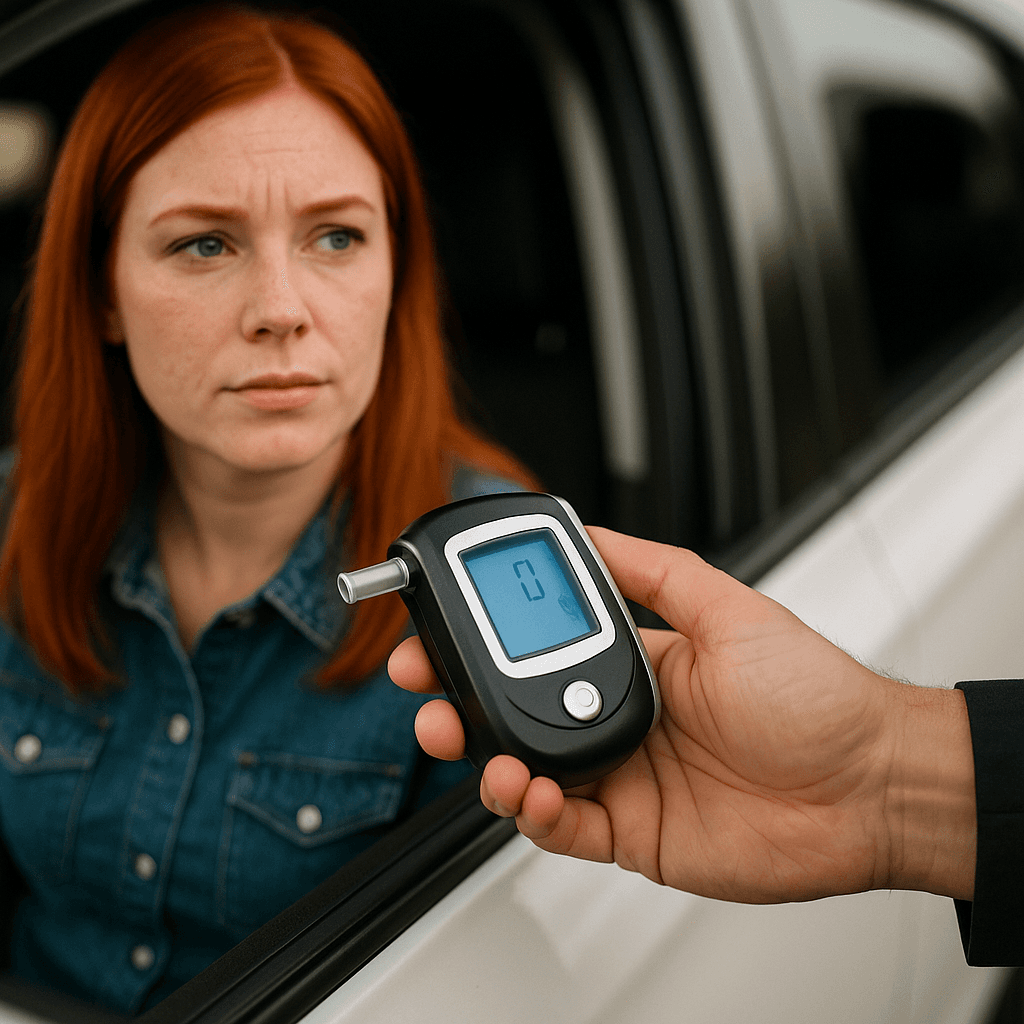
Leandra's Law under Vehicle and Traffic Law §1198 mandates ignition interlock device installation for all DWI and DWAI convictions in New York, including as a condition of any Restricted Use License issued during the interlock period. If your suspension stems from a DWI arrest, you cannot operate any vehicle without an installed and functioning IID, even under RUL authority. The interlock requirement applies to the vehicle, not just your personal car. If you drive a company-owned delivery van, the IID must be installed in that vehicle or you must arrange to drive a personal vehicle with an installed device.
Most delivery employers will not allow IID installation in company fleet vehicles due to liability, maintenance, and insurance concerns. This creates a forced choice: drive your own vehicle for delivery work with an IID installed, or find employment that does not require driving during your interlock period. The interlock period typically runs 12 months for a first DWI offense and longer for repeat offenses, measured from the date of installation. The Restricted Use License does not shorten the interlock period. It only permits you to drive during that period under defined restrictions.
IID installation costs approximately $100 to $150, with monthly monitoring fees of $75 to $100. New York requires you to use a state-approved interlock vendor; the list is maintained on the DMV website. If you are caught driving without a functioning interlock during the mandated period, your RUL will be revoked immediately and you will face additional criminal charges under VTL §1198. Delivery drivers sometimes assume that daytime work driving is exempt from interlock requirements or that company vehicles are treated differently. Neither assumption is correct under New York law.
Insurance Verification and SR-22 Confusion for New York Drivers
New York does not use SR-22 certificates. Financial responsibility verification for Restricted Use License holders is handled through the Insurance Information and Enforcement System, a real-time electronic reporting framework under Vehicle and Traffic Law §313. When you purchase auto insurance, your carrier reports the policy issuance directly to DMV electronically. When the policy lapses or is cancelled, the carrier reports that event immediately, triggering automatic suspension action.
Delivery drivers often call insurance agents requesting "SR-22 filing" because that term appears in national hardship-license guides. New York agents cannot file SR-22 forms because the state does not recognize them. Instead, you need a standard auto insurance policy issued by a carrier licensed in New York, with coverage meeting or exceeding state minimums: $25,000 bodily injury per person, $50,000 bodily injury per accident, $10,000 property damage, plus mandatory Personal Injury Protection and uninsured motorist coverage. The carrier will report the policy to DMV through IIES automatically. You do not file anything separately.
If you do not own a vehicle and plan to drive employer-owned delivery vehicles under your RUL, you need non-owner liability insurance. Non-owner policies provide the liability coverage DMV requires for license reinstatement without insuring a specific vehicle. Rates for non-owner policies with a suspended-license history typically range $80 to $150 per month, depending on your violation history and county. Confirm the carrier writes non-owner policies in New York and reports through IIES before purchasing. Not all carriers offer non-owner products, and some that do will not write policies for drivers with active RUL restrictions.
Common Denial Reasons and How to Address Them in a Second Application
DMV denies Restricted Use License applications for reasons grouped into three categories: insufficient documentation, ineligibility due to violation history, and discretionary denial based on risk assessment. The denial notice will state the reason, but the explanation is often brief. Insufficient documentation denials occur when employer verification lacks specifics, when proof of insurance is not yet visible in IIES, when the suspension clearance or eligibility confirmation is missing, or when application forms are incomplete. These are curable. Gather the missing documentation and reapply immediately.
Ineligibility denials occur when the applicant has not completed mandatory prerequisites. For DWI suspensions, you must complete the Impaired Driver Program before RUL eligibility begins. For multiple-offense DWI cases, you may face a hard revocation period during which no restricted driving is permitted regardless of documentation. For suspensions due to unpaid fines or child support arrears, the underlying obligation must be resolved or a payment plan established before DMV will consider a hardship application. These denials require resolving the underlying issue before reapplication will succeed.
Discretionary denials are the hardest to overcome. DMV reviews your full driving record, the number of prior suspensions or revocations, compliance history with prior restricted licenses, and the nature of the current suspension. Drivers with multiple suspensions within a 36-month window face higher denial rates. Drivers who violated prior RUL terms face near-automatic denial on subsequent applications. If your denial falls into this category, consider whether a administrative hearing is warranted. You have the right to request a hearing to present evidence of rehabilitation, employment necessity, and compliance intent. Delivery drivers whose job loss would result in housing instability or loss of child custody have stronger cases for discretionary approval, but the burden of proof is on the applicant.
What Happens If You Drive Outside Approved Hours or Routes
Restricted Use License violations in New York are treated as aggravated unlicensed operation under Vehicle and Traffic Law §511. If you are stopped by law enforcement while driving outside your approved work hours, outside your approved geographic zone, or for purposes not listed on your RUL, you will be charged with AUO. First-degree AUO is a misdemeanor carrying up to 180 days in jail and a minimum fine of $500. Your RUL will be revoked immediately, and your underlying suspension period may be extended.
Delivery drivers are at elevated risk because route variability makes compliance harder to demonstrate during a traffic stop. If your RUL specifies "delivery routes within Bronx, Westchester, and Putnam counties, Monday through Saturday, 6:00 AM to 4:00 PM," and you are stopped in Nassau County at 5:30 PM, the burden is on you to prove the stop occurred within the scope of your employment driving. Carrying a current delivery manifest, GPS route log, or employer dispatch confirmation can provide evidence, but officers have discretion to issue AUO charges when the stop appears outside documented parameters.
Some delivery drivers assume that any driving related to income generation qualifies as work driving under their RUL. That interpretation is incorrect. If your RUL lists delivery work for a specific employer, driving for a second gig-platform job or running personal errands between deliveries falls outside approved purposes. Multi-apping while operating under an RUL creates legal exposure every time you accept an order from a platform not listed in your original employer verification. New York DMV does not issue RULs with open-ended "any employment driving" language; every approved purpose must be documented in the application.
Cost Breakdown and Timeline for Delivery Drivers Seeking RUL Approval
The application fee for a Restricted Use License in New York is $25, though this figure should be verified against the current DMV fee schedule at dmv.ny.gov. If your suspension requires completion of the Impaired Driver Program, the IDP enrollment fee is approximately $225, with additional costs for the required education sessions. If ignition interlock is mandated, installation runs $100 to $150 and monthly monitoring fees add $75 to $100. Insurance costs vary widely based on violation history and whether you need vehicle or non-owner coverage, but delivery drivers with DWI suspensions typically pay $150 to $300 per month for liability coverage meeting New York minimums.
Processing time for RUL applications is not published by DMV and varies significantly by regional office and case complexity. Straightforward applications with complete documentation submitted at high-volume offices like Manhattan or Buffalo may process within 10 to 15 business days. Applications requiring additional review, missing documentation, or submitted at smaller DMV offices can take 30 to 45 days or longer. During the processing period, you cannot drive legally. Plan for income loss during this gap or arrange alternative transportation to retain your delivery job.
If your application is denied and you request an administrative hearing, add another 60 to 90 days to the timeline. Hearings are scheduled based on DMV administrative law judge availability and regional caseload. Delivery drivers facing job loss within two weeks of suspension rarely have time to complete the RUL process before termination. The reality is that some drivers lose employment before restricted driving authority is granted, even when the application is ultimately approved.