Nebraska offers two parallel restricted-driving permit systems, and most suspended drivers apply for the wrong one. Employment Driving Permits are available for general suspension situations, but DUI drivers typically need an Ignition Interlock Permit instead.
Nebraska's Two-Track Employment Permit System
Nebraska DMV operates two separate restricted-driving permit systems with different eligibility rules and application paths. The Employment Driving Permit (EDP) under Neb. Rev. Stat. § 60-4,118 covers general suspension situations—unpaid tickets, points accumulation, uninsured driving, and certain administrative suspensions. The Ignition Interlock Permit (IIP) under Neb. Rev. Stat. § 60-6,211.05 covers DUI-related suspensions specifically. Most drivers apply for the wrong program because both allow work-purpose driving, but the DMV processes them through separate divisions with different fee structures and approval timelines.
You cannot hold both permits simultaneously. If your suspension stems from an OWI conviction or administrative license revocation following a chemical test failure or refusal, your only employment-driving pathway is the IIP. The EDP application will be rejected with no fee refund. First-offense DUI drivers face a mandatory 60-day hard suspension period before an Ignition Interlock Permit can be issued. Second and subsequent offenses impose longer hard suspension periods with no restricted-driving option during that window.
The state's Administrative License Revocation law (Neb. Rev. Stat. § 60-498.01 et seq.) initiates suspension immediately upon officer certification of test failure or refusal, even before criminal conviction. You have 10 days from suspension notice to request a hearing to contest the administrative revocation. If you miss that 10-day window, the suspension proceeds and you must serve the entire hard suspension period before applying for any restricted permit.
Who Qualifies for the Employment Driving Permit
The Employment Driving Permit is available to drivers whose suspension does not involve alcohol or drugs. Approved causes include: points accumulation, unpaid traffic tickets, failure to appear at a court hearing, uninsured motorist violations, failure to satisfy judgments, and certain child support enforcement actions. Nebraska DMV requires applicants to demonstrate a qualifying need: maintaining employment, attending school, obtaining medical treatment, or fulfilling court-mandated obligations.
The DMV application requires: completed application form, proof of employment or other qualifying need (employer verification letter on company letterhead specifying your work hours and job address), SR-22 proof of insurance, and payment of the $50 application fee. Your employer's verification letter must include your supervisor's name, contact information, and signature. Self-employed drivers must provide business license documentation and client contract examples demonstrating regular work obligations.
The permit restricts driving to the specific hours and routes necessary for the qualifying purpose. If your employer verification letter states your work shift runs 8 AM to 5 PM Monday through Friday, your permit authorizes driving during those hours for commute and work-related errands only. Driving outside those hours—even to a medical appointment—constitutes a violation unless you submit a separate medical-need request with physician verification and wait for DMV approval before the appointment date.
Compare car insurance rates in your state
Get quotes from licensed carriers — no obligation, no spam, results in minutes.
Get Your Free Quote✓ No Obligation Required✓ Licensed Carriers Only✓ Available Nationwide✓ Free to Compare
What the Employment Permit Does Not Cover
Nebraska's employment-hardship permit does not restore general driving privileges. You cannot drive for recreational purposes, family errands unrelated to work, or social activities—even during your approved work-hours window. Police officers routinely pull over drivers at grocery stores and gas stations during daytime hours and verify permit compliance. If your permit restricts you to home-to-work commute and you are stopped at a location off that direct route, you will be charged with driving under suspension regardless of the time of day.
CDL holders face additional restrictions. The Employment Driving Permit authorizes personal vehicle operation only. You cannot operate commercial vehicles under an EDP, even if your job requires commercial driving and your employer submitted verification of that need. Federal Motor Carrier Safety Administration regulations prohibit restricted state licenses from authorizing interstate commercial operation. If you hold a CDL and your job requires driving commercial vehicles, the EDP will not preserve your employment.
Gig economy workers and commission-based drivers whose work hours vary unpredictably face documentation challenges. The DMV requires fixed hours and routes on the employer verification letter. If your job requires driving throughout the day with variable start and end times, you must work with your employer to define the broadest reasonable window and submit route descriptions covering all likely work-related driving. The DMV may approve broader windows for documented gig work, but approval is discretionary and processing takes longer than standard fixed-schedule applications.
How Ignition Interlock Permits Differ for DUI Cases
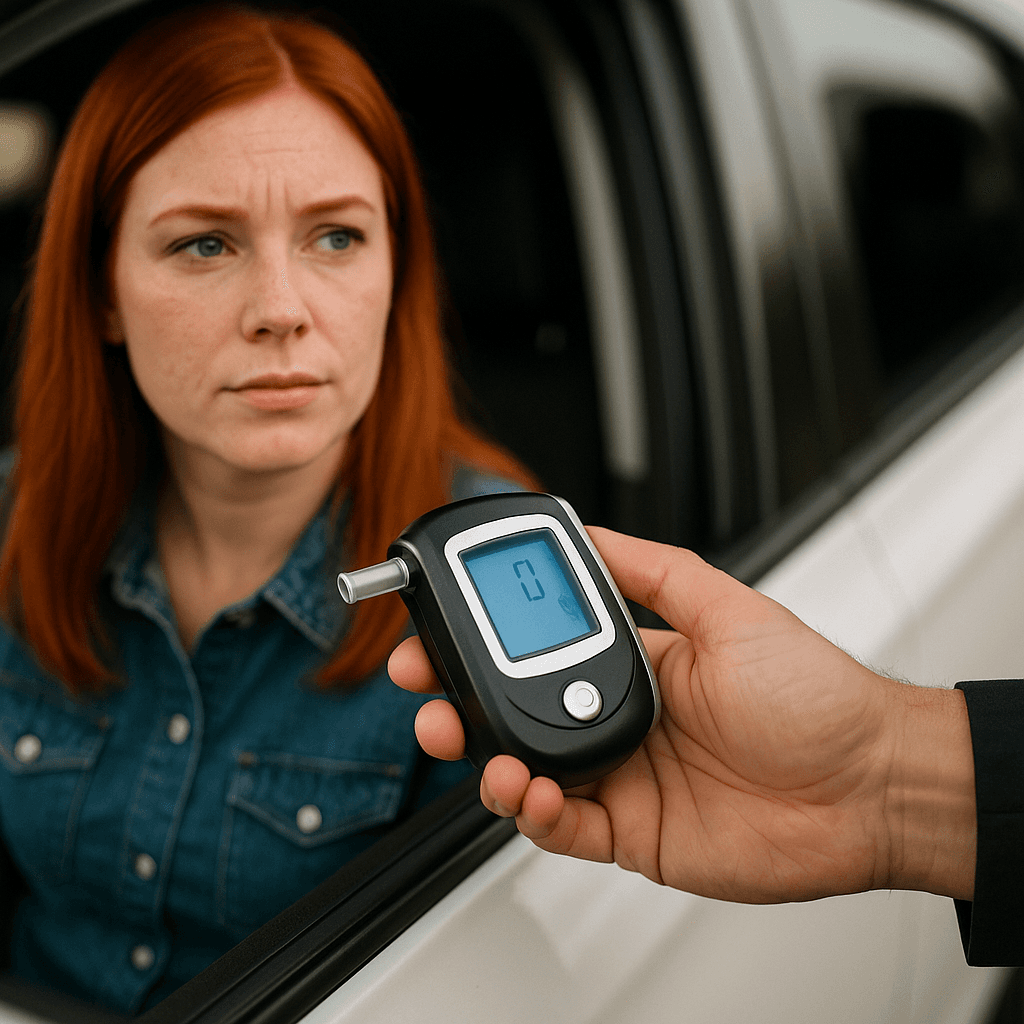
Drivers suspended for DUI, refusal to submit to chemical testing, or driving with a blood alcohol content above the legal limit must apply for an Ignition Interlock Permit instead of an Employment Driving Permit. The IIP requires installation of a state-certified ignition interlock device in any vehicle you operate. The device prevents the engine from starting unless you provide a passing breath sample, and it demands rolling retests at random intervals while driving.
Nebraska's hard suspension period for first-offense DUI is 60 days. You cannot apply for an IIP until that period expires. The hard suspension starts from the date of the administrative revocation notice, not the criminal conviction date. Second and subsequent DUI offenses impose longer mandatory hard suspension periods with no early-application option. During the hard suspension, you have zero legal driving privileges—no work permit, no hardship license, no exceptions.
Once the hard suspension period ends, you may apply for an IIP by submitting: completed IIP application, verification of ignition interlock device installation by a Nebraska-approved vendor, SR-22 certificate of insurance, and payment of fees. The ignition interlock device itself costs approximately $75–$150 for installation plus $60–$90 per month for monitoring and calibration. That cost is in addition to the permit application fee and the SR-22 insurance premium increase. The IIP restricts driving to the same work-hours and approved-purposes framework as the EDP, but every trip requires device compliance.
SR-22 Insurance Requirements for Employment Permits
Both the Employment Driving Permit and the Ignition Interlock Permit require SR-22 proof of financial responsibility before the DMV will issue the restricted license. SR-22 is not a type of insurance—it is a certificate your insurance carrier files with the state DMV electronically, certifying you carry at least Nebraska's minimum liability coverage: $25,000 per person for bodily injury, $50,000 per accident for bodily injury, and $25,000 for property damage. Nebraska also requires uninsured motorist coverage.
Not every carrier offers SR-22 filing. Standard and preferred-tier carriers often decline to write policies for suspended drivers or charge premiums that make coverage unaffordable. Non-standard carriers specializing in high-risk cases write most SR-22 policies in Nebraska. Based on available industry data, drivers with suspended licenses typically pay $140–$240/month for minimum-liability SR-22 policies, depending on age, county, and violation history. DUI drivers face the highest premiums—often $200–$300/month—because the SR-22 filing period runs for the duration of the suspension plus any additional years mandated by the court.
If your SR-22 policy lapses for any reason—missed payment, voluntary cancellation, carrier non-renewal—your insurance company notifies the DMV electronically within 24 hours. The DMV immediately suspends your Employment Driving Permit or Ignition Interlock Permit and re-suspends your underlying driver's license. Reinstatement after an SR-22 lapse requires paying a new $125 reinstatement fee, filing a new SR-22 certificate, and reapplying for the restricted permit. Some drivers lose their permits permanently after lapse violations because the DMV treats SR-22 lapses as evidence of non-compliance with court-ordered conditions.
What Happens If You Drive Outside Permit Restrictions
Violating your Employment Driving Permit restrictions—driving outside approved hours, traveling routes not listed on your permit, or operating a vehicle for non-approved purposes—results in immediate permit revocation and criminal charges for driving under suspension. Nebraska prosecutes permit violations as Class IV misdemeanors carrying up to 5 days in jail and fines up to $500 for first offenses. Subsequent violations escalate to higher-class misdemeanors with mandatory jail time.
Police officers have access to DMV permit records during traffic stops. When an officer pulls your vehicle information, the system flags your restricted license status and displays your approved hours and routes. If the stop occurs outside your permitted window or at a location inconsistent with your approved routes, the officer will ask for documentation of emergency circumstances. Medical emergencies and vehicle breakdowns are generally excused if you report the incident to the DMV within 48 hours, but the burden of proof is on you.
Employers occasionally terminate drivers who hold restricted licenses because of liability concerns. If you cause an accident while driving under an Employment Driving Permit and your employer's commercial auto policy excluded restricted-license drivers, the employer faces uninsured exposure for damages. Some industries—delivery services, sales routes, home healthcare—cannot accommodate route restrictions and will not retain employees with hardship permits. Your employer is not legally required to accommodate your restricted license, and termination for inability to perform essential job functions is typically not wrongful under Nebraska employment law.
Timeline and Costs for Nebraska Employment Permits
Nebraska DMV does not publish guaranteed processing timelines for Employment Driving Permits, but standard applications with complete documentation typically process within 10–15 business days. Ignition Interlock Permit applications take longer—often 15–20 business days—because the DMV cross-references ignition interlock vendor records to confirm device installation before issuing the permit. Applications missing required documentation or employer verification letters with incomplete information are returned without processing, restarting the timeline from the date you resubmit corrected materials.
Total upfront cost for an Employment Driving Permit includes: $50 DMV application fee, SR-22 filing fee (typically $15–$50 depending on carrier), and first month's insurance premium ($140–$240 for most suspended drivers). If your suspension requires ignition interlock, add $75–$150 for device installation. Budget for ongoing costs: monthly SR-22 insurance premiums, monthly ignition interlock monitoring fees ($60–$90), and potential employer parking or vehicle-use restrictions that force you to drive your own vehicle instead of a company vehicle.
Reinstatement after your full suspension period ends costs an additional $125 reinstatement fee to restore your unrestricted license. DUI-related suspensions may require completion of a chemical dependency evaluation and any recommended treatment or education programs before the DMV will process reinstatement. Verify current reinstatement requirements with Nebraska DMV Driver and Vehicle Records division at dmv.nebraska.gov before your suspension end date—some requirements must be completed before your suspension expires, and missing deadlines extends your suspension period automatically.