Montana requires you to petition a district court judge for a probationary license—the MVD processes your suspension but cannot issue the license itself. Court approval timelines, required employer documentation, and ignition interlock installation vary significantly across Montana's 56 counties.
Why Montana's Probationary License Requires a Court Petition
Montana Code Annotated § 61-5-208 places probationary license authority in district court, not with the Montana Motor Vehicle Division. The MVD suspends your license under administrative or criminal processes, but only a district court judge can grant you a probationary license—the state's term for work-restricted driving privileges. You file your petition in the district court serving the county where you reside, not at an MVD office.
This dual-agency structure means your timeline and requirements depend on local court procedures as much as state statute. A DUI-based suspension in Yellowstone County follows the same underlying statute as one in Glacier County, but filing fees, hearing schedules, employer documentation standards, and judge-imposed conditions vary by jurisdiction. Montana has 56 counties, each with district court clerks operating under local administrative rules.
The MVD maintains your suspension record and processes your eventual reinstatement, but the court controls whether you drive during the suspension period. If your petition is denied, you have no work-driving privilege—your only legal path is waiting out the full suspension term. Montana statute requires you to prove your employment need and demonstrate that your driving poses minimal public risk, but the judge interprets those standards through county-specific precedent.
Who Qualifies for a Montana Probationary License Under Court Review
Montana allows probationary license petitions for most suspension triggers, including DUI convictions (first and subsequent offenses), points-based administrative suspensions, and uninsured-driver violations. The statute does not categorically exclude any cause from eligibility, but DUI cases face additional procedural requirements: a mandatory hard suspension period before you can petition (approximately 45 days for a first offense under MCA § 61-8-402, longer for subsequent offenses), and an ignition interlock device requirement under MCA § 61-8-442.
The court evaluates your petition based on employment need, household responsibilities (medical appointments, child care, education), and public safety risk. You must prove that losing your license creates genuine hardship and that restricted driving serves an essential purpose. Courts typically require an employer verification letter on company letterhead confirming your job title, work hours, work address, and a statement that driving is necessary to perform your duties or reach your workplace. Self-employment requires additional documentation: business registration, client contracts, or tax records demonstrating ongoing income dependence on driving.
Montana courts interpret 'necessary travel' more broadly than urban states because of the state's rural geography. Driving 50 miles one-way for work, medical care, or groceries is common in Montana, and judges factor this into route and time restrictions. A probationary license granted in Missoula may allow a 60-mile commute radius; one granted in a smaller county may allow even broader travel if the petitioner demonstrates necessity. The burden is on you to document why your specific situation requires driving and what routes you need.
Compare car insurance rates in your state
Get quotes from licensed carriers — no obligation, no spam, results in minutes.
Get Your Free Quote✓ No Obligation Required✓ Licensed Carriers Only✓ Available Nationwide✓ Free to Compare
Employer Documentation Required for Court Approval
Every probationary license petition requires proof of employment need. The district court will not approve a work-restricted license without documentation verifying that your job depends on driving. Your employer must provide a letter on company letterhead that includes: your full name and job title, your work schedule (including start and end times), the physical address of your workplace, a statement confirming that driving is necessary to reach work or perform your job duties, and the employer's contact information for court verification.
If your job requires driving during work hours—delivery, sales, field service, home health care—the employer letter must specify this and describe the typical routes or service area. Courts may impose narrower restrictions on job-related driving than on commute-only driving because the public risk exposure is higher. If you are self-employed, the court requires business registration documents, client contracts, invoices, or tax filings that demonstrate ongoing income and driving necessity. Affidavits from clients or business partners supporting your claim strengthen your petition.
Some Montana courts require the employer to appear at the probationary license hearing or submit a notarized affidavit rather than just a letter. Check with your county district court clerk before filing to confirm local documentation standards. Submitting incomplete employer verification is the most common reason for petition denial or hearing delays. The court will not assume your job requires driving—you must prove it with specific, verifiable documentation.
Ignition Interlock Device Requirement for DUI-Based Probationary Licenses
Montana Code Annotated § 61-8-442 requires ignition interlock installation as a condition of any probationary license granted after a DUI suspension. The device must be installed in every vehicle you own or regularly operate before the court issues the probationary license. You cannot drive—even under a restricted license—without an active, compliant ignition interlock device.
You must contract with a state-certified ignition interlock provider, pay installation fees (typically $75-$150), and pay monthly monitoring fees (typically $60-$90). The court order specifies the required interlock period, which usually matches the probationary license duration. Violations—failed breath tests, missed calibration appointments, tampering attempts—are reported to the court and can result in probationary license revocation. Montana law requires you to cover all interlock costs; no state subsidy or hardship waiver applies.
If you do not own a vehicle, you may petition for a probationary license with an interlock exemption, but you must prove that you will only drive employer-owned vehicles equipped with interlock devices or that you rely entirely on non-owner insurance and will rent vehicles with interlock systems. Most Montana judges deny interlock exemptions unless the petitioner provides concrete evidence of compliance. If you share a vehicle with a household member who is not required to use an interlock, that person can request an exemption from the interlock requirement for that vehicle, but you remain prohibited from driving it.
Court-Imposed Route and Time Restrictions
Montana probationary licenses are not open driving privileges. The district court judge defines the specific hours and routes you are allowed to drive, and those restrictions are binding. Violating them—driving outside approved hours, taking unapproved routes, or driving for unapproved purposes—triggers probationary license revocation and criminal charges for driving while suspended.
Typical court-approved purposes include: driving to and from work during the hours specified in your employer verification letter (usually with a 30-60 minute buffer window before and after your shift), driving during work hours if your job requires it and the employer documentation supports it, driving to and from court-ordered alcohol treatment or ignition interlock calibration appointments, and driving to medical appointments with advance notice to the court or probation officer. Some judges allow grocery shopping, child care transportation, or religious services, but only if you request those purposes in your petition and provide supporting documentation.
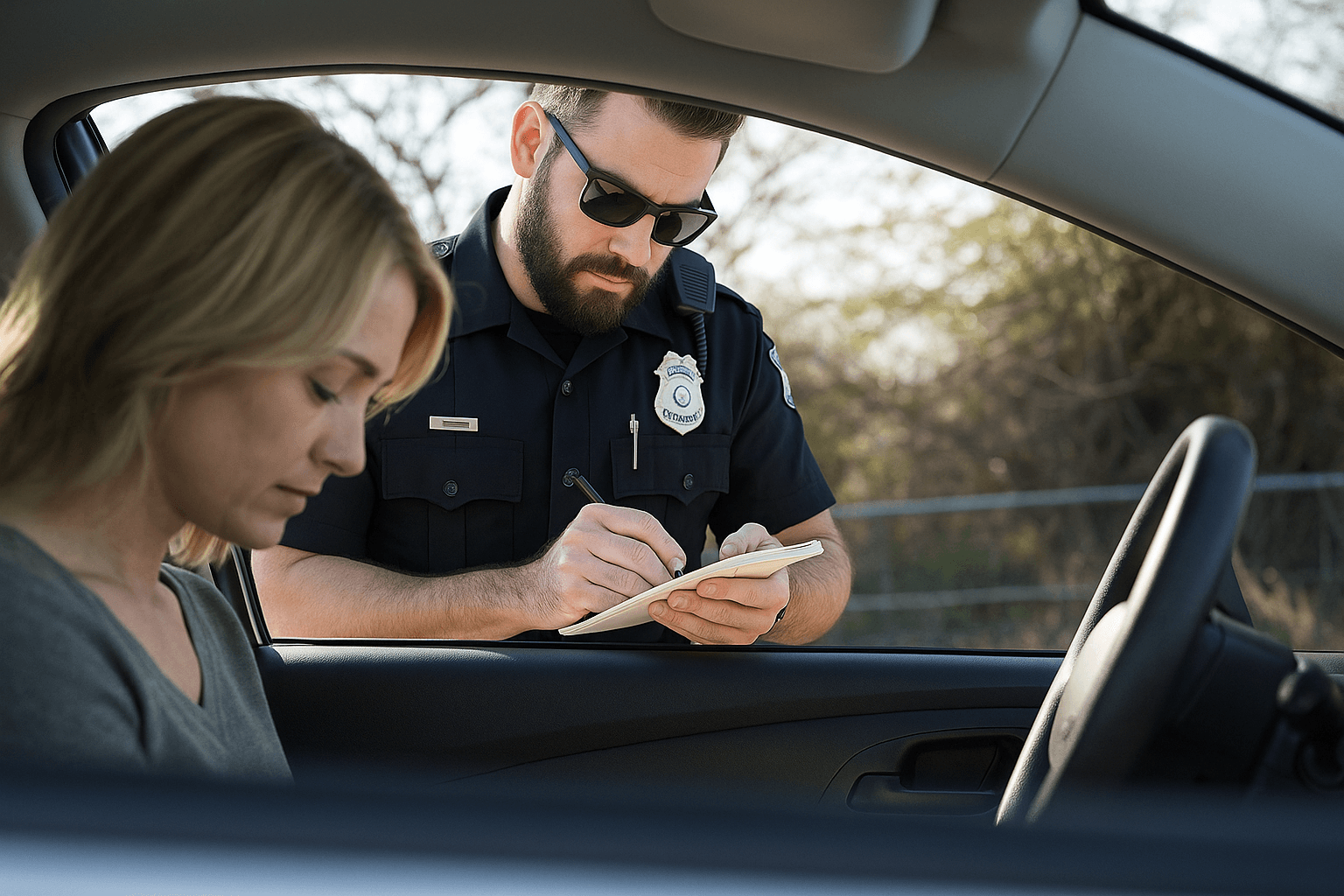
The court order lists your approved addresses: home, workplace, treatment provider, interlock service center. You must carry the court order in your vehicle at all times. Montana law enforcement can verify probationary license restrictions through the MVD database during traffic stops. If you are stopped outside approved hours or locations, the officer can arrest you for driving under suspension even if you have a valid probationary license. Route deviations—taking a longer route home to run an errand, stopping for gas in a non-approved location, driving a family member to an appointment—are violations unless you petition the court for a modification and receive written approval before the trip.
Filing Your Probationary License Petition in District Court
You file your probationary license petition in the district court for the county where you reside. Montana does not allow you to choose a different county for convenience or faster processing. Contact the district court clerk's office to request the probationary license petition form and instructions; some counties provide forms online, others require in-person pickup.
The petition requires: a completed application form with your full legal name, driver's license number, and suspension details; a copy of the MVD suspension notice or court order that triggered your suspension; employer verification documentation on company letterhead; proof of SR-22 insurance filing (you must secure SR-22 coverage before filing the petition—judges will not approve a probationary license without proof of financial responsibility); proof of ignition interlock installation if your suspension is DUI-related; and a filing fee. The filing fee varies by county—some courts charge a flat administrative fee, others assess costs based on hearing length or complexity. Expect $50-$200 depending on jurisdiction.
After filing, the court schedules a hearing. Hearing wait times vary widely: some Montana counties schedule probationary license hearings within 2-3 weeks, others take 6-8 weeks depending on court docket congestion. You must appear in person at the hearing. The judge reviews your petition, examines your documentation, and may ask questions about your employment, your suspension cause, and your compliance with ignition interlock or treatment requirements. The prosecutor or county attorney may attend and raise objections. If the judge approves your petition, the court issues a written order specifying your driving restrictions and the probationary license duration. You present that order to the MVD to receive the physical restricted license.
SR-22 Insurance Filing Requirement for Montana Probationary Licenses
Montana requires SR-22 financial responsibility filing before the court grants a probationary license. An SR-22 is not a separate insurance policy—it is a certificate your insurer files electronically with the Montana MVD confirming that you carry at least the state's minimum liability coverage: $25,000 bodily injury per person, $50,000 bodily injury per accident, and $20,000 property damage per accident.
You must contact an insurer licensed to write SR-22 policies in Montana and request SR-22 filing. The insurer charges an SR-22 filing fee (typically $15-$50, one-time) and adjusts your premium to reflect your high-risk status. Probationary license applicants typically see premiums increase 40-80% compared to standard rates because suspension history flags you as a high-risk driver. Monthly premiums for minimum-coverage SR-22 policies in Montana typically range from $85 to $190 depending on your age, suspension cause, and county.
If you do not own a vehicle, you can purchase a non-owner SR-22 policy, which provides liability coverage when you drive vehicles you do not own—borrowed cars, employer vehicles, rental cars. Non-owner SR-22 policies cost less than standard policies because they exclude collision and comprehensive coverage, but they satisfy Montana's SR-22 requirement. Montana law requires you to maintain continuous SR-22 coverage for the entire probationary license period and for 3 years after DUI-related reinstatement. If your policy lapses or is canceled, the insurer notifies the MVD electronically, the court revokes your probationary license immediately, and your full suspension resumes.
What Happens If You Drive Outside Your Probationary License Restrictions
Violating your probationary license terms—driving outside approved hours, taking unapproved routes, or driving for unapproved purposes—is a criminal offense in Montana. Law enforcement treats it as driving while suspended, which carries penalties identical to driving with no license at all: criminal misdemeanor charges, potential jail time (up to 6 months for a first offense, longer for repeat violations), and fines up to $500.
The district court revokes your probationary license immediately upon receiving a violation report from law enforcement or your ignition interlock provider. Once revoked, you cannot reapply for another probationary license—you must serve the remainder of your suspension without driving. The revocation also extends your underlying suspension period in some cases: the MVD may add 6-12 months to your original suspension term if you are convicted of driving under suspension during your probationary license period.
Ignition interlock violations—missed calibration appointments, failed breath tests, or tampering—trigger automatic court review. Montana interlock providers report violations to the court within 48 hours. The judge may revoke your probationary license or impose additional conditions such as extended interlock duration, increased treatment requirements, or restricted driving hours. Even technical violations—forgetting to schedule a calibration appointment, having a passenger attempt to provide a breath sample—count as compliance failures and can result in probationary license suspension.