Driving outside your approved work-permit hours isn't a gray area—most states revoke the permit immediately and add 30–90 days to your underlying suspension. Here's what triggers enforcement and what happens next.
What Enforcement Actually Looks Like When You Drive Outside Permit Hours
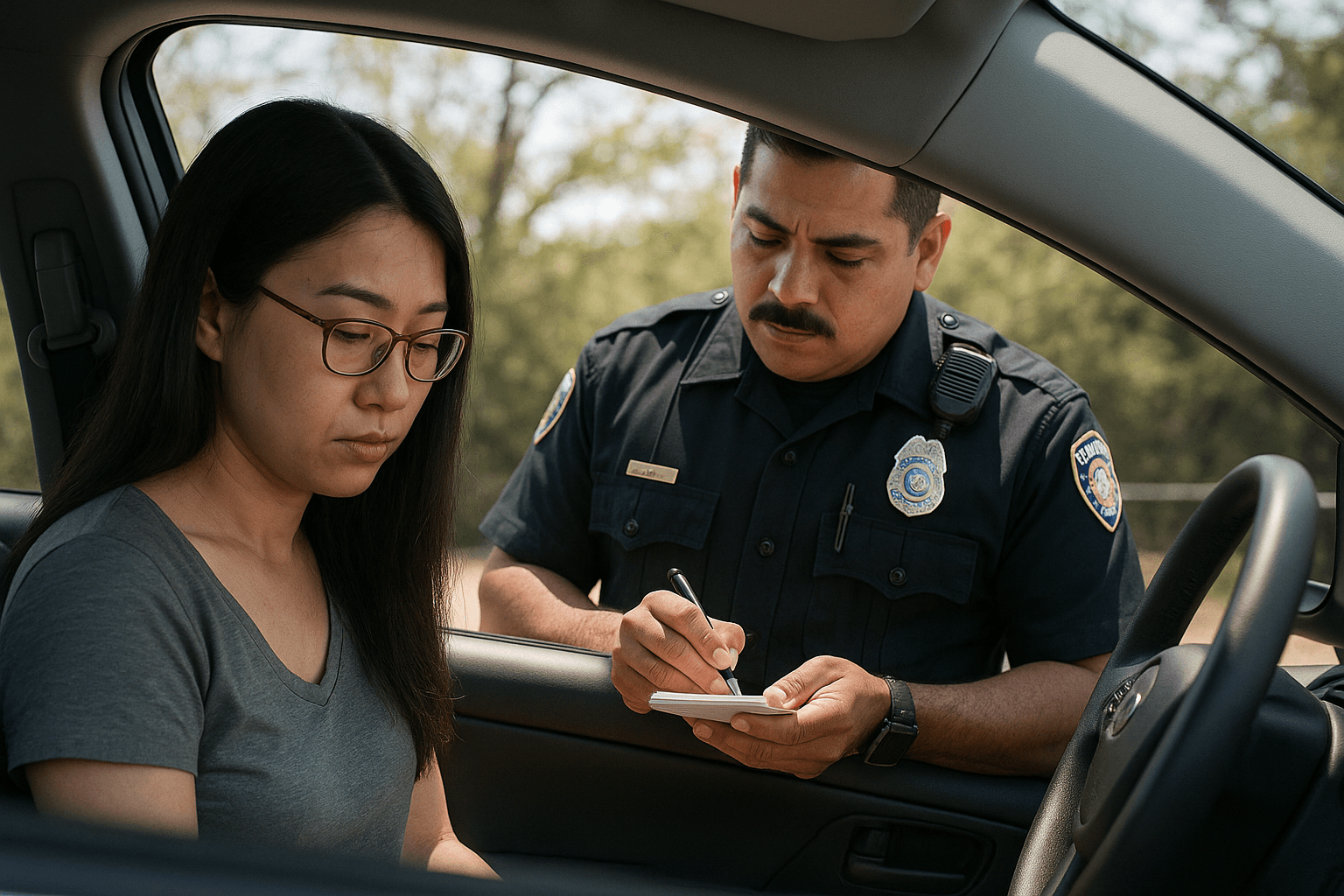
Police enforce work-permit restrictions during every traffic stop. The officer checks the timestamp against your permit's approved hours and routes. If you're outside the window—commuting at 10 p.m. when your permit allows 6 a.m. to 6 p.m., for example—the violation is immediate.
Most states issue a citation for driving under suspension even though you hold a restricted permit. The permit didn't fail to cover you; you violated its terms. That distinction matters because it triggers the same criminal penalties as driving with no license at all.
The officer typically confiscates the permit on scene. Some states allow you to continue driving to complete the trip; others impound the vehicle immediately. Either way, the permit stops working the moment the citation is written.
The Dual Consequence Structure Most Drivers Don't Expect
Work-permit violations trigger two separate consequences: administrative revocation by the state licensing agency and criminal prosecution for the underlying citation. The administrative consequence happens first.
Your state's DMV or equivalent agency revokes the permit within 5–10 business days of the citation. Most states add 30 to 90 days to your original suspension period automatically. A few states—Ohio, Indiana, Pennsylvania—restart the full suspension clock from zero, meaning a DUI suspension that had 4 months remaining now runs 12 months from the violation date.
The criminal charge proceeds separately. Driving under suspension is typically a misdemeanor carrying fines of $500–$2,500, possible jail time of 1–30 days, and points added to your driving record. If the underlying suspension was DUI-related, prosecutors sometimes charge the violation as a probation breach, which carries heavier sentencing.
You cannot use the work permit for any purpose after revocation—not even the originally approved commute. Driving to work the next day becomes driving under suspension again, compounding the problem.
Compare car insurance rates in your state
Get quotes from licensed carriers — no obligation, no spam, results in minutes.
Get Your Free Quote✓ No Obligation Required✓ Licensed Carriers Only✓ Available Nationwide✓ Free to Compare
Why 'Close Enough' Timing and Route Violations Both Count
Judges enforce permit restrictions literally. Arriving at work 15 minutes before your approved start time is a violation. Stopping at a gas station 2 miles off the direct commute route is a violation. Taking your child to school when your permit lists only work and medical appointments is a violation.
The permit approval process requires you to document exact hours and exact routes for a reason: the state is granting an exception to your suspension, not flexibility. Officers and prosecutors treat deviations as intentional because the restrictions were your own submission.
Some drivers assume employers will defend them if the violation happened during job-related driving. That rarely works. Unless your permit explicitly listed job-site travel or delivery routes—and most work permits don't—your employer's confirmation that you were working doesn't change the legal outcome.
What the Timeline Looks Like After a Violation
The citation triggers a mandatory administrative review. Your state DMV receives the police report within 3–5 business days. The review is not a hearing—you don't get to argue that the violation was minor or necessary. The agency checks whether the citation time and location fall outside your approved restrictions. If yes, the permit is revoked.
You receive a revocation notice by mail, typically within 10 business days of the citation. The notice includes the new suspension end date. Most states do not allow you to reapply for another work permit during the extension period. A few states—Texas, Oklahoma, Georgia—allow a second application after 90 days if you complete additional education or treatment requirements.
The criminal case proceeds on a separate timeline. Your arraignment is typically scheduled 30–45 days after the citation. You can plead guilty and accept the penalties, or contest the charge. Contesting rarely succeeds unless the officer's documentation of time and location contains factual errors.
If you're convicted, the court adds points to your record and may impose jail time. Those points count toward future insurance rate calculations even after your suspension ends. The conviction also becomes a permanent record that future employers and insurers see.
Whether SR-22 Filing Remains Active After Permit Revocation
Your SR-22 filing obligation does not pause when your work permit is revoked. If your underlying suspension required SR-22—which most DUI and uninsured-driving suspensions do—you must maintain continuous coverage throughout the full suspension period, including any extension.
Allowing your SR-22 to lapse during the extension triggers a separate suspension for noncompliance. That suspension runs consecutively, not concurrently. A 60-day extension for the permit violation plus a 90-day suspension for SR-22 lapse means 150 total days added to your license ineligibility.
Some drivers cancel their policies after permit revocation, assuming they won't drive during the extension. That cancellation generates an SR-22 lapse notice to the state within 48 hours. The state adds the noncompliance suspension immediately.
Maintaining SR-22 during a period when you cannot legally drive feels economically wasteful, but it's procedurally required. Non-owner SR-22 policies typically cost $40–$80 per month and keep your filing active without insuring a vehicle.
What Happens to Your Job When the Permit Is Revoked
Most employers terminate employees who lose work-driving privileges, especially if the job requires regular vehicle use. The work permit was the condition that allowed your continued employment; its revocation removes that condition.
Some employers offer unpaid leave or temporary reassignment to non-driving roles. That accommodation is voluntary—no state labor law requires it. If your job description included driving as an essential function, the employer can terminate immediately without wrongful termination risk.
If you were using a company vehicle under the work permit, the employer's commercial auto policy typically excludes coverage for restricted-license drivers who violate their permit terms. That means any accident you caused while driving outside approved hours could expose the employer to uninsured liability. Employers terminate to cut that risk.
You cannot argue that losing your job creates hardship grounds for a new permit. Most states explicitly prohibit reapplication after a violation-based revocation until the extension period completes.
Getting Back to Legal Driving After the Extension Ends
Once the extension period completes, your eligibility to reinstate depends on your state's original suspension requirements. If the underlying suspension required completion of DUI education, alcohol treatment, or an ignition interlock device installation, those requirements remain.
You must satisfy all original conditions plus pay the revocation penalty—typically an additional reinstatement fee of $100–$300 on top of the original suspension reinstatement fee. Some states require you to retake the written and road tests if your total suspension period exceeded 12 months.
Your SR-22 filing must remain active through reinstatement and for the full filing period your state requires—usually 3 years from the original suspension start date. The violation does not restart the SR-22 clock in most states, but a few jurisdictions (Florida, Virginia) extend the filing requirement by the same number of days the suspension was extended.
Once reinstated, your insurance rates reflect both the original violation and the driving-under-suspension conviction. Expect premiums $180–$350 per month for minimum liability coverage, depending on your state and the specifics of both violations. Those rates typically remain elevated for 3–5 years.