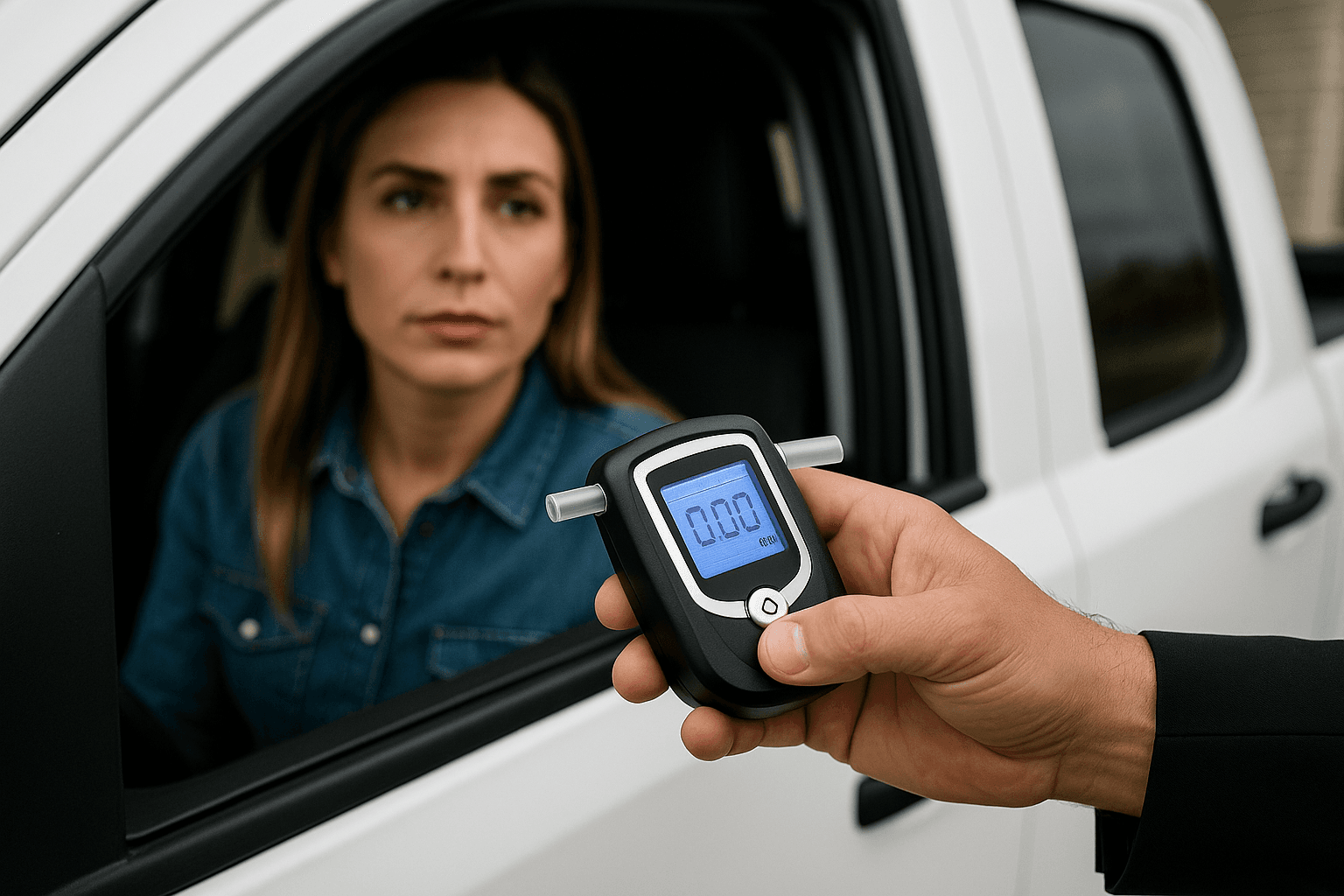
Colorado's probationary license system uses electronic monitoring to track time and route violations—not just traffic stops. A single drive outside your approved work window triggers revocation before you realize DMV has logged it.
What Colorado Calls a Probationary License and How Time Restrictions Work
Colorado issues an Early Reinstatement / Probationary License for drivers who cannot wait out the full suspension period. This is the state's formal name for what other states call a hardship or restricted license. For DUI-related suspensions, Colorado requires an ignition interlock device (IID) as a condition of probationary driving privileges.
The probationary license restricts driving to specific purposes: commute to and from work, school, medical appointments, court-ordered programs, and essential household duties. Colorado DMV defines approved hours at the time of issuance based on documentation you submit—typically your employer's verification letter stating your work schedule. If you work 8 AM to 5 PM Monday through Friday, your approved driving window is typically those hours plus a reasonable commute buffer (30-45 minutes before and after shift start/end).
Colorado does not issue a physical document listing your approved hours. The restrictions are recorded in DMV's administrative file and linked to your IID account. You are expected to know your approved driving purposes and stay within them. This creates the first failure mode: many drivers assume that because no one is watching, minor deviations won't matter. That assumption is wrong.
How Colorado Tracks Violations Without Traffic Stops
Colorado's ignition interlock providers (Smart Start, Intoxalock, LifeSafer, and others approved by DMV) transmit daily driving logs to the state electronically. Every time you start your vehicle, the IID records the timestamp, location, and test result. These logs are reviewed by DMV compliance officers on a monthly cycle and flagged for pattern violations.
A single drive outside your approved work hours triggers a compliance violation flag. If you start your vehicle at 11 PM on a Saturday, and your probationary license restricts you to work commute Monday through Friday 7 AM to 6 PM, that start event is a logged violation. You will not know immediately—the violation appears in your IID provider's monthly report to DMV, and DMV processes it within 30-45 days.
Colorado DMV sends a notice of violation to your last address on file. The notice states the date, time, and nature of the violation and gives you 10 days to request a hearing. If you do not respond within 10 days, your probationary license is automatically revoked. You return to full suspension status and lose eligibility for early reinstatement for the remainder of your suspension period. There is no warning before the first violation notice.
Compare car insurance rates in your state
Get quotes from licensed carriers — no obligation, no spam, results in minutes.
Get Your Free Quote✓ No Obligation Required✓ Licensed Carriers Only✓ Available Nationwide✓ Free to Compare
What Counts as Driving Outside Approved Hours
Colorado's probationary license approved-purposes list is more restrictive than most drivers expect. Work commute means the direct route from home to workplace and back. Stopping at a gas station on the way to work is typically within approved purposes if it is on your commute route and occurs during your approved window. Stopping at a friend's house after work is not.
Weekend driving is generally not approved unless your work schedule includes weekend shifts and your employer verification letter documents those shifts. Running errands on Saturday—even essential errands like grocery shopping—falls outside approved purposes for most probationary licenses. Colorado law allows household duties as an approved purpose, but you must request that purpose specifically at the time of application and document it (for example, a recurring medical appointment every other Saturday).
If your job requires driving during work hours (delivery, sales calls, service appointments), you must document that requirement in your employer verification letter and request approval for work-hours driving in addition to commute driving. Colorado typically approves this for employment purposes, but the IID logs will show midday starts and stops. Without documentation on file, those midday trips look like violations.
The Employer Coordination Problem Most Drivers Miss
Your employer's verification letter defines your approved driving window. If your work schedule changes—shift reassignment, mandatory overtime, new job site location—you must file an amended request with Colorado DMV before driving the new schedule. Driving the new hours without DMV approval is a violation even if the hours are legitimate work purposes.
Colorado DMV requires 10-15 business days to process schedule change requests. That lag creates a trap: your employer assigns you to a 6 AM start time, you need to drive at 5:15 AM starting Monday, but your approved window doesn't start until 6:30 AM. If you drive the new schedule before DMV processes your amendment, every drive is logged as a time violation. The solution is to request the change in writing as soon as you know your schedule will shift and carry a copy of your employer's updated letter in your vehicle until DMV confirms the amendment.
Some employers will not retain workers with probationary licenses because of the coordination burden and liability exposure. Colorado law does not require employers to accommodate restricted licenses. If your job requires flexible hours, night shifts, or frequent schedule changes, a probationary license may not be viable even if DMV approves your initial application.
What Happens After a Violation Notice and How to Request a Hearing
Colorado DMV's violation notice gives you 10 calendar days from the date printed on the notice to request a hearing. The hearing is administrative, conducted by a DMV hearing officer, not a judge. You must request the hearing in writing by mail or in person at a DMV office—phone requests are not accepted. If you miss the 10-day window, your probationary license is revoked automatically with no further review.
At the hearing, DMV presents the IID log showing the date, time, and location of the flagged drive. You present evidence that the drive was within approved purposes or that the log is incorrect (which is rare—IID timestamp data is considered reliable unless you can show device malfunction). If you argue that you thought the drive was allowed but did not have prior DMV approval, that argument typically fails. Colorado requires prior approval for any driving outside the purposes listed in your original probationary license grant letter.
If the hearing officer finds a violation occurred, your probationary license is revoked and you return to full suspension status. You cannot reapply for early reinstatement until the original suspension period ends. If your original suspension was 12 months and you lose probationary privileges at month 6, you serve the remaining 6 months with no driving privileges. Colorado's position is that probationary driving is a privilege, not a right, and violation of the terms forfeits that privilege.
Insurance Requirements and SR-22 Filing During Probationary Period
Colorado requires SR-22 insurance as a condition of probationary license approval for most suspension types, including DUI, uninsured driving, and some points-related suspensions. SR-22 is a filing your insurer submits to Colorado DMV certifying that you carry at least the state's minimum liability coverage: $25,000 per person, $50,000 per accident for bodily injury, and $15,000 for property damage.
If your SR-22 filing lapses during the probationary period—because you miss a payment, your insurer cancels the policy, or you switch carriers without maintaining continuous SR-22—Colorado DMV suspends your probationary license immediately. The suspension is automatic. You receive a notice by mail but your driving privileges end the day the lapse is reported to DMV, not the day you receive the notice. Reinstatement after an SR-22 lapse requires paying a $95 reinstatement fee, filing a new SR-22, and in some cases restarting the probationary license application process.
Premiums for non-standard auto insurance with SR-22 filing in Colorado typically range from $140 to $240 per month for drivers with a DUI-related suspension. Clean-record drivers pay $85 to $140 per month for the same coverage. The SR-22 filing itself costs $15 to $35, paid to your insurer as a one-time or annual fee. Maintaining continuous coverage is critical—a single lapse restarts the three-year SR-22 filing period from zero.
CDL Holders and the Commercial Driving Exclusion
Colorado's probationary license does not cover commercial driving. If you hold a commercial driver's license (CDL) and your job requires operating a commercial motor vehicle, a probationary license allows you to commute to work in your personal vehicle but does not allow you to drive the commercial vehicle itself. This creates an impossible situation for CDL holders whose job is driving—truckers, bus drivers, delivery drivers operating vehicles over 26,000 pounds.
Federal Motor Carrier Safety Administration (FMCSA) regulations disqualify CDL holders from operating commercial vehicles during any period of suspension or restriction on their personal driver's license. Colorado cannot override federal law. Even if Colorado DMV were to approve work-purposes driving in a commercial vehicle (which it does not), federal disqualification would still apply. The practical result: CDL holders facing suspension typically cannot work in commercial driving roles until the suspension period ends and full driving privileges are restored.
Some CDL holders switch to non-commercial roles (warehouse, dispatch, office) during the suspension period to preserve employment with the same company. Others change industries temporarily. If your CDL is your income and you face suspension, consult an attorney about whether occupational hardship provisions in your industry (e.g., agricultural exemptions, intrastate-only driving) might apply. Most will not.