Virginia DUI offenders must petition the court for a restricted license, not the DMV. Court-defined driving hours and routes vary by jurisdiction, and judges deny most petitions lacking employer verification letters or ASAP enrollment proof.
Virginia DUI Restricted Licenses Come from Courts, Not DMV
Virginia requires DUI offenders to petition the court for a restricted license during the mandatory revocation period. DMV does not issue restricted licenses for DUI convictions. This is a critical procedural split most drivers miss: DMV handles administrative suspensions for insurance lapses or unpaid tickets, but the court that convicted you controls DUI-based restricted driving privileges under Va. Code § 18.2-271.1.
The petition filing happens in the same circuit court that handled your DUI case. You file a motion requesting restricted driving privileges, submit required documentation, and attend a hearing where the judge decides whether to grant the petition and what restrictions to impose. Outcomes vary substantially by jurisdiction and individual judge. Some circuits grant restricted licenses routinely for first offenses with clean prior records; others impose stricter standards or deny petitions for employment-only purposes.
Filing the petition does not guarantee approval. Judges evaluate your employment need, your compliance with ASAP enrollment, your insurance filing status (FR-44, not SR-22), and whether you've paid all court-ordered fines and restitution. Missing any of these elements typically results in denial without a second hearing.
What Documentation the Court Requires Before Your Hearing
Virginia courts require proof of hardship before they will consider granting a restricted license. The petition itself must include an employer verification letter on company letterhead stating your job title, work address, required work hours, and a statement that driving is essential to your employment. Generic letters or letters that do not specify exact hours and routes are frequently rejected.
You must also show proof of enrollment in Virginia's Alcohol Safety Action Program (ASAP). ASAP is mandatory for all DUI offenders seeking restricted driving privileges. The court will not grant a restricted license without confirmation that you have been referred by the court and have begun attending classes. Violation of ASAP terms during the restriction period triggers immediate license revocation.
Insurance proof must be FR-44, not SR-22. Virginia is one of only two states requiring FR-44 certificates for DUI suspensions. FR-44 mandates liability limits of 50/100/40, double the standard SR-22 minimums of 25/50/20. Your carrier files the FR-44 certificate electronically with DMV, and you must present proof of active FR-44 coverage at your court hearing. Most carriers writing FR-44 in Virginia include Allstate, Geico, Progressive, Nationwide, State Farm, Bristol West, Dairyland, National General, The General, and USAA.
Finally, you must pay the $145 DMV reinstatement fee before the court will issue the restricted license order. The court cannot waive this fee. Bring the DMV receipt to your hearing.
Compare car insurance rates in your state
Get quotes from licensed carriers — no obligation, no spam, results in minutes.
Get Your Free Quote✓ No Obligation Required✓ Licensed Carriers Only✓ Available Nationwide✓ Free to Compare
How Judges Define Approved Hours and Routes
Virginia law does not establish uniform statewide hours or route restrictions for DUI-based restricted licenses. The judge defines your permitted driving purposes, times, and routes in the court order. Approved purposes typically include travel to and from work, ASAP classes, court-ordered treatment programs, medical appointments, and religious services. Some judges include school pickup and grocery shopping; others limit the license strictly to employment and court-ordered activities.
Work-hour restrictions are set by the judge based on your employer's verification letter. If your letter states you work Monday through Friday, 8 a.m. to 5 p.m., the judge will typically grant driving privileges for those exact hours plus a reasonable commute buffer—usually 30 to 60 minutes before and after your shift. If you work variable hours or overnight shifts, your employer letter must state that explicitly, and the judge may impose broader time windows or require weekly schedule verification.
Route restrictions are also court-defined. Most judges do not specify exact street-by-street routes, but the order will state that travel must be direct and by the most reasonable path between your home, workplace, and other approved locations. Driving outside your approved purposes, hours, or routes is a Class 1 misdemeanor in Virginia, punishable by up to 12 months in jail and immediate revocation of your restricted license.
Ignition Interlock Is Mandatory for the Entire Restriction Period
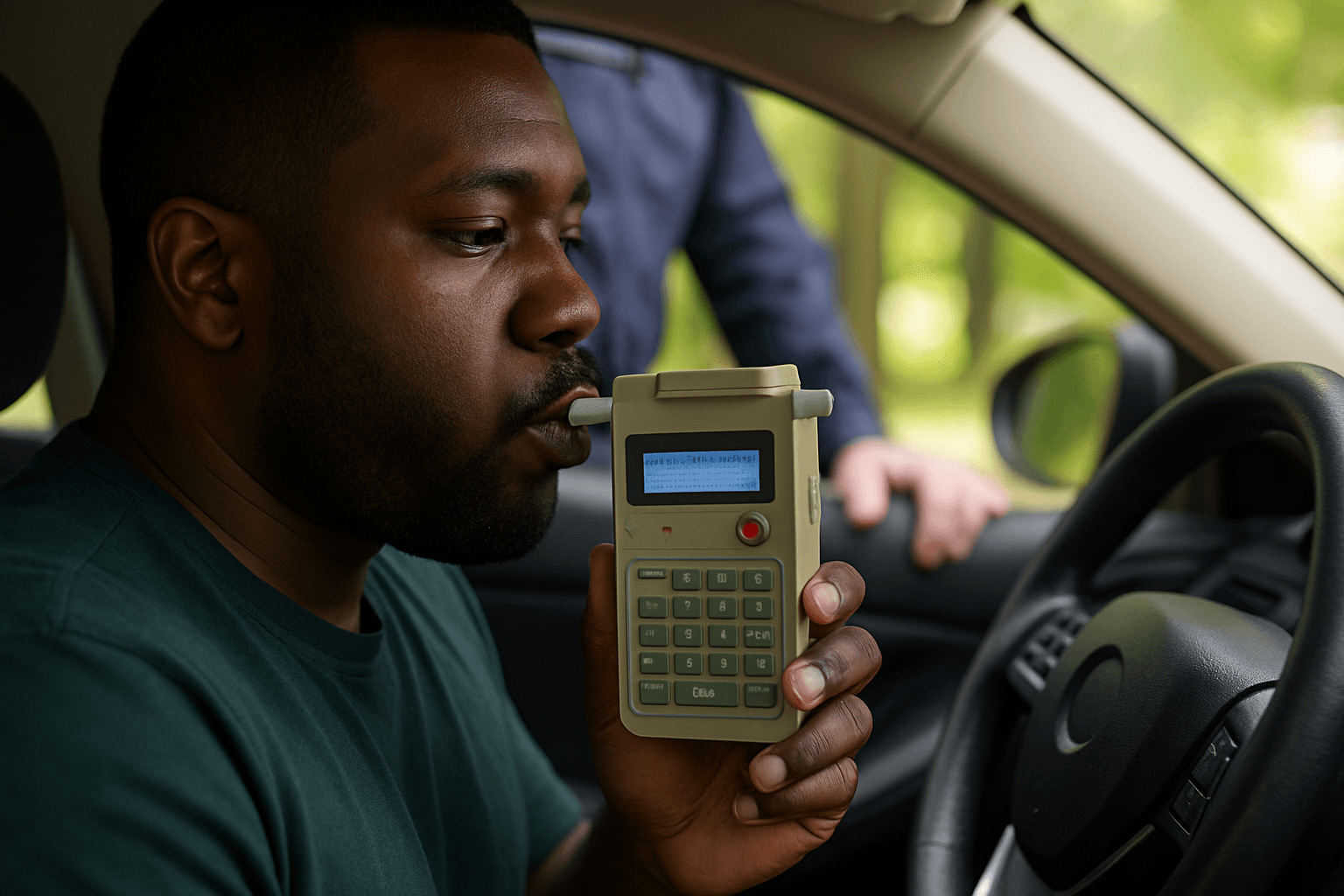
Virginia requires ignition interlock device (IID) installation for the entire duration of any DUI-based restricted license. This is not optional, and there is no income-based waiver. The court order granting your restricted license will specify IID as a condition, and you must install the device before you begin driving on the restricted license.
IID installation costs typically range from $70 to $150, with monthly monitoring fees of $60 to $90. You pay these costs directly to the IID provider; neither the court nor DMV subsidizes them. The device requires you to provide a breath sample before the engine will start, and random rolling retests while driving. Failed tests or attempts to tamper with the device trigger violations reported to both the court and DMV, resulting in restricted license revocation.
Virginia law does not allow restricted license holders to drive any vehicle not equipped with an IID. If your employer requires you to drive a company vehicle for work purposes, that vehicle must also have an IID installed, or your restricted license does not authorize you to drive it. Most employers will not install IID on company vehicles due to liability and insurance constraints, which means your restricted license cannot cover job-related driving in employer-owned vehicles.
Second DUI Convictions Carry a One-Year Hard Suspension
A second DUI conviction within 10 years results in a mandatory four-year license revocation in Virginia. For the first year of that revocation, no restricted license is available under any circumstances. This is a hard suspension period with no judicial discretion to shorten it.
After the first year, you may petition the court for a restricted license for the remaining three years of the revocation. The petition process and documentation requirements are the same as for a first offense, but judges impose stricter scrutiny on second-offense petitions. Employment verification alone is rarely sufficient; judges typically require documented proof of sustained ASAP compliance, completion of inpatient or outpatient treatment programs, and letters of support from sponsors or counselors.
A third DUI conviction within 10 years results in indefinite license revocation with no restricted license available at all under Va. Code § 18.2-271.1. Your only path to driving privileges is full reinstatement after the statutory revocation period, which requires completing all court-ordered programs, paying all fines and fees, and petitioning for reinstatement through DMV after the revocation term expires.
FR-44 Filing Lapse Revokes Your Restricted License Immediately
Virginia DMV monitors FR-44 filings electronically. If your carrier cancels your policy for nonpayment or any other reason, DMV receives notification within 24 hours and automatically revokes your restricted license. There is no grace period, and you will not receive advance warning from DMV before the revocation takes effect.
Reinstating a restricted license after FR-44 lapse requires filing a new petition with the court. You cannot simply obtain new insurance and resume driving. The court treats FR-44 lapse as a violation of the original restricted license order, and most judges will deny reinstatement petitions for at least 30 to 90 days after the lapse, regardless of whether you have since obtained new coverage.
FR-44 premiums in Virginia typically range from $140 to $280 per month for DUI offenders, depending on age, county, and prior insurance history. Setting up automatic payment with your carrier is the only reliable way to avoid lapse. Missing a single payment triggers cancellation, and once DMV revokes your restricted license for lapse, the court is unlikely to grant a second petition during the same revocation period.
What Happens If You Drive Outside Your Approved Restrictions
Driving outside the court-defined purposes, hours, or routes on your restricted license is a separate criminal offense in Virginia. If you are stopped by law enforcement while driving for a non-approved purpose or outside your approved hours, you will be charged with driving on a suspended license under Va. Code § 46.2-301, a Class 1 misdemeanor.
Conviction carries penalties of up to 12 months in jail, a fine of up to $2,500, and immediate revocation of your restricted license. The court will not issue another restricted license during the remainder of your DUI revocation period. You will serve the full revocation term without any driving privileges.
Law enforcement officers have access to DMV records showing your restricted license status and the court-defined restrictions. If your employer letter stated you work Monday through Friday and you are stopped on a Saturday, the officer will see the discrepancy immediately. There is no verbal explanation that satisfies the statute. The violation is absolute.