You were suspended in Utah and need to drive to work. The court controls the Limited License process — the DLD just reflects the order. Here's how to petition, what documentation the court requires, and how IID and SR-22 setup actually work before you can drive again.
Why Utah's Limited License Process Is Court-Controlled, Not DMV-Administered
Most states route hardship-license applications through their DMV or equivalent licensing agency. Utah does not. The Utah Driver License Division (DLD) administers your suspension and will reflect the Limited License on your driving record once issued, but the DLD does not evaluate petitions, set approved routes, or grant work-driving relief. The court that has jurisdiction over your case controls all of that.
This matters because you cannot walk into a DLD office and file a hardship application. You petition the court. The judge evaluates your need, reviews your documentation, and issues an order specifying exactly when, where, and under what conditions you can drive. The DLD receives that court order and updates your record accordingly. The administrative role is limited to record-keeping and compliance tracking.
Because the court controls the process, outcomes vary significantly by county and judge. There is no uniform statewide fee schedule, no fixed list of approved purposes, and no standardized denial criteria published by the DLD. What works in Salt Lake County may not work in Washington County. What one judge approves for DUI cases, another may deny for points-based suspensions. The procedural framework is statutory, but the discretion is judicial.
What Documentation the Court Requires for a Work-Driving Petition
The court expects a petition that proves need, not just asserts it. At minimum, you need a formal written petition filed with the court, proof of employment or another essential travel need (medical appointments, court-ordered programs, education), and an SR-22 financial responsibility certificate filed with the DLD before the court will consider issuing a Limited License.
Most petitions include an employer verification letter on company letterhead stating your job title, work address, required work hours, and confirmation that driving is necessary to perform your job or commute to your workplace. If your job requires driving during work hours (delivery, sales, service calls), the letter should specify that. If the suspension was DUI-triggered, expect the court to require proof of enrollment in or completion of a DUI education program before granting relief.
Utah Code Section 41-6a-530 requires ignition interlock device (IID) installation for DUI-related suspensions as a condition of Limited License issuance. You need proof of IID installation — typically a vendor receipt or compliance report from an approved installer — before the court will sign the order. The court may also require documentation of other essential travel needs: medical appointment schedules, college enrollment verification, or proof of court-ordered treatment programs. Generic claims of hardship do not survive judicial scrutiny. The documentation proves the claim.
Compare car insurance rates in your state
Get quotes from licensed carriers — no obligation, no spam, results in minutes.
Get Your Free Quote✓ No Obligation Required✓ Licensed Carriers Only✓ Available Nationwide✓ Free to Compare
How Ignition Interlock and SR-22 Setup Work Before You Can Drive
For DUI-related suspensions, Utah law mandates IID installation before you can legally drive under a Limited License. You arrange installation through a DLD-approved vendor, pay the installation fee (typically $75 to $150) and monthly monitoring fee (approximately $60 to $90 per month), and obtain a compliance report from the vendor proving the device is installed and calibrated. That report is part of your court petition packet.
The SR-22 certificate is not optional. Utah requires SR-22 filing for DUI, uninsured driving, and most insurance-related suspensions. You contact an auto insurance carrier that writes high-risk policies in Utah, purchase a policy that meets or exceeds Utah's minimum liability limits ($25,000 bodily injury per person, $65,000 bodily injury per accident, $15,000 property damage), and request SR-22 filing. The carrier electronically files the SR-22 with the DLD, typically within 24 to 48 hours. You need proof of that filing — either a confirmation letter from the carrier or a DLD record screenshot showing active SR-22 status — before the court will issue the Limited License order.
Utah is a no-fault state, which means your policy must also include Personal Injury Protection (PIP) coverage with a minimum of $3,000 per person. The SR-22 filing confirms you carry both liability and PIP minimums. If your policy lapses at any point during the SR-22 filing period (typically 3 years for DUI), the carrier notifies the DLD electronically, and your Limited License is subject to immediate revocation.
What Routes and Hours the Court Actually Approves
The Limited License order specifies exactly where and when you can drive. Most judges approve direct travel between home and work during your documented work schedule, plus a reasonable buffer (typically 30 to 60 minutes before and after your shift to account for variable start times and commute conditions). Some orders include travel to and from court-ordered DUI programs, medical appointments, or educational institutions if you provide supporting documentation.
If your job requires driving during work hours — not just commuting to a fixed workplace — the court may approve broader route parameters, but you need employer documentation that specifies the job's driving requirements. Delivery drivers, home health aides, sales representatives, and service technicians fall into this category. The employer letter must describe the geographic service area and the business necessity of the driving. Generic permission to "drive for work purposes" is not enough.
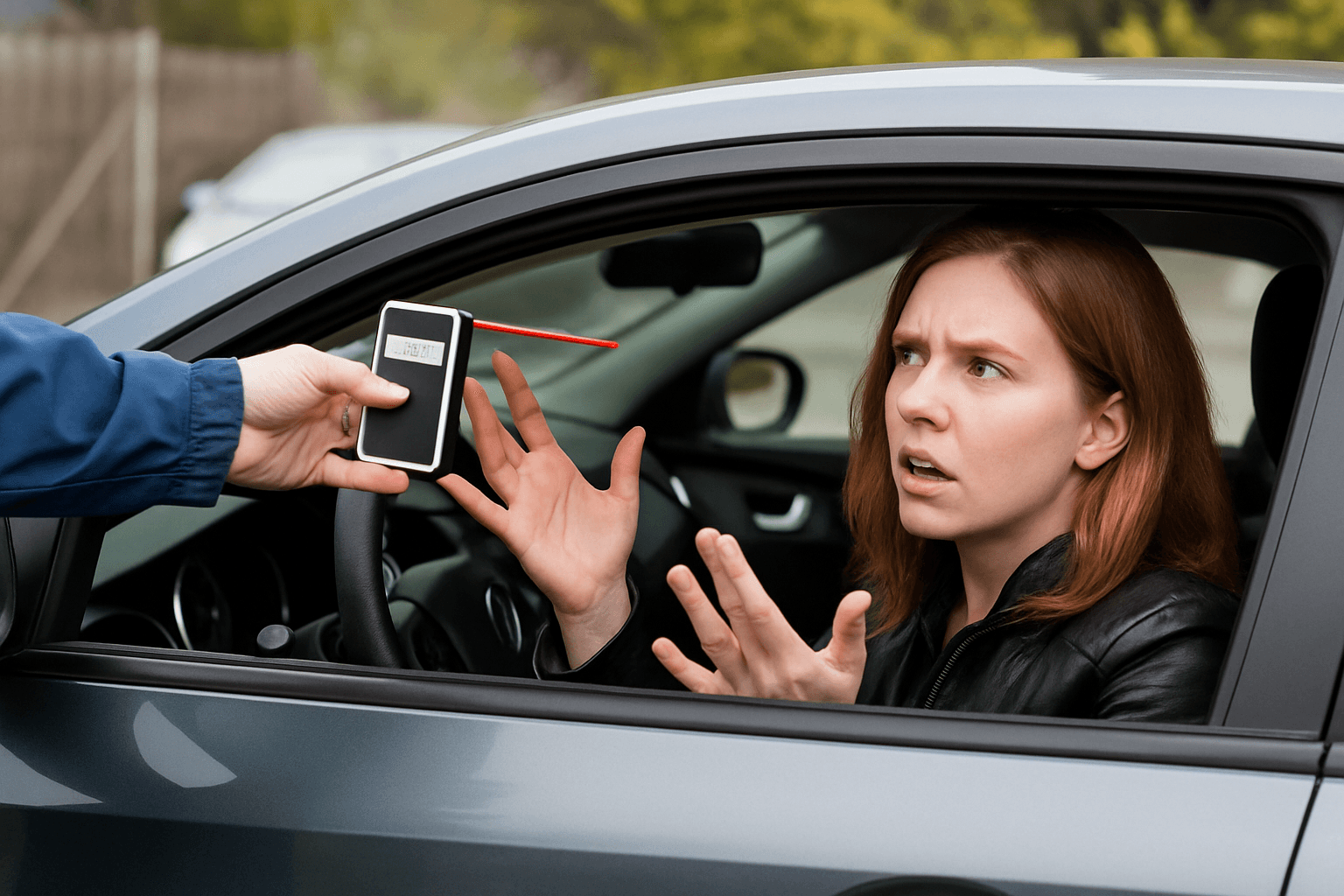
The court can and does impose time restrictions separate from route restrictions. Some orders allow driving only during daylight hours. Others prohibit driving on weekends or holidays unless the work schedule specifically requires it. If you violate the time or route restrictions — even once — the court can revoke the Limited License without further hearing. Law enforcement officers can verify Limited License restrictions in real time through the DLD database. A traffic stop outside your approved hours or off your approved route triggers an immediate violation report to the court.
Why CDL Holders Cannot Use a Limited License for Commercial Driving
If you hold a commercial driver's license (CDL) and were suspended following a DUI or other disqualifying event in your personal vehicle, the Limited License does not restore your CDL privileges. Federal Motor Carrier Safety Administration regulations prohibit the use of state-issued hardship or restricted licenses to operate commercial motor vehicles. Utah's Limited License is a personal-driving privilege only.
This creates a functional problem for CDL holders whose jobs require commercial driving. You may be able to petition the court for a Limited License to commute to your workplace, but you cannot legally operate a commercial vehicle once you arrive. If your employer requires CDL operation as a condition of employment, the Limited License does not solve the job-protection problem. Some employers will reassign CDL drivers to non-driving roles during the suspension period; others will not.
CDL reinstatement follows a separate federal and state regulatory track. Depending on the disqualifying event, you may face a mandatory CDL disqualification period (1 year for a first DUI, 3 years for a hazmat-related DUI, lifetime for a second DUI) that runs concurrently with your personal-license suspension but is not shortened by Limited License issuance. Restoring your CDL requires completing the disqualification period, meeting all DLD reinstatement requirements (including SR-22 filing and reinstatement fees), and in some cases retaking the CDL knowledge and skills tests.
How Utah's 0.05% BAC Threshold Changes the DUI Suspension Landscape
Utah Code Section 41-6a-502 sets the legal BAC limit at 0.05%, the lowest in the United States. This means drivers can be arrested and administratively suspended at BAC levels that would not trigger DUI consequences in any other state. The lower threshold increases the volume of DUI-related suspensions and corresponding Limited License petitions.
The administrative per se suspension kicks in automatically upon arrest if your BAC is 0.05% or higher. The DLD suspends your license within 30 days of the arrest unless you request a hearing within 10 days of the notice. The administrative suspension runs independently of any criminal court proceedings. You can face both an administrative DLD suspension and a separate judicial suspension upon conviction. The Limited License petition addresses the administrative suspension, but if you are later convicted, the court may impose a separate or concurrent suspension that modifies or revokes the Limited License.
Because Utah's threshold is lower, more drivers are suspended for BAC levels close to the legal limit. Some petition the court arguing the BAC was just above 0.05% and that the stop or test administration was flawed. Those legal arguments are separate from the Limited License petition. The court evaluating your work-driving need does not retry the DUI case or suppress evidence. The petition assumes the suspension is valid and asks for limited relief. If you are challenging the suspension itself, that happens in a separate DLD hearing or criminal court proceeding.
What Happens If You Are Caught Driving Outside Approved Limits
Violating the terms of a Limited License in Utah triggers revocation without a second hearing in most cases. The court order specifies the consequences of violation explicitly. If a law enforcement officer stops you outside your approved hours, off your approved routes, or for any traffic violation while driving under a Limited License, the officer files a violation report with the court and the DLD.
The court can revoke the Limited License immediately. You receive notice of revocation, not notice of a hearing to contest the violation. Some judges build a one-violation warning structure into the initial order, but that is discretionary and uncommon. Most orders treat any violation as grounds for automatic revocation. Once revoked, you serve the remainder of your suspension without work-driving relief.
The DLD also treats Limited License violations as separate licensing events. A violation can extend your SR-22 filing requirement, trigger additional reinstatement fees, or in some cases result in a longer overall suspension period. If the violation involved alcohol or drugs, expect the court to deny any future Limited License petitions for the duration of the suspension. The procedural path forward closes after a violation. The cost of ignoring time or route restrictions is not just the revocation — it is the loss of any discretionary relief for the remainder of the suspension period.