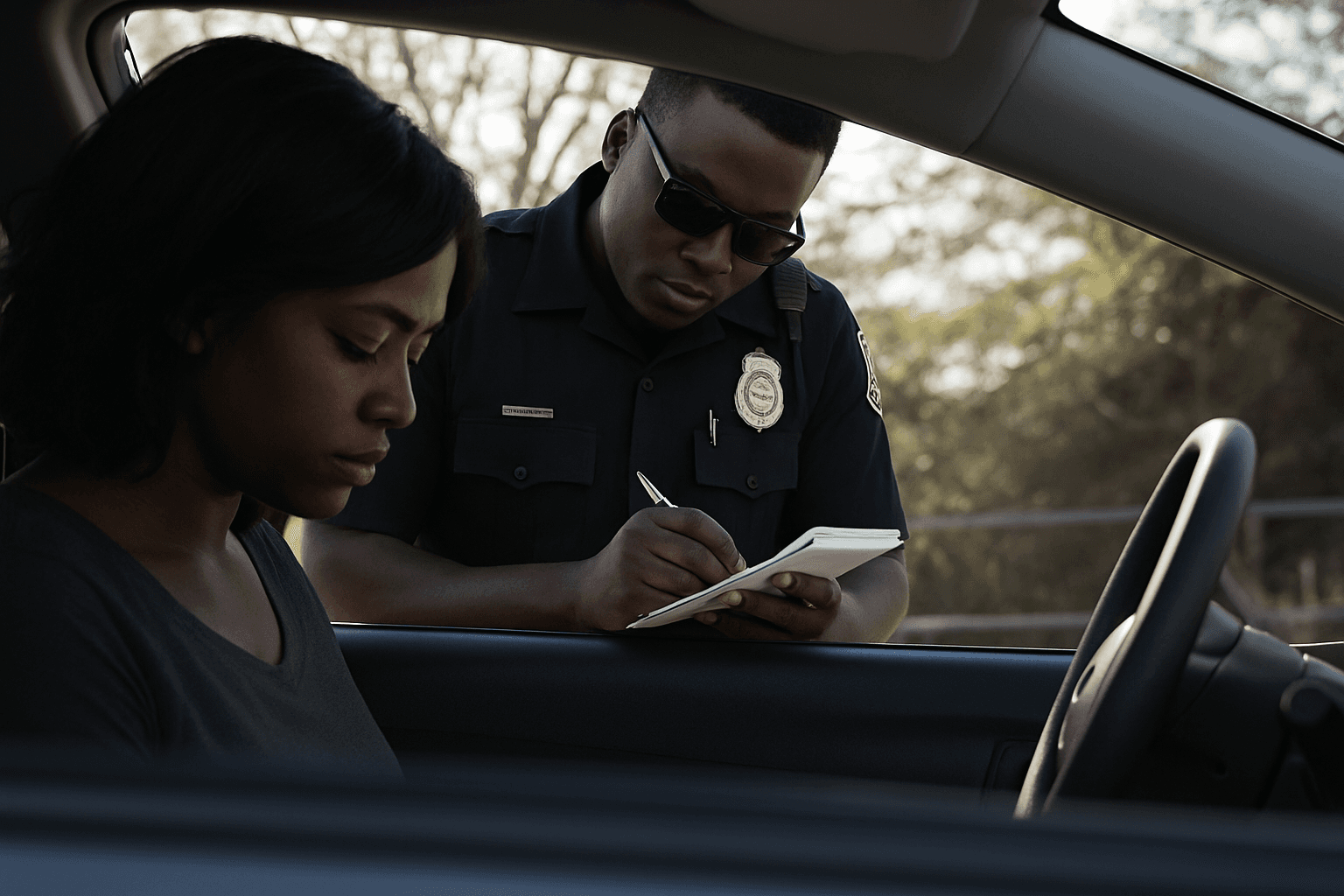
South Dakota requires court approval for restricted driving privileges. The circuit court decides whether your employer letter and documented need justify work-hours driving, and most petitioners don't realize the court has no obligation to grant the petition even when documentation is complete.
Why South Dakota Restricted License Petitions Require Circuit Court Approval
South Dakota does not operate a DMV-administered hardship license program. Under SDCL 32-12-53, restricted driving privileges are granted exclusively through circuit court petition. The court has discretion to approve or deny your petition based on demonstrated need, and approval is never automatic.
This matters because you cannot apply online, submit documentation to a DMV clerk, and receive a yes-or-no answer within a processing window. You file a petition with the circuit court in the county where you reside, the court schedules a hearing if required, and a judge evaluates whether your employment situation justifies limited driving privileges during the suspension period. The judge can impose conditions, restrict hours more narrowly than you requested, or deny the petition entirely.
For DUI-related suspensions, you face a mandatory 30-day hard suspension period before you can petition for restricted privileges. That 30 days runs from the effective date of the administrative revocation or court-ordered suspension, not from the date you decide to file the petition. If you were arrested for DUI and your license was revoked under SDCL 32-23-11 (administrative license revocation for breath test failure or refusal), the 30-day clock started at arrest. Filing your petition on day 31 does not mean you receive a restricted license on day 32.
What Your Employer Letter Must Include for Court Review
The circuit court requires proof of employment or essential need as part of your petition. An employer letter serves as verification that you have a legitimate work-related driving requirement, but the letter alone does not guarantee approval.
Your employer letter should state: your job title, your work schedule (specific days and hours), the physical address of your workplace, whether your job requires driving during work hours (deliveries, client visits, equipment transport), and a confirmation that driving is a condition of continued employment. The letter must be signed by a supervisor, HR representative, or business owner with authority to verify your employment status.
Circuit courts also expect your petition to specify the route you will drive (home address to work address) and the time window you need (for example, 6:00 AM to 6:30 PM Monday through Friday if your shift runs 7:00 AM to 5:00 PM). The court defines route and time restrictions in its order, and those restrictions are legally binding. Driving outside the approved window or taking a detour that is not reasonably necessary puts your restricted license at risk of revocation.
Compare car insurance rates in your state
Get quotes from licensed carriers — no obligation, no spam, results in minutes.
Get Your Free Quote✓ No Obligation Required✓ Licensed Carriers Only✓ Available Nationwide✓ Free to Compare
How Ignition Interlock Affects Your Restricted License Petition
South Dakota requires ignition interlock installation for DUI-related restricted licenses. Under SDCL 32-23-109, the ignition interlock program applies to drivers who have been convicted of DUI or who have had their license administratively revoked for breath test failure or refusal.
You must install an IID in the vehicle you will drive under the restricted license before the court grants the petition. The court order will specify that restricted driving privileges are conditioned on continuous IID compliance, meaning the device must remain installed and functional for the duration of the restricted license period and potentially longer depending on the underlying conviction.
IID installation costs approximately $75 to $150, with monthly monitoring fees of $60 to $90. South Dakota's IID program requires a certified provider, and the device logs every start attempt, every failed breath test, and every tamper event. Violations reported by the IID provider (failed starts, missed rolling retests, disconnection attempts) trigger automatic reporting to the court and can result in immediate revocation of your restricted privileges.
What Happens If the Court Denies Your Petition
The circuit court is not required to grant restricted driving privileges even when you submit complete documentation. Judges evaluate whether your need justifies the public safety risk of allowing someone with a suspended license to drive, and that evaluation is subjective.
Common denial reasons include: prior DUI convictions (repeat offenders face stricter scrutiny), unresolved violations or unpaid fines on your driving record, employment situations where alternative transportation is deemed feasible (for example, urban commutes with public transit access), or employment that requires commercial driving (restricted licenses in South Dakota typically exclude CDL use even for personal-vehicle commuting to a CDL-required job).
If your petition is denied, you can file a new petition after addressing the deficiencies the court identified. Some counties allow re-filing after 30 days; others require waiting until a later stage of your suspension period. You cannot appeal a restricted license denial through the standard appellate process because the granting of restricted privileges is discretionary, not a due process right.
CDL Holders and Commercial Driving Exclusions
South Dakota restricted licenses do not authorize commercial driving. If you hold a CDL and your job requires operating a commercial motor vehicle, a restricted license for personal-vehicle commuting will not allow you to perform the driving duties of your job.
This creates a gap for CDL holders whose employment depends on commercial driving: the restricted license allows you to drive to and from work in a personal vehicle equipped with an IID, but it does not restore your CDL privileges or allow you to drive the company truck, delivery van, or bus once you arrive. Some employers will accommodate this by reassigning CDL drivers to non-driving roles during the suspension period; others will not retain employees who cannot fulfill the primary job function.
If your suspension was triggered by a DUI in a personal vehicle (not a CMV), federal law imposes additional CDL disqualification periods separate from the state suspension. A first-offense DUI disqualifies your CDL for one year under 49 CFR 383.51, and that disqualification runs concurrently with your state license suspension. A restricted license does not shorten the federal CDL disqualification period.
SR-22 Filing Requirements for Restricted License Insurance
South Dakota requires SR-22 filing for DUI-related suspensions, and the SR-22 requirement applies during the restricted license period. You must obtain SR-22 insurance before the court grants your petition, because proof of SR-22 filing is part of the required documentation.
SR-22 is not a type of insurance. It is a certificate filed by your carrier with the South Dakota Division of Motor Vehicles certifying that you carry at least the state minimum liability coverage: $25,000 per person for bodily injury, $50,000 per accident for bodily injury, and $25,000 for property damage. The carrier files the SR-22 electronically, and the DMV monitors it continuously. If your policy lapses or is cancelled, the carrier notifies the DMV immediately, and your restricted license is revoked.
SR-22 filing typically adds $15 to $25 to your monthly premium as a processing fee, but the larger cost increase comes from the underlying suspension. Drivers with DUI suspensions pay approximately $180 to $290 per month for liability coverage with SR-22 filing in South Dakota, compared to $85 to $140 for clean-record drivers. The SR-22 filing requirement lasts for three years from the date of reinstatement in most DUI cases, meaning the filing continues after your restricted license period ends and after your full license is reinstated.
What to Do About Insurance Right Now
Your current carrier may cancel your policy when the suspension takes effect, or they may non-renew at the end of your policy term. Either way, you need coverage that includes SR-22 filing before you can petition for restricted privileges.
Call your current carrier first and ask whether they will continue coverage with SR-22 filing added. If they refuse or quote a rate above $250 per month, compare quotes from carriers that specialize in high-risk coverage: Progressive, Geico, The General, Dairyland, Bristol West, and National General all write SR-22 policies in South Dakota and quote online or by phone. Provide your suspension notice, your employer letter, and the proposed route and time restrictions when requesting quotes so the carrier can confirm coverage will comply with the court's expected order terms.
Once you have a policy in place, the carrier files the SR-22 electronically with the South Dakota DMV. You receive a copy of the SR-22 certificate, and you submit that certificate as part of your restricted license petition to the circuit court. The court will not approve your petition without proof of SR-22 filing, and you cannot drive legally under restricted privileges until the court order is issued and the SR-22 is active.