South Dakota requires circuit court petition for work-driving privileges during suspension. Most drivers miss the mandatory hard-suspension period before eligibility and the employer verification requirements that differ by circuit.
South Dakota Routes Hardship Through Circuit Court, Not DMV
South Dakota does not operate a DMV-administered hardship license program. The circuit court in your county holds exclusive authority to grant restricted driving privileges during suspension. You file a petition with the circuit court, not the Division of Motor Vehicles, and the judge decides whether to approve work-driving access and under what terms.
This creates three immediate complications most drivers miss. First, circuit court procedures vary by county — formatting requirements, filing fees, and hearing timelines differ between Minnehaha County and Pennington County and smaller rural circuits. Second, the circuit court judge has discretion over every aspect of your restricted license: approved hours, approved routes, whether ignition interlock is required beyond statutory minimums, and whether your specific work justification meets the court's threshold. Third, there is no appeals pathway if the judge denies your petition without a substantive legal error — you wait out the suspension or re-petition with stronger documentation.
The DMV's role is limited: after the circuit court issues an order granting restricted driving privileges, you take that court order to the DMV to have the restriction coded onto your license record. The DMV does not evaluate your eligibility, does not set the terms, and cannot override a circuit court denial. If you call the DMV asking about hardship license applications, they will redirect you to the circuit court.
DUI Suspensions Require 30-Day Hard Period Before Petition Eligibility
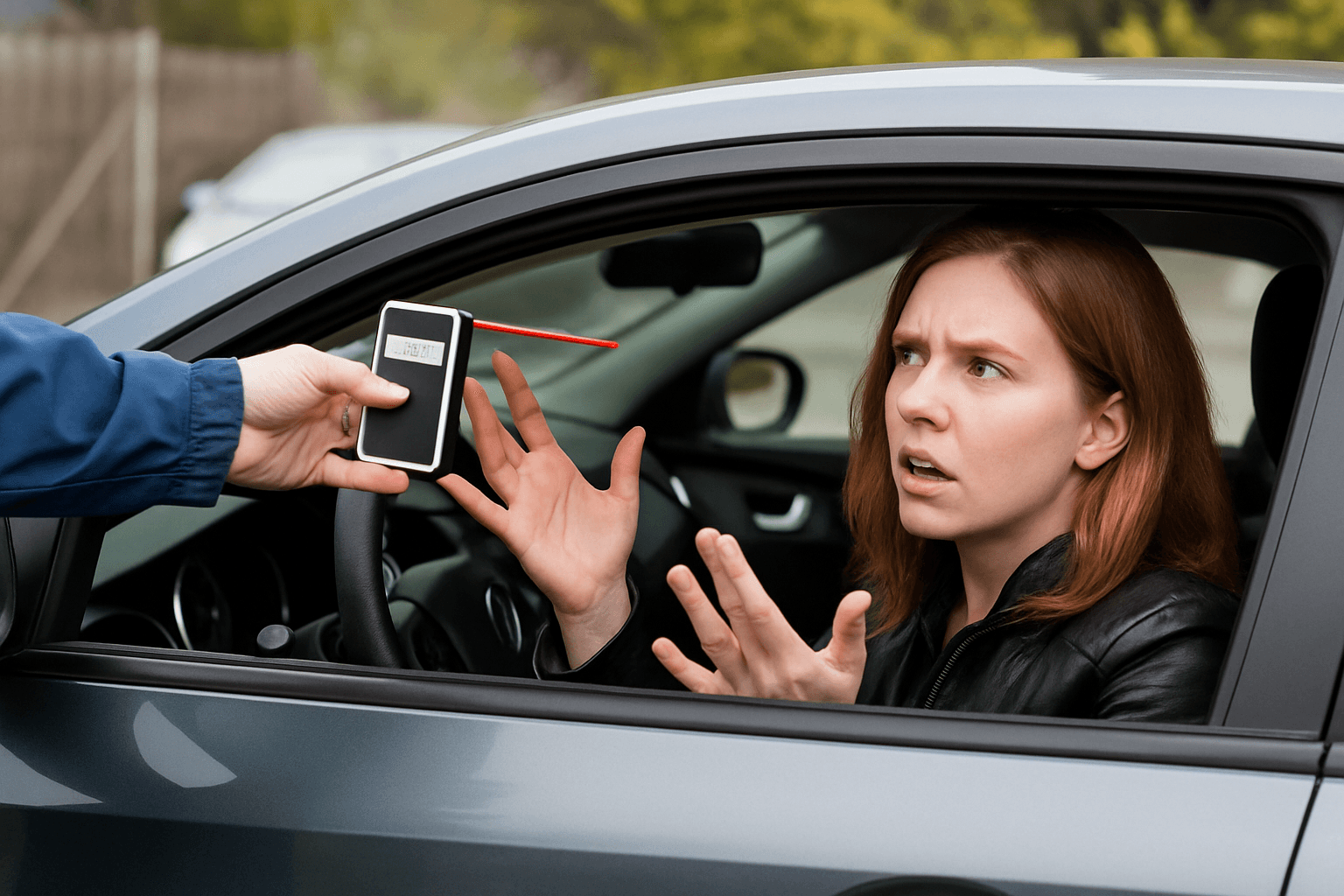
First-offense DUI administrative revocation in South Dakota triggers a 30-day hard suspension before you become eligible to petition the circuit court for restricted driving privileges. That 30 days starts from the date of arrest under South Dakota's administrative license revocation (ALR) framework, not the conviction date. Most drivers confuse these timelines and file petitions prematurely.
The ALR process runs parallel to your criminal case. Under SDCL 32-23-11, if you refuse a breathalyzer or test at or above the legal limit, the DMV revokes your license administratively within days of arrest: 1 year for refusal, 30 days for BAC failure on a first offense. That 30-day revocation for BAC failure is your hard suspension period. The circuit court will not grant restricted privileges during those first 30 days. After 30 days, you may petition for a restricted license while the remaining revocation period runs.
Repeat DUI offenders face longer hard suspension periods and may be categorically ineligible for restricted privileges depending on their offense history and the circuit court's local rules. The ignition interlock requirement under SDCL 32-23-109 typically applies to any restricted license granted after DUI suspension — the circuit court will condition your restricted privileges on IID installation and compliance monitoring.
Compare car insurance rates in your state
Get quotes from licensed carriers — no obligation, no spam, results in minutes.
Get Your Free Quote✓ No Obligation Required✓ Licensed Carriers Only✓ Available Nationwide✓ Free to Compare
Employer Verification Letter and Route Documentation Are Non-Negotiable
South Dakota circuit courts require proof of employment need and specific route justification before granting restricted driving privileges. An employer verification letter is the baseline document every petition must include. That letter must state your job title, work address, scheduled work hours (including start and end times), and whether your job requires driving during work hours beyond commuting.
The circuit court uses this letter to define your approved driving window and approved routes. If you work 7 AM to 3 PM Monday through Friday at a job site 12 miles from your residence, the court order will typically restrict you to direct-route commuting during a window slightly broader than your work hours (e.g., 6 AM to 4 PM) to allow for reasonable transit time. Deviation from that route or time window is a criminal offense — driving outside approved purposes voids your restricted license immediately.
Most employers are familiar with this requirement, but commission-based workers, gig workers, and employees with variable schedules face additional documentation burdens. If your work hours change weekly, the court may require your employer to submit a monthly schedule attestation or may deny the petition outright on grounds that the restriction cannot be practically enforced. If your job requires client visits or delivery routes rather than a single commute, you must submit a representative route map and explain why work-purposes driving is necessary — the court will scrutinize whether ride-sharing or employer-provided transportation is a viable alternative.
SR-22 Filing Is Required for DUI and Uninsured-Driver Suspensions
If your suspension arose from DUI, uninsured accident, or refusal to maintain required liability coverage, South Dakota requires SR-22 certificate of insurance filing before the circuit court will grant restricted driving privileges. The SR-22 is not a type of insurance — it is a continuous-monitoring filing your insurer submits to the South Dakota Division of Motor Vehicles certifying that you carry at least the state's minimum liability coverage: $25,000 per person, $50,000 per accident for bodily injury, and $25,000 for property damage.
You must obtain SR-22 filing before petitioning the circuit court if your suspension cause requires it. The court order granting restricted privileges will explicitly condition those privileges on maintaining active SR-22 filing throughout the restricted period and the full filing period after full reinstatement. South Dakota typically requires 3 years of SR-22 filing after DUI conviction. If your SR-22 lapses during that period — because you miss a premium payment, switch carriers without transferring the filing, or cancel the policy — the insurer notifies the DMV electronically and your restricted license is suspended immediately.
Not all suspension causes require SR-22. Points-accumulation suspensions, unpaid-ticket suspensions, and failure-to-appear suspensions typically do not trigger SR-22 requirements unless your suspension also involves an uninsured-driving component. Confirm your specific suspension notice from the DMV lists SR-22 as a reinstatement requirement before purchasing SR-22 filing — unnecessary SR-22 costs roughly $25–$50 filing fee plus elevated premiums for no benefit.
CDL Holders Cannot Use Restricted Licenses for Commercial Driving
South Dakota restricted driving privileges apply only to personal-vehicle operation. If you hold a commercial driver's license and your job requires operating commercial vehicles (Class A, B, or C trucks, buses, or vehicles requiring hazmat endorsement), the circuit court's restricted license order does not authorize you to drive those vehicles — even during approved work hours on approved routes.
This creates an unsolvable problem for CDL holders whose employment depends on commercial driving. You may petition for and receive a restricted license that allows you to commute to your CDL-required job in your personal vehicle, but you cannot perform the job itself. Most trucking companies and commercial carriers terminate employment immediately upon suspension for this reason. The restricted license does not bridge the gap.
If your job does not require you to drive commercially but you happen to hold a CDL (for example, you drive a personal vehicle to a warehouse job and your CDL is inactive), the restricted license covers your commute in your personal vehicle without issue. Clarify your actual job duties in the employer verification letter the circuit court reviews — if the court believes your job requires commercial driving, the petition will be denied as unenforceable.
Ignition Interlock Installation and Monthly Monitoring Add $120–$180
South Dakota circuit courts typically require ignition interlock device installation as a condition of restricted driving privileges after DUI suspension. The IID requirement under SDCL 32-23-44 is mandatory for some suspension causes and discretionary for others — the circuit court has authority to impose IID as a condition even when state law does not mandate it.
IID installation costs $75–$150 upfront, and monthly monitoring fees run $60–$90. Over a 6-month restricted license period, total IID cost is approximately $435–$690. Over a 1-year period, total cost reaches $795–$1,230. These costs are in addition to SR-22 filing fees and elevated insurance premiums — the full cost stack for a DUI-related restricted license in South Dakota typically exceeds $2,000 in the first year.
The IID monitors every engine start and requires rolling retests while driving. If you attempt to start the vehicle with alcohol detected, the device logs a violation and reports it to the circuit court and the DMV. A single failed start typically triggers a show-cause hearing where the court decides whether to revoke your restricted privileges. Most circuit courts revoke after the first violation — there is no grace period or second-chance framework. The IID provider charges a lockout reset fee (typically $50–$100) in addition to reporting the violation.
Restricted License Application Fee and Reinstatement Fee Total $50–$100
The circuit court sets the filing fee for restricted license petitions, and that fee varies by county. Typical range is $50–$75 to file the petition, paid to the clerk of courts at the time of filing. This fee is non-refundable whether the court grants or denies your petition.
After your full suspension period ends and you are eligible for unrestricted reinstatement, South Dakota charges a $50 reinstatement fee to restore your license to full privileges. This fee is separate from the restricted license petition fee. If your suspension cause required SR-22 filing, you must show proof of active SR-22 at the time of reinstatement and maintain it for the full filing period (typically 3 years from conviction date for DUI).
Processing time for reinstatement after you pay the fee and submit required documentation is typically 5–10 business days. The DMV issues a new license card reflecting full driving privileges. Your restricted license becomes void the moment full reinstatement is processed — continuing to drive under restricted-license terms after reinstatement is not a violation, but you lose the protection of approved-purposes justification if stopped outside your formerly approved hours.