Most states define work-hours narrowly — typical 9-to-5 windows — which leaves second-shift and overnight workers ineligible or forced to document nonstandard schedules with employer affidavits that judges scrutinize heavily.
Why Overnight and Second-Shift Workers Face Higher Hardship License Denial Rates
Most state hardship license statutes define approved driving hours using language like "to and from work during normal business hours" or "employment purposes during daylight hours." Judges interpret this language conservatively. A petition stating "work hours 11 PM to 7 AM" triggers scrutiny that a 9-to-5 schedule does not.
The denial rate is higher because judges assume nonstandard hours create enforcement risk. A driver approved for overnight driving is harder for law enforcement to monitor. Patrol officers cannot verify whether a 2 AM drive is truly work-related without employer documentation at the traffic stop. Judges respond by requiring documentation standards that daytime workers never face.
If your petition does not include a notarized employer affidavit specifying your exact shift start time, shift end time, and commute route, expect the judge to continue the hearing and request it. Most overnight-shift denials stem from incomplete documentation, not ineligibility.
What Documentation Overnight Workers Must Provide That Day-Shift Workers Do Not
Standard hardship petitions for day-shift workers typically require an employer verification letter confirming job title, work address, and hire date. Overnight and second-shift workers need four additional items: a notarized affidavit from the employer stating your exact shift hours, a map or written description of your commute route with estimated drive time, proof that public transportation is unavailable during your shift hours, and a signed statement from you acknowledging that any driving outside approved hours will result in immediate license revocation.
The public transportation unavailability requirement is the most commonly missed element. Judges in urban counties assume transit runs 24 hours. Your petition must include a transit authority schedule printout showing no service between your home and workplace during your shift window. If you live in a rural area with no public transit, include a sworn statement to that effect.
Some states require the employer affidavit to include language certifying that your shift assignment is permanent, not temporary, and that no daytime position is available. This prevents judges from suggesting you request a schedule change instead of granting hardship driving.
Compare car insurance rates in your state
Get quotes from licensed carriers — no obligation, no spam, results in minutes.
Get Your Free Quote✓ No Obligation Required✓ Licensed Carriers Only✓ Available Nationwide✓ Free to Compare
How to Frame Shift Hours in Your Hardship Petition Without Triggering Automatic Denial
Do not write "I need to drive anytime for work." Judges read that as a request for unrestricted driving. Instead, define a specific commute window: "Approved hours: 10:30 PM to 12:00 AM for commute to work; 7:00 AM to 8:30 AM for commute from work." Include buffer time for shift start and end, typically 30 to 60 minutes on each side.
If your job requires driving during your shift, state the business necessity explicitly. Example: "Petitioner works as overnight security supervisor at three warehouse locations. Job duties require travel between facilities from 12 AM to 6 AM. Employer affidavit attached." Judges distinguish between commute-only hardship and job-duty driving. Job-duty driving requires higher documentation standards but is approvable if the employer confirms it in writing.
Never frame overnight hours as a convenience. "I prefer second shift" will get your petition denied. Frame it as an employment necessity: "Petitioner's position is second-shift only. Employer does not offer daytime equivalent role."
State-Specific Rules That Close Overnight Hardship Eligibility Entirely
Pennsylvania does not issue occupational licenses for any suspension triggered by uninsured driving or points accumulation, regardless of shift hours. If you work overnight in Pennsylvania and lost your license for driving uninsured, hardship driving is not available. The only path forward is full reinstatement.
Washington state restricts ignition interlock licenses to specific hours approved by the court. Overnight hours are rarely approved for first-time DUI offenders. The state presumes alcohol-related risk is higher during late-night hours and denies petitions that include driving after 10 PM unless the petitioner can prove shift work with employer documentation and agree to random alcohol testing.
New Jersey hardship licenses for uninsured-cause suspensions are unavailable statewide. If you lost your license for driving without insurance in New Jersey and work second shift, your only option is to reinstate fully before driving again.
How SR-22 Filing Interacts with Overnight Hardship Approvals
If your suspension requires SR-22 filing, the overnight-shift approval does not change your SR-22 obligation. SR-22 is a proof-of-insurance certificate your carrier files with the state DMV. Hardship license approval and SR-22 filing are separate procedural requirements. You need both.
Some carriers refuse to write policies for overnight-shift hardship license holders because actuarial data shows higher claim frequency during late-night driving hours. Expect quote refusals from standard carriers. Non-standard carriers that specialize in high-risk and SR-22 filing typically accept overnight hardship cases but price premiums 40 to 60 percent higher than day-shift equivalents.
The SR-22 filing itself does not mention your approved driving hours. The certificate states that you carry liability coverage meeting state minimums. Your hardship license order defines when you can drive. Violating your approved hours voids the hardship license but does not void the insurance policy or SR-22 filing. However, a violation arrest will trigger a new suspension, and your carrier may nonrenew at the next policy term.
What Happens If You Are Stopped Driving Outside Approved Overnight Hours
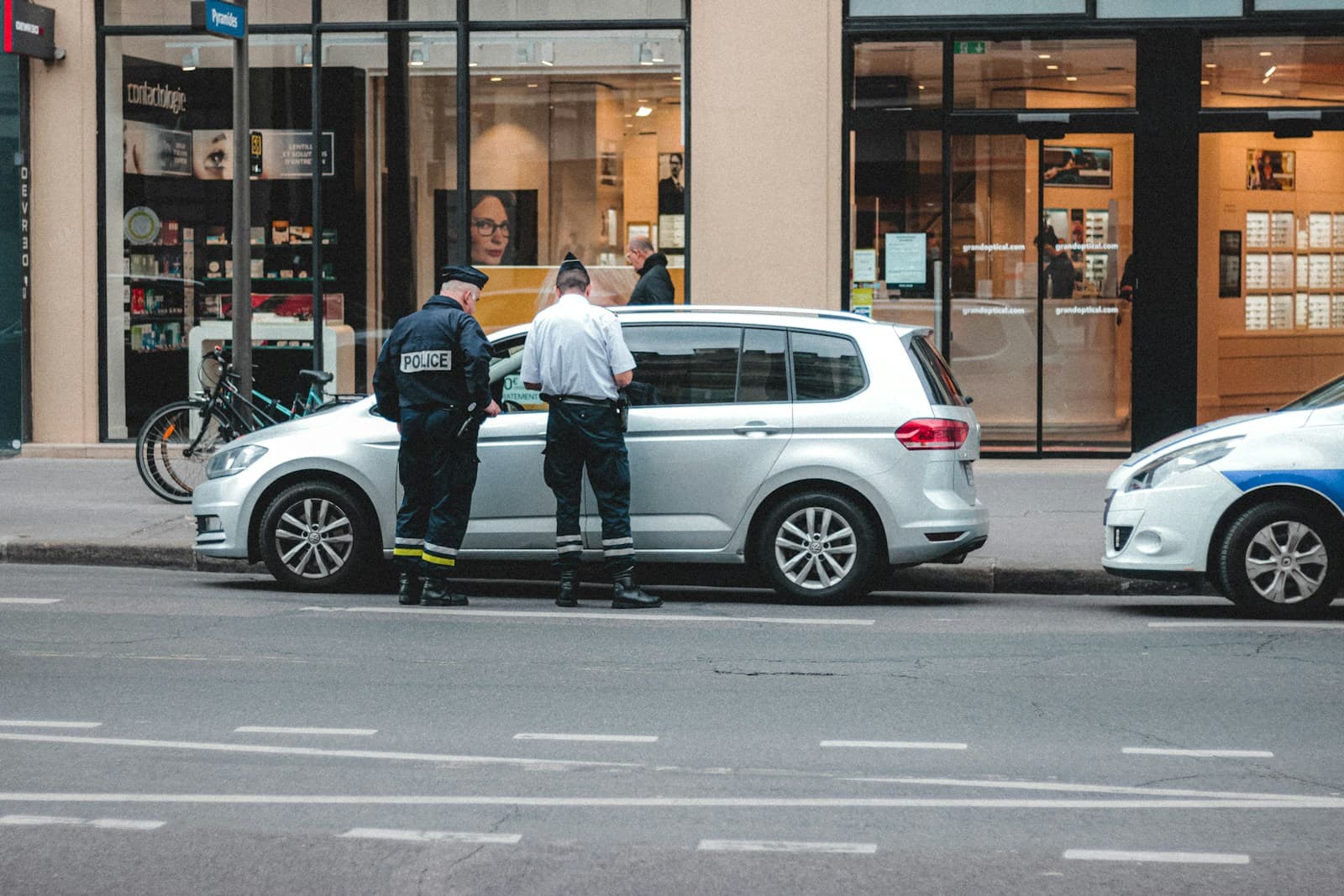
Hardship licenses list approved hours and purposes on the physical document. Officers check this during traffic stops. If you are stopped at 3 AM and your approved hours are 10 PM to 12 AM, the officer will arrest you for driving on a suspended license. The hardship license does not protect you outside its terms.
Most states treat violations of hardship terms as a separate criminal offense carrying the same penalties as driving on a fully suspended license: jail time ranging from 48 hours to six months, fines from $500 to $2,500, and immediate revocation of the hardship license. You lose the restricted driving privilege and return to full suspension status. There is no warning, no second chance, no reduction to a traffic ticket.
Some judges include violation language directly in the hardship order: "If petitioner is found operating a vehicle outside approved hours, hardship license will be revoked immediately without further hearing." This means the DMV cancels your hardship license administratively as soon as the arrest report reaches them. You will not receive another hearing to explain the violation.
How to Get Coverage That Meets Your State's SR-22 Filing Requirement
Start by confirming whether your suspension cause requires SR-22. DUI, reckless driving, uninsured driving, and insurance lapse suspensions typically require SR-22 filing. Points accumulation and unpaid ticket suspensions usually do not, though some states mandate it for points-related license revocations.
Once you know SR-22 is required, contact non-standard carriers that specialize in high-risk policies. Standard carriers often decline SR-22 risks entirely or price them uncompetitively. Non-standard carriers understand the overnight-shift documentation burden and price accordingly. Expect monthly premiums between $140 and $220 for liability-only coverage with SR-22 filing, depending on your state, age, and violation history.
If you do not own a vehicle, ask about non-owner SR-22 policies. These cover you when driving any vehicle you do not own, which is common for second-shift workers who carpool or borrow vehicles. Non-owner SR-22 premiums run $60 to $110 per month. The SR-22 certificate files the same way as a standard policy, satisfying your state's proof-of-insurance requirement without requiring vehicle ownership.