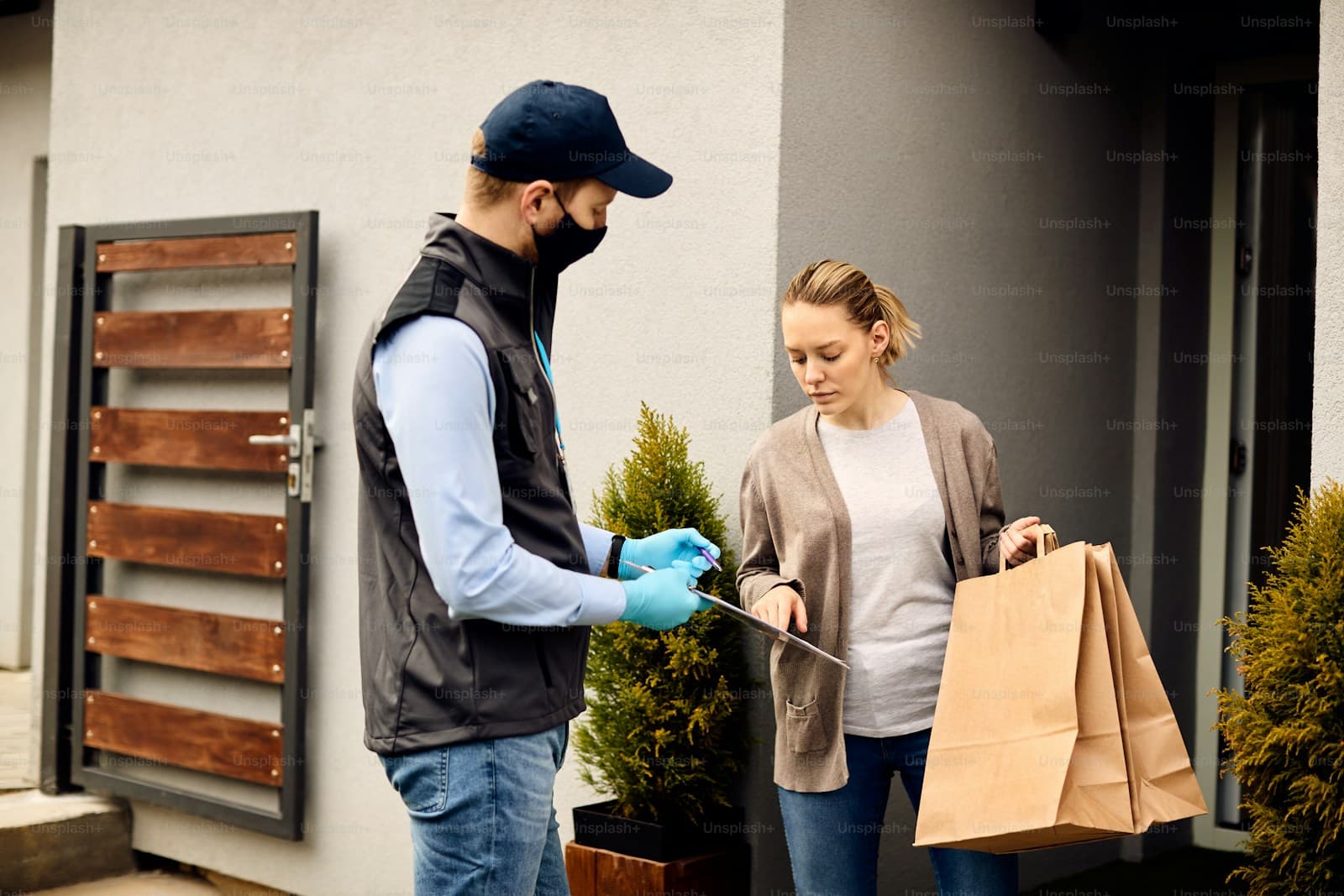
Gig delivery platforms require specific HR documentation for restricted licenses. Most states issue work permits that cover traditional employment but never explicitly authorize app-based delivery driving.
Why DoorDash and Uber Eats Reject Most Work Permits
Delivery platforms operate contractor relationships, not employment relationships. When you apply to drive with a restricted license, their compliance teams check whether your work permit explicitly authorizes contractor delivery driving. Most states issue work permits tied to a specific employer name and address pulled from your application. DoorDash sees "ABC Restaurant Group, 123 Main St" on your permit and flags it as invalid because you are not an employee of DoorDash.
The mismatch is structural. Your state DMV approved your work permit based on your employer verification letter. That employer is the restaurant, catering company, or food service business that hired you as a W-2 employee. The delivery platform is not your employer under IRS classification. It is a technology intermediary paying you as a 1099 contractor. Your work permit covers commute to ABC Restaurant and driving during your shift at ABC Restaurant. It does not cover logging into DoorDash during off-hours and accepting delivery requests across the city.
Some drivers attempt to list the delivery platform as their employer on the work permit application. This fails at the employer verification stage. Uber Eats and DoorDash will not provide employer verification letters because they do not employ you. They will not sign affidavits confirming your work hours, routes, or employment status. Without that documentation, your DMV will not approve the work permit application.
What Documentation the Platform Actually Requires
Delivery platforms require a valid unrestricted driver's license or a restricted license that explicitly authorizes commercial courier activity. The second category is rare. Most states do not include delivery contractor activity in their approved work purposes list. Work permits typically cover commute to a fixed worksite, driving during employment hours for job duties, medical appointments, court-ordered programs, and sometimes childcare or education. Contractor delivery falls outside these categories in most DMV interpretations.
When you upload your work permit to the platform, their compliance system checks the "authorized purposes" section. If it reads "travel to and from employment at [employer name], travel during work hours for employment purposes," the system flags it as non-compliant. You receive a generic rejection message: "Your restricted license does not meet our requirements." The platform does not tell you why because the why is obvious to their legal team: your permit does not authorize the specific activity you are applying to perform.
A small number of states issue broader work permits with language like "employment and business purposes" or "all lawful purposes except personal recreation." Florida's Business Purpose Only license is the clearest example. These permits sometimes pass platform compliance review because the language is not employer-specific. Texas Occupational Licenses also use broad language covering "essential need" driving, which occasionally satisfies platform requirements. Even in these states, approval is not guaranteed. Platform compliance teams apply their own interpretation of whether contractor delivery qualifies as a business purpose or essential need.
Compare car insurance rates in your state
Get quotes from licensed carriers — no obligation, no spam, results in minutes.
Get Your Free Quote✓ No Obligation Required✓ Licensed Carriers Only✓ Available Nationwide✓ Free to Compare
The Route Restriction Problem Platforms Won't Waive
Most work permits include route restrictions: approved travel between home address and employer address, with optional stops for fuel or childcare along the direct path. Your permit may specify exact cross-streets or require you to carry a map of approved routes. Delivery driving violates this restriction structurally. You accept requests across a service area that may span 20 square miles, driving to customer addresses the DMV never approved and never reviewed.
Even if the platform accepts your work permit during onboarding, you are operating outside your legal driving authority every time you deviate from the approved home-to-work route. If you are pulled over during a delivery, the officer will compare your current location to the employer address on your work permit. The address will not match. The route will not match. You are driving on a suspended license with a work permit that does not authorize your current activity. That is a separate criminal charge in most states, often classified as driving while suspended knowingly, which carries harsher penalties than the original suspension.
Some drivers attempt to list a delivery platform warehouse or dispatch hub as their work address. This solves the route problem only if your deliveries radiate from that hub and you return to it between shifts. Most delivery platforms do not operate hub dispatch models. You log in from home, accept requests based on your current GPS location, and complete deliveries across the service area without ever visiting a fixed worksite. The hub address on your permit becomes meaningless the moment you leave your driveway.
How to Structure Your Application If You Have a Restaurant Employer
If you work as a W-2 employee at a restaurant and also contract with delivery platforms, your work permit should reflect your W-2 employment only. Apply with your restaurant employer's verification letter. Request approval for commute to the restaurant and driving during your shift for catering deliveries, supply pickups, or other job duties your employer assigns. Do not mention DoorDash, Uber Eats, or any contractor platform in your application. Those relationships are legally separate and not covered by employment-based work permits.
Once your work permit is issued, you can perform delivery driving only as part of your restaurant job duties. If your restaurant assigns you a catering delivery to a customer address, that trip is covered because it occurs during your employment hours and serves your employer's business purpose. If you clock out and log into DoorDash to accept independent delivery requests, you are driving outside your permit authority. The distinction is employment relationship, not activity type. Delivering food as an employee is covered. Delivering food as a contractor is not.
Some restaurants operate their own delivery fleets and hire drivers as employees. These roles produce clean work permit applications because your employer verification letter describes delivery driving as your primary job duty. Your approved routes cover the restaurant's service area because that is where your employment requires you to drive. This structure satisfies both DMV and platform requirements. The platform sees a work permit authorizing delivery activity during employment hours, and you are performing that activity as a direct employee of the business the platform contracted with for delivery services.
What Happens If You Deliver on a Work Permit Anyway
Drivers report mixed enforcement outcomes. Some complete hundreds of deliveries on work permits without incident. Others are stopped during their first week and charged with driving while suspended. The variability reflects officer discretion and local enforcement priorities, not legal ambiguity. Your work permit does not authorize contractor delivery. If an officer determines you are driving outside permitted purposes, you can be arrested on the spot.
The consequences stack quickly. Your original suspension remains in effect. The new driving while suspended charge adds court dates, fines, possible jail time, and extension of your suspension period. Your work permit is typically revoked immediately upon arrest for violating its terms. You lose the limited driving authority you had. Reinstatement becomes more complicated because you now have a violation of court-ordered or DMV-ordered restrictions on your record. Some states classify this as willful noncompliance, which disqualifies you from future hardship license applications.
Delivery platforms terminate drivers who accumulate moving violations or criminal charges during contract periods. A driving while suspended arrest will appear on your motor vehicle record within days. The platform pulls updated MVR reports quarterly or after incidents. When the charge appears, your account is deactivated. You lose both the delivery income and the work permit that allowed you to commute to your restaurant job. The economic damage exceeds the platform earnings you were trying to protect.
Insurance Coverage Gaps Platform Policies Don't Address
Delivery platforms provide liability coverage when you are actively transporting an order. That coverage typically does not apply when you are driving on a restricted license that does not authorize the underlying activity. Insurance policies contain exclusions for illegal acts and operation outside the scope of permitted use. Driving on a work permit for purposes the permit does not cover meets both exclusions.
Your personal auto policy also excludes commercial delivery activity unless you purchased a commercial rider or business-use endorsement. Most suspended drivers carry state-minimum liability policies because that is all SR-22 filing requires. Those policies explicitly exclude contractor delivery, rideshare, and other transportation network company activity. If you cause an accident while delivering on a work permit, you may face three simultaneous coverage denials: your personal insurer denies because you were using the vehicle commercially, the platform denies because you were operating on an invalid license, and the injured party sues you personally for damages neither policy will cover.
Some drivers assume SR-22 filing satisfies all insurance requirements for work permit driving. SR-22 is a compliance certificate proving you carry liability insurance. It does not change your policy's coverage terms, exclusions, or approved-use categories. If your policy excludes delivery activity, the SR-22 filing does not override that exclusion. You are simply proving to the DMV that you carry a policy that will not actually cover the driving you are doing.
The Correct Path Forward for Delivery Income
Stop delivery platform work until your full driving privileges are reinstated. The income is not worth the criminal exposure, insurance gaps, and work permit revocation risk. If delivery driving is your primary income source and you cannot replace it, consider non-driving roles: restaurant kitchen positions, warehouse work, remote customer service, or other employment that does not require a valid license. Many drivers in this situation discover that traditional employment with predictable hours and benefits outperforms gig income once platform expenses and risk are honestly accounted.
If you hold a W-2 delivery position with a restaurant or catering company, apply for a work permit based on that employment. Provide accurate employer verification describing your job duties, work hours, and service area. Do not accept contractor delivery requests during your suspension period. Once your suspension ends and your unrestricted license is reinstated, you can return to platform delivery work without legal or insurance complications.
Reinstatement timelines vary by suspension cause and state. DUI suspensions with SR-22 filing requirements typically last 1 to 3 years. Points-based suspensions may lift after 6 to 12 months. Insurance lapse suspensions often resolve within 30 to 90 days once proof of coverage is filed. Focus on satisfying reinstatement requirements: complete required courses, pay fines, maintain SR-22 filing for the full period, and avoid new violations. The path is long but direct. Contractor delivery on a work permit shortcuts nothing and jeopardizes the limited driving authority you fought to obtain.