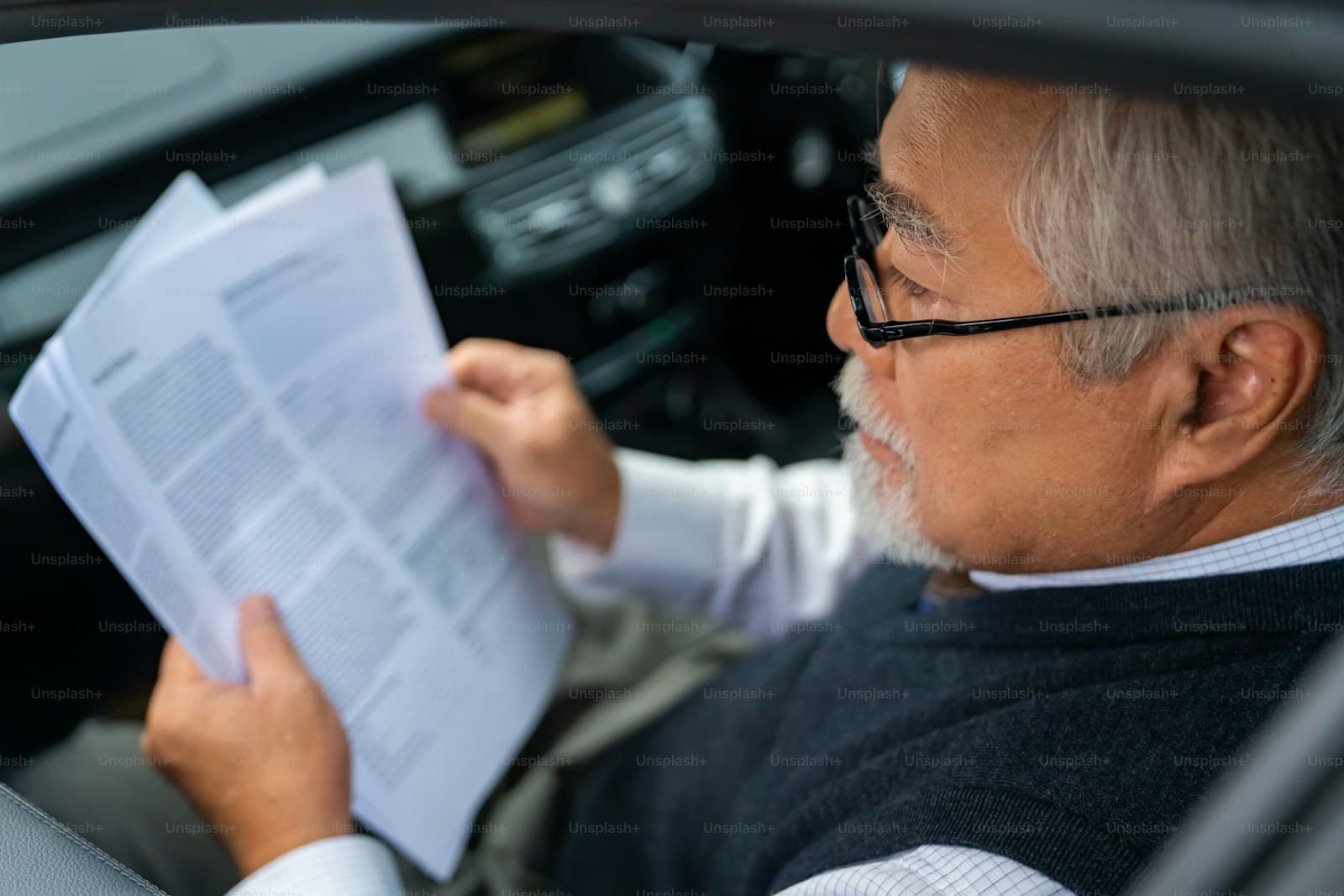
Pennsylvania judges require specific employer verification language when reviewing OLL petitions. Most first-time applicants fail court review because their employer letter lacks the court-approved elements.
What Pennsylvania Courts Require in an OLL Employer Verification Letter
Pennsylvania's Occupational Limited License application requires employer verification submitted as part of your petition to the Court of Common Pleas. The court needs to see that your driving request serves an occupational necessity, not just that you are employed. Your employer's letter must state your job title, work address, required work hours, the occupational tasks that require driving, and the specific routes or destinations you need to reach during work. Many employers write a simple employment confirmation letter stating you work full-time and are a valued employee. That language does not satisfy the court's occupational-necessity standard.
The court evaluates whether your petition demonstrates a genuine occupational need that cannot reasonably be met through alternative transportation. If your employer's letter does not tie your driving to specific job tasks—deliveries, site visits, client appointments, equipment transport—the judge reads it as a general employment confirmation and denies the petition. Court of Common Pleas judges in Pennsylvania have discretion to approve or deny OLL petitions based on the totality of documentation presented. A weak employer letter is the single most common documentation failure that results in denial at first hearing.
Each Pennsylvania county's Court of Common Pleas operates independently. Some counties publish sample employer letter formats on their court websites or provide them through the prothonotary's office. Other counties expect applicants to know the required elements without a published template. Before your employer drafts the letter, contact the prothonotary in the county where you will file your OLL petition and ask whether a sample format or specific required language exists for employer verification letters in occupational license petitions.
Who Must Sign the Employer Letter and What Job Details the Court Evaluates
The employer verification letter must be signed by someone with direct authority over your work schedule and job responsibilities. A co-worker, shift supervisor without hiring authority, or HR representative who does not manage your daily work typically does not satisfy the court's requirement. The signer must be able to testify under oath if the court schedules a hearing on your petition. Most counties accept a letter signed by a direct manager, business owner, or corporate officer who can verify both your employment status and the occupational necessity of your driving.
The court evaluates whether your job genuinely requires you to drive or whether the driving is incidental to employment you could perform using alternative transportation. If you are a delivery driver, HVAC technician, home health aide, or sales representative whose job description centers on travel to multiple sites daily, the occupational necessity is clear. If you are an office worker who occasionally drives to client meetings or a retail employee who sometimes makes bank deposits, the court may determine that rideshare, public transit, or task reassignment are reasonable alternatives. The employer letter must explain why those alternatives are not viable for your specific role.
Pennsylvania does not allow OLL privileges for commercial driving. If you hold a CDL and your job requires operating a commercial vehicle, the OLL will not authorize that driving. Your employer letter should state whether your driving involves personal vehicles only or whether your role requires commercial vehicle operation. If commercial driving is part of your job, you need to address with your employer whether they can temporarily reassign you to non-commercial duties during your OLL period or whether your employment will be terminated if you cannot perform the commercial driving component.
Compare car insurance rates in your state
Get quotes from licensed carriers — no obligation, no spam, results in minutes.
Get Your Free Quote✓ No Obligation Required✓ Licensed Carriers Only✓ Available Nationwide✓ Free to Compare
How to Structure the Employer Letter for Pennsylvania Court Review
The employer verification letter should open with a clear statement of your employment status, job title, hire date, and work schedule. The second paragraph should describe the occupational tasks that require driving, naming specific destinations, clients, or job sites you must reach. The third paragraph should state why alternative transportation is not a reasonable substitute for your driving: shift hours that do not align with public transit schedules, rural job sites not served by transit, multiple daily destinations that would require hours of travel using rideshare, or time-sensitive appointments that cannot accommodate transit delays.
Include your employer's contact information—business name, address, phone number, and the signer's title. The court may contact your employer to verify the information in the letter. If the contact information is missing or the employer does not respond when the court calls, your petition will be delayed or denied. Date the letter and have your employer sign it on company letterhead if available. Plain paper is acceptable if the letter includes complete business contact information, but letterhead signals legitimacy to the court.
Bring the original signed employer letter to your OLL petition hearing or filing appointment. Some counties require the original; others accept a clean photocopy. If you submit a photocopy and the court later requests the original, you must produce it or your petition may be dismissed. Do not alter the employer letter after your employer signs it. Any handwritten additions, strikethroughs, or changes to the signed document will be read as tampering and will result in automatic denial.
What Happens If Your Employer Refuses to Provide a Verification Letter
Some Pennsylvania employers refuse to provide OLL verification letters because they fear liability exposure if you are involved in a crash while driving under an occupational license, or because company policy prohibits involvement in employee legal matters. If your employer refuses, you cannot fabricate the letter or have a friend pose as your supervisor. Submitting a fraudulent employer verification letter to a Pennsylvania court is a criminal offense under 18 Pa.C.S. § 4904 (unsworn falsification to authorities) and will result in immediate denial of your OLL petition, potential criminal charges, and extension of your suspension period.
If your employer will not provide a letter, you have three options. You can ask whether a different manager or company officer is willing to sign the verification. You can propose that your employer draft a narrow verification limited to factual statements about your employment and work schedule, with no opinion on occupational necessity, and supplement that document with your own affidavit explaining the driving need. Or you can seek different employment with an employer willing to verify your occupational driving need and refile your OLL petition after securing that new position.
Self-employed Pennsylvania drivers face a different documentation burden. If you are an independent contractor, sole proprietor, or LLC owner, the court expects you to provide business registration documents, a signed affidavit describing your occupational driving need, and evidence that your business is active and generates income—recent invoices, bank statements showing business deposits, or contracts with clients. The court applies a higher scrutiny standard to self-employment claims because of the potential for fabricating an occupational need. If you cannot document an established, income-generating business, the court will deny your petition.
How the OLL Petition Process Works in Pennsylvania Courts
You file your OLL petition with the Court of Common Pleas in the county where you reside. The petition packet includes a completed petition form, proof of your suspension and the reason for it, your employer verification letter, proof of financial responsibility (SR-22 insurance), and payment of court costs. Court costs vary by county—there is no statewide uniform fee. Costs typically range from $100 to $300 depending on the county and whether your petition requires a hearing. Contact the prothonotary in your county courthouse to confirm the current filing fee and accepted payment methods before you file.
After you file, the court schedules a hearing or reviews your petition administratively depending on county practice and the reason for your suspension. For DUI-based suspensions, Pennsylvania requires that you serve the full hard suspension period before the court will consider an OLL petition. The hard suspension length varies by DUI tier—first-offense general impairment may carry no suspension, while high BAC or refusal triggers a 12-month suspension. If you are suspended for DUI and attempt to file an OLL petition before your hard suspension period expires, the court will deny the petition as premature. You must wait until the hard period is fully served, then file.
If the court approves your OLL petition, the judge issues an order authorizing limited driving for occupational, vocational, or therapeutic purposes. The order specifies approved destinations, approved hours, and any conditions such as ignition interlock device installation. You must carry the court order with you whenever you drive under OLL authority. If a police officer stops you and you cannot produce the court order, you will be charged with driving under suspension. If you drive outside the approved hours, routes, or purposes stated in the court order, the court can revoke your OLL immediately and you will serve the remainder of your original suspension with no further restricted driving privileges.
SR-22 Insurance Requirements for Pennsylvania OLL Approval
Pennsylvania requires proof of financial responsibility before the court will approve an OLL petition. For most suspension types that make you eligible for an OLL, that means filing an SR-22 certificate with PennDOT. The SR-22 is not a type of insurance—it is a certification your insurance carrier files with the state confirming you carry at least Pennsylvania's minimum liability coverage: $15,000 per person for bodily injury, $30,000 per accident for bodily injury, and $5,000 for property damage. Your carrier charges an SR-22 filing fee, typically $25 to $50, and your premium will increase because you are now classified as high-risk.
You must maintain continuous SR-22 coverage for the duration required by your suspension type. For DUI suspensions, Pennsylvania typically requires 3 years of SR-22 coverage following reinstatement. If your insurance lapses or your carrier cancels your policy during the SR-22 period, the carrier notifies PennDOT electronically and PennDOT suspends your license again immediately. The court will also revoke your OLL if your SR-22 lapses. You cannot drive under OLL authority without active SR-22 coverage on file with PennDOT.
If you do not own a vehicle, you can purchase a non-owner SR-22 policy that provides liability coverage when you drive a vehicle you do not own—a family member's car, a company vehicle, or a rental. Non-owner policies meet Pennsylvania's financial responsibility requirement for OLL purposes. Premiums for non-owner SR-22 policies are typically lower than standard policies because the carrier is not insuring a specific vehicle, but you are still classified as high-risk and will pay more than a driver with a clean record.