Pennsylvania judges define your OLL driving hours individually based on employment documentation submitted with your petition. Unlike states with preset work windows, your approved hours depend entirely on what your employer verifies and what the court approves.
Pennsylvania OLL Time Windows Are Court-Defined, Not Statutorily Fixed
Pennsylvania's Occupational Limited License (OLL) under 75 Pa.C.S. § 1553 does not come with preset driving hours. The court of common pleas in your county defines your approved time restrictions based on employment documentation you submit with your petition. Most states with work-restricted licenses publish standard commute windows or blanket work-hours permissions. Pennsylvania does not.
Your approved driving hours depend on what your employer states in their verification letter and what the judge considers reasonable. A retail worker with a 6 a.m. to 2 p.m. shift will receive different approved hours than a server working 4 p.m. to midnight, even if both commute the same distance. The court typically adds a 30-minute buffer before and after documented work hours to account for travel time, but this is not guaranteed.
Because OLL petitions are filed with the court of common pleas in your county of residence, procedural requirements and time-restriction interpretations vary by county. There is no statewide uniform template. Some counties require employer letters on company letterhead with supervisor signature and direct contact information. Others accept basic employment verification forms. Check your county's court website or contact the prothonotary's office before filing.
What Employer Documentation Must Include for Time Approval
The court needs verifiable proof of your work schedule to set time restrictions. Your employer's verification letter must include your regular shift hours, work address, days per week worked, and supervisor contact information. Vague letters stating "full-time employment" or "various shifts" create delays or denials.
If your job involves multiple work locations, list all addresses in the employer letter and explain the driving pattern. Route delivery drivers, home healthcare aides, and construction workers with rotating job sites need detailed route descriptions. The court will not approve open-ended "anywhere in the county" time windows. You must document specific addresses or a defined geographic area.
Self-employed petitioners face additional scrutiny. You must provide business registration documents, client contracts showing scheduled work, and a detailed explanation of why driving is occupationally necessary. Pennsylvania judges deny petitions from self-employed drivers when documentation appears constructed solely to obtain driving privileges rather than reflecting genuine occupational need.
Compare car insurance rates in your state
Get quotes from licensed carriers — no obligation, no spam, results in minutes.
Get Your Free Quote✓ No Obligation Required✓ Licensed Carriers Only✓ Available Nationwide✓ Free to Compare
Ignition Interlock Device Requirement Affects All DUI-Based OLL Petitions
Pennsylvania requires ignition interlock devices (IID) on all vehicles operated under an OLL granted after a DUI suspension. This applies regardless of your BAC level, refusal status, or prior record. The IID requirement is not negotiable for DUI-triggered OLL petitions.
You must install the IID before the court grants the OLL. Installation costs typically range from $70 to $150, with monthly monitoring fees between $60 and $90. Your approved OLL time restrictions apply to the vehicle with the installed IID only. Driving any other vehicle, even within your approved work hours, violates the OLL and triggers immediate revocation.
The court does not modify time restrictions to accommodate IID calibration appointments. Most IID providers require monthly service visits during normal business hours. If your approved OLL hours do not overlap with calibration appointment availability, you must petition the court for a time modification before scheduling the appointment. Missed calibration appointments generate violation reports sent directly to PennDOT and the court.
Driving Outside Approved Hours Triggers Automatic OLL Revocation
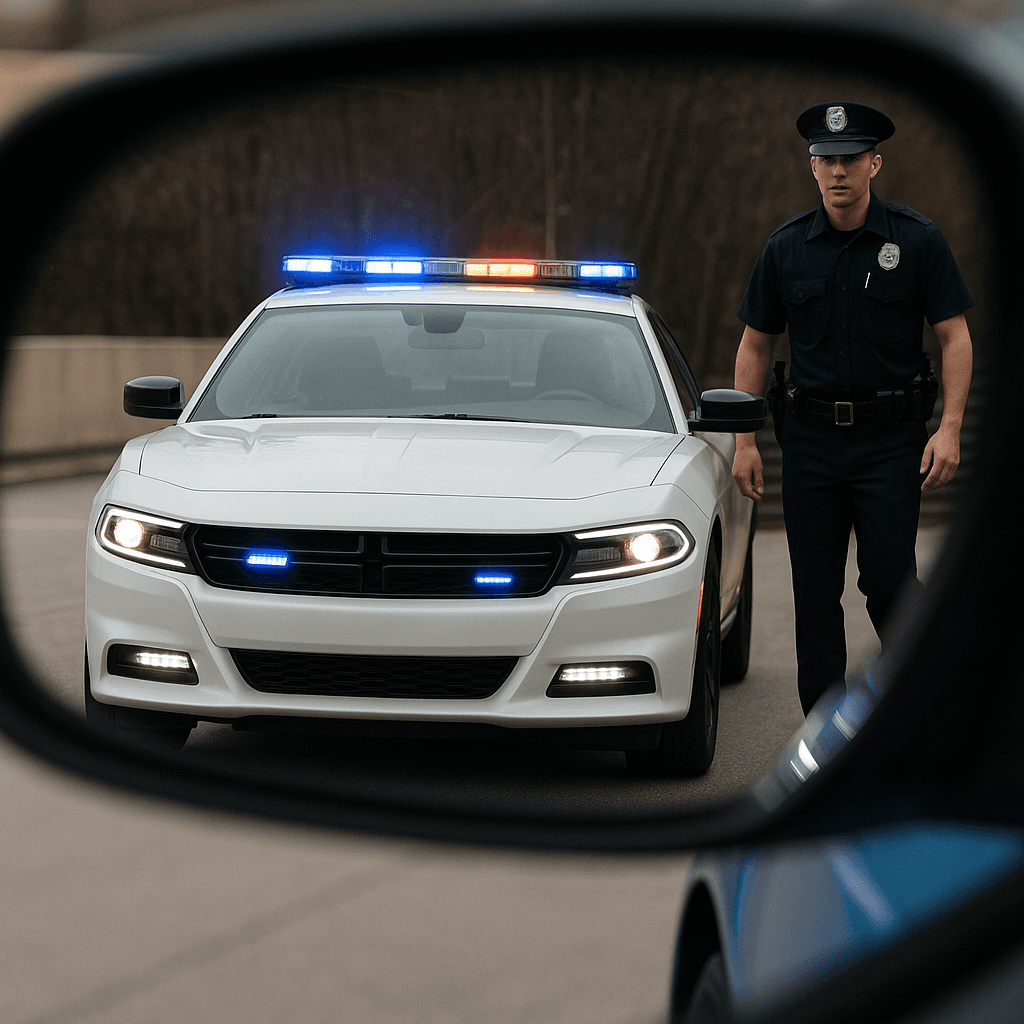
Pennsylvania law enforcement can verify OLL restrictions in real time through PennDOT's system. If you are stopped outside your approved hours or routes, the officer will see the restriction immediately. There is no grace period and no informal warning system.
OLL violations result in automatic license revocation, extension of your underlying suspension period, and potential criminal charges for driving under suspension. The court does not hold hearings to determine whether the violation was intentional. Being stopped outside approved hours is itself the violation, regardless of the reason.
Common violation scenarios include stopping for groceries after work, driving a child to an emergency appointment during non-approved hours, or extending a work shift without prior court approval. If your work schedule changes, you must file an amended petition with updated employer documentation before driving under the new hours. Retroactive approval does not exist.
SR-22 Filing Is Required Before OLL Petition Approval
Pennsylvania courts require proof of financial responsibility before granting an OLL petition. For most DUI and uninsured-driving suspensions, this means filing an SR-22 certificate with PennDOT. Your insurance carrier files the SR-22 electronically, but you must request it and pay any associated fees before filing your OLL petition.
SR-22 filing typically adds $15 to $25 to your policy fee, but the premium increase from moving to a non-standard carrier often exceeds $50 to $120 per month. Not all carriers write SR-22 policies in Pennsylvania. If your current carrier does not offer SR-22 filing, you must switch to a carrier that does before petitioning for the OLL.
The SR-22 must remain active for three years following reinstatement for DUI suspensions. If your carrier cancels your policy or you allow it to lapse, PennDOT receives automatic notification and your OLL is revoked immediately. There is no grace period for SR-22 lapses. Reinstatement after an SR-22 lapse requires filing a new petition, paying additional court costs, and serving any extended suspension period the court imposes.
County-Specific Court Costs and Processing Timelines Vary Widely
Pennsylvania does not publish a statewide OLL application fee. Court costs are set by individual counties and range from approximately $100 to $300 depending on your county of residence and the complexity of your case. Philadelphia and Allegheny counties typically charge higher fees than rural counties.
Processing times for OLL petitions vary by county court docket congestion. Some counties schedule hearings within two to three weeks of filing. Others take six to eight weeks. You cannot drive under OLL privileges until the court issues the signed order and PennDOT updates your driving record, regardless of whether you have already installed an IID or obtained SR-22 coverage.
If your petition is denied, you must wait the period specified in the denial order before filing a new petition. Most counties impose a 30-day to 90-day waiting period after denial. Using the waiting period to gather stronger employment documentation, correct SR-22 filing errors, or resolve outstanding court costs increases approval likelihood on the second petition.