Oregon requires an employer verification letter for Hardship Permit applications, but most HR departments send generic templates that get denied. The DMV needs specific wording about job duties, route requirements, and hours that justify essential driving beyond commute-only.
What Oregon DMV Requires in an Employer Verification Letter
Oregon requires an employer verification letter for Hardship Permit applications under ORS 807.240, but the statute does not define what constitutes adequate documentation. Oregon DMV's application review process requires the letter to verify essential need for driving, not just employment status. A letter that confirms you work full-time at a specific address will be rejected if it does not explain why driving is required to perform the job.
The letter must state your job title, employment start date, work schedule including specific days and hours, and why driving is necessary for the position. If your job requires travel between multiple sites during the workday, route-based driving to customer locations, or transport of equipment or materials that cannot be carried on public transit, the letter must state that explicitly. Oregon DMV interprets essential need narrowly: commuting to and from a single worksite is not sufficient justification for a Hardship Permit unless combined with additional driving requirements during work hours or proof that public transit is unavailable on your route and schedule.
The employer letter must be printed on company letterhead, signed by a supervisor or HR representative with direct knowledge of your job duties, and include the company's contact phone number for DMV verification. Generic HR templates that confirm dates of employment without addressing driving necessity will delay or deny your application. If you work multiple jobs, submit a separate verification letter for each employer showing cumulative driving need.
Route and Time Restrictions Oregon DMV Applies to Hardship Permits
Oregon Hardship Permits are restricted to essential purposes only: employment, medical appointments, school, and essential household needs. The DMV defines specific route restrictions based on the stated need in your application and employer letter. If your employer letter states you work at 123 Main Street from 8 AM to 5 PM, your Hardship Permit will authorize driving from your home address to that worksite during those hours, plus a reasonable buffer for travel time.
If your job requires driving during work hours, the employer letter must document specific routes or service areas. Delivery drivers, home health aides, field service technicians, and sales representatives whose job duties require multi-site travel need employer letters that describe the service territory or typical route pattern. Oregon DMV will not approve open-ended driving authorization: the permit will specify approved routes or geographic boundaries based on what the employer documents.
Time restrictions are defined by the hours stated in your employer letter plus travel buffer. If you work 7 AM to 3 PM, your Hardship Permit will typically authorize driving from 6 AM to 4 PM to account for commute time. Driving outside approved hours, even for employment purposes at a second job not listed in your application, violates your Hardship Permit terms and triggers automatic revocation under ORS 807.240. If your work schedule changes after permit issuance, you must file an amended application with updated employer documentation before driving the new hours.
Compare car insurance rates in your state
Get quotes from licensed carriers — no obligation, no spam, results in minutes.
Get Your Free Quote✓ No Obligation Required✓ Licensed Carriers Only✓ Available Nationwide✓ Free to Compare
Ignition Interlock Requirement for DUII-Related Hardship Permits
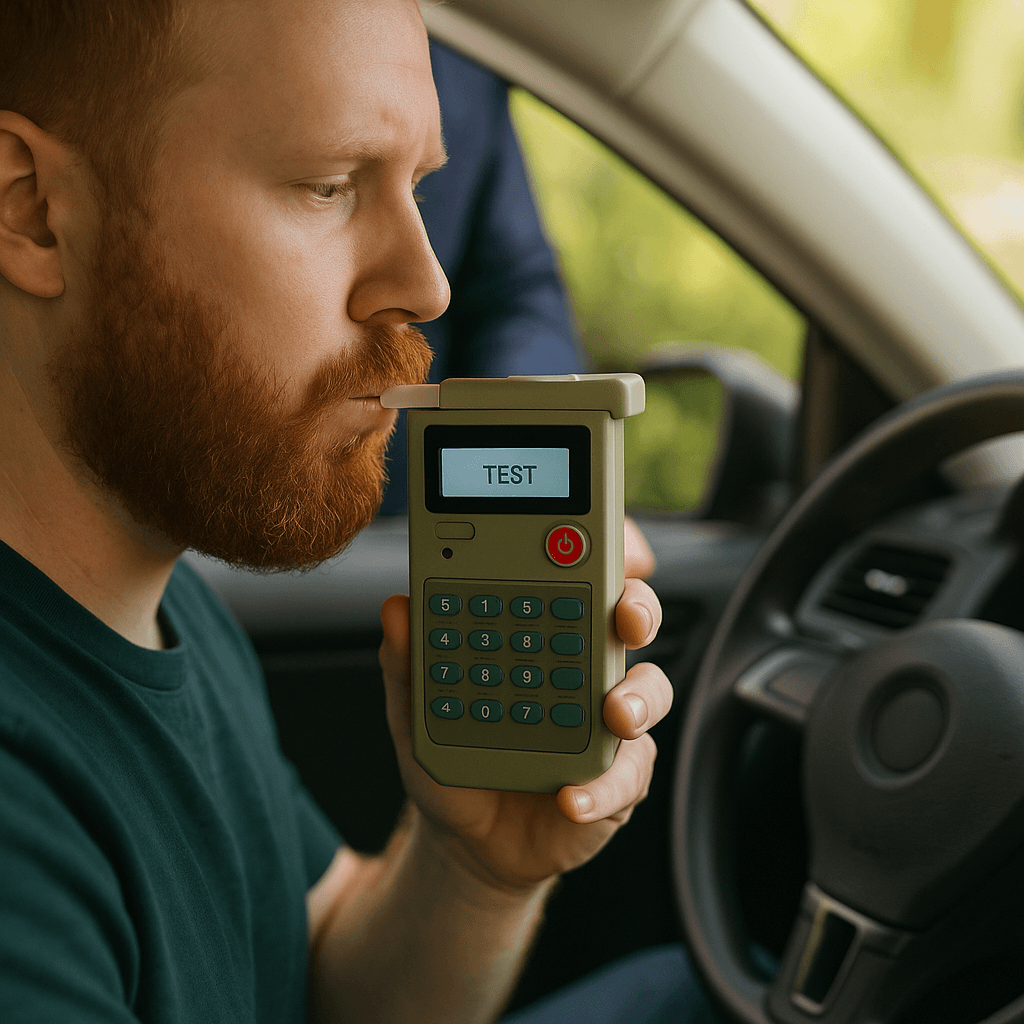
Oregon requires ignition interlock device installation as a condition of any Hardship Permit issued following a DUII suspension under ORS 813.602. The IID requirement applies even during the restricted Hardship Permit period, not just at full reinstatement. Your employer letter must acknowledge that your vehicle will be equipped with an IID and confirm that IID use is compatible with your job duties.
Some employers prohibit IID-equipped vehicles on company property due to liability concerns or fleet insurance restrictions. If you drive a company vehicle as part of your job, the Hardship Permit does not authorize you to install an IID in an employer-owned vehicle without written employer consent. The employer letter should state whether you will drive your personal vehicle, a company vehicle with employer approval for IID installation, or whether your job duties will be modified to exclude vehicle operation during the Hardship Permit period.
Oregon's IID program requires monthly calibration and compliance reporting to DMV. If your work schedule conflicts with IID service provider hours, address that in your application. DMV will not modify IID compliance requirements to accommodate work schedules: you must arrange calibration appointments outside work hours or risk Hardship Permit revocation for non-compliance.
SR-22 Filing Requirements and Insurance Setup Before Application
Oregon requires SR-22 financial responsibility filing for Hardship Permit applications following DUII suspensions, uninsured driving violations, and certain other serious suspension types. The SR-22 certificate must be on file with Oregon DMV before your Hardship Permit application will be processed. You cannot submit the employer letter and application first, then add SR-22 later: the filing sequence is insurance policy purchase, SR-22 electronic filing by the carrier, then Hardship Permit application submission.
SR-22 is an endorsement to a liability insurance policy, not a separate insurance product. You must purchase an auto insurance policy that meets Oregon's minimum liability limits of $25,000 per person, $50,000 per accident for bodily injury, and $20,000 for property damage, then request SR-22 filing from that carrier. Not all carriers write policies for suspended drivers or offer SR-22 filing. Non-standard carriers including Bristol West, Dairyland, GAINSCO, The General, Progressive, and USAA write SR-22 policies in Oregon for DUII and high-risk applicants.
If you do not own a vehicle and will be borrowing a vehicle or driving employer-provided vehicles during your Hardship Permit period, you need non-owner SR-22 insurance. Non-owner policies provide liability coverage when you drive vehicles you do not own and satisfy Oregon's SR-22 filing requirement without requiring you to insure a specific vehicle. The SR-22 filing fee is typically $15 to $50 depending on carrier, and the filing must remain active for 3 years from the date of DUII conviction under Oregon law.
DUII Diversion Program and Early Hardship Permit Eligibility
Oregon's DUII Diversion Program under ORS 813.200 allows first-time DUII offenders to apply for a Hardship Permit after a 30-day hard suspension, contingent on diversion enrollment and IID installation. This is a distinctive Oregon-specific pathway: most states require completion of the full administrative suspension period before any restricted driving privilege becomes available. If you are eligible for DUII Diversion and enroll within 30 days of arraignment, you can apply for a Hardship Permit on day 31 of your suspension.
Diversion eligibility requires no prior DUII convictions or diversions in the previous 15 years, no commercial driver's license involvement, and no death or serious injury in the current offense. The Hardship Permit issued during diversion is contingent on continued diversion compliance: if you are terminated from the diversion program for failing to attend treatment, missing monitoring appointments, or committing a new offense, your Hardship Permit is automatically revoked and you serve the remainder of the original suspension period with no driving privileges.
The employer letter submitted with a diversion-track Hardship Permit application must document immediate employment need that justifies early permit issuance. Oregon DMV interprets essential need more strictly for diversion applicants than for post-suspension applicants: the letter must show that loss of employment is imminent without driving authorization, not just that driving would be more convenient than alternative transportation. Job offers contingent on valid driving privileges, employer ultimatums with specific termination dates, and positions with no public transit alternative during required work hours meet this threshold.
What Happens If Your Employer Letter Is Rejected
Oregon DMV processes Hardship Permit applications by mail and does not provide real-time application status. If your employer letter does not meet documentation requirements, DMV will mail a rejection notice to the address on your application listing the deficiencies. Processing delays of 14 to 21 days are common: you will not know your application was incomplete until the rejection letter arrives, at which point you must obtain a corrected employer letter and resubmit.
Rejection notices typically state "employer verification does not document essential need" or "employment letter does not specify work schedule and route requirements." DMV does not provide model employer letter templates or pre-application review. You must interpret the rejection notice, identify what additional information is required, and obtain a revised letter from your employer. Each resubmission restarts the processing clock: if your initial application is rejected on day 15 and you resubmit on day 20, expect a decision on your corrected application by day 35 to 40 from your original submission.
If your employer refuses to provide a letter with the level of detail Oregon DMV requires, or if your HR department will only confirm employment dates without describing job duties or driving necessity, your Hardship Permit application will continue to be denied. Oregon does not have an appeals process for employer letter content: the documentation either meets the standard or it does not. Applicants whose employers will not provide compliant letters sometimes submit affidavits from direct supervisors who can describe job duties in detail, but DMV is not required to accept affidavits in place of employer letterhead verification.
Insurance Cost and Filing Timeline for Hardship Permit Setup
The total upfront cost to obtain an Oregon Hardship Permit following a DUII suspension includes the Hardship Permit application fee, SR-22 filing fee, first month's premium on a high-risk auto insurance policy, and IID installation. Typical cost breakdown: SR-22 filing fee $15 to $50, IID installation $75 to $150, IID monthly lease $60 to $90, and insurance premium $140 to $280 per month for DUII-related policies depending on age, county, and driving history. Total first-month cost typically ranges from $400 to $650 before the Hardship Permit application fee.
Timeline from suspension notice to Hardship Permit issuance: minimum 35 to 45 days for DUII diversion applicants starting on day 31 of the hard suspension, and 45 to 60 days for non-diversion applicants whose full suspension period must elapse before Hardship Permit eligibility begins. The employer letter, SR-22 filing, and IID installation must all be completed before application submission. If any component is missing, DMV will reject the application and processing restarts when corrected documentation is received.
SR-22 policies for Hardship Permit holders must remain active for the entire 3-year filing period required under Oregon law. If your policy lapses or is cancelled for non-payment, the carrier notifies Oregon DMV electronically within 24 hours and your Hardship Permit is suspended immediately. You cannot reinstate the Hardship Permit until a new SR-22 policy is in force and the reinstatement fee of $75 is paid. Employers terminate drivers whose Hardship Permits lapse: the employment justification that supported the original permit becomes void if you cannot legally drive.