Oregon requires ignition interlock installation and SR-22 filing for most hardship permits. Your employer's verification letter must specify exact work hours and routes, and DMV evaluates every case individually.
What Oregon Calls the Work-Restricted License and Who Qualifies
Oregon issues a Hardship Permit under ORS 807.240, which allows essential-purpose driving during suspension. Work commutes qualify as essential, but approval is not automatic. DMV evaluates each application individually based on documented necessity.
DUI-related suspensions are eligible after the mandatory hard suspension period ends. For implied consent BAC failure cases under ORS 813.410, the hard period is 30 days. For refusal cases, it's longer. Points-based and uninsured-driving suspensions also qualify, but eligibility timing varies by suspension type.
Oregon's DUII Diversion Program (ORS 813.200 et seq.) offers a faster pathway for first-time DUII offenders. Enrollment in diversion allows hardship permit application after 30 days, contingent on ignition interlock installation. This is a distinctive Oregon-specific route not available in most states. Drivers suspended as Habitual Traffic Offenders under ORS 809.600 face a 10-year revocation and substantially longer waiting periods before any hardship eligibility.
What Documentation Your Employer Must Provide
Oregon requires proof of essential need, which for work purposes means an employer verification letter. This letter must state your job title, work address, required work hours, and the necessity of driving to perform your job duties. Generic HR letters stating you are employed are insufficient.
DMV also requires the SR-22 insurance certificate if your suspension type mandates financial responsibility filing. Most DUI-related suspensions and uninsured-driving suspensions require SR-22. Points-based suspensions sometimes do and sometimes do not, depending on the underlying violation.
Additional documentation varies by suspension reason. DUII cases require proof of diversion enrollment or completion of alcohol education. Unpaid fines or FTA cases require proof of resolution before DMV will process the hardship application. The application form itself is available through Oregon DMV's Driver and Motor Vehicle Services Division.
Compare car insurance rates in your state
Get quotes from licensed carriers — no obligation, no spam, results in minutes.
Get Your Free Quote✓ No Obligation Required✓ Licensed Carriers Only✓ Available Nationwide✓ Free to Compare
How Oregon Defines Approved Routes and Hours
Oregon restricts hardship permits to essential purposes only: employment, medical appointments, school, and essential household needs. Specific route restrictions are defined by DMV on a case-by-case basis, based on the stated need in your application.
For work purposes, DMV typically approves the direct route between your residence and work address, plus any on-the-job driving required by your employer's verification letter. If your job requires driving to multiple sites during the workday, your employer letter must list those addresses or describe the territory. Without that specificity, DMV may approve only the commute route.
Time restrictions are similarly case-specific. DMV defines approved hours based on your documented work schedule. If you work 8 a.m. to 5 p.m., DMV typically allows a buffer window (e.g., 7 a.m. to 6 p.m.) to accommodate shift variation. Commission-based or gig workers with nonstandard hours face a harder approval path because DMV prefers fixed schedules. If your hours vary weekly, your employer letter must explain why, or DMV may deny the application for insufficient necessity documentation.
Ignition Interlock Requirement for Work Permits in Oregon
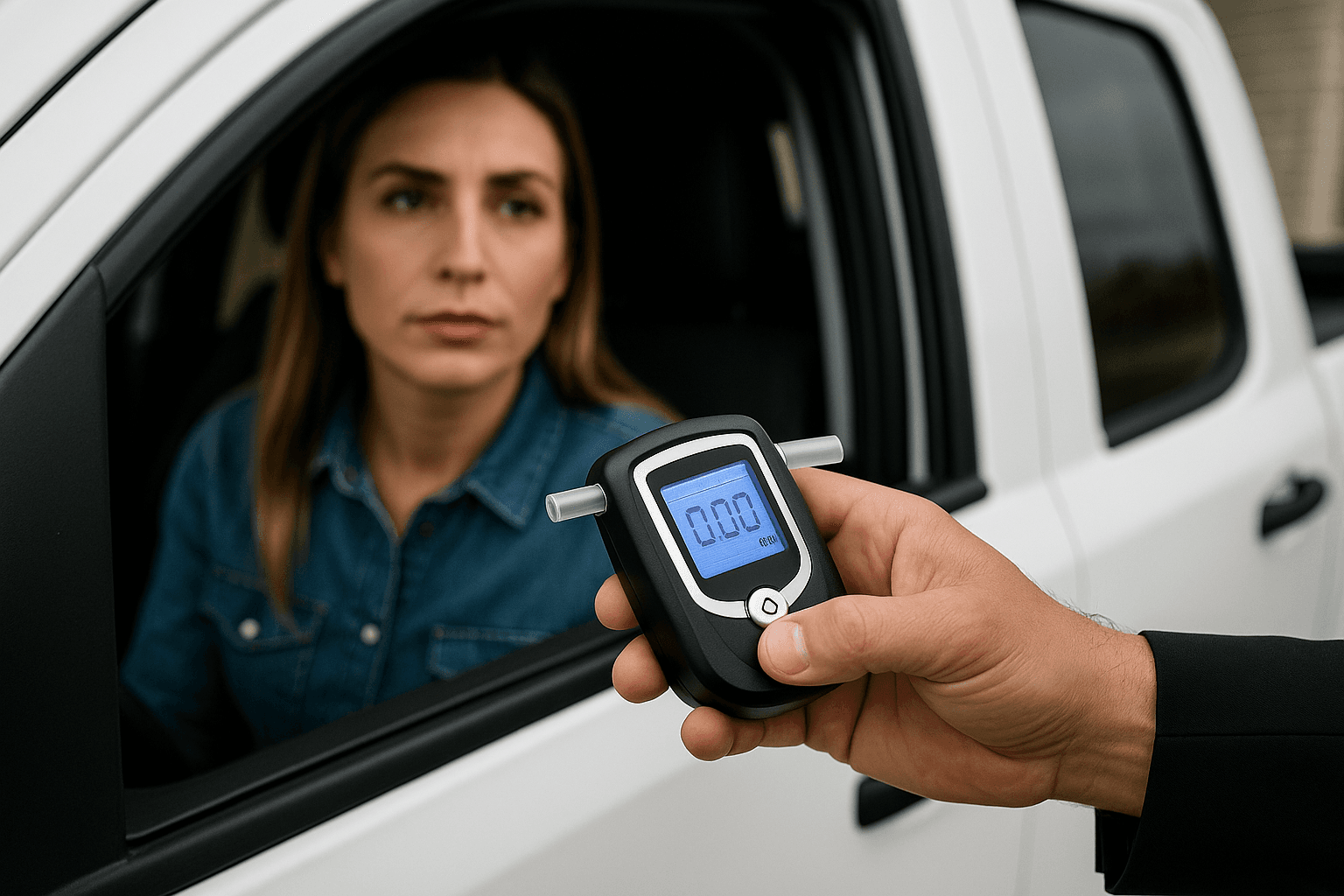
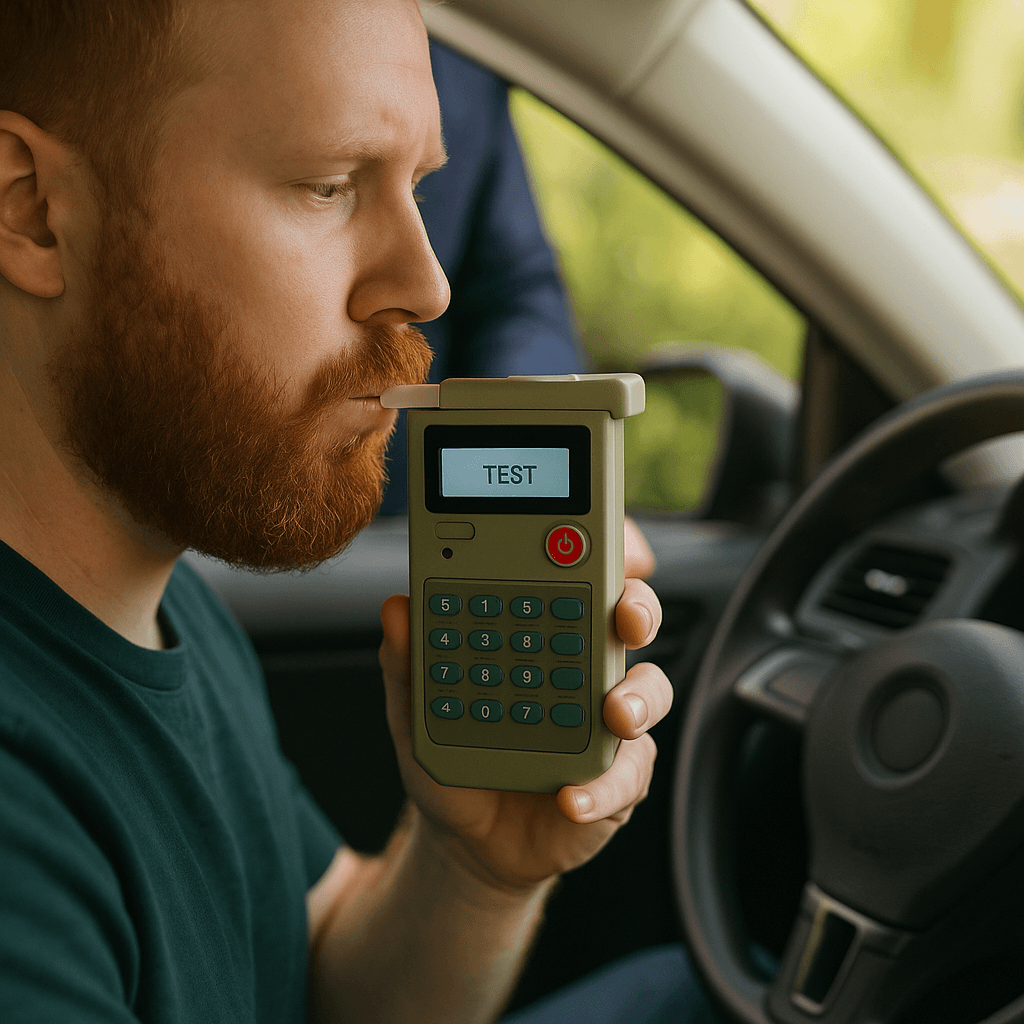
Oregon requires ignition interlock device installation as a condition of any hardship permit following a DUI-related suspension, governed under ORS 813.602. The IID must be installed by an approved vendor before DMV will issue the permit. Oregon DMV maintains a list of approved IID providers; using a non-approved vendor disqualifies the application.
The IID requirement applies to all DUI-related hardship permits, including those issued through the DUII Diversion Program. Non-DUI suspensions (points, uninsured, unpaid fines) typically do not require IID for hardship permits, but DMV retains discretion to impose it if the suspension involves any alcohol-related violation.
Compliance reporting is required. Your IID vendor submits monthly reports to DMV. Tampering attempts, failed breath tests, or missed calibration appointments trigger automatic permit revocation. Most drivers do not realize that a single failed morning breath test (from residual alcohol the night before) counts as a violation even if you were not actively driving.
SR-22 Filing Setup and What It Costs
SR-22 financial responsibility filing is required for DUII and certain other serious suspension types in Oregon. The SR-22 must remain on file for 3 years and is a prerequisite to both hardship permit issuance and full reinstatement after suspension ends.
Your insurance carrier files the SR-22 certificate directly with Oregon DMV. Not all carriers write SR-22 policies. In Oregon, carriers confirmed to write SR-22 include Geico, Progressive, Bristol West, Dairyland, GAINSCO, Kemper, National General, The General, and USAA. State Farm writes SR-22 but does not advertise non-owner policies publicly. If you do not own a vehicle, you need a non-owner SR-22 policy, which covers liability when you drive borrowed or rented vehicles.
SR-22 filing fees range from $15 to $50 depending on carrier. Premium impact is the larger cost. Drivers with DUI suspensions typically pay $140–$190 per month for minimum-liability SR-22 coverage in Oregon. Non-owner policies cost slightly less, approximately $85–$140 per month. Estimates based on available industry data; individual rates vary by driving history, coverage selections, and location.
Application Processing Timeline and What Delays Approval
Oregon DMV does not publish a standard processing timeline for hardship permit applications. Processing time varies based on suspension type, completeness of documentation, and current DMV workload. Most applications take 2 to 4 weeks if all documentation is complete.
Incomplete applications extend processing significantly. Missing employer verification, missing SR-22 certificate, or unresolved underlying issues (unpaid fines, uncompleted education requirements) halt processing until resolved. DMV does not proactively notify applicants of missing documentation in all cases. You may wait weeks only to discover your application was never reviewed.
Court-issued suspensions require coordination between the court and DMV. If your suspension originated from a criminal conviction, the court must notify DMV of your eligibility before DMV will process the hardship application. This adds weeks to the timeline. Unlike some states where courts issue restricted licenses directly, Oregon hardship permits are issued by DMV, not courts, though court documents may be required as supporting evidence for DUII-related applications.
What Happens If You Drive Outside Approved Hours or Routes
Driving outside your approved hardship permit restrictions is treated as driving while suspended in Oregon. This triggers immediate permit revocation, extends your underlying suspension period, and may result in criminal charges.
Most drivers assume a small deviation (stopping for groceries on the way home from work, driving a child to school on a Saturday) is a gray area. It is not. Oregon law treats any non-approved use as a violation. Law enforcement does not grant discretion. If you are stopped outside approved hours or off approved routes, the permit is revoked on the spot.
Violation also impacts future hardship eligibility. A revoked permit for cause typically disqualifies you from reapplying until the underlying suspension expires. Some drivers lose months of work eligibility because they assumed the permit allowed minor personal errands.
CDL Holders and Commercial Driving Restrictions
Oregon hardship permits do not cover commercial driving. If you hold a CDL and your job requires operating a commercial vehicle, the hardship permit does not restore that privilege. You may use the hardship permit to drive a personal vehicle to and from work, but you cannot drive the commercial vehicle itself.
This creates a serious problem for CDL holders whose job is commercial driving. Employers in the trucking and delivery industries typically will not retain drivers who cannot operate commercial vehicles, even if the driver has a valid hardship permit for personal use. The hardship permit solves the commute problem but not the employment problem.
Federal CDL disqualification rules are separate from state hardship programs. A DUI in any vehicle (personal or commercial) disqualifies your CDL for at least one year under federal law. Oregon's hardship permit does not override that federal disqualification. You must wait out the federal disqualification period before applying for CDL reinstatement, which is a separate process from personal license reinstatement.