You were suspended yesterday and work starts Monday. Oregon's Hardship Permit requires proof of essential need, SR-22 filing, and ignition interlock installation before your employer documentation even matters.
Oregon's Hard Suspension Window Blocks Immediate Work Permits
Oregon imposes a 30-day hard suspension before any hardship permit application can be filed for implied consent BAC failure cases under ORS 813.410. Your employer verification letter, insurance proof, and application fee are irrelevant until that 30-day period ends. The clock starts from your administrative suspension effective date, not your arrest date or hearing date.
Refusal cases carry a longer initial lockout — the full 1-year administrative suspension with no hardship eligibility for the first 30 days. BAC failure suspensions last 90 days total, meaning you face 30 days with no driving privileges followed by 60 days of potential hardship permit eligibility if approved. Court-convicted DUII revocations have separate hard periods that vary by conviction type and prior offense history.
If you're counting on a work permit to save your job this week, Oregon law does not accommodate that timeline. The hard suspension protects public safety at the cost of immediate employment preservation. Your employer needs to know this window exists before they make retention decisions.
What Oregon's Hardship Permit Actually Authorizes
Oregon calls its restricted driving privilege a Hardship Permit under ORS 807.240. The permit restricts you to essential purposes only: employment, medical appointments, school, and essential household needs. Route restrictions are defined case-by-case by Oregon DMV based on the need you document in your application.
Time restrictions follow the same pattern. If your application states you work 7 AM to 3 PM Monday through Friday at a specific address, your approved hours will bracket that window with minimal buffer — typically 30 minutes before and after your documented shift. Deviation from approved hours or routes risks immediate permit revocation without hearing. Oregon DMV monitors compliance through random checks and employer verification follow-ups.
Commercial driving is excluded. If you hold a CDL and your job requires operating commercial vehicles, Oregon's Hardship Permit does not cover that activity. You can drive your personal vehicle to and from the job site during approved hours, but you cannot operate the semi, delivery truck, or commercial bus once you arrive. This distinction ends employment for CDL holders whose work is the driving itself.
Compare car insurance rates in your state
Get quotes from licensed carriers — no obligation, no spam, results in minutes.
Get Your Free Quote✓ No Obligation Required✓ Licensed Carriers Only✓ Available Nationwide✓ Free to Compare
Required Documentation for Employment-Based Applications
Oregon DMV requires proof of essential need as the foundation document. For employment-based hardship permits, that means a verification letter from your employer on company letterhead confirming your job title, work address, work hours, and a statement that driving is necessary to perform the job or reach the job site. The letter must be signed by a supervisor or HR representative with contact information DMV can verify.
You must also submit an SR-22 insurance certificate if your suspension type requires it. DUII cases, uninsured driving suspensions, and certain reckless driving violations trigger SR-22 filing under ORS 806.010. The SR-22 filing must be active before Oregon DMV will process your hardship application. Expect 3 to 7 days for your insurer to file electronically and for DMV's system to confirm receipt.
Additional documentation varies by suspension reason. DUII-related hardship permits require proof of enrollment in Oregon's DUII Diversion Program if you're a first-time offender, or proof of completion of alcohol evaluation and treatment if diversion is not available. Points-based suspensions may require completion of a driver improvement course. Failure-to-pay suspension applicants must provide proof that outstanding fines or fees have been resolved before DMV will consider the hardship application.
Ignition Interlock Device Requirement for DUII Cases
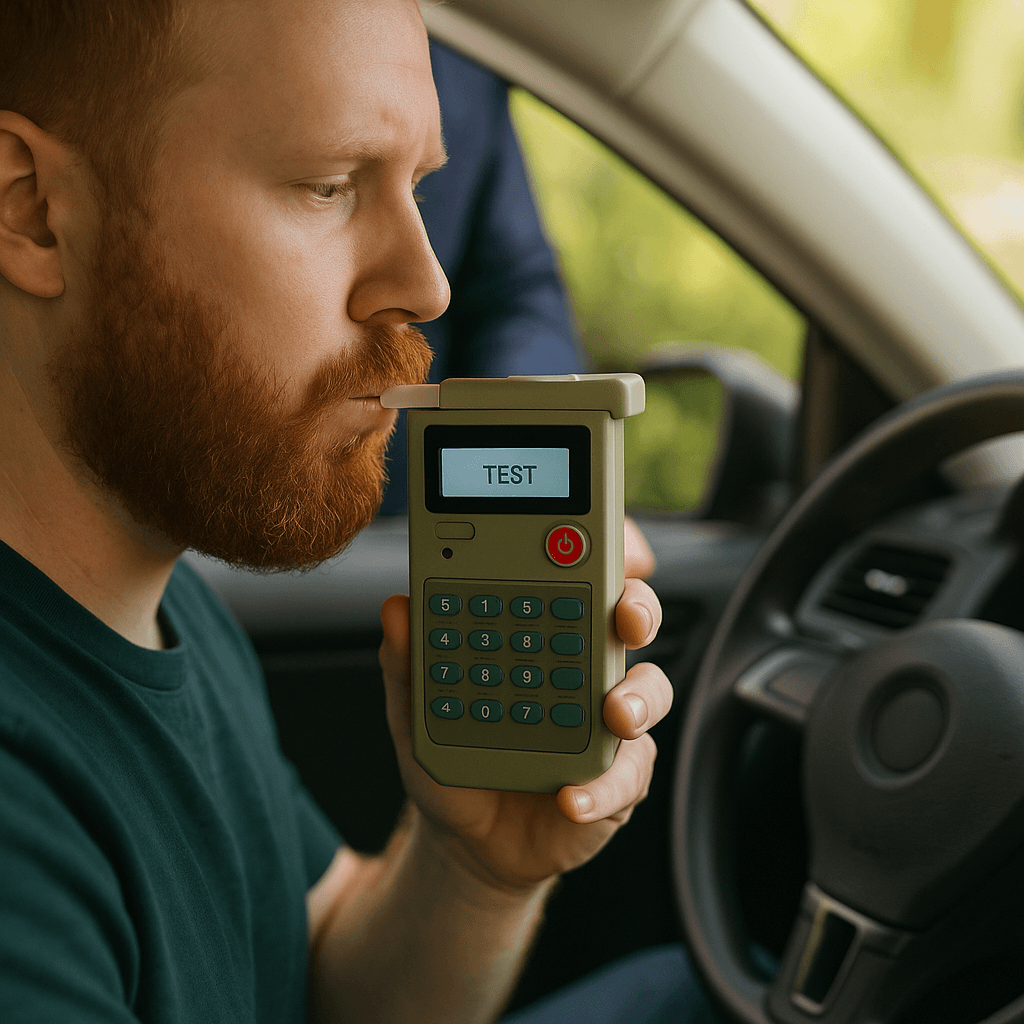
Oregon requires ignition interlock device installation as a condition of any hardship permit following a DUII-related suspension under ORS 813.602. The IID must be installed by an Oregon DMV-approved vendor before your hardship permit becomes valid. Installation costs typically range from $75 to $150, with monthly monitoring and calibration fees of $60 to $90.
The IID requirement applies even during the hardship permit phase — before full reinstatement. If you're approved for a hardship permit after your 30-day hard suspension ends, the permit is only valid when the IID is installed and functioning. Driving without a functioning IID while holding a hardship permit constitutes a separate criminal violation and triggers immediate permit revocation.
Compliance reporting is automatic. The IID vendor transmits your test results and any violation events directly to Oregon DMV. Failed breath tests, attempts to start the vehicle without testing, or evidence of tampering appear in your compliance record within 24 hours. Three failed tests or one tampering event typically result in permit suspension pending a hearing.
Application Process and Timeline at Oregon DMV
Oregon hardship permit applications are processed through Oregon DMV, not the courts. You file Form 735-7262 (Hardship Permit Application) at a DMV field office or by mail to Driver and Motor Vehicle Services Division. The application requires your current suspension order, proof of essential need, SR-22 certificate if applicable, IID installation receipt for DUII cases, and the application fee.
Processing times are not guaranteed. Oregon DMV does not publish a standard review window, but typical processing ranges from 10 to 21 business days depending on case complexity and field office workload. Incomplete applications are rejected without review — you must resubmit with all required documentation and pay the fee again. DMV does not issue provisional permits while your application is under review. You remain suspended until the hardship permit is formally issued.
Approval is discretionary. Oregon DMV evaluates your documented need, your driving record, the severity of your suspension trigger, and your compliance history. Second or third DUII offenses face higher scrutiny and longer processing times. Habitual Traffic Offender status under ORS 809.600 makes hardship permit eligibility extremely limited — the 10-year revocation period includes a multi-year lockout before any hardship consideration.
What Happens If You're Caught Driving Outside Approved Restrictions
Violating your hardship permit terms triggers immediate revocation without advance warning. Oregon State Police and local law enforcement have access to your approved hours and routes during traffic stops. If you're pulled over at 9 PM when your permit restricts driving to 6 AM to 4 PM, the officer will confiscate your hardship permit on the spot.
Revocation reinstates your full original suspension period. If you had 60 days remaining on a 90-day suspension when your hardship permit was issued, violating the permit terms restarts that 60-day clock with no hardship eligibility during the new suspension period. You also face criminal charges for driving while suspended, which carries its own penalties including potential jail time and extended suspension periods.
Employer verification failures have the same effect. If Oregon DMV contacts your employer to verify your work hours and discovers you no longer work there, or that your documented hours don't match your actual schedule, your permit is revoked administratively. The burden is on you to notify DMV within 10 days of any change in employment, work hours, or work address. Failure to update your hardship permit details is treated as a material misrepresentation.
SR-22 Insurance Setup for Hardship Permit Holders
Oregon requires continuous SR-22 filing for the full suspension period and typically for 3 years after reinstatement for DUII-related cases. The SR-22 certificate must be on file before Oregon DMV will issue your hardship permit. If your SR-22 lapses at any point during the filing period, Oregon DMV receives electronic notification within 24 hours and your hardship permit is automatically suspended.
Non-owner SR-22 policies cover drivers who don't own a vehicle but need to meet the filing requirement. Monthly premiums for non-owner SR-22 coverage in Oregon typically range from $40 to $85, depending on your violation history and the carrier's risk assessment. Owner-operator SR-22 policies that cover a vehicle you own or regularly drive cost more — expect $140 to $250 per month for liability-only coverage with an SR-22 endorsement after a DUII suspension.
Carriers writing SR-22 in Oregon include Progressive, Geico, Bristol West, Dairyland, The General, GAINSCO, and State Farm. Not all carriers offer the same approval rates for DUII-related filings. If you're applying for a hardship permit after a DUII suspension, expect 2 to 5 declinations before finding a carrier willing to file. Employment-hardship SR-22 insurance policies are priced based on your violation severity, years licensed, and whether you've had prior lapses.