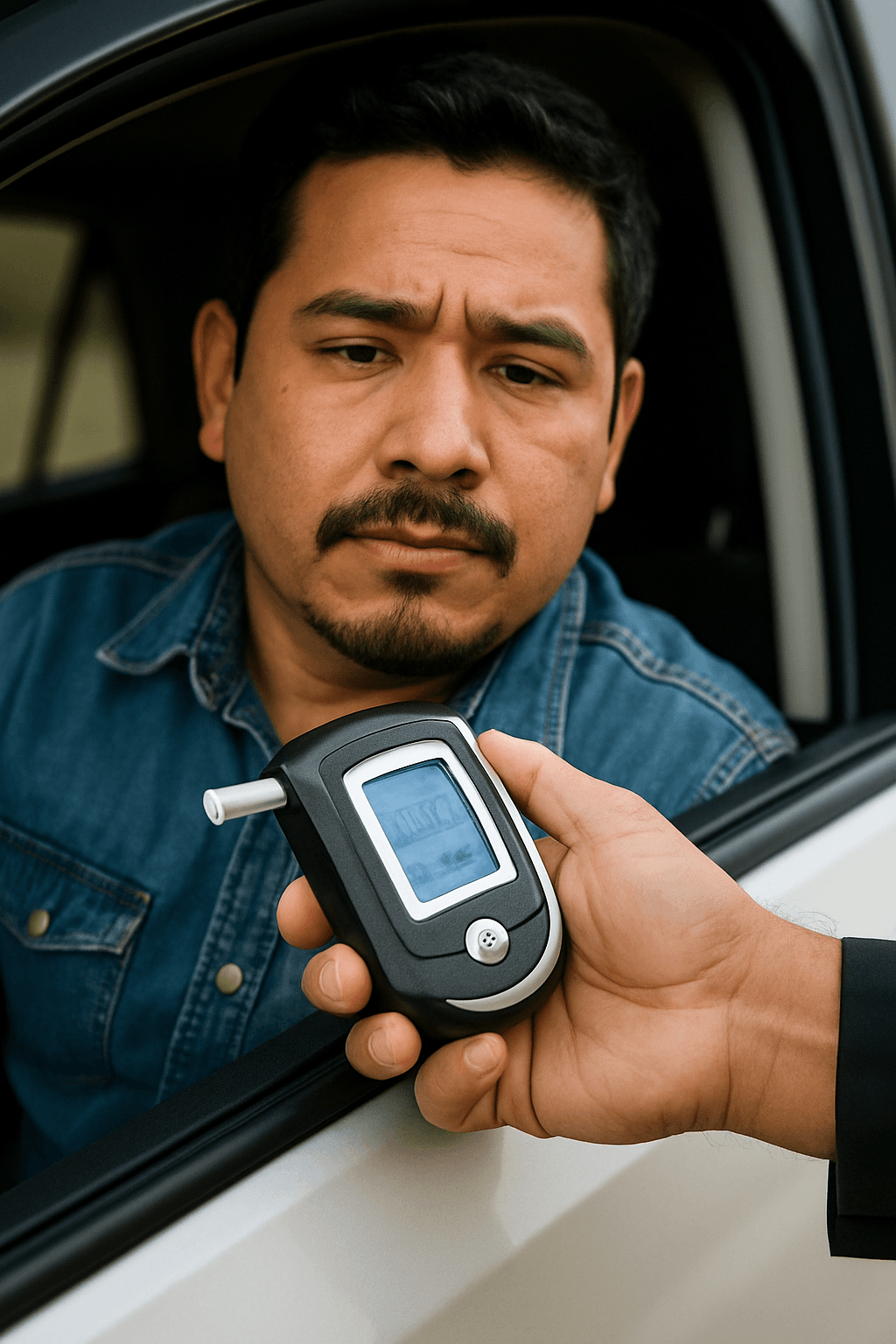
Oklahoma's Modified Driver License lets you drive to work during suspension, but the DPS and court approval tracks use different paperwork, different timelines, and different IID requirements. Most applicants don't know which track they're in until their first petition is denied.
Which Track Are You In: DPS Administrative or District Court Petition?
Oklahoma operates two separate approval tracks for Modified Driver Licenses, and the suspension source determines which one you use. DUI administrative revocations from Department of Public Safety (DPS) under Oklahoma's Implied Consent law (47 O.S. § 6-205.1) go through the DPS Driver License Services administrative application process. Court-ordered suspensions from traffic convictions, points accumulation, or criminal penalties require a district court petition filed in the county where the conviction occurred.
Most applicants discover the track distinction only after filing through the wrong channel. DPS administrative applications require proof of SR-22 insurance, proof of employment or essential travel need, and payment of the application fee directly to DPS. District court petitions require a formal motion filed through the district court clerk, a hearing before a judge, and a court order granting the modified license before DPS will issue the physical credential.
The 30-day hard suspension period under Egan's Law (47 O.S. § 6-205.1) applies to first-offense DUI administrative revocations before DPS will consider a modified license application. That hard period does not apply to court-ordered suspensions from other causes. If your license was suspended for uninsured driving under 47 O.S. § 7-606, points accumulation, or unpaid fines, the court petition track typically has no mandatory waiting period before you can apply.
What Documentation Does Your Employer Need to Provide?
Both tracks require employer verification confirming your work need, but the format and submission pathway differ. DPS administrative applications accept a signed letter on company letterhead stating your job title, work address, work hours, and a statement that driving is essential to your employment. The letter must include the employer's contact information and supervisor signature.
District court petitions require the same employer letter plus an affidavit format that can be submitted as an exhibit to your motion. Some district courts in Oklahoma County, Tulsa County, and Cleveland County require the employer affidavit to list specific routes and addresses for job-related driving if your position involves travel during work hours (delivery drivers, home health aides, sales roles). Office workers commuting to a single location need only the work address and commute window.
CDL holders face an additional restriction: Oklahoma's Modified Driver License does not authorize commercial vehicle operation even if your job requires it. If you hold a commercial driver's license and your employment depends on operating a commercial vehicle, the modified license will not preserve that job. Personal vehicle commuting to a CDL-required job site is allowed, but the modified license covers personal driving privileges only.
Compare car insurance rates in your state
Get quotes from licensed carriers — no obligation, no spam, results in minutes.
Get Your Free Quote✓ No Obligation Required✓ Licensed Carriers Only✓ Available Nationwide✓ Free to Compare
How Route and Hour Restrictions Actually Work in Practice
Oklahoma law allows district courts and DPS to impose route and time restrictions tailored to your documented need. Most modified licenses approved through the DPS administrative track include language limiting driving to "employment purposes, educational purposes, medical appointments, and essential household duties" without specifying exact routes. Court-ordered modified licenses typically include more precise restrictions tied to the employer affidavit and the judge's discretion.
Typical approved hours for DPS-issued modified licenses cover the documented work schedule plus a one-hour buffer before and after each shift. If your employer letter states you work Monday through Friday, 8 a.m. to 5 p.m., your modified license will generally authorize driving from 7 a.m. to 6 p.m. on those days. Weekend or evening driving for non-work purposes remains prohibited unless your employer documents weekend shifts or variable schedules.
Court-ordered modified licenses can be more restrictive or more permissive depending on the judge's assessment of your underlying violation. DUI-triggered petitions often carry stricter route documentation requirements, with some judges requiring a map of the approved commute path attached to the order. Non-DUI suspensions (points, unpaid tickets, uninsured driving) generally receive broader language allowing "necessary travel for employment and family support."
Violating the route or hour restrictions triggers immediate revocation. Oklahoma State Troopers and municipal officers can verify modified license status and approved hours through the DPS database at the traffic stop. Driving outside approved hours or for unapproved purposes (social visits, errands unrelated to work or household essentials) is treated as driving under suspension, a misdemeanor carrying up to one year in jail and fines up to $1,000 under 47 O.S. § 6-303.
When Is Ignition Interlock Device Installation Required?
Oklahoma requires ignition interlock device (IID) installation as a condition of any modified license issued after a DUI-triggered suspension. The IID requirement applies to both DPS administrative modified licenses and court-ordered modified licenses when the underlying suspension stems from an alcohol or drug-related driving offense. First-offense DUI administrative revocations require IID for the full duration of the modified license period, typically the remainder of the revocation after the 30-day hard suspension.
The device must be installed by a DPS-certified provider before you submit your modified license application. Oklahoma maintains a list of certified IID providers on the DPS website; using a non-certified provider will result in application denial. Installation costs typically range from $75 to $150, with monthly monitoring and calibration fees of $60 to $90. Those costs are separate from the modified license application fee and SR-22 insurance premium.
Non-DUI suspensions (points, uninsured driving, unpaid tickets, failure to appear) do not trigger the IID requirement unless the court specifically orders it as a condition of the modified license. DPS administrative modified licenses for non-DUI causes do not include IID mandates. If your suspension resulted from Oklahoma's uninsured motorist enforcement under 47 O.S. § 7-606, your modified license application will require proof of SR-22 insurance but not IID installation.
What SR-22 Filing Setup Costs and How Long It Lasts
Oklahoma requires SR-22 certificate of financial responsibility filing for most modified license applications, with the filing period tied to the underlying suspension cause. DUI suspensions require three years of continuous SR-22 coverage measured from the reinstatement date, not the suspension date. Uninsured driving suspensions under 47 O.S. § 7-606 also require three-year SR-22 filing. Points-based suspensions and unpaid-ticket suspensions typically do not require SR-22 unless the court specifically orders it.
The SR-22 filing fee ranges from $15 to $50 depending on the carrier, paid once at policy inception. That fee is separate from the premium. Monthly premium costs for SR-22 liability coverage in Oklahoma after a DUI suspension typically range from $140 to $240 per month for minimum state limits ($25,000 bodily injury per person, $50,000 per accident, $25,000 property damage). Non-owner SR-22 policies for drivers without a vehicle cost approximately $85 to $140 per month.
SR-22 lapse triggers automatic license re-suspension. If your carrier cancels your policy or you allow coverage to lapse, the carrier notifies DPS electronically within 10 days. DPS suspends your modified license and your underlying driving privileges immediately without additional notice. Reinstatement after SR-22 lapse requires paying the $125 reinstatement fee, filing new SR-22 proof, and restarting the three-year SR-22 clock from zero.
Carriers writing SR-22 in Oklahoma include Progressive, Geico, The General, National General, State Farm, and Bristol West. Non-owner SR-22 policies are available from Progressive, Geico, The General, and USAA (for eligible members). Standard-tier carriers (Nationwide, Farmers, Travelers) typically decline SR-22 applicants with recent DUI convictions, requiring you to shop non-standard or high-risk carriers for the first 18 to 24 months after the suspension.
How Long Until You Receive the Physical Modified License?
DPS administrative modified license applications typically process within 10 to 15 business days after DPS receives your completed application packet, SR-22 proof, employer verification, and payment. The physical credential is mailed to the address on file with DPS. Court-ordered modified licenses take longer because the timeline includes the court hearing schedule, judicial review, and the court order transmission to DPS.
District court petition hearings are typically scheduled 15 to 30 days after you file the motion, depending on the county and the judge's docket. Oklahoma County and Tulsa County district courts often run 30 to 45 days from filing to hearing. After the judge grants the motion, the court clerk transmits the order to DPS, which then issues the physical modified license within 7 to 10 business days.
Total timeline from application or petition filing to physical credential in hand: DPS administrative track averages 2 to 3 weeks. District court petition track averages 6 to 8 weeks. If your job has a hard deadline for legal driving status, budget the full timeline and file early. Some employers will accept a copy of the court order granting the modified license as interim proof while waiting for the physical credential; others require the physical card before allowing you to drive company vehicles or perform job-related travel.
What Happens If Your Application Is Denied?
DPS can deny a modified license application if you fail to provide required documentation, if your SR-22 proof is incomplete, or if your suspension type is ineligible under Oklahoma law. Common denial reasons include employer verification letters missing required details (supervisor signature, contact information, work hours), SR-22 filings listing incorrect policy dates or coverage limits, and applications submitted before the 30-day hard suspension period expires for DUI revocations.
Denied DPS applications allow resubmission after you correct the deficiency. DPS does not refund the application fee if your initial submission is denied for incomplete documentation. Court petitions denied by a judge require filing a new motion with corrected supporting documents or additional evidence addressing the judge's stated concerns. Some judges deny initial petitions for DUI-triggered suspensions if the applicant has not completed an alcohol assessment or enrolled in a DPS-approved treatment program.
If your modified license application is denied and your job requires immediate driving, non-owner SR-22 insurance will not provide a legal pathway to drive without the license itself. SR-22 is proof of financial responsibility, not a driving privilege. The only legal solution after denial is correcting the application deficiencies and resubmitting, or in some cases consulting an attorney to file the district court petition if you attempted the DPS administrative track incorrectly.