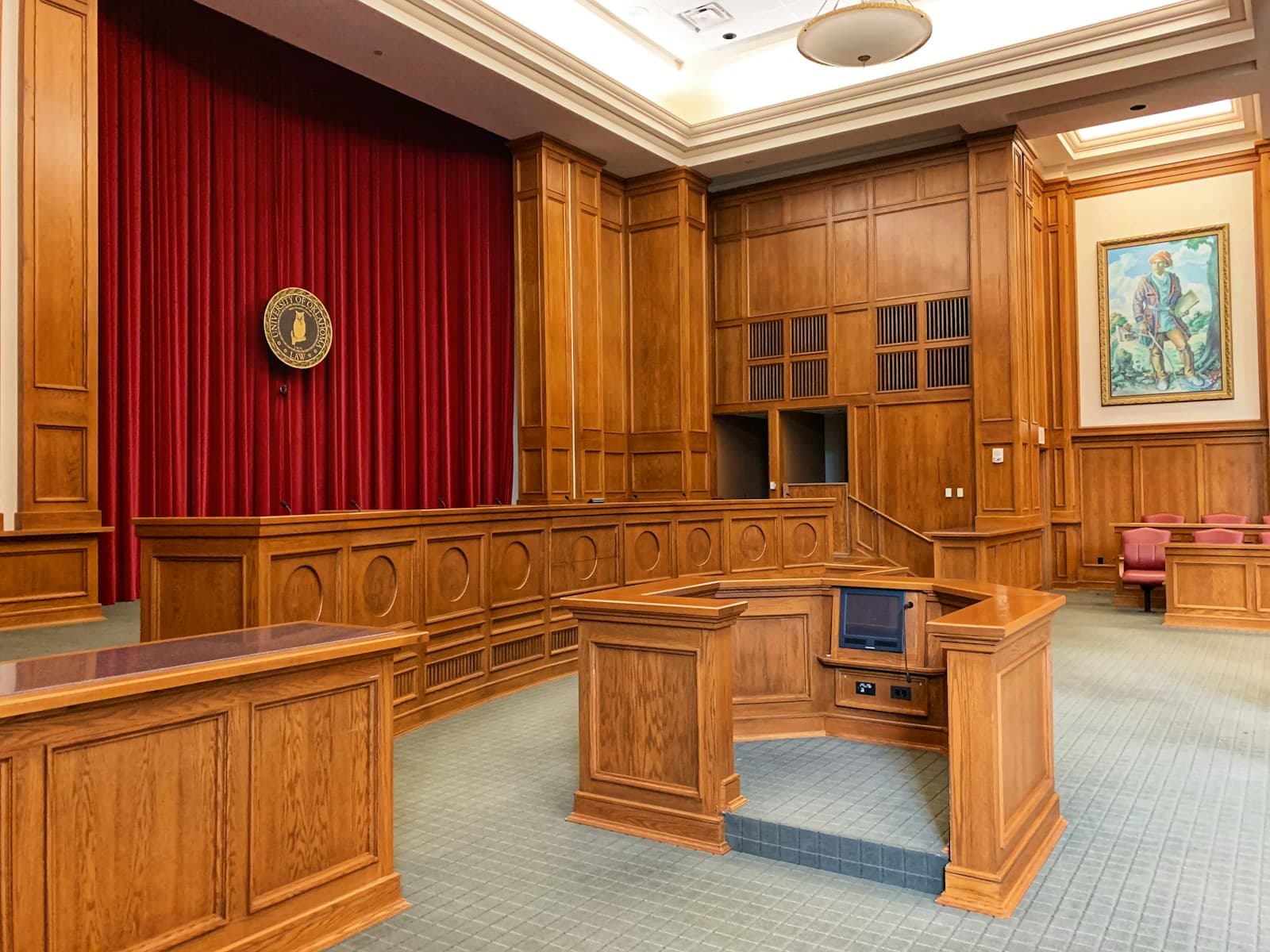
Ohio judges grant or deny LDP petitions based on employer documentation. Most applicants submit proof of hire when courts actually require route specificity, shift timing, and job-function detail.
Why Ohio Courts Reject LDP Petitions When Employment Is Verified
Your employer confirmed you work full-time. The court denied your Limited Driving Privileges petition anyway.
Ohio courts grant LDP petitions under Ohio Revised Code 4510.021 based on necessity, not employment status alone. The judge evaluates whether your specific job function requires driving and whether alternative transportation genuinely fails for your shift, location, and route. A letter confirming you work 40 hours per week at a warehouse does not answer those questions. Most denials happen because the employer letter documented the wrong facts.
The court needs to know your work start time, your home address, your worksite address, whether public transit runs that route during your shift window, and whether your job function itself requires driving during work hours. If you work 6 AM to 2 PM and the bus runs your route starting at 5 AM, the judge has no necessity basis to grant driving privileges. If your employer letter omits shift timing entirely, the court assumes the worst case and denies the petition.
What Ohio Courts Actually Mean by Employer Documentation
Ohio LDP petitions require proof of employment necessity under ORC 4510.021. The statute does not define what constitutes adequate proof. Court practice fills that gap.
Most Ohio courts expect the employer letter to include: your full legal name, your job title, your worksite address, your shift start and end times, whether your job requires you to drive during work hours, and a supervisor signature on company letterhead. Some courts require the employer to specify exact driving duties if you claim job-function necessity rather than just commute necessity. If you deliver parts between job sites, the letter should state that and describe the geographic range.
Courts grant LDP for work, school, medical appointments, court-ordered treatment, and other purposes specifically enumerated by the granting court. Work is the most common approved purpose, but the court defines permitted hours and routes narrowly. If your employer letter says you work "various shifts" or "as scheduled," the court cannot define permissible driving hours and will likely deny the petition. The judge needs fixed hours or a recurring schedule window to write an enforceable court order.
Compare car insurance rates in your state
Get quotes from licensed carriers — no obligation, no spam, results in minutes.
Get Your Free Quote✓ No Obligation Required✓ Licensed Carriers Only✓ Available Nationwide✓ Free to Compare
Route Maps and Shift Timing Documentation Matter More Than You Think
Ohio LDP orders specify permitted routes and permitted hours. The court cannot write those restrictions without knowing where you live, where you work, and when you work.
Include a printed map showing your home address and your worksite address with the direct commute route highlighted. Google Maps screenshots work. If your job requires driving to multiple sites during the workday, include a second map showing those job-site locations and typical routes between them. The court uses this documentation to define geographic boundaries in the LDP order. Driving outside those boundaries violates the court order and triggers automatic LDP revocation plus criminal charges for driving under suspension.
Shift timing documentation prevents ambiguity. If you work 7 AM to 3 PM Monday through Friday, the court may grant LDP for 6 AM to 4 PM on those days, allowing buffer time for the commute. If your schedule rotates or varies weekly, provide a written shift schedule covering at least the next 30 days. Courts hesitate to grant LDP for unpredictable schedules because enforcement becomes unworkable. Gig workers, on-call employees, and commission-based drivers face higher denial rates for this reason.
Job Function Justification for Drivers Whose Work Requires Driving
Some jobs require driving as a core function: delivery drivers, home health aides, field service technicians, sales representatives covering territories, and real estate agents. Ohio courts treat job-function driving differently from commute-only driving.
If your job requires driving during work hours, the employer letter must describe those driving duties specifically. "Sales territory covering Cuyahoga, Lorain, and Medina counties" is adequate. "Various client visits" is not. The court evaluates whether your employer could reassign you to a non-driving role during your suspension period. If the employer states you are the only field technician covering a specific service area and reassignment is not possible, that strengthens the necessity argument.
Commercial drivers face a separate problem. Ohio LDP typically excludes commercial vehicle operation even when the underlying suspension allows it. If you hold a CDL and your job requires driving a commercial vehicle, LDP will not help you. The court can grant LDP for commuting to that job in your personal vehicle, but you cannot operate the commercial vehicle itself under LDP. Most employers terminate CDL drivers who cannot perform the core job function, making LDP a temporary stopgap at best.
SR-22 Filing Requirement Before the Court Grants LDP
Ohio courts require proof of SR-22 insurance filing before granting LDP for OVI-related suspensions and most insurance-related suspensions. The SR-22 filing proves you carry liability coverage meeting Ohio minimum requirements: $25,000 per person, $50,000 per accident for bodily injury, and $25,000 for property damage.
You cannot file for SR-22 after the court grants LDP. The SR-22 filing must be active when you submit your LDP petition. Most courts require a copy of the SR-22 certificate as part of the petition packet. If you submit the petition without proof of SR-22 on file, the court denies it and you start over. Employment-hardship SR-22 policies typically cost $40 to $80 per month depending on your violation history and county. The SR-22 filing fee itself is $25 to $50, paid once at setup.
SR-22 must remain on file for the entire duration of your suspension, not just the LDP period. If your SR-22 lapses because you miss a payment or cancel the policy, the Ohio BMV receives automatic notice from the insurance carrier within 24 hours. The BMV suspends your license again immediately, and your LDP becomes void. Reinstatement after SR-22 lapse requires starting the entire LDP petition process over, paying a new reinstatement fee, and potentially serving additional suspension time.
Ignition Interlock Requirement and Employer Coordination
Ohio requires ignition interlock devices for all OVI-related LDP grants under ORC 4510.022. The device must be installed by an Ohio Department of Public Safety-approved vendor before the court grants the LDP. Installation costs $70 to $150, and monthly monitoring fees run $60 to $90.
Some employers refuse to allow employees to install ignition interlock devices in company vehicles. If your job requires you to drive a company car, van, or truck during work hours, coordinate with your employer before filing the LDP petition. The employer letter should state whether the company permits interlock installation in the assigned vehicle. If the employer refuses, you cannot use that vehicle under LDP, and the court may deny the petition if driving a company vehicle is essential to your job function.
Ignition interlock violations trigger immediate LDP revocation. If you attempt to start the vehicle after drinking, if you fail a rolling retest during a drive, or if you miss a required calibration appointment, the interlock vendor reports the violation to the Ohio BMV within 48 hours. The BMV revokes your LDP without a hearing. Most drivers do not realize that having another person blow into the device also counts as a violation. The device logs every failed start attempt and every skipped rolling retest, creating a permanent record the court reviews if you petition for LDP again.
Court Jurisdiction and Filing Location for LDP Petitions
Limited Driving Privileges are granted exclusively by courts, not the Ohio BMV. The specific court with jurisdiction depends on your suspension type. For OVI convictions, the sentencing court that handled your criminal case has jurisdiction over your LDP petition. For administrative suspensions issued by the BMV, the court of common pleas in your county of residence has jurisdiction.
Filing in the wrong court wastes weeks. The court dismisses the petition without prejudice, meaning you must refile in the correct court and pay the filing fee again. Court filing fees for LDP petitions vary by county. Some courts charge $50, others charge $150. This is separate from the $40 Ohio BMV reinstatement fee you will pay later when your full driving privileges are restored.
The petition itself requires specific documentation: a completed petition form, proof of SR-22 filing, proof of ignition interlock installation if required, the employer verification letter described above, a copy of your current BMV driving record, and payment of the court filing fee. Some courts provide petition form templates on their websites. Others require you to draft the petition yourself or hire an attorney to prepare it. Missing any required document delays the hearing or results in automatic denial.