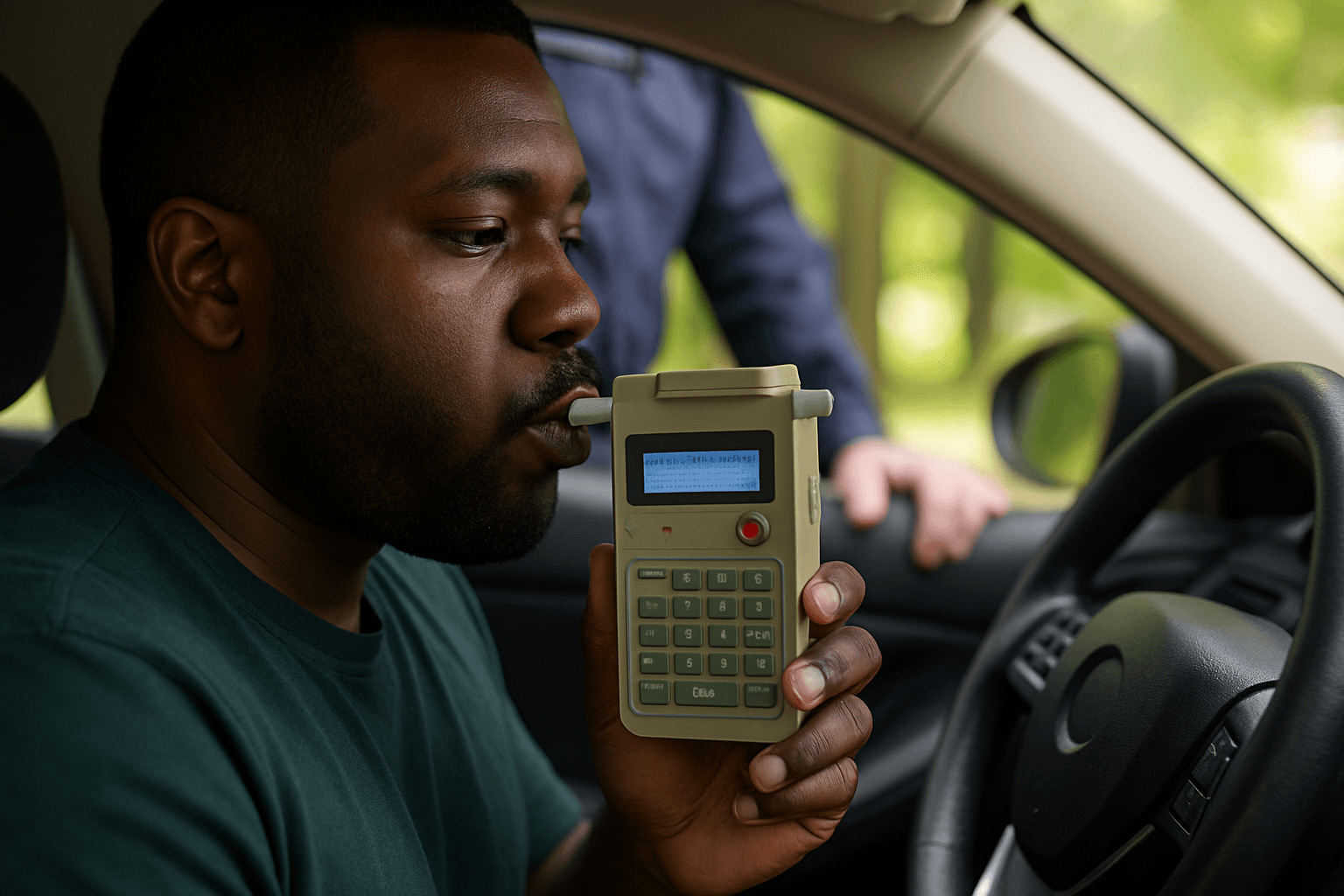
New York DMV issues Restricted Use Licenses on a case-by-case basis with no published processing standard. Most applicants wait 2-6 weeks, but DWI cases with ignition interlock mandates often extend to 8+ weeks due to interlock verification steps.
What NY DMV Does Not Publish: The Restricted Use License Processing Window
New York DMV does not publish a standard processing time for Restricted Use License applications. Unlike driver license renewals or registration transactions with posted timelines, RUL applications are reviewed on administrative discretion with no guaranteed turnaround commitment.
Most applicants experience a 2-6 week wait from submission to approval notification. DWI cases requiring ignition interlock installation under Leandra's Law face longer windows—often 8-12 weeks—because DMV must verify interlock device installation and carrier compliance reporting before issuing the restricted license. The interlock coordination step is the structural bottleneck DMV does not surface in public guidance.
Regional DMV office workload drives much of the variation. New York City metro offices process higher volumes and typically run longer backlogs than upstate county offices. If you submit at a Rochester or Buffalo DMV, approval often arrives faster than a Manhattan or Queens submission for the same violation profile.
Application Submission and the Employment Documentation Trigger
The Restricted Use License application (MV-500 series form) requires three core components at submission: completed application form, proof of employment or necessity for driving, and proof of insurance verified directly by DMV through carrier electronic reporting.
Employment verification is the documentation anchor for work-purposes eligibility. Your employer must provide a letter on company letterhead stating your job title, work address, scheduled work hours, and confirmation that driving is required to reach the worksite or perform job duties. Self-employment requires additional documentation: business registration, client contracts, or tax filings demonstrating the business operates and requires driving.
DMV does not accept generic employment letters. The letter must specify exact work hours and address where you will drive. If your job involves driving during work hours (delivery, service calls, site visits), the employer letter must state that explicitly. DMV uses these details to define the route and time restrictions embedded in your RUL approval.
Compare car insurance rates in your state
Get quotes from licensed carriers — no obligation, no spam, results in minutes.
Get Your Free Quote✓ No Obligation Required✓ Licensed Carriers Only✓ Available Nationwide✓ Free to Compare
Ignition Interlock Verification and the DWI Processing Extension
Leandra's Law (NY VTL §1198) mandates ignition interlock installation for all DWI/DUI convictions as a condition of any Restricted Use License during the interlock period. DMV will not issue the RUL until the interlock device is installed and the provider has submitted compliance reporting to DMV confirming installation.
This creates a procedural sequence most applicants miss: you cannot complete the RUL application until the interlock is installed, and the interlock provider cannot install until your vehicle is identified and you've paid installation fees. The interlock step adds 2-4 weeks to the timeline before DMV even begins RUL review.
Multiple DWI offenses extend the delay further. Drivers with two or more DWI convictions face extended hard revocation periods and may be categorically ineligible for a Restricted Use License during portions of the revocation window. DMV reviews prior offense history manually in these cases, adding weeks to the approval decision.
Insurance Verification Without SR-22: NY's IIES System
New York does not use SR-22 certificates. Financial responsibility verification is handled entirely through the Insurance Information and Enforcement System (IIES), a direct DMV-to-carrier electronic reporting framework.
When you purchase a liability policy from a New York-admitted carrier, the carrier reports coverage electronically to DMV within 24-48 hours. DMV verifies this reporting before processing your RUL application. You do not submit proof of insurance forms—DMV pulls the data directly from IIES.
If your carrier has not reported coverage by the time DMV reviews your application, the application stalls until IIES confirms active coverage. This is most common with non-standard carriers or recently purchased policies. Verify with your carrier that IIES reporting has been submitted before applying for the RUL.
Route and Time Restrictions Defined at Approval
The Restricted Use License approval notice specifies exactly where and when you are permitted to drive. Driving is restricted to specific purposes defined by DMV: travel to and from work, school, medical appointments, and other court- or DMV-approved essential activities.
Work-related driving is time-bounded. If your employer letter states your shift is 9 AM to 5 PM, your RUL will typically allow driving one hour before and one hour after those times to account for commute variability. Driving outside that window—even for work-related errands—violates the restriction and triggers immediate revocation.
Route restrictions are less commonly enforced but legally embedded in the approval. DMV expects you to drive the most direct route between home and work. Detours for personal errands during the commute window violate the restriction. If stopped outside the direct route during approved hours, you must demonstrate the deviation was necessary and work-related.
What Happens If Your Application Is Denied
DMV has broad discretion to deny Restricted Use License applications. Common denial reasons include: unpaid tickets or fines listed on your driving abstract, multiple prior suspensions or revocations within the past 5 years, failure to complete required Impaired Driver Program classes, or insufficient employment documentation.
The denial notice will state the reason. Most denials can be cured by addressing the specific issue—paying outstanding fines, completing IDP enrollment, or resubmitting stronger employment verification—and reapplying. Denials for multiple DWI offenses or permanent revocations are harder to overcome and may require a formal hearing.
Reapplication after a denial adds another 2-6 weeks to your timeline. If you are approaching a job-loss deadline, address every potential denial trigger before submitting the first application. Pull your driving abstract from DMV, verify all fines are paid, confirm IDP enrollment if required for your violation, and ensure your employer letter includes all details DMV requests.
Insurance Cost Stack for Restricted Use License Compliance
The cost to maintain a Restricted Use License in New York combines three components: the $25 DMV application fee, ignition interlock device installation and monthly monitoring fees (if required), and liability insurance premiums reported through IIES.
Ignition interlock costs run $100-$150 for installation and $75-$100 per month for monitoring and calibration. Over a typical 12-month interlock period, total device costs approach $1,000-$1,300. These are separate from insurance premiums.
Liability insurance for drivers with DWI suspensions typically costs $140-$250 per month in New York, depending on age, county, and prior claim history. Non-standard carriers writing high-risk policies dominate this market. Employment-hardship SR-22 insurance frameworks used in other states do not apply in New York—IIES reporting replaces the SR-22 filing mechanism entirely.