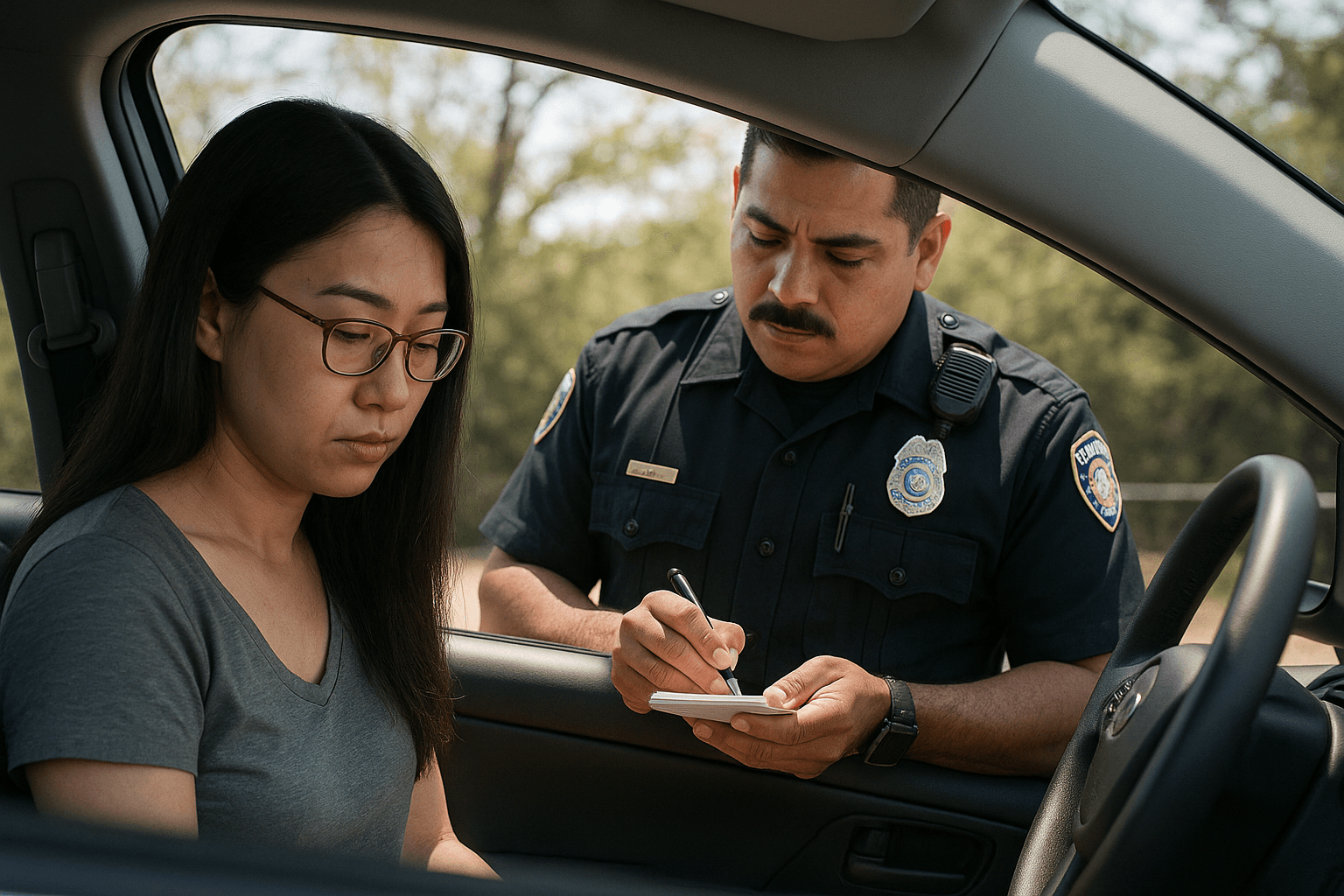
New York's Restricted Use License allows driving to work, school, and medical appointments — but only during approved hours documented in your DMV application. Driving outside your window is a new violation.
What Hours Does New York's Restricted Use License Actually Cover?
New York's Restricted Use License (RUL) does not grant you blanket work-hours driving. The DMV approves specific time windows based on the documentation you submit with your MV-500 application — typically your employer's verification letter stating your shift schedule, start time, end time, and commute route. If your employer confirms you work 9 AM to 5 PM Monday through Friday at a specific address, your RUL will likely restrict you to that commute window plus a reasonable buffer (often 30 minutes before and after) for travel time. Driving at 8 PM to run errands is not covered, even if you hold an RUL.
The approved hours appear on the RUL itself or in the accompanying restriction notice from the DMV. You are required to carry both your RUL and the employer verification letter while driving — law enforcement will ask for both during any traffic stop. If your actual work schedule changes after the RUL is issued (you switch to night shift, add weekend hours, or take a second job), you must file an amended application with new employer documentation. Driving outside your approved window without an amendment is treated as driving on a suspended license, which triggers a new misdemeanor charge under New York Vehicle and Traffic Law § 511.
New York does not publish a standard hours template. The DMV exercises broad discretion in defining what constitutes reasonable work-related driving for your specific case. This discretion is why documentation quality matters — vague employer letters produce narrow approvals or outright denials.
Does the Restricted Use License Cover Driving During Work Hours?
It depends on what your job requires and what your employer documented in the verification letter. If your job involves driving as a core function — delivery driver, sales rep with client visits, home health aide traveling between patient homes — the employer letter must state that explicitly and list the geographic territory or typical routes. The DMV will consider approving driving during work hours for job-function purposes, but only if the letter makes clear that the driving is not personal convenience but job necessity.
If your job does not require driving (you work at a fixed location all day), your RUL will typically restrict you to the commute only: home to work in the morning, work to home in the evening. Leaving the worksite during lunch to run errands is not covered. Stopping at a grocery store on the way home is not covered unless the DMV specifically approved household-duty driving as an additional purpose.
Commercial driving is categorically excluded even if your job requires it. If you hold a Commercial Driver's License and your employment is commercial vehicle operation (truck driver, bus driver, heavy equipment operator), the RUL does not authorize you to perform those duties. New York's RUL applies only to personal vehicles under Class D/DJ/E licenses. CDL holders can obtain an RUL for commuting to the job site in a personal vehicle, but once at work, they cannot operate the commercial vehicle without a valid unrestricted CDL.
Compare car insurance rates in your state
Get quotes from licensed carriers — no obligation, no spam, results in minutes.
Get Your Free Quote✓ No Obligation Required✓ Licensed Carriers Only✓ Available Nationwide✓ Free to Compare
What Happens If You Drive Outside Your Approved Hours?
Driving outside your RUL's approved time window is prosecuted as Aggravated Unlicensed Operation (AUO) under Vehicle and Traffic Law § 511. The severity depends on your suspension tier and prior record. AUO in the Third Degree (the base charge) is a misdemeanor punishable by up to 30 days in jail, a fine of $200 to $500, and a mandatory additional suspension period. If your underlying suspension was DWI-related or you have a prior AUO conviction, the charge escalates to AUO Second Degree (up to 180 days jail, $500-$1,000 fine) or AUO First Degree (a felony for repeat offenders).
The DMV will also revoke your RUL immediately upon arrest for AUO. You lose the restricted driving privilege entirely, and reapplication is not guaranteed — the DMV treats RUL violations as evidence you cannot be trusted with conditional driving. If you are arrested for AUO while holding an RUL, the new conviction typically extends your underlying suspension by at least 6 months and may trigger a hard revocation period with no hardship eligibility.
Law enforcement in New York actively enforces RUL restrictions. Officers run your license during traffic stops and see the restriction code. If you are pulled over at 11 PM on a Saturday and your RUL restricts you to weekday 8 AM-6 PM commute hours, the officer will arrest you on the spot. There is no grace period, no warning system. The time restriction is a hard legal boundary.
How to Document Your Work Schedule for Maximum Approval
The employer verification letter you submit with your MV-500 application is the single most important document in your RUL file. The DMV uses it to define your approved hours, so vague or incomplete letters produce narrow approvals or denials. Your employer must provide the letter on company letterhead, signed by a manager or HR representative with contact information the DMV can verify. The letter must state: your full name, your job title, your work address, your scheduled days and hours (e.g., Monday-Friday 7:30 AM to 4:00 PM), whether your job requires driving during work hours and if so for what purpose, and confirmation that you cannot perform the job without driving.
If your work schedule varies (retail with rotating shifts, gig work with flexible hours, on-call positions), the employer letter should state the range of possible hours and note that your schedule varies weekly. The DMV may approve a broader window (e.g., 6 AM to 11 PM seven days a week) if the letter documents genuine schedule variability and job necessity. But the burden is on you to prove the variability is job-driven, not personal convenience.
For drivers with multiple jobs, submit separate employer letters for each job. The DMV can approve multiple work locations and commute routes on a single RUL, but only if each is documented with a standalone letter. Self-employed drivers and independent contractors face the hardest documentation burden — you will need business registration, client contracts, or invoices showing regular work obligations tied to specific locations. A generic statement that you "work for yourself" will not support an RUL application.
Can You Add Medical or School Purposes to a Work-Only RUL?
Yes, but only if you document those purposes in your initial application or file an amendment with supporting evidence. New York's RUL statute allows driving for work, school, medical appointments, and other court- or DMV-approved essential activities. The DMV does not automatically grant all purposes — you must request each one and provide documentation. If you are enrolled in school, submit a letter from the registrar confirming your enrollment, class schedule, and campus address. If you have recurring medical appointments, submit a letter from your healthcare provider confirming the treatment schedule and medical necessity.
Most RUL approvals are work-only because most applicants submit only employer documentation. If you anticipate needing school or medical driving, include those requests and supporting documents in your MV-500 packet at the time of application. Adding purposes after the fact requires filing an amended application, paying a second $25 fee, and waiting for DMV review — processing time for amendments is unpredictable and can take 4-6 weeks.
Household duties are not a separate approved purpose under New York's RUL framework in the way Texas includes them. If you need to drive children to daycare or elderly parents to appointments, those trips must fall within your approved work or medical windows or you must document them as care-dependent medical necessity tied to a healthcare provider's letter.
What Insurance Do You Need for a Restricted Use License?
New York does not use SR-22 certificates. Financial responsibility verification for your RUL is handled through the DMV's direct electronic reporting system with admitted carriers. You must carry a standard New York auto insurance policy that meets the state's minimum liability limits: $25,000 bodily injury per person, $50,000 bodily injury per accident, $10,000 property damage, plus mandatory Personal Injury Protection (PIP) and Uninsured Motorist coverage. Your carrier reports your active coverage directly to the DMV in real time through the Insurance Information and Enforcement System (IIES).
Your suspension status will place you in the non-standard auto insurance market. Expect monthly premiums in the $180-$290 range depending on your violation history, age, and county. If your suspension is DWI-related, Leandra's Law mandates ignition interlock device (IID) installation as a condition of your RUL — the IID lease adds approximately $70-$100/month, and your carrier must file proof of IID installation with the DMV before your RUL is issued.
Some carriers writing suspended-license drivers in New York include Geico, Progressive, Bristol West, and National General. If you do not own a vehicle but need coverage to maintain your RUL eligibility, ask about non-owner policies — these provide liability coverage when you drive borrowed or rental vehicles and satisfy the DMV's financial responsibility requirement at a lower monthly cost (typically $50-$90/month for non-owner liability).
How Long Does It Take to Get Approval and What Are the Costs?
New York DMV does not publish a standard processing time for RUL applications. Actual turnaround varies significantly by regional DMV office and case complexity — straightforward work-commute applications with complete documentation typically process in 2-4 weeks, but DWI cases requiring IID coordination or applications with multiple purposes can take 6-8 weeks or longer. You cannot drive on a suspended license while waiting for RUL approval. Plan accordingly if you have a job start date or cannot afford unpaid leave.
The RUL application fee is $25 paid at the time you submit your MV-500 form. If your suspension requires you to pay a termination or civil penalty fee before reinstatement eligibility (common for insurance lapse suspensions under VTL § 319), those fees are separate and must be paid before the DMV will process your RUL application. DWI suspensions often carry additional Driver Responsibility Assessment fees ($250/year for three years), which must be current for RUL eligibility.
If your application is denied, the DMV provides a written denial notice with the reason. Common denial reasons include incomplete employer documentation, ineligibility due to multiple prior DWI convictions, unpaid fines or civil penalties blocking DMV transactions, or failure to complete mandatory programs like the Impaired Driver Program. You can reapply after correcting the deficiency, but you will pay another $25 application fee.