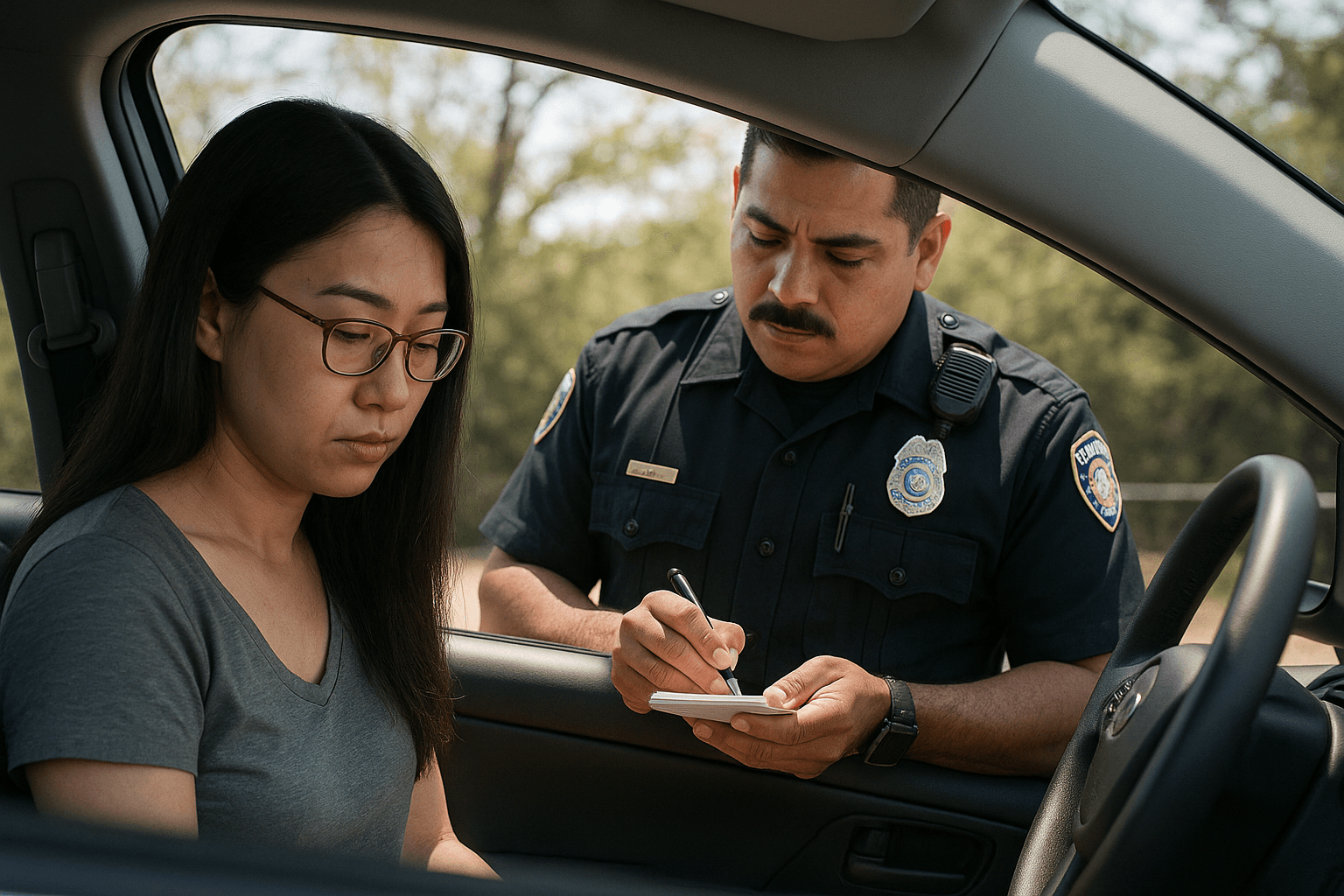
New York drivers with point-suspension can apply for a Restricted Use License through DMV, but the approval process weighs your complete suspension history — not just the current accumulation total.
What the Restricted Use License Covers for Point-Suspended Drivers
New York's Restricted Use License (RUL) allows you to drive to and from work, during work hours if your job requires driving, to medical appointments, and to court-ordered obligations. The license does not permit general-purpose driving — grocery runs, social visits, and errands outside approved purposes remain illegal.
Your employer must provide a verification letter on company letterhead confirming your work address, shift hours, and whether your job requires driving beyond commuting. Most DMV hearing officers require route documentation: the specific streets you'll use between home and work, with mileage and estimated travel time.
If your job involves commercial driving, the RUL typically cannot be used to operate commercial vehicles. CDL holders can use an RUL for personal commuting in a non-commercial vehicle, but not for the commercial vehicle their job requires. This creates a functional dead-end for truck drivers, delivery drivers, and others whose employment is the commercial driving itself.
Why Point-Suspension RUL Applications Face Higher Denial Rates
NY DMV has broad administrative discretion in granting or denying RULs. Point accumulation is the visible trigger, but the DMV weighs your complete driving and suspension history. If you've had prior suspensions — even those fully resolved years ago — the hearing officer can cite them as evidence of pattern behavior and deny the RUL.
Drivers with multiple prior suspensions face the steepest approval hurdle. A single 11-point suspension after years of clean driving is treated very differently than an 11-point suspension following two prior point-based or alcohol-related suspensions. The statute does not mandate this weighing, but DMV administrative practice applies it routinely.
DUI-related point suspensions trigger an additional layer: Leandra's Law (NY VTL §1198) mandates ignition interlock installation for all DWI convictions, including as a condition of any RUL during the interlock period. If your points include a DWI conviction, expect IID installation as non-negotiable.
Compare car insurance rates in your state
Get quotes from licensed carriers — no obligation, no spam, results in minutes.
Get Your Free Quote✓ No Obligation Required✓ Licensed Carriers Only✓ Available Nationwide✓ Free to Compare
How to File the RUL Application After Point Suspension
The application uses NY DMV's MV-500 series form. You must submit proof of employment (the employer verification letter), proof of insurance verified through NY's Insurance Information and Enforcement System (IIES), and documentation of any court-ordered obligations like DDP completion if the suspension involved alcohol.
The $25 application fee is paid at the time of filing. Processing time is not published by DMV and varies significantly by regional office and case complexity. Expect 3 to 6 weeks in most counties, longer in downstate metro offices with higher caseloads.
If your suspension includes unpaid fines or surcharges, the RUL application will be denied automatically until those balances are cleared. The DMV does not negotiate payment plans at the RUL hearing stage — arrears must be resolved before the application is submitted.
The Insurance Filing Requirement for Point-Suspended Drivers
New York does not use SR-22 certificates. Financial responsibility verification is handled entirely through the IIES system, a real-time electronic database linking NY-admitted carriers to the DMV. Your carrier reports policy issuance, cancellations, and lapses directly to DMV — no paper filing is involved.
You must maintain continuous coverage for the full duration of your RUL period and any subsequent monitoring period the DMV specifies. A lapse triggers automatic suspension of both your RUL and your vehicle registration under NY VTL §319. The civil penalty for a lapse is $8 per day (up to $900 maximum for a 90-day cap period), plus a $50 restoration fee.
Not all carriers write policies for point-suspended drivers. Standard-tier carriers like State Farm and GEICO may decline to quote or may impose surcharges exceeding 100% of base premium. Non-standard carriers like Bristol West and National General specialize in high-risk cases and typically offer the most competitive pricing for point-suspension profiles. Expect monthly premiums between $180 and $320 depending on your county, age, vehicle, and exact point total. Estimates based on available industry data; individual rates vary by driving history, vehicle, coverage selections, and location.
What Happens If You're Caught Driving Outside Approved Hours
Driving outside the purposes, hours, or routes specified in your RUL constitutes Aggravated Unlicensed Operation (AUO) under NY VTL §511. AUO in the third degree (the least severe tier) is a misdemeanor carrying up to 30 days in jail, a fine up to $500, and mandatory license revocation.
Your RUL is revoked immediately upon an AUO arrest — you do not continue driving while the case is pending. The DMV does not issue a second RUL after an AUO violation. You are back to full suspension with no hardship pathway until the underlying suspension period expires and you complete full reinstatement.
Employers occasionally ask drivers with RULs to perform tasks outside approved hours — a late delivery, an early shift swap, weekend inventory. Saying yes once is enough to trigger AUO if you're stopped. The legal risk is yours, not the employer's.
How Long the RUL Lasts and What Reinstatement Requires
The RUL remains valid for the duration of your point-suspension period, typically until the underlying violations age off your record and your point total drops below the suspension threshold. NY uses a rolling point system: violations remain on your abstract for 18 months from the conviction date, and points assigned to those violations count toward suspension thresholds during that window.
Once your point total drops below 11 (the typical suspension threshold for non-probationary drivers), you are eligible to apply for full license reinstatement. The $50 base reinstatement fee applies, plus any outstanding suspension termination fees or civil penalties from prior lapses.
If your suspension included alcohol-related points, completion of the NY Impaired Driver Program (IDP) is required before full reinstatement. IDP completion does not automatically restore your license — you must still apply for reinstatement and pay all fees. The RUL does not convert to a full license; it expires when the suspension period ends or when you complete reinstatement, whichever comes first.
Finding Coverage That Meets NY's IIES Reporting Requirement
Your carrier must be admitted to write policies in New York and participate in the IIES electronic reporting system. Out-of-state carriers and non-admitted surplus lines carriers cannot satisfy the requirement — their policies will not appear in the DMV's verification database, and your RUL application will be denied for lack of proof of insurance.
Start with non-standard carriers that specialize in point-suspension cases: Bristol West, National General, and Progressive all write in New York and report through IIES. Request quotes from at least three carriers — rate variation for point-suspended drivers can exceed 40% between the lowest and highest quote for identical coverage.
Your policy must meet NY's minimum liability limits: $25,000 per person / $50,000 per accident for bodily injury, and $10,000 for property damage. Personal Injury Protection (PIP) and Uninsured Motorist coverage are also mandatory. Collision and comprehensive are optional unless your lender requires them, but dropping them to lower premium rarely saves enough to justify the exposure — a single at-fault accident without collision coverage can leave you owing thousands on a totaled vehicle with no payout.