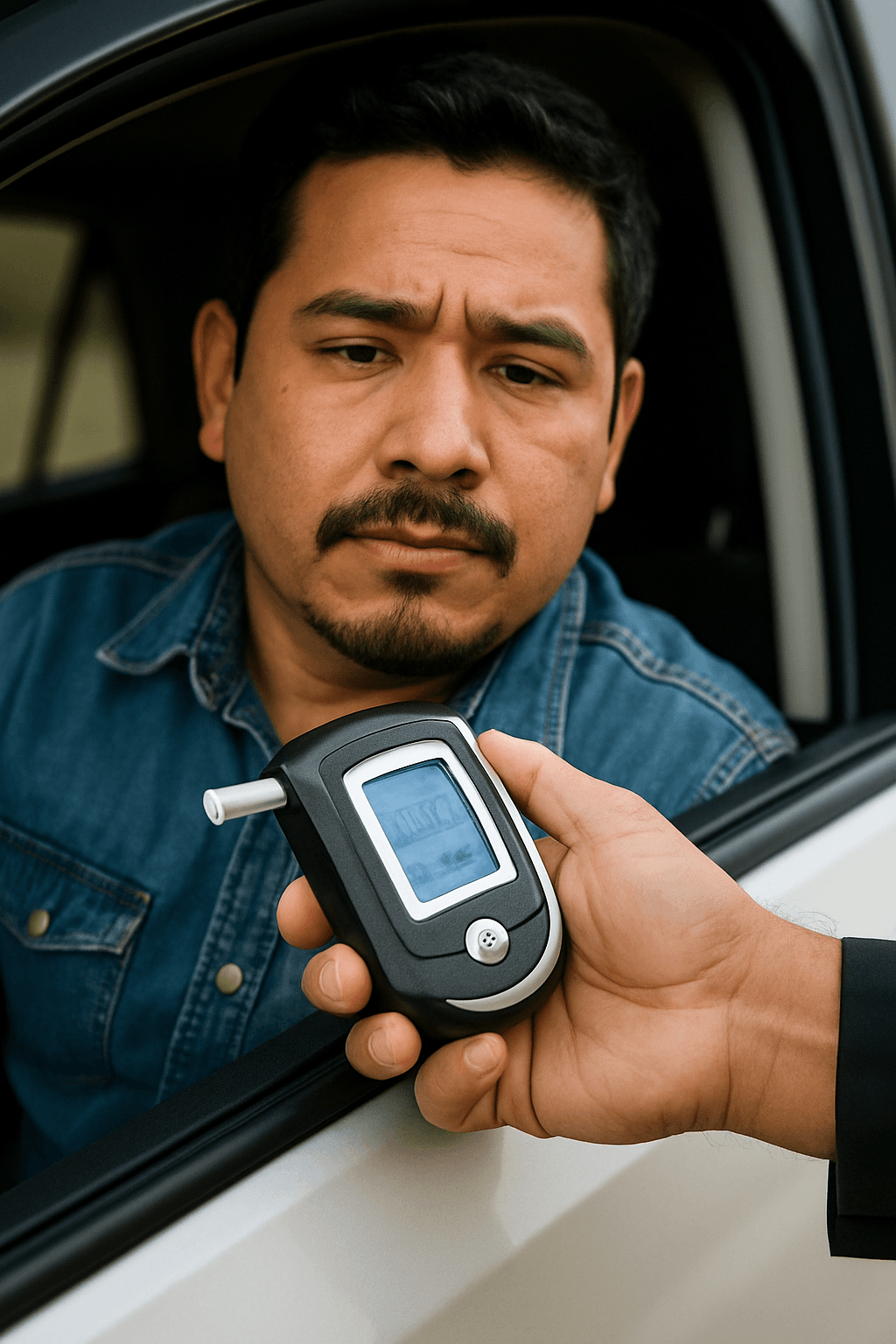
New Jersey's conditional license requires employer verification, MVC approval, and proof of IDRC enrollment for DWI cases. The application path runs through both court and MVC, and documentation failures are the primary reason petitions stall.
What New Jersey calls a conditional license and when work driving qualifies
New Jersey issues a Conditional License for drivers facing suspension who can prove employment necessity. The program runs through both the Motor Vehicle Commission and the court that ordered the suspension, depending on the underlying violation. DWI cases follow a court-driven petition process tied to Intoxicated Driver Resource Center enrollment. Points-based suspensions and certain administrative violations follow an MVC-only petition path.
The conditional license restricts driving to employment, education, medical treatment, and essential household purposes. It is not an unrestricted hardship license. Route and time restrictions appear on the license itself and must match the approved petition documentation. Violations of these restrictions trigger immediate revocation and additional penalties.
Uninsured driving suspensions do not qualify for conditional license relief in New Jersey. The state enforces strict liability for uninsured operation under N.J.S.A. 39:6B-2, and no conditional driving pathway exists for drivers suspended under this statute.
Employer verification documentation the MVC requires before petition approval
The MVC requires written verification from your employer on company letterhead. The letter must include your job title, work address, scheduled work hours, and a statement confirming that driving is required for commuting to work or for job duties. Generic employment verification letters that omit the driving-necessity statement will cause delays or denials.
Self-employed applicants must provide business registration documentation, proof of business address, and a signed affidavit describing the driving requirement. Gig economy workers (rideshare, delivery contractors) face additional scrutiny because conditional licenses typically exclude commercial driving activity. Most New Jersey conditional licenses explicitly prohibit use for commercial purposes, which means Uber, Lyft, DoorDash, and similar platform work is not an approved use even if it constitutes your primary income.
If your job requires driving during work hours (sales routes, client visits, delivery runs within a non-commercial capacity), the employer letter must specify the hours and approximate routes. The MVC uses this information to define the time and route restrictions that appear on the conditional license. Missing route details reduce approval likelihood or result in overly narrow restrictions.
Compare car insurance rates in your state
Get quotes from licensed carriers — no obligation, no spam, results in minutes.
Get Your Free Quote✓ No Obligation Required✓ Licensed Carriers Only✓ Available Nationwide✓ Free to Compare
Court order requirements for DWI-related conditional license petitions
DWI suspensions require court approval before the MVC will issue a conditional license. You must file a motion with the court that imposed the suspension, typically the municipal court where the conviction occurred. The motion must include proof of IDRC enrollment or completion, proof of ignition interlock installation (if required), employer verification, and proof of SR-22 equivalent insurance (FS-1 form in New Jersey).
The 2019 DWI reform (P.L. 2019, c. 248) created an interlock-in-lieu-of-suspension option for first-offense DWI cases with BAC between 0.08% and 0.099%. This pathway replaces the suspension entirely with an interlock requirement and functions as New Jersey's de facto low-BAC hardship mechanism. It is not formally labeled a conditional license but achieves the same functional outcome: continued driving with restrictions.
Proof of IDRC enrollment is the gatekeeper document for DWI conditional licenses. The Intoxicated Driver Resource Center administers a mandatory education and evaluation program separate from the MVC. You must attend the initial IDRC session and obtain confirmation documentation before the court will consider a conditional license motion. Missing two consecutive IDRC classes after conditional license approval triggers automatic revocation without hearing.
Ignition interlock installation is required for all DWI-related conditional licenses in New Jersey. The device must be installed by an MVC-approved vendor before the conditional license is issued. Installation receipts and monthly compliance reports must be submitted to both the interlock vendor and the MVC. Tampering with the device, failing a rolling retest, or missing a monthly calibration appointment results in immediate conditional license suspension.
MVC approval process for points and administrative suspensions
Points-based suspensions and certain administrative violations allow direct petition to the MVC without court involvement. The application requires completion of MVC form BA-208 (Application for Conditional License), employer verification, proof of insurance, and payment of the application fee. Processing typically takes 30 to 45 days from submission of complete documentation, but incomplete applications reset the timeline.
The MVC evaluates conditional license petitions based on necessity, not hardship. Losing your job without a license meets the standard. Inconvenience or increased commute time without a license does not. The petition must demonstrate that no reasonable alternative exists: no public transit access to your workplace, no rideshare or carpool option that aligns with work hours, and no employer flexibility to adjust your schedule or work location.
Conditional licenses for points suspensions typically carry narrower time restrictions than DWI conditional licenses. Approved hours often mirror your documented work schedule plus a 30-minute buffer on each end. Driving outside these hours for any reason, even an emergency, violates the restriction. The MVC does not issue supplemental approvals for one-time route deviations.
SR-22 equivalent insurance setup and the FS-1 form requirement
New Jersey does not use SR-22 certificates. Financial responsibility is certified through the FS-1 form, submitted by your insurance carrier directly to the MVC. The FS-1 serves the same function as an SR-22 in other states: it notifies the MVC that you carry liability coverage meeting state minimums and that the carrier will notify the MVC if the policy lapses or is canceled.
DWI suspensions and certain high-risk violations require FS-1 filing for the duration of the conditional license period and, in most cases, for three years following license reinstatement. The carrier files the FS-1 electronically at policy inception. You do not handle the form directly, but you must confirm with your agent that the FS-1 has been filed and accepted by the MVC before submitting your conditional license petition. Missing FS-1 proof is a common petition denial cause.
Not all carriers write FS-1 policies. Preferred-tier carriers (Amica, USAA for eligible military members) typically decline drivers requiring FS-1 filing. Non-standard carriers and high-risk specialists dominate this market segment in New Jersey. Expect monthly premiums between $180 and $320 depending on violation severity, age, and coverage selections. These are estimates based on available industry data; individual rates vary.
Policy lapses during the conditional license period trigger automatic MVC notification and conditional license suspension. The carrier must file an FS-2 form (notice of cancellation) with the MVC within 10 days of cancellation. The MVC then suspends the conditional license administratively. Reinstatement after a lapse requires proof of new FS-1 coverage, payment of a restoration fee, and reapplication for conditional license approval.
Timeline from petition filing to conditional license issuance
Court-driven DWI petitions take longer than MVC-only petitions. Municipal courts schedule motion hearings based on their docket load, typically 3 to 6 weeks from filing. If the court grants the motion, it issues an order authorizing the MVC to issue a conditional license. You must then bring the court order, proof of interlock installation, proof of FS-1 filing, and employer verification to an MVC office to receive the physical license. Total timeline: 6 to 10 weeks from initial motion filing to license in hand.
MVC-only petitions (points, administrative violations) process in 30 to 45 days if all documentation is complete at submission. Incomplete applications or missing employer verification extend this by weeks. The MVC does not issue partial approvals or allow driving while the petition is pending. You remain under full suspension until the conditional license is physically issued.
Some drivers attempt to coordinate conditional license approval with their work start date when the suspension threatens a new job offer. This rarely works cleanly. The MVC and courts do not expedite petitions for employment timing, and processing delays are common. If your job offer has a firm start date, factor 8 to 12 weeks of conditional license petition time into your planning.
Cost breakdown: application, interlock, insurance, and restoration fees
The conditional license application itself does not carry a separate MVC fee beyond the standard restoration fee. New Jersey charges a $100 restoration fee to reinstate driving privileges after suspension, whether full reinstatement or conditional. Court filing fees for DWI conditional license motions vary by municipality but typically range $50 to $100.
Ignition interlock installation costs $75 to $150, with monthly monitoring and calibration fees of $60 to $90. A one-year interlock requirement costs approximately $900 to $1,200 total. Interlock vendors require payment upfront or via monthly installment, and the MVC does not subsidize costs.
FS-1 insurance premiums represent the largest ongoing cost. A driver with a single DWI and clean prior record pays approximately $180 to $250 per month for minimum liability coverage. Drivers with multiple violations or prior lapses pay $250 to $320 per month. These are market estimates for New Jersey's non-standard auto insurance tier; actual quotes vary by carrier, age, zip code, and coverage selections.
New Jersey also operates a Surcharge Violation System separate from the MVC restoration fee. DWI convictions trigger annual surcharges of $1,000 per year for three years. These surcharges are billed separately by the MVC and must be paid or enrolled in a payment plan before conditional license approval. Unpaid surcharges block conditional license issuance even if all other documentation is complete.