Minnesota requires a court petition for Limited Licenses, not DMV filing. Most applicants miss the employer documentation requirements that judges use to determine approval, and fail to understand when Ignition Interlock is non-negotiable versus optional.
Why Minnesota's Court-Petition Process Changes What Your Employer Letter Must Contain
Minnesota issues Limited Licenses through district court petition under Minn. Stat. § 171.30, not through Driver and Vehicle Services administrative review. This means a judge evaluates your hardship claim and supporting documentation directly. Your employer letter is not a DMV checkbox—it is evidence presented to the court that must demonstrate genuine necessity and operational feasibility.
Judges in Minnesota counties vary in approval standards because § 171.30 grants discretionary authority rather than mandating approval for qualifying applicants. Hennepin County judges may prioritize route precision and time-window documentation differently than judges in Olmsted or St. Louis counties. The employer letter becomes the primary evidence that your job genuinely requires driving and that restricted hours align with your work schedule.
This differs from DMV-administered hardship programs in states like Texas or Illinois, where administrative staff review applications against published checklists. Minnesota's judicial discretion means missing documentation or vague employer descriptions carry higher denial risk. Most denials occur because the petition fails to document route necessity or because the employer letter describes general job duties rather than specific driving requirements the court can translate into enforceable restrictions.
What Minnesota Judges Require in Employer Verification Letters
The employer letter must state your job title, employment start date, and whether continued employment depends on your ability to drive. Judges need to see that losing driving privileges directly threatens job retention, not merely convenience. A letter stating "employee needs transportation to work" is insufficient. The letter must state "continued employment requires employee to drive during work hours" or "employee cannot perform job duties without personal vehicle access during shift."
Specific work hours must appear in the letter. Minnesota courts typically restrict Limited License driving to employment hours plus reasonable commute buffer. If your shift runs 8 AM to 5 PM and your commute is 45 minutes, the letter should state those hours and the court order will typically permit driving from 7:00 AM to 6:00 PM. If your job involves variable hours—commission sales, gig work, client-site visits—the letter must explain the variability and propose a broader time window the court can approve or modify.
Route documentation strengthens petitions significantly. If your job requires driving to multiple sites during work hours (delivery routes, home healthcare visits, property management inspections), the employer letter should describe the geographic service area and typical number of stops per shift. Judges can then approve "driving within Hennepin County for employment purposes during approved hours" rather than restricting you to a single commute path. Missing route context results in overly narrow approvals that limit your ability to perform the job the petition was meant to preserve.
The letter must be signed by a supervisor, HR representative, or business owner with authority to verify employment terms. Judges reject letters from coworkers or unsigned statements. Letterhead is not legally required but adds credibility. The letter should include company contact information so the court can verify if needed, though direct verification is rare unless the petition raises red flags.
Compare car insurance rates in your state
Get quotes from licensed carriers — no obligation, no spam, results in minutes.
Get Your Free Quote✓ No Obligation Required✓ Licensed Carriers Only✓ Available Nationwide✓ Free to Compare
When Ignition Interlock Is Required and How It Affects Employer Documentation
Minnesota requires Ignition Interlock Device installation for DWI-related Limited License petitions under Minn. Stat. § 171.306. If your suspension stems from a DWI conviction, test refusal, or administrative revocation for alcohol-related driving, IID is non-negotiable. The court will not issue a Limited License without proof of IID installation in the vehicle you will drive.
This requirement changes what your employer letter must address. If you drive a company vehicle during work hours, the employer must state whether the company permits IID installation in that vehicle. Most employers refuse IID installation in fleet vehicles due to liability and insurance concerns. If your job requires driving a company vehicle and the employer will not permit IID, you cannot obtain a Limited License for that employment. The petition must propose using your personal vehicle for work driving, and the employer letter must confirm the company permits personal vehicle use for job duties.
IID installation costs approximately $75 to $150 upfront, plus $60 to $100 per month for monitoring and calibration. These costs are your responsibility, not the state's or employer's. The employer letter does not need to address IID costs, but the court will verify that you have arranged installation before issuing the Limited License. Petitioners who apply without securing IID installation commitments face delays or denials.
For non-DWI suspensions (points accumulation, uninsured driving, unpaid fines), IID is not required unless the court orders it as a condition of approval. Judges retain discretion to impose IID even for non-alcohol suspensions if your driving record suggests risk. The employer letter for non-DWI cases should focus on employment necessity and route documentation without addressing IID unless the court raises it during the hearing.
What Happens If Your Employer Will Not Provide a Letter
Some employers refuse to provide hardship license documentation due to liability concerns or HR policy. This does not disqualify you from petitioning, but it significantly weakens your case. Minnesota courts prioritize employment-preservation petitions because the statute's purpose is preventing economic hardship. Without employer verification, you must provide alternative documentation that demonstrates job necessity.
Self-employed petitioners should submit business registration documents, recent tax filings showing active income, client contracts, or invoices demonstrating ongoing work that requires driving. If you drive for a rideshare or delivery platform, submit recent earnings statements and platform terms requiring personal vehicle use. Judges evaluate these documents as employer-letter substitutes but apply higher scrutiny because self-reported necessity is easier to fabricate.
If your employer refuses to provide a letter due to company policy, request that HR provide a generic employment verification letter stating your job title, hire date, and full-time or part-time status. Attach this to an affidavit you prepare describing your job duties and why driving is required. This combination is weaker than a direct employer statement but stronger than affidavit alone. Some judges accept this; others deny and advise reapplication with employer cooperation.
Employment loss after suspension but before petition filing creates a gap many applicants miss. If you lost your job because your license was suspended, you can still petition using a prospective employer offer letter. The offer must be contingent on your ability to drive and must state specific start date, hours, and driving requirements. Judges view prospective employment petitions with skepticism because the job contingency creates circular dependency, but § 171.30 does not prohibit them.
How Medical Necessity and School Enrollment Interact With Employer Documentation
Minnesota Limited License petitions may combine multiple approved purposes: employment, medical treatment, school enrollment, and chemical dependency treatment. If you need to drive for work and for ongoing medical appointments, the petition should address both. The employer letter documents the employment necessity, and you separately provide medical documentation (physician letter stating treatment frequency, appointment schedule, and necessity of personal vehicle access).
Combining purposes strengthens petitions because it demonstrates broader hardship impact. A judge may approve a wider time window or geographic area when multiple legitimate needs are documented. For example, if your work hours are 9 AM to 5 PM and you have physical therapy three times per week at 6:30 PM, the court may approve driving from 8:30 AM to 7:30 PM rather than restricting to employment hours alone.
School enrollment documentation requires registrar verification of enrollment status, class schedule, and campus location. If you work and attend school, both must appear in the petition with corresponding documentation. Judges do not automatically approve broader restrictions just because you list multiple purposes—each must be independently supported. A vague statement that you "sometimes have medical appointments" without supporting documentation weakens the entire petition.
Chemical dependency treatment documentation is required for DWI-related petitions. Minnesota judges expect proof of enrollment in court-ordered treatment programs and a letter from the treatment provider stating session frequency and location. Missing treatment documentation is a common denial trigger for DWI petitions because it signals noncompliance with the underlying conviction conditions.
Petition Filing Process and Timeline From Application to Approval
Minnesota Limited License petitions are filed in the district court for the county where you reside. You must file a Petition for Limited License form (available from the court administrator's office or the court's website), pay the court filing fee (typically $250 to $350, varies by county), and attach all supporting documentation including the employer letter, proof of SR-22 insurance filing if required, IID installation proof for DWI cases, and any medical or school documentation.
For DWI-related suspensions, you cannot file until the mandatory hard suspension period expires. First-offense DWI with BAC below 0.16 requires 15 days minimum before petition eligibility. Higher BAC or repeat offenses trigger longer mandatory periods. Attempting to file before the hard period expires results in automatic denial and wasted filing fees. Verify your eligibility date with DVS before filing.
After filing, the court schedules a hearing, typically 2 to 6 weeks out depending on county caseload. You must appear at the hearing. The judge reviews your petition and supporting documents, may ask clarifying questions about your employment or treatment compliance, and issues a ruling on the record. If approved, the court order specifies permitted driving purposes, days of the week, time windows, and geographic restrictions. This order is transmitted to DVS, which issues the physical Limited License.
Processing time from court approval to license issuance is typically 7 to 14 days. You cannot drive on the court order alone—you must wait for DVS to issue the Limited License card. Driving on a suspended license before receiving the physical card, even with a signed court order, is a violation that can result in new criminal charges and petition revocation. Most judges warn petitioners explicitly about this during the hearing.
What Violations Trigger Automatic Limited License Revocation
Driving outside the approved purposes, hours, or routes documented in your court order results in automatic Limited License revocation and new criminal charges. Minnesota law treats Limited License violations as knowing violations of license restrictions, which carry harsher penalties than standard suspended-license driving. If your approved hours are 7 AM to 6 PM and you are stopped at 8 PM, you will be charged with violating license restrictions regardless of where you were driving or why.
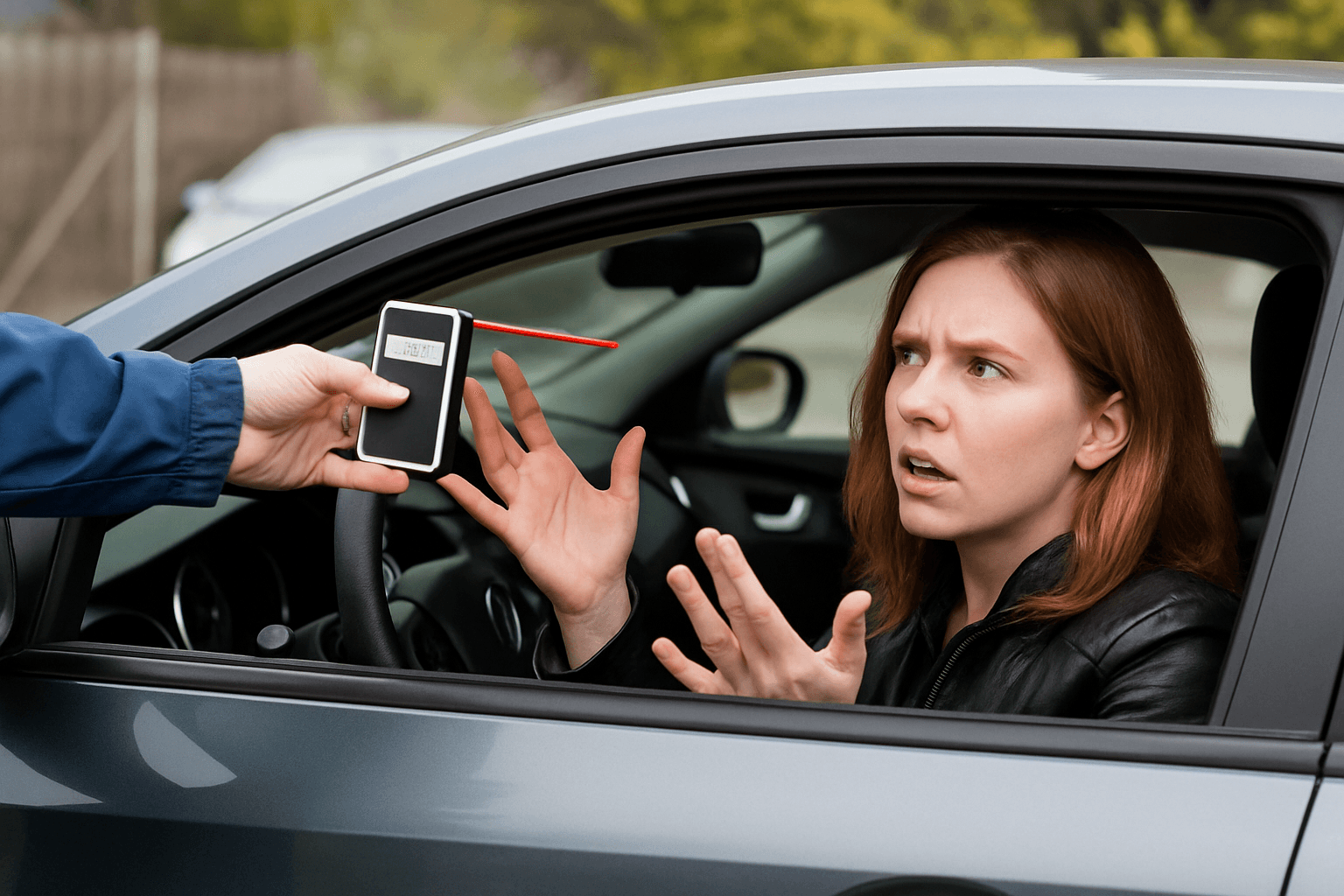
Alcohol-related violations are zero-tolerance. If you are stopped and any detectable alcohol is present (even below 0.08 BAC), your Limited License is revoked immediately and you face new DUI charges. This applies even if you are driving within approved hours for approved purposes. The court order for DWI-related Limited Licenses typically includes explicit language prohibiting any alcohol consumption before or during driving.
Missing scheduled IID calibration appointments or attempting to tamper with the device triggers automatic violation reports to DVS and the court. IID vendors are required to report missed appointments and tampering attempts within 48 hours. The court will schedule a show-cause hearing, and most judges revoke upon receiving the vendor report unless you can document equipment failure or vendor error.
Failing to maintain SR-22 insurance filing results in automatic license suspension that overrides the Limited License. Minnesota requires continuous SR-22 filing for the duration specified in your original suspension order (typically 3 years for DWI cases). If your insurer cancels your policy and files an SR-26 cancellation notice with DVS, your Limited License becomes invalid immediately. You cannot drive legally until you obtain new SR-22 coverage and DVS processes the filing, which takes 3 to 10 business days.