Michigan's BAIID requirement for restricted licenses creates a specific installation sequence most drivers miss. The 30-day hard suspension ends before you can install the device, but your restricted license won't be issued until installation is verified by the Secretary of State.
Why Michigan's BAIID Timeline Doesn't Match Your Work Schedule
Your restricted license application was approved, but you cannot drive yet. Michigan requires a Breath Alcohol Ignition Interlock Device (BAIID) installed and verified before the Secretary of State issues your physical restricted license. The catch: most BAIID vendors won't install the device until your 30-day hard suspension period ends, but your employer needs you back on Monday.
For a first OWI offense, Michigan imposes a 30-day hard suspension during which no driving is permitted—not even for work. After those 30 days, you become eligible for a restricted license with BAIID. The restricted license allows driving to and from work, during work hours if your job requires it, to court-ordered programs, and to medical appointments. But the license won't be mailed until the Secretary of State receives electronic confirmation from your BAIID vendor that the device is installed and operational.
The installation lag typically adds 5 to 10 business days after your hard suspension ends. If you schedule installation for day 31 and the vendor's next available appointment is 7 days out, you're looking at nearly 6 weeks total before you can legally drive to work. Some employers hold the position open during the hard suspension but won't extend past that window. This is the pressure point most drivers underestimate when they see "eligible after 30 days" on their court order.
The Actual BAIID Installation Sequence in Michigan
BAIID installation in Michigan follows a specific order. First, you complete your restricted license application through the Secretary of State—either at a branch office or through the DAAD (Driver Assessment and Appeal Division) if your case required a hearing. The SOS approves the application contingently: your license will be issued once BAIID installation is confirmed.
Second, you contact a state-approved BAIID vendor. Michigan maintains a list of approved vendors on the Secretary of State website. Installation costs typically run $75 to $150, with monthly monitoring fees of $60 to $100. The vendor schedules an installation appointment, which must occur after your hard suspension ends. Most vendors require 3 to 7 business days' notice for appointments. The device is installed in your vehicle (or your employer's vehicle if you have written authorization), calibrated, and tested.
Third, the vendor transmits electronic confirmation to the Secretary of State that the device is operational. This transmission happens within 24 to 48 hours after installation. Once the SOS receives confirmation, your restricted license is processed and mailed. Standard mail delivery adds another 7 to 10 business days. You cannot drive until the physical restricted license card arrives, even if the device is installed and functional. Driving on an expired or suspended license—even with the device installed—remains a misdemeanor under MCL 257.904.
Compare car insurance rates in your state
Get quotes from licensed carriers — no obligation, no spam, results in minutes.
Get Your Free Quote✓ No Obligation Required✓ Licensed Carriers Only✓ Available Nationwide✓ Free to Compare
What Happens If You Install the Device During Your Hard Suspension
Some drivers assume installing the BAIID early will speed up the restricted license issuance. It does not. If you install the device on day 15 of your 30-day hard suspension, the vendor will still transmit confirmation to the Secretary of State, but the SOS will not process your restricted license application until day 31 at the earliest. You've paid the installation fee and started the monthly monitoring clock without gaining any time.
Worse, some BAIID vendors charge the first month's monitoring fee at installation. If you install two weeks before you're eligible to drive, you've prepaid for two weeks of a device you cannot legally use. Vendors rarely prorate the first month. The economically optimal installation date is the day after your hard suspension ends, or as close to that date as the vendor's schedule allows.
One exception: if your restricted license application required a DAAD hearing and that hearing is scheduled during your hard suspension period, installing the device beforehand may demonstrate compliance intent to the hearing officer. But this is a strategic calculation for your attorney to advise on, not a procedural requirement.
Employer Verification and Route Documentation Requirements
Michigan's restricted license statute requires proof of need. For work-purposes driving, the Secretary of State typically requires an employer verification letter on company letterhead. The letter must state your job title, work address, required work hours, and whether the job requires driving during work hours (for example, if you're a delivery driver, home health aide, or sales rep with a defined territory).
If your work hours vary, the letter should specify the range: "Employee works Monday through Friday, start times between 6:00 AM and 8:00 AM, end times between 4:00 PM and 6:00 PM." Vague language like "works full time" or "various hours" creates documentation problems. Hearing officers and SOS reviewers interpret ambiguity as noncompliance risk. If your employer cannot or will not provide a detailed letter, your restricted license application may be denied or delayed.
For drivers whose jobs require operating a vehicle during work hours, the restricted license still prohibits commercial driving. If you hold a CDL and your job requires a commercial vehicle, a personal restricted license does not cover that use. Michigan restricted licenses apply to personal vehicles only. CDL holders facing OWI revocations lose commercial driving privileges separately, and those privileges cannot be reinstated through the restricted license pathway.
How BAIID Violations Trigger Immediate Revocation
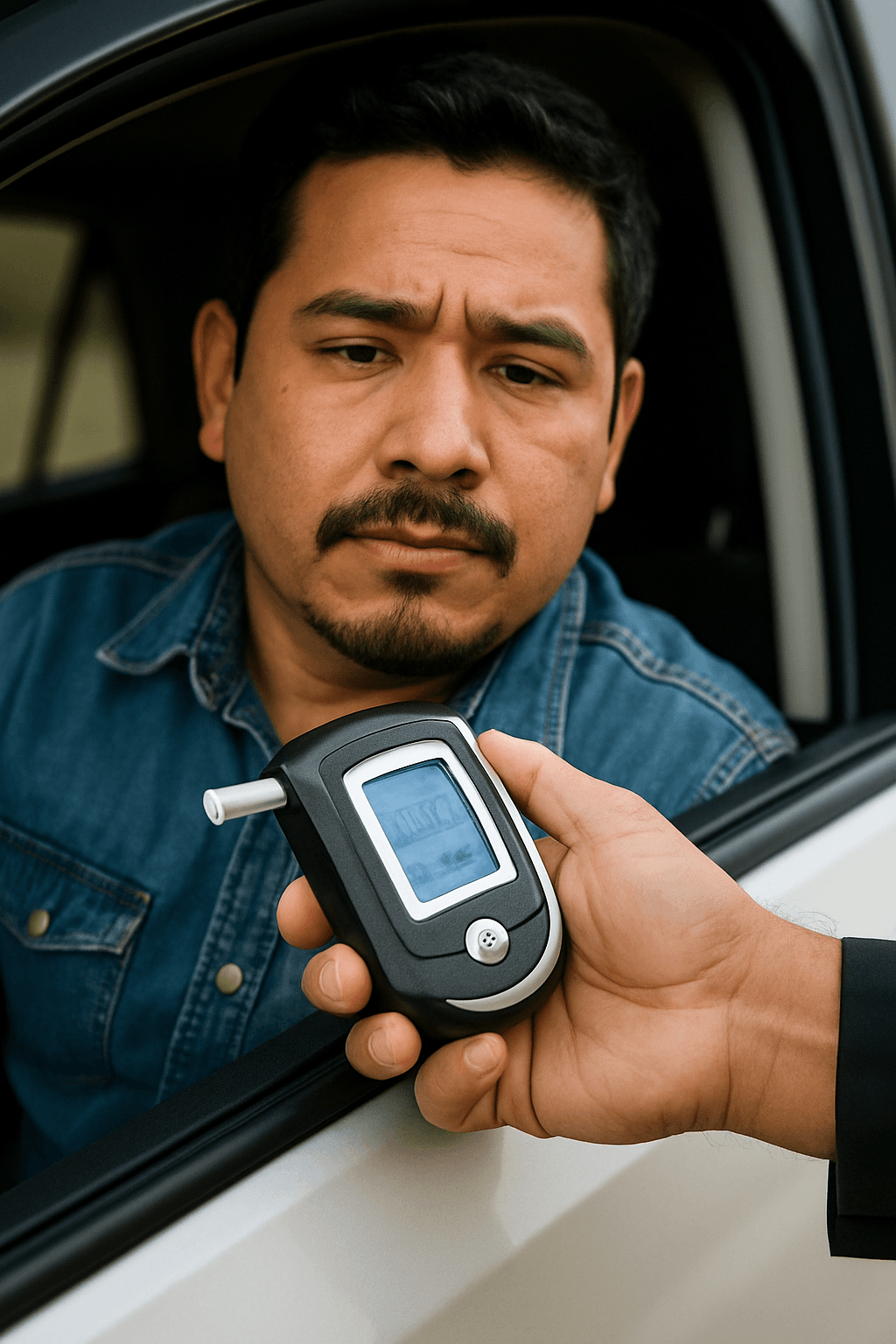
Michigan's BAIID compliance rules are strict. The device records every start attempt, every rolling retest, and every violation. Violations include: failing a start test (BAC above 0.025%), failing a rolling retest, attempting to tamper with or bypass the device, missing a scheduled calibration appointment, or having someone else blow into the device.
The vendor transmits violation reports to the Secretary of State electronically. A single failed start test does not automatically revoke your restricted license, but it triggers a review. Two failed start tests within a 30-day period, or one failed rolling retest, typically results in immediate revocation without a hearing. Once revoked, you must wait the full original suspension or revocation period before reapplying, and you'll face a second DAAD hearing with a much lower approval probability.
Missed calibration appointments are the most common compliance failure. BAIID devices require recalibration every 30 to 60 days, depending on the vendor. The vendor schedules the appointment when you install the device. If you miss the appointment window by more than 5 days, the device locks out and the vendor reports noncompliance to the SOS. You cannot drive until the device is recalibrated, and your restricted license may be suspended or revoked depending on whether this is your first missed appointment.
SR-22 Filing Setup for Michigan Restricted Licenses
Michigan requires proof of financial responsibility for most restricted license cases. For OWI offenses, SR-22 filing is mandatory. The SR-22 is not a type of insurance—it is a certificate your insurance carrier files with the Secretary of State confirming you carry at least Michigan's minimum liability coverage: $50,000 bodily injury per person, $100,000 per accident, and $10,000 property damage.
SR-22 filing in Michigan also triggers the state's no-fault Personal Injury Protection (PIP) requirement. Post-2020 reform, Michigan allows drivers to select PIP coverage limits, but restricted license applicants typically cannot opt out entirely. Most carriers require you to carry at least the minimum PIP tier ($50,000) to issue an SR-22. If you owned a vehicle before your suspension, your previous insurer likely dropped you after the OWI conviction. You'll need a new policy from a carrier willing to write high-risk coverage with SR-22 filing.
Carriers that write SR-22 policies for Michigan restricted license holders include Progressive, Geico, Bristol West, Direct Auto, and National General. Monthly premiums for SR-22 coverage after an OWI conviction typically range from $180 to $320 per month, depending on your age, county, and whether you need a vehicle or non-owner SR-22 policy. Non-owner SR-22 applies if you no longer own a vehicle but need coverage to meet the Secretary of State's filing requirement. The SR-22 must remain active for 3 years from the date of reinstatement. If the policy lapses or is cancelled, the carrier notifies the SOS electronically, and your restricted license is suspended immediately.
What to Do If Your Restricted License Application Is Denied
Not all restricted license applications are approved on first submission. Common denial reasons include: incomplete employer verification, unresolved court fines or fees, failure to complete required alcohol education or treatment programs, prior BAIID violations on record, or insufficient demonstration of need.
If your application is denied, the Secretary of State or DAAD hearing officer will state the reason in writing. You have the right to reapply once the deficiency is corrected. For documentation issues—missing employer letter, vague work hours, incomplete proof of insurance—you can resubmit immediately once the corrected documents are provided. For substantive issues—unpaid court fines, incomplete treatment program, prior compliance failures—you must resolve the underlying issue before reapplying.
Second OWI offenses within 7 years result in a one-year hard revocation, not a suspension. Revocations have no automatic end date. You must petition the DAAD for a hearing after the revocation period ends. DAAD hearings require proof of sobriety (typically 12 months of documented abstinence), completion of a substance abuse evaluation, letters of support, and in many cases attendance at AA or similar programs. Restricted licenses after revocation are not guaranteed—the hearing officer has full discretion to deny. If your first DAAD hearing is denied, you must wait one full year before you can petition again.