Your Maryland license was suspended and you have a job that requires driving. The state calls it a Restricted License, and the MVA process requires employer documentation, ignition interlock enrollment for DUI cases, and FR-44 filing—not SR-22.
What Maryland's Restricted License Actually Allows You to Drive For
Maryland's Restricted License permits driving to work, school, medical appointments, and other essential purposes as specified in your MVA restriction order. The exact scope depends on your suspension cause and the documentation you submit during your application. DUI-related suspensions typically require ignition interlock enrollment before any work driving is permitted, and your restriction order will state whether the device must remain installed for the full duration of your license period or only during specific suspension phases.
The MVA or Office of Administrative Hearings hearing officer defines your approved routes and time windows based on the employer verification letter you provide. If your job requires driving during work hours—delivery routes, client visits, job site travel—you must document those needs explicitly in your application. The restriction order becomes the legal boundary. Driving outside approved hours or routes triggers immediate revocation, even if the deviation was accidental.
Maryland does not use the term "hardship license" in statute or MVA documentation. The formal name is Restricted License, and it is issued through an administrative process that varies by suspension type. Point-based suspensions and some other categories require a contested case hearing before the Office of Administrative Hearings, not a simple counter application at the MVA. DUI cases follow a separate path through the Ignition Interlock System Program, which effectively serves as the work-driving pathway for alcohol-related suspensions.
MVA Application Path: Contested Hearing vs. Administrative Approval
Maryland splits Restricted License applications into two procedural tracks. DUI and some refusal cases route through the Ignition Interlock System Program (IISP) under Transportation Article §16-404.1, which allows you to avoid full suspension by enrolling in the interlock program before the suspension takes effect. You apply directly with the MVA, submit proof of interlock installation, and receive modified driving privileges immediately upon approval. This is not a separate license—it modifies your existing license to allow driving with the device installed.
Point-based suspensions, uninsured motorist violations, and certain failure-to-appear cases require a contested case hearing before the Office of Administrative Hearings. You must request the hearing within 10 days of receiving your Order of Suspension. Missing the 10-day window waives your right to challenge the suspension administratively, and your path to a Restricted License becomes much harder. The hearing officer has broad discretion to grant or deny work-driving privileges and to define the scope of your restrictions. Bring employer verification, proof of ignition interlock enrollment if applicable, and documentation of any court-ordered alcohol education program completion.
The MVA provides an online portal at mva.maryland.gov for eligibility checks and some application steps, but whether you can complete the process online depends entirely on your suspension type. DUI interlock enrollments can often be processed remotely. Hearing-required cases cannot.
Compare car insurance rates in your state
Get quotes from licensed carriers — no obligation, no spam, results in minutes.
Get Your Free Quote✓ No Obligation Required✓ Licensed Carriers Only✓ Available Nationwide✓ Free to Compare
Employer Documentation the MVA Actually Requires
Your employer must provide a signed letter on company letterhead verifying your job title, work address, scheduled hours, and the statement that driving is essential to your continued employment. If your job requires driving during work hours—not just commuting—the letter must specify the nature of that driving: delivery routes, client sites, job locations, or other work-related travel. Generic statements like "employee needs to drive for work" are insufficient and will delay your application.
The MVA does not provide a standard employer verification form. Your employer writes the letter in their own format, but it must include: your full legal name as it appears on your license, your current home address, your work schedule including days and hours, and a direct contact number for HR or your supervisor. The hearing officer or MVA reviewer will call to verify the information if the letter raises any questions. Some employers refuse to provide verification letters due to liability concerns about retaining employees with restricted licenses—address this risk before you apply.
If you are self-employed, provide business registration documentation, a signed affidavit describing your work driving needs, and client contracts or invoices showing active business activity. The MVA treats self-employment claims skeptically because they are harder to verify. Bring more documentation than you think you need: tax records, business insurance certificates, and anything proving your business requires vehicle operation.
Ignition Interlock Enrollment and the FR-44 Filing Requirement
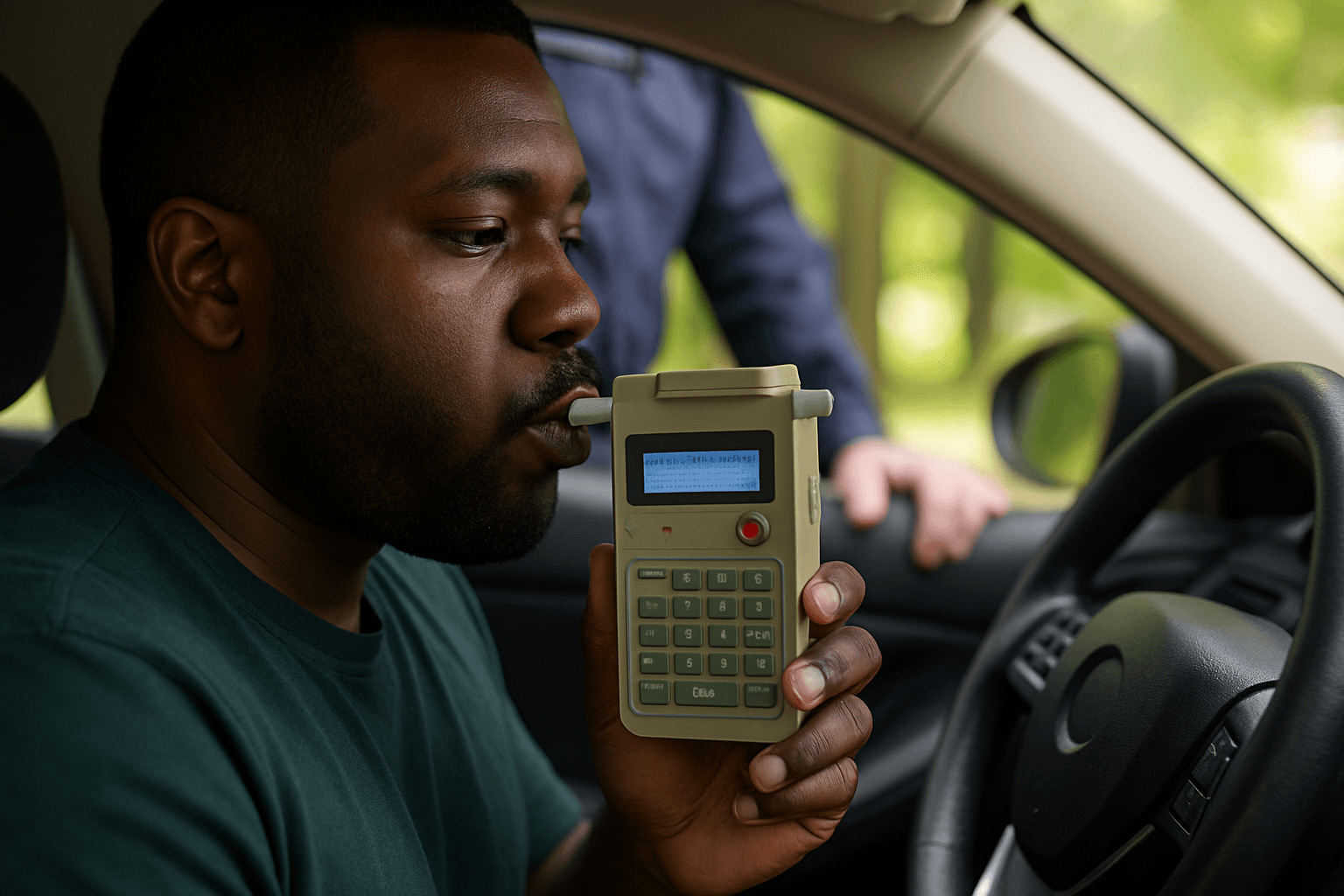
DUI-related Restricted License cases in Maryland require ignition interlock installation before any driving privileges are restored. You must enroll with an MVA-approved interlock vendor, have the device installed in every vehicle you will operate, and submit proof of installation to the MVA before your application is approved. The interlock monitors every ignition attempt and logs violations—failed breath tests, tampering, missed rolling retests—which the vendor reports to the MVA monthly.
Maryland's interlock requirement escalates based on your blood alcohol concentration at the time of arrest. Drivers with BAC ≥ 0.15 face longer mandatory interlock periods than those with BAC between 0.08 and 0.14 per Transportation Article §16-404.1. The device must remain installed for the full duration specified in your restriction order, and removal before the end date triggers automatic suspension. Interlock costs typically run $75–$100 for installation, $70–$90 per month for monitoring, and $50–$75 for removal, all paid out of pocket.
Maryland requires FR-44 insurance filing for DUI-related suspensions, not SR-22. FR-44 is a higher-liability proof-of-insurance certificate with minimum limits of $60,000/$120,000/$30,000—double the state's standard liability floor. You cannot complete your Restricted License application without submitting the FR-44 certificate to the MVA. Drivers who apply with SR-22 forms instead of FR-44 face application rejection and must refile with the correct form, adding weeks to the process. FR-44 must remain active for 3 years in most DUI cases, measured from the filing date.
Approved Hours, Routes, and the Consequences of Driving Outside Restrictions
Your Restricted License restriction order specifies the exact hours and routes you are permitted to drive. The MVA or hearing officer typically grants a commute window—usually your documented work start time minus 30 minutes to your documented end time plus 30 minutes—and may allow additional time blocks for medical appointments, school drop-offs, or other pre-approved purposes. Driving outside those windows, even by 10 minutes, is a violation of your restriction order and grounds for immediate revocation.
Route restrictions are less common but appear in cases involving prior violations during restricted periods or high-risk profiles. If your restriction order specifies approved routes—home to work via specific roads, for example—GPS monitoring or officer observation of deviations can trigger enforcement. Maryland does not routinely install GPS tracking on Restricted License holders, but the interlock device logs ignition events, and law enforcement can subpoena that data if a violation is suspected.
Violating your Restricted License terms results in automatic revocation, reinstatement of the full original suspension period, and potential criminal charges for driving while suspended or revoked. Your next eligibility for any driving privileges is pushed back months or years depending on the severity of the violation. Employers who discover restriction violations often terminate immediately due to liability exposure. The restriction order is a contract: follow it exactly or lose the privilege entirely.
What Happens If You're a CDL Holder or Your Job Requires Commercial Driving
Maryland's Restricted License does not cover commercial vehicle operation. If you hold a CDL and your job requires driving a commercial vehicle—truck, bus, delivery van over 26,000 lbs GVWR—the Restricted License allows you to commute to work in a personal vehicle but does not permit you to operate the commercial vehicle itself. This creates an impossible situation for CDL holders whose job duties require commercial driving: you can get to the job site but cannot perform the job.
Federal Motor Carrier Safety Administration rules prohibit commercial driving during any state-imposed license suspension or restriction period, regardless of state law. Even if Maryland were to grant work-driving privileges that included commercial vehicle operation—which it does not—federal law would override that permission. CDL holders facing suspension must either negotiate non-driving job duties with their employer during the restriction period or accept that their commercial driving career is paused until full license reinstatement.
Some employers will retain CDL employees in non-driving roles—warehouse, dispatch, administrative—during restriction periods if the employee has tenure and a path back to full licensure. Others cannot afford the operational disruption and terminate. If you are a CDL holder applying for a Restricted License, address this reality with your employer before you apply. The restriction will not let you drive commercially, and your employer needs to decide whether they can work around that.
How Long the Restricted License Process Actually Takes and What It Costs
Processing time for Maryland Restricted License applications varies by suspension type and procedural track. DUI interlock enrollments processed through the MVA without a contested hearing typically take 10–15 business days once the MVA receives your ignition interlock installation certificate and FR-44 filing. Hearing-required cases take longer: the Office of Administrative Hearings schedules contested case hearings 30–60 days out from your request date, and the hearing officer issues a decision within 10 business days after the hearing. Total time from suspension notice to Restricted License issuance: 6–10 weeks in hearing cases.
The cost stack includes: MVA application processing (specific fee not published; contact the MVA directly or consult your hearing notice for current fees), ignition interlock installation and monitoring ($75–$100 installation, $70–$90 per month), FR-44 insurance filing fee ($15–$50 depending on carrier), and the premium increase associated with FR-44 coverage. FR-44 doubles your liability limits, and high-risk classification after a DUI suspension typically raises your monthly premium to $200–$350 per month compared to $85–$140 for standard Maryland drivers. Multiply the monthly increase by 36 months—the typical FR-44 filing duration—to estimate total insurance cost impact.
Reinstatement fees apply once your full suspension period ends and you transition from Restricted License back to unrestricted driving. Maryland's base reinstatement fee is $45, but additional fees stack if your suspension involved multiple causes—uninsured driving, failure to appear, and a DUI each carry separate reinstatement charges. Budget for $100–$200 in combined reinstatement and administrative fees when your restriction period ends.