Maryland's MVA requires employer verification letters for restricted licenses, but most applicants submit forms that hearing officers reject. The letter must document specific work hours, exact route addresses, and whether your job requires driving during work—not just commuting.
What Maryland's Restricted License Actually Allows for Work
Maryland's Restricted License permits driving for employment, education, medical appointments, and other essential purposes as defined by the MVA or hearing officer. The restriction is not automatic—it's granted through either an Office of Administrative Hearings (OAH) contested case hearing or direct MVA application, depending on your suspension type.
Point-based suspensions and most DUI cases require an OAH hearing, not a counter application at the MVA. The hearing officer has broad discretion in defining what counts as essential and what routes you're allowed to use. Your employer's letter is the primary evidence that shapes that decision.
The restriction order specifies approved purposes, permitted hours, and sometimes exact route boundaries. If your job requires driving during work hours—delivery, client visits, site inspections—that needs separate approval beyond commute authorization. Most applicants request commute-only restrictions and discover later that their job duties aren't covered.
What the Employer Verification Letter Must Include
The employer letter must state your exact work hours, not a vague schedule. "Monday through Friday, 8 a.m. to 5 p.m." is acceptable. "Flexible hours" or "varies by week" gives the hearing officer no framework to define time restrictions and typically results in denial or a narrower approval than you need.
Include the specific street address of your worksite. If you work at multiple locations, list each address and explain the rotation schedule. The hearing officer uses these addresses to define route restrictions. If your employer letter lists a headquarters address but you actually report to a job site fifteen miles away, your approved route won't cover the drive you need.
Document whether your job requires driving during work hours, not just commuting. If you deliver, transport clients, move between job sites, or make service calls, state that explicitly with the frequency and typical radius. Maryland's restricted license does not automatically cover commercial driving—if you hold a CDL, your personal-vehicle restricted license will not restore your commercial driving privileges.
Compare car insurance rates in your state
Get quotes from licensed carriers — no obligation, no spam, results in minutes.
Get Your Free Quote✓ No Obligation Required✓ Licensed Carriers Only✓ Available Nationwide✓ Free to Compare
Why Most Employer Letters Get Rejected at the Hearing
Hearing officers reject vague employment verification. A letter stating "This employee is essential to our operations and needs to drive" provides no evidentiary basis for defining restrictions. The officer needs concrete data: start time, end time, worksite address, and whether driving is a job duty or just the method of commute.
Many employers submit HR-template letters designed for unemployment claims or background checks, not MVA restricted license hearings. These templates don't address route specifics or work-hour driving. If your employer uses a standard form, ask them to add a supplemental paragraph addressing the three required elements: exact schedule, exact address, and whether driving is part of the job itself.
If your employer refuses to provide a detailed letter—some companies have blanket policies against it for liability reasons—you may not qualify for a work-based restriction. The MVA does not accept self-employment affidavits without supporting documentation like tax filings, business licenses, and client contracts that demonstrate the work schedule and driving need.
The Ignition Interlock and SR-22 Filing Requirement
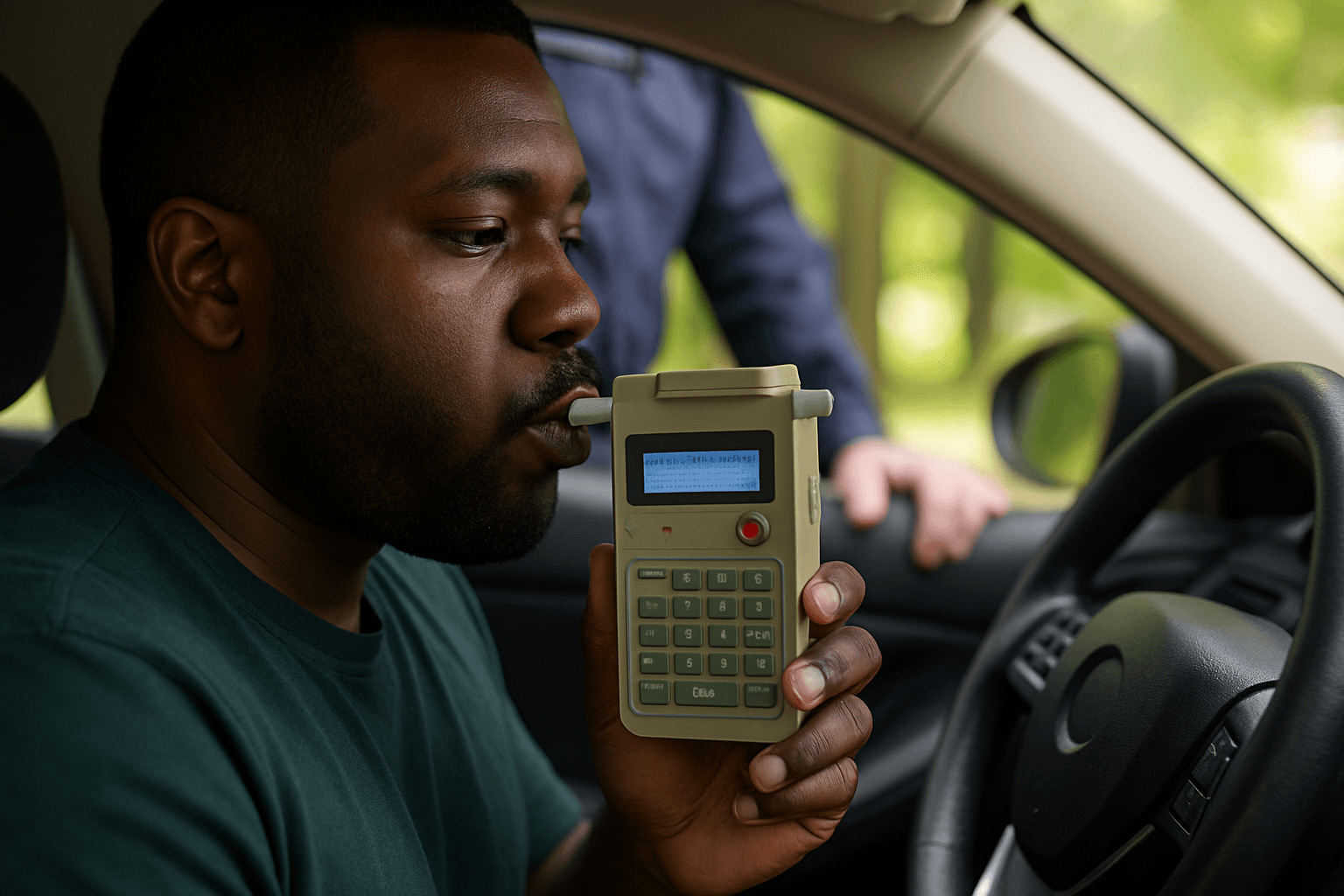
Maryland requires ignition interlock device installation for DUI-related restricted licenses under the Ignition Interlock System Program (IISP). Enrollment must be confirmed before the MVA or hearing officer will issue driving privileges. The device stays in your vehicle for the duration of the restriction period, typically one to three years depending on your BAC level and prior offenses.
BAC at or above 0.15 at the time of arrest triggers a longer mandatory interlock period than BAC between 0.08 and 0.14. The program costs approximately $70 to $150 per month for device rental, calibration, and monitoring, separate from the restricted license application fee and reinstatement costs.
Most DUI and uninsured-driving suspensions require SR-22 filing. Your insurer files the SR-22 certificate with the MVA electronically, certifying that you carry at least Maryland's minimum liability coverage: $30,000 per person, $60,000 per accident for bodily injury, and $15,000 for property damage. The filing stays active for three years in most cases. If your policy lapses or cancels during that period, the carrier notifies the MVA immediately and your restricted license is suspended.
How to Apply for Maryland's Restricted License
Point-based and most alcohol-related suspensions require requesting a contested case hearing through the Office of Administrative Hearings within ten days of receiving your Order of Suspension. Missing that ten-day window waives your right to challenge the suspension administratively. The hearing is not a counter visit—it's a formal proceeding where you present evidence, including your employer letter, proof of SR-22 filing, and IID enrollment confirmation if applicable.
The hearing officer evaluates whether your stated need is legitimate, whether the proposed restrictions are enforceable, and whether granting limited driving privileges poses an unacceptable public safety risk. Prior violations, the reason for suspension, and the quality of your documentation all factor into the decision. Approval is not guaranteed.
If the hearing officer grants the restriction, you'll receive a written order specifying approved purposes, permitted hours, and any route limitations. That order is your legal authority to drive—carry it with you at all times. Violating the terms, even unintentionally, typically results in immediate revocation without a second hearing.
What Happens If You're Caught Driving Outside Approved Hours
Driving outside the approved hours, routes, or purposes listed on your restriction order is treated as driving on a suspended license. Maryland law does not recognize "I thought I was still within my work window" as a defense. The restriction order is specific. If your approved commute window is 7:00 a.m. to 7:30 a.m. and 4:30 p.m. to 5:00 p.m., a 6:45 a.m. departure is a violation.
A violation triggers automatic revocation of the restricted license and extends your full suspension period. You'll also face criminal charges for driving on a suspended license, which carries fines, possible jail time, and a separate suspension layer that stacks on top of your original case.
If your work schedule changes after the restriction is granted, you must petition the MVA or return to the hearing officer for a modification. Do not assume that a new employer letter alone authorizes the change. The restriction order controls until it's formally amended.
Finding SR-22 Insurance That Covers Work-Restricted Driving
Not all carriers write policies for drivers with active suspensions and restricted licenses. Standard-tier insurers typically decline or non-renew once the MVA filing appears. Non-standard carriers like The General, Dairyland, Bristol West, and Progressive specialize in high-risk SR-22 filings and understand restricted-license coverage.
Your premium will reflect the suspension cause, your driving history, and the SR-22 filing requirement. Expect monthly costs between $140 and $240 for minimum liability coverage during the restriction period. Rates drop after the SR-22 filing period ends and your license is fully reinstated, but only if you maintain continuous coverage without lapses.
If you don't own a vehicle but need SR-22 filing to maintain your restricted license, non-owner SR-22 policies provide the required liability coverage without insuring a specific car. This is common for drivers whose suspension resulted from an incident in a borrowed or employer-owned vehicle.