Maryland's MVA grants restricted licenses for work purposes — but only if you document your exact route, hours, and employer need before the Office of Administrative Hearings hearing. Most applicants miss the route-documentation requirement and face denial.
Maryland Restricted License for Work: What It Allows and When You Can Apply
Maryland issues Restricted Licenses through the Motor Vehicle Administration (MVA), but eligibility and approval depend on a contested case hearing before the Office of Administrative Hearings (OAH), not a simple counter application. The restricted license allows driving to and from work, during work hours if your job requires it, and to other essential purposes the hearing officer approves — medical appointments, education, and court-ordered obligations.
You can apply after a DUI suspension, point-based suspension, or certain other administrative actions. The MVA does not automatically grant restricted licenses; a hearing officer evaluates your documented need, your compliance history, and whether you've enrolled in required programs like the Ignition Interlock System Program (IISP). If you refuse a breathalyzer or fail with a BAC of 0.15 or higher, your interlock period extends and the restricted license may be delayed.
The restricted license is not a workaround for ongoing violations. If you have unpaid fines, unresolved suspensions, or incomplete DUI education requirements, the hearing officer will deny your petition. Resolve those issues before requesting the hearing.
Employer Verification Letter: What Maryland's OAH Hearing Officer Requires
The employer verification letter is the core of your restricted license petition. Maryland's OAH hearing officers require this letter to confirm your work need, your schedule, and your exact commute route. A generic letter stating you need to drive to work will not pass review.
The letter must include: your employer's business name and address, your job title, your exact work schedule (days, start time, end time), the physical address of your worksite, and a statement confirming you need to drive to perform your job duties. If your job requires driving during work hours — delivery, sales calls, client visits — the letter must describe those responsibilities and typical routes. The employer should include contact information for HR or a manager who can verify the letter if the hearing officer calls.
Your petition must also include a written description of your commute route: home address, route description (streets or highways), destination address, and estimated drive time. If you work multiple sites, document each one separately. If you need to drive during work hours, describe the typical area you cover and why public transportation or rideshare cannot substitute. The hearing officer has broad discretion to limit your approved routes and hours based on what the documentation supports.
Compare car insurance rates in your state
Get quotes from licensed carriers — no obligation, no spam, results in minutes.
Get Your Free Quote✓ No Obligation Required✓ Licensed Carriers Only✓ Available Nationwide✓ Free to Compare
SR-22 or FR-44 Filing Requirement for Maryland Restricted License
Maryland requires SR-22 financial responsibility filing for DUI, DWI, and certain serious violations before you can drive on a restricted license. The SR-22 is not insurance — it is a certificate your insurer files with the MVA proving you carry at least Maryland's minimum liability coverage: $30,000 bodily injury per person, $60,000 bodily injury per accident, and $15,000 property damage.
If your suspension stems from a DUI or DWI with a BAC of 0.15 or higher, Maryland may require an FR-44 certificate instead. The FR-44 requires double Maryland's minimum liability limits: $60,000/$120,000/$30,000. Verify which filing your suspension order requires before purchasing coverage — the wrong filing type will delay your restricted license approval.
Not every carrier writes SR-22 or FR-44 policies. In Maryland, Geico, Progressive, Dairyland, Bristol West, The General, and National General confirm SR-22 filings. USAA writes SR-22 for eligible members. State Farm writes SR-22 but does not confirm FR-44 availability. If you do not own a vehicle, ask carriers about non-owner SR-22 policies — these meet Maryland's filing requirement and cost less than standard policies because they cover only liability when you drive a borrowed or rented vehicle.
The SR-22 filing must remain active for the entire period specified in your suspension order — typically 3 years after a DUI conviction. If your policy lapses or cancels, your insurer notifies the MVA electronically through Maryland's Insurance Verification Exchange (MIVE), and the MVA suspends your restricted license immediately. You will pay a $45 reinstatement fee and refile SR-22 proof before driving again.
Ignition Interlock Device Requirement for DUI-Related Restricted Licenses
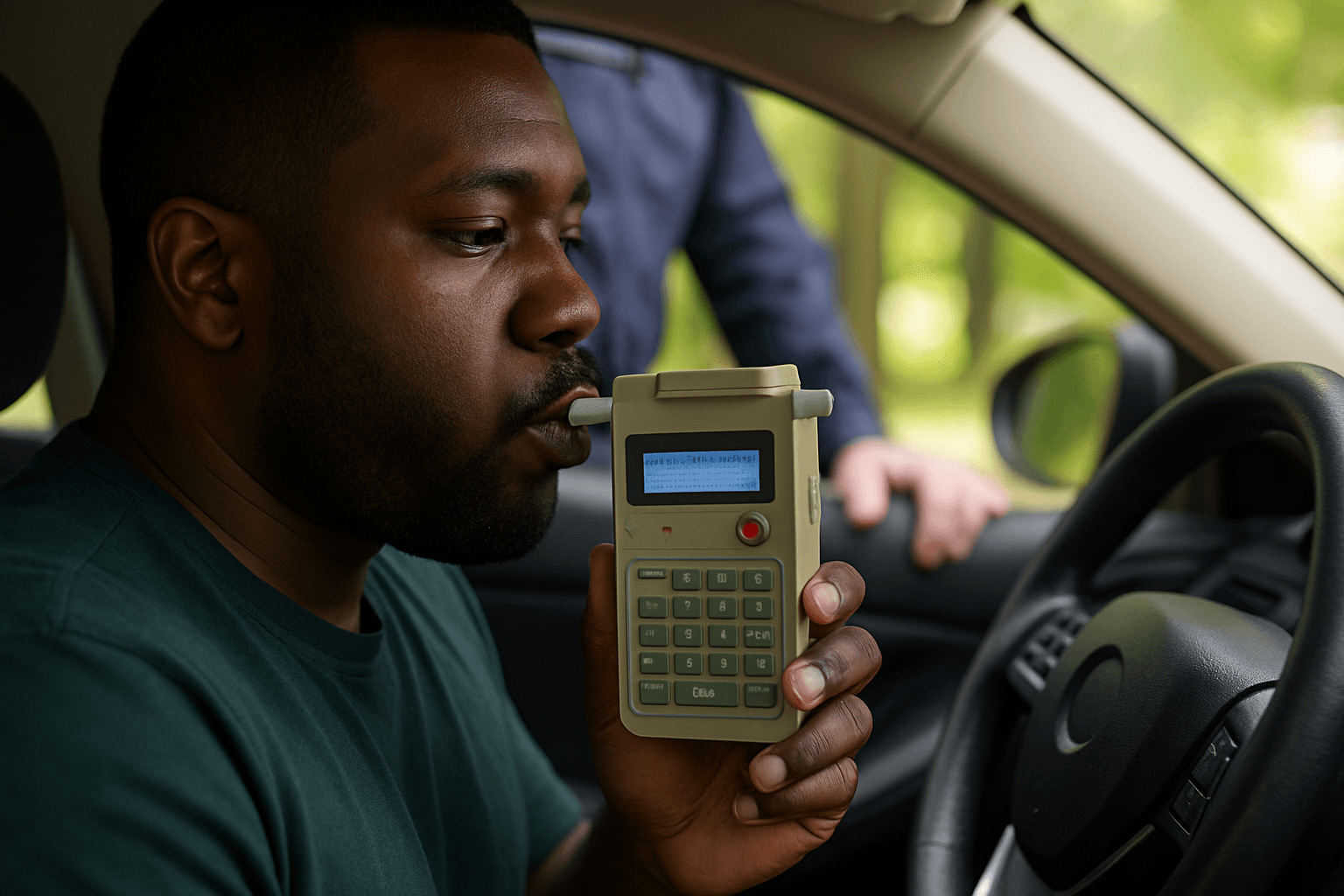
Maryland mandates ignition interlock device (IID) installation for most DUI and DWI suspensions under the Ignition Interlock System Program (IISP). The IID prevents your vehicle from starting unless you provide a clean breath sample. If your suspension stems from a breath-test failure or refusal, you must enroll in the IISP before the OAH hearing officer will approve your restricted license.
Maryland Transportation Article §16-404.1 governs the IISP. If your BAC was between 0.08 and 0.14, your interlock period typically runs 1 year. If your BAC was 0.15 or higher, the period extends. If you refused the breath test, the interlock requirement is longer and the hearing officer has less discretion to shorten it.
You must install the IID with an MVA-approved vendor before driving. The device logs every start attempt, every failed breath sample, and every instance of tampering. The vendor uploads this data to the MVA monthly. If you fail a rolling retest, attempt to start the vehicle after drinking, or tamper with the device, the MVA extends your interlock period and may revoke your restricted license. Budget $70–$100 per month for IID lease and monitoring fees on top of your SR-22 insurance premium.
What Happens If You Drive Outside Your Approved Hours or Routes
Maryland treats driving outside your approved restricted license terms as driving on a suspended license. If law enforcement stops you outside your documented work hours, on a route not included in your OAH petition, or for a purpose not approved by the hearing officer, you face criminal charges under Maryland Transportation Article §16-303.
The penalty for driving on a suspended license in Maryland includes up to 1 year in jail, a $1,000 fine, and an additional suspension period added to your existing restriction. The MVA will revoke your restricted license immediately, and you will need to restart the petition process — new hearing, new documentation, new fees.
If your job schedule changes after the hearing officer approves your restricted license, you must petition the OAH to modify your restriction order before driving the new hours. Do not assume flexibility. The restricted license is a legal accommodation tied to specific documented facts. If those facts change, the accommodation must be updated through the same legal process that granted it.
Cost Breakdown: Application, SR-22, Interlock, and Premium Impact
The total cost to obtain and maintain a Maryland restricted license for work depends on your suspension cause and filing requirement. Budget for the following expenses:
MVA application and hearing fees: Maryland charges administrative fees for the OAH hearing petition and restricted license issuance. These fees vary by suspension type; verify current amounts at mva.maryland.gov before filing.
SR-22 or FR-44 filing fee: Most carriers charge a one-time filing fee of $15–$50 to submit the SR-22 or FR-44 certificate to the MVA. This fee is separate from your premium.
SR-22 premium increase: Expect your liability insurance premium to increase $40–$90 per month compared to a clean-record driver. Non-owner SR-22 policies typically cost $30–$60 per month because they exclude collision and comprehensive coverage. FR-44 policies cost more because the liability limits are higher. Estimates based on available industry data; individual rates vary by driving history, vehicle, coverage selections, and location.
Ignition interlock lease and monitoring: $70–$100 per month for the device lease, calibration, and monthly data upload. You pay this directly to the IID vendor, not your insurance carrier.
Reinstatement fee: Maryland charges a $45 reinstatement fee when your full driving privileges are restored after the suspension period ends and all requirements are completed.
Total monthly cost during the restricted license period: $110–$190 per month for drivers with SR-22 and interlock requirements. Non-interlock suspensions reduce that to $40–$90 per month for SR-22 premium impact alone.
CDL Holders: Why Work-Restricted Licenses Do Not Cover Commercial Vehicles
If you hold a Commercial Driver's License (CDL) and your personal-vehicle suspension triggers a restricted license petition, the restricted license does not authorize commercial vehicle operation. Maryland law treats personal and commercial driving privileges separately. A restricted license issued for commuting to your CDL-required job allows you to drive your personal vehicle to the worksite — it does not allow you to operate the commercial vehicle once you arrive.
If your CDL is suspended due to a personal-vehicle DUI, Maryland typically disqualifies your CDL for 1 year under federal rules (49 CFR Part 383). You cannot petition for a restricted CDL. Employers cannot legally allow you to drive commercial vehicles during the disqualification period, even if your job depends on it.
Some CDL holders attempt to use their restricted personal license to drive to a non-driving job at the same employer. This works only if the employer has a non-driving role available and the hearing officer approves the commute route. If your only role is commercial driving, the restricted license will not save your job. Address this reality early: if your CDL is disqualified, you need a non-driving income plan for the duration of the suspension.