Maryland's MVA restricted license process requires an OAH hearing for most suspension types, not a counter application. Your employer documentation needs to satisfy specific hearing-officer requirements that vary by suspension cause.
Maryland Calls It a Restricted License and Routes It Through OAH Hearings
Maryland issues a Restricted License for work purposes, but unlike states where you walk into a DMV counter with documentation, most Maryland suspension types require a contested case hearing before the Office of Administrative Hearings (OAH). The hearing officer has broad discretion in granting and defining restrictions.
Point-based suspensions, some DUI administrative suspensions, and certain other triggers all require this hearing. You are not filling out a form and waiting for approval. You are presenting a case to a hearing officer who will evaluate whether your work need justifies the risk of allowing you back on the road under specific constraints.
The application path is through the MVA, but the decision authority is OAH. This distinction matters because the documentation standard is higher than states where hardship licenses are administratively granted. You need to prove the necessity and document the constraints you are willing to accept.
What Documentation the Hearing Officer Actually Evaluates
The MVA lists required documentation: proof of employment or need, SR-22 or FR-44 insurance certificate if required, completed MVA application, ignition interlock enrollment documentation if DUI-related, and court order or MVA hearing documentation. That list describes the minimum filing requirement. It does not describe what wins the hearing.
The employer verification letter is the cornerstone. It must state your job title, your work address, your required work hours, and the consequence of losing your license. Generic HR letters that confirm employment without stating necessity fail regularly. The hearing officer needs to understand why you cannot carpool, use transit, or work remotely.
Route documentation strengthens the case significantly. A map showing the commute path, mileage, and the absence of viable transit alternatives demonstrates that the restriction you are requesting is narrowly tailored. Hearing officers are more likely to approve restrictions that are geographically and temporally specific than open-ended "drive to work" permissions.
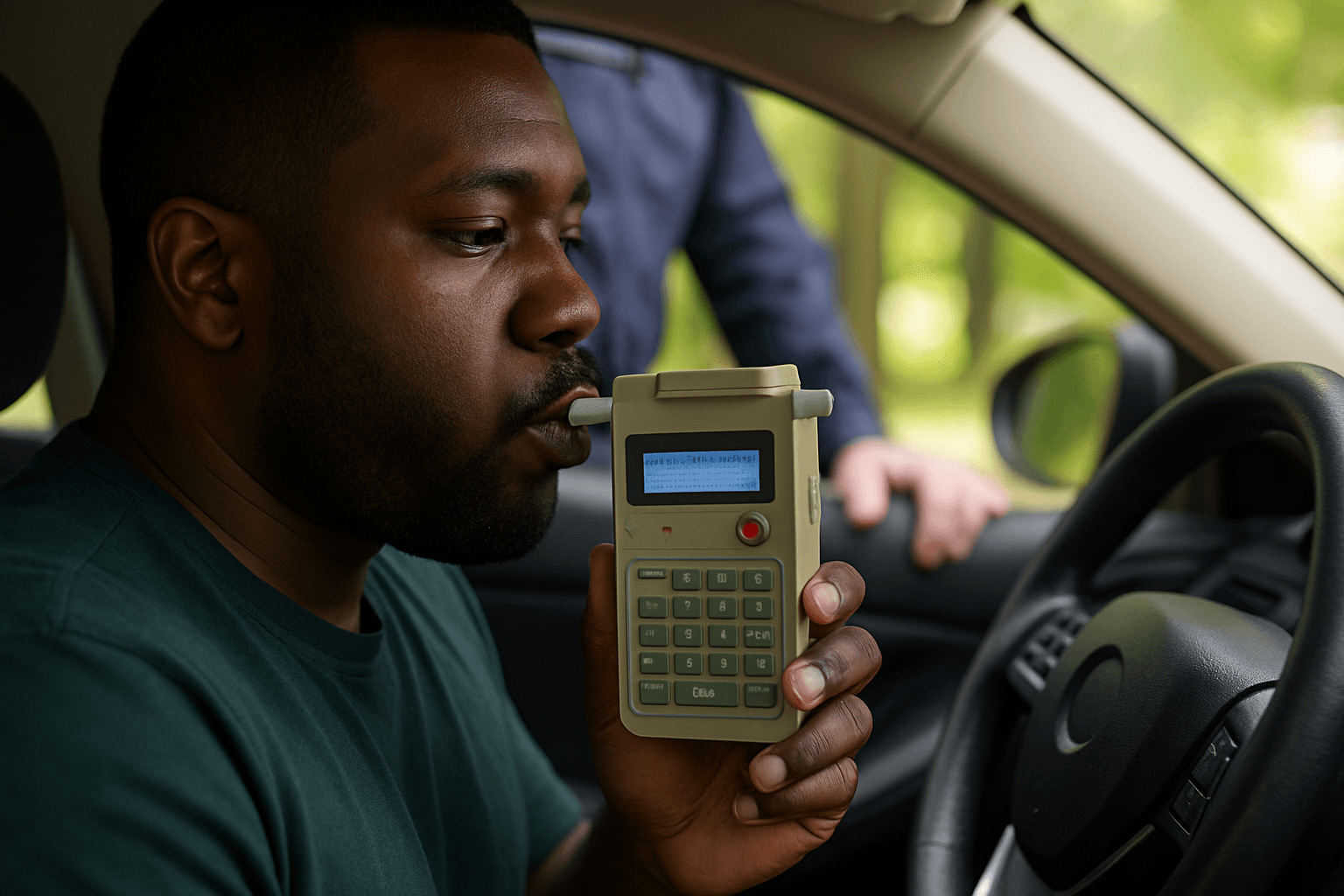
If your suspension is DUI-related, ignition interlock enrollment documentation is mandatory before the hearing. Maryland requires participation in the Ignition Interlock System Program for most alcohol-related suspensions. You cannot argue for a restricted license without proving you have enrolled in the interlock program first.
Compare car insurance rates in your state
Get quotes from licensed carriers — no obligation, no spam, results in minutes.
Get Your Free Quote✓ No Obligation Required✓ Licensed Carriers Only✓ Available Nationwide✓ Free to Compare
How Approved Restrictions Are Defined and What Violates Them
Maryland restricted licenses carry court-defined or MVA-defined restrictions. Typical restrictions limit driving to work, school, medical appointments, and other essential purposes as specified in the restriction order. The hearing officer defines these purposes explicitly in the order granting the restricted license.
Time restrictions vary by case. The MVA or hearing officer may impose specific time windows based on your stated needs. If your employer letter says you work 8 a.m. to 5 p.m., expect the restriction to mirror that schedule with a buffer for commute time. Driving outside those hours violates the restriction even if the destination is work-related.
Route restrictions are less common but possible. Some orders specify approved routes or geographic boundaries. If your hearing order includes route constraints, driving outside those boundaries for any reason is a violation.
Violating restriction terms typically results in immediate revocation of the restricted license and extension of the underlying suspension period. Maryland does not issue warnings. The interlock device logs every trip if you are enrolled in IISP. If you are caught driving outside approved hours or purposes, the hearing officer has discretion to deny future restricted license applications.
SR-22 and FR-44 Filing Requirements Depend on Your Suspension Cause
Maryland requires SR-22 filing for DUI, DWI, and certain other serious violations. The filing must be maintained for 3 years in most cases. If your suspension is alcohol-related, expect SR-22 to be mandatory. If your suspension is uninsured-motorist-related, SR-22 is also typically required.
FR-44 filing is required for certain aggravated DUI cases in Maryland. FR-44 carries higher liability limits than SR-22 and typically results in higher premium costs. Verify with the MVA whether your case requires SR-22 or FR-44 before purchasing coverage.
The insurance certificate must be filed before the OAH hearing if your case requires it. You cannot defer insurance setup until after the hearing decision. The hearing officer will ask for proof of filing as part of the documentation review.
Not all suspension causes require SR-22. Point-based suspensions sometimes do and sometimes do not. Unpaid-ticket suspensions and failure-to-appear suspensions usually do not require SR-22. Employment-hardship SR-22 insurance is structured differently than standard auto policies because it emphasizes compliance documentation over comprehensive coverage.
Timeline from Application to Restricted License Issuance
The OAH hearing must be requested within 10 days from the date of the Order of Suspension. Missing this 10-day window waives your right to challenge the administrative suspension and typically forecloses the restricted license option for that suspension period.
Once the hearing is requested, OAH schedules the hearing date. Typical scheduling lag is 2 to 4 weeks depending on OAH caseload. You cannot drive during this waiting period unless you qualify for Maryland's Ignition Interlock System Program, which allows eligible DUI/DWI drivers to avoid the full suspension by enrolling in the interlock program before the suspension takes effect.
If the hearing officer approves the restricted license, the MVA issues the license typically within 5 to 10 business days after the hearing decision. You must pay the $45 reinstatement fee before the restricted license is issued. If your suspension involved multiple causes or unpaid fines, additional fees may apply.
The restricted license is valid for the duration specified in the hearing order. Most restricted licenses are issued for the remaining suspension period, not as a permanent replacement. At the end of the restriction period, you must complete full reinstatement requirements to restore an unrestricted license.
CDL Holders Cannot Use Restricted Licenses for Commercial Driving
Maryland restricted licenses do not authorize commercial vehicle operation. If you hold a commercial driver's license and your job requires driving a commercial vehicle, the restricted license will not preserve your employment.
This is a federal restriction, not a Maryland-specific rule. CDL disqualifications run independently of personal-vehicle restricted licenses. Even if your suspension was for a personal-vehicle DUI, your CDL is disqualified for one year for a first offense. The restricted license issued by Maryland covers personal driving only.
If your job involves both commercial and personal driving, document both needs in your employer letter. The hearing officer can approve personal driving for commute purposes, but the commercial driving disqualification remains in effect regardless of the restricted license approval.
Some CDL holders assume that because their job requires driving, they automatically qualify for a restricted license that covers their work vehicle. This is incorrect. The restricted license covers personal vehicles for the purpose of commuting to work or driving during work hours in a personal vehicle only.
What Happens If Your Employer Will Not Accept a Restricted License
Some employers refuse to retain employees with restricted licenses due to liability concerns, particularly in industries where driving is a core job function. This is legal. Employers are not required to accommodate restricted-license employees.
If your employer has stated they will not accept a restricted license, include this in your documentation for the OAH hearing. Some hearing officers consider employment-loss risk as part of the necessity evaluation. However, Maryland does not guarantee restricted license approval based solely on employment consequences.
Gig economy workers and commission-based drivers face a related problem. Rideshare companies and delivery platforms typically terminate drivers with any license restriction. If your income depends on these platforms, a restricted license does not preserve your work authorization with those companies.
The restricted license pathway is designed for employees whose work requires personal driving to and from a fixed work location or during defined work hours. It is not designed to preserve commercial driving privileges or platform-based gig work.