Maine restricted license petitions require a court-approved employer verification letter documenting your work schedule, route, and job duties. Most petitions fail because applicants submit generic employment letters instead of the specific sworn affidavit judges expect.
What Documentation Maine Courts Require for Work-Restricted License Petitions
Maine restricted license petitions require a formal employer verification letter, proof of SR-22 insurance for OUI cases, and supporting statements that establish hardship. The employer letter must function as a sworn affidavit: it must state the employer's name and business address, your job title and duties, your work schedule with specific days and hours, and the physical route you need to drive from your residence to the workplace.
Most petitions fail because applicants submit generic employment verification letters. A letter stating "Jane Doe is employed full-time at our facility" does not satisfy Maine court requirements. The court needs to see that driving is necessary for your employment, that your work schedule is documented, and that the route is defined. Many employers are unfamiliar with restricted license procedures and default to standard employment verification language.
The petition itself must be filed with the court that handled your suspension case or has jurisdiction over your residence. Maine's restricted license process is court-driven under 29-A M.R.S. § 2412, not a Bureau of Motor Vehicles administrative procedure. You petition the court, not the BMV. The court evaluates your hardship claim and decides whether to grant the restricted license and what conditions to impose.
How to Structure the Employer Verification Letter Maine Courts Accept
The employer verification letter must include your employer's letterhead if available, the date, and a statement affirming that the employer has direct knowledge of your employment status and work requirements. The letter should state: your full legal name, your job title, whether your position is full-time or part-time, your work schedule (specific days of the week and start/end times), the employer's physical business address, and a statement that you must drive to perform your job duties or that public transportation is unavailable.
The employer must sign the letter and include their printed name and title. Some courts require the signature to be notarized, treating the letter as an affidavit. Verify current notarization requirements with the court clerk before filing your petition. The route documentation is critical: state your home address and your employer's address clearly so the court can define the commute corridor. If your job requires driving during work hours (delivery driver, home health aide, sales representative), the letter must state that and describe the geographic area your job covers.
Employers sometimes hesitate to provide detailed route documentation because they worry about liability if you violate the restricted license terms. Explain that Maine restricted licenses are court orders, and the court defines the restrictions. The employer's role is to verify the employment need, not to guarantee your compliance. If your employer refuses to provide the letter, you cannot petition successfully. Maine courts do not grant restricted licenses for abstract hardship: the need must be employment-specific and documented.
Compare car insurance rates in your state
Get quotes from licensed carriers — no obligation, no spam, results in minutes.
Get Your Free Quote✓ No Obligation Required✓ Licensed Carriers Only✓ Available Nationwide✓ Free to Compare
What Supporting Statements and Proof of Insurance Maine Requires
In addition to the employer letter, Maine courts require supporting statements that explain why losing your license creates hardship. This is typically a sworn personal statement describing your employment situation, your household responsibilities, and the lack of alternative transportation. The statement should explain how losing your license jeopardizes your employment, not just that it would be inconvenient.
For OUI suspensions, Maine requires proof of SR-22 insurance before the court will consider your petition. The SR-22 filing must be active and on file with the Maine Bureau of Motor Vehicles at the time you submit your petition. Most carriers can issue SR-22 certificates within 24 to 48 hours, but you must purchase a policy first. If you do not own a vehicle, you need non-owner SR-22 coverage that allows you to drive employer-owned vehicles or borrowed vehicles during your restricted license period.
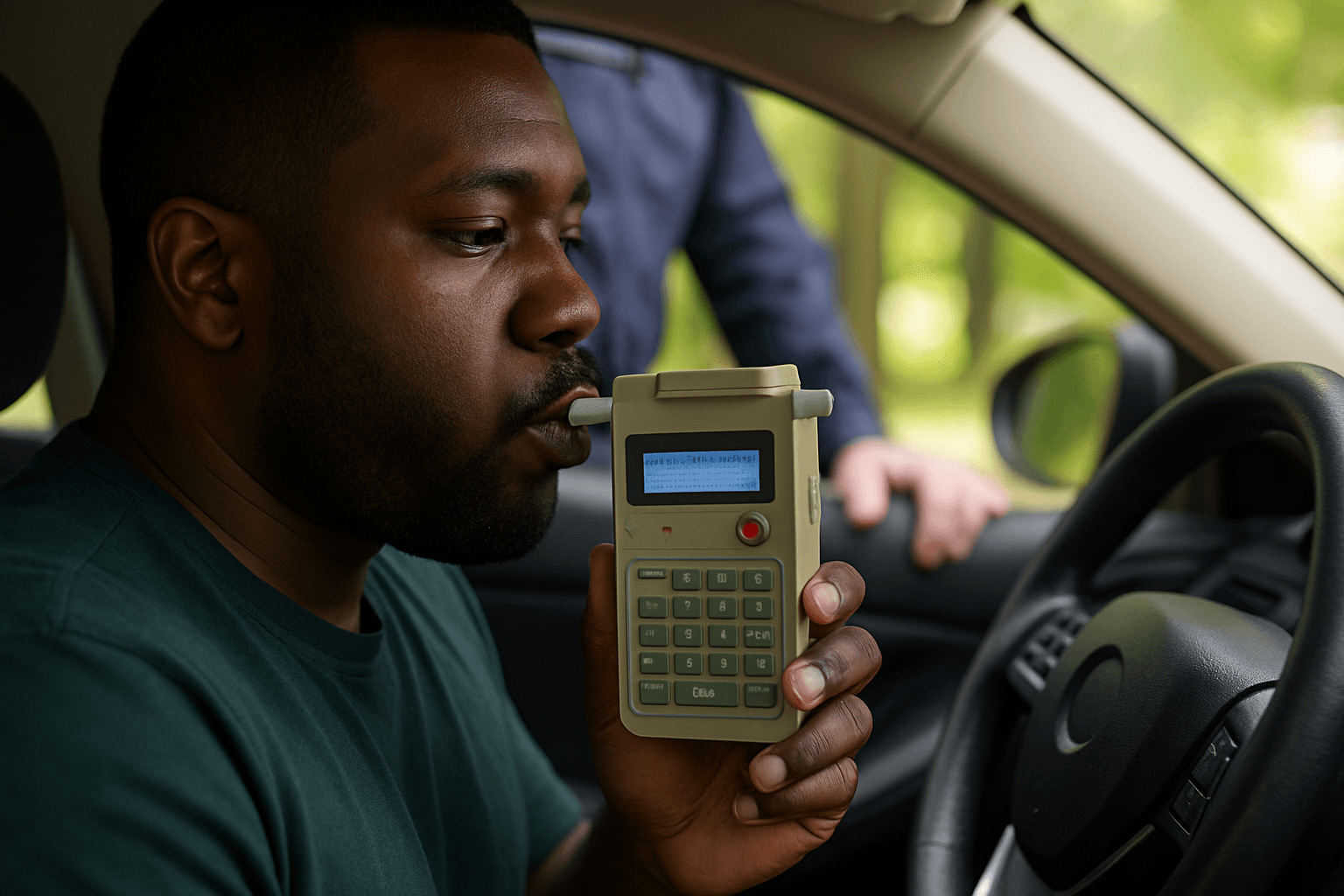
Maine's ignition interlock requirement applies to OUI restricted licenses under 29-A M.R.S. § 2412-A. If the court grants your restricted license, you must install an approved ignition interlock device before you can legally drive. The IID installation receipt becomes part of your compliance documentation. The court order will specify whether the IID is required for your entire restricted license period or a portion of it.
How Maine Courts Define Work-Hour and Route Restrictions
Maine restricted licenses are court-defined, meaning the judge decides the specific hours and routes you are allowed to drive. Typical restrictions allow driving during your documented work schedule plus a reasonable commute buffer (30 minutes before and after your shift), driving the direct route between your home and workplace, and driving for court-approved essential purposes such as medical appointments or required substance abuse program attendance.
The court order is the controlling document. If your work schedule changes after the restricted license is granted, you must petition the court to amend the order. Driving outside the approved hours or routes violates the court order and can result in immediate license revocation, additional criminal charges for operating after suspension, and jail time in OUI cases. Maine law enforcement can verify restricted license terms through the BMV system during traffic stops.
If your job requires driving during work hours, the court order must explicitly authorize work-related driving within a defined geographic area. Delivery drivers, home health workers, and sales representatives cannot function under a commute-only restriction. The employer letter must document this need clearly, and the court must approve it. Some judges will not grant broad work-hour driving privileges for high-BAC OUI cases or repeat offenses.
What Happens If Your Restricted License Petition Is Denied
Maine courts deny restricted license petitions when the employment documentation is inadequate, when the applicant has not completed the mandatory hard suspension period, or when the hardship claim is not sufficiently compelling. First-offense OUI suspensions in Maine carry a mandatory 30-day hard suspension before any restricted license petition is viable. Repeat offenses carry longer mandatory periods. Filing too early guarantees denial.
If your petition is denied, the court typically allows you to refile after correcting the deficiencies. Common denial reasons include: employer letter lacks sworn affidavit language or route documentation, no proof of SR-22 insurance on file, applicant has not enrolled in or completed required alcohol education (Driver Education and Evaluation Program or DEEP), or the court determines that alternative transportation is available.
After denial, you must continue serving your full suspension period unless you successfully refile. Maine does not offer administrative hardship licenses through the BMV, so there is no fallback path. If you lose your job during the suspension because you could not obtain a restricted license, that does not change your eligibility for future petitions: you must document a current employment need at the time you petition.
How SR-22 Insurance Costs Affect the Total Restricted License Budget
Maine restricted license costs include the court filing fee, SR-22 filing fee, ignition interlock installation and monthly monitoring fees for OUI cases, and the premium increase from the violation that triggered your suspension. SR-22 insurance in Maine typically costs $85 to $140 per month for drivers with OUI suspensions, compared to $60 to $90 per month for clean-record drivers. The SR-22 filing itself adds $25 to $50 as a one-time fee, depending on the carrier.
Ignition interlock devices cost approximately $100 to $150 for installation and $75 to $100 per month for monitoring and calibration. If your restricted license period lasts six months, total IID costs approach $600 to $750. The court petition filing fee varies by county but typically ranges from $50 to $150. These are upfront costs you must pay before you can legally drive under the restricted license.
The financial calculation is straightforward: restricted license setup costs $1,000 to $1,500 over the first few months. Losing your job costs more. If your employer will not hold your position without a restricted license, the restricted license petition is an employment-protection expense, not a driving convenience. Carriers writing employment hardship SR-22 coverage in Maine include Geico, Progressive, Dairyland, Bristol West, and The General. Rates vary significantly by carrier, age, and county.
What CDL Holders Need to Know About Maine Restricted Licenses
Maine restricted licenses do not authorize commercial driving, even if your job requires a CDL. If you hold a commercial driver's license and your personal license is suspended, the CDL is also suspended under federal regulations. A restricted license for work purposes allows you to drive a personal vehicle to and from your job, but it does not reinstate your CDL privileges.
If your job is commercial driving (truck driver, bus driver, delivery driver operating a commercial vehicle), a restricted license will not save your employment. You cannot operate a commercial motor vehicle under a restricted license. Some CDL holders mistakenly believe that a work-purposes restricted license covers their commercial driving duties. It does not. The employer verification letter should clarify whether you drive a personal vehicle or a commercial vehicle for work.
If you are a CDL holder whose job does not require commercial driving (for example, an office worker who commutes in a personal vehicle), the restricted license allows that commute. The court order should explicitly state that the restricted license does not authorize commercial vehicle operation to avoid confusion during enforcement stops.