Maine's court-approved Restricted License requires documented work routes, proof of employment need, and SR-22 insurance filing—but most applicants don't realize the petition goes through the court that handled their case, not the BMV.
Why Maine's Restricted License Process Runs Through Courts, Not the BMV
Maine does not issue hardship or restricted licenses through the Bureau of Motor Vehicles administrative process. Instead, you must petition the court that suspended your license or has jurisdiction over your case. This court-driven pathway means your approval depends on a judge's evaluation of your documented need, not a checklist reviewed by a DMV clerk.
The petition goes to the same court that handled your OUI case, points suspension, or other underlying violation. If you were convicted in District Court, that court hears your restricted license petition. If your suspension resulted from an administrative action (such as an insurance lapse), you petition the District Court in your county of residence. The Maine BMV does not accept or deny restricted license applications—it only processes approved orders issued by the court.
This structure creates a documentation burden most applicants underestimate. Courts expect to see proof of employment need, employer verification letters, route maps, work schedules, and SR-22 proof before they approve restricted driving. Missing any single component typically results in a denied petition and a rescheduled hearing weeks later.
What Routes and Hours Maine Courts Approve for Work Driving
Maine Restricted Licenses limit you to court-defined routes and hours tied directly to your employment. The court order will specify the approved purposes: typically commute to and from work, travel during work hours if your job requires driving, and sometimes additional purposes like medical appointments or court-ordered obligations. The petition must include your employer's address, your home address, and the specific route you intend to drive.
Approved hours mirror your documented work schedule. If your employer confirms you work Monday through Friday, 7 AM to 4 PM, the court order restricts driving to those days and hours, plus reasonable commute buffer time (typically 30 minutes before and after your shift). If your job involves irregular hours or shift work, your employer's verification letter must state that explicitly—courts will not approve vague "as-needed" schedules without supporting documentation.
Driving outside your approved routes or hours while on a Restricted License triggers automatic revocation and additional charges. Maine law enforcement can verify your restriction terms in real time during any traffic stop. If you are pulled over at 9 PM on a Saturday and your court order restricts you to Monday-Friday work commute, the license is revoked on the spot and you face operating-after-suspension charges, which carry separate criminal penalties and extended suspension periods.
Compare car insurance rates in your state
Get quotes from licensed carriers — no obligation, no spam, results in minutes.
Get Your Free Quote✓ No Obligation Required✓ Licensed Carriers Only✓ Available Nationwide✓ Free to Compare
Documentation Your Employer Must Provide for the Court Petition
Maine courts require an employer verification letter as part of every Restricted License petition tied to employment need. The letter must confirm your job title, work address, scheduled hours (including days of the week), and whether your position requires driving during work hours. Generic "to whom it may concern" letters do not satisfy the court's standard—the letter must be on company letterhead, signed by a supervisor or HR representative, and dated within 30 days of your petition filing date.
If your job involves driving to multiple locations (for example, delivery routes, sales territories, or home health visits), your employer must list the specific service area or client addresses you are expected to visit. Courts do not approve open-ended "throughout the state" language. If you cannot predict exact addresses in advance, your employer should describe the geographic boundaries of your work territory (for example, "Knox County and surrounding municipalities") and explain why route specificity is impractical given the nature of the work.
Some employers refuse to provide verification letters because they do not want to assume liability for an employee driving on a restricted license. Maine law does not require employers to accommodate restricted licenses, and many companies maintain blanket policies against retaining employees with suspended or restricted driving privileges. If your employer will not provide the letter, your petition will be denied regardless of how strong your hardship claim is. Before filing, confirm your employer is willing to document your work need in writing.
SR-22 Insurance Filing Requirements for Maine Restricted Licenses
If your suspension resulted from an OUI conviction, Maine requires proof of SR-22 insurance before the court will approve a Restricted License petition. SR-22 is a certificate of financial responsibility filed by your insurer directly with the Maine BMV, proving you carry at least Maine's minimum liability coverage: $50,000 bodily injury per person, $100,000 bodily injury per accident, and $25,000 property damage. The SR-22 filing itself costs approximately $25 to $50 as a one-time insurer processing fee, but the premium increase is the real cost driver.
SR-22 insurance typically costs $140 to $240 per month in Maine for drivers with an OUI on record, compared to $85 to $120 per month for clean-record drivers. The filing must remain active and continuous for the entire period the court specifies—typically matching the length of your OUI suspension (often 150 days for a first offense, longer for repeat offenses). If your policy lapses or is canceled for any reason, your insurer notifies the BMV within 10 days and your Restricted License is automatically suspended.
Drivers who do not own a vehicle can satisfy the SR-22 requirement with a non-owner SR-22 policy. This covers you when driving borrowed or employer-owned vehicles and meets the state's proof-of-insurance mandate. Non-owner policies typically cost $50 to $90 per month for drivers with an OUI. If you plan to use a company vehicle under your Restricted License, confirm with your employer that their commercial policy allows employees with suspended licenses to drive—many do not.
Ignition Interlock Device Requirements for OUI-Based Restricted Licenses
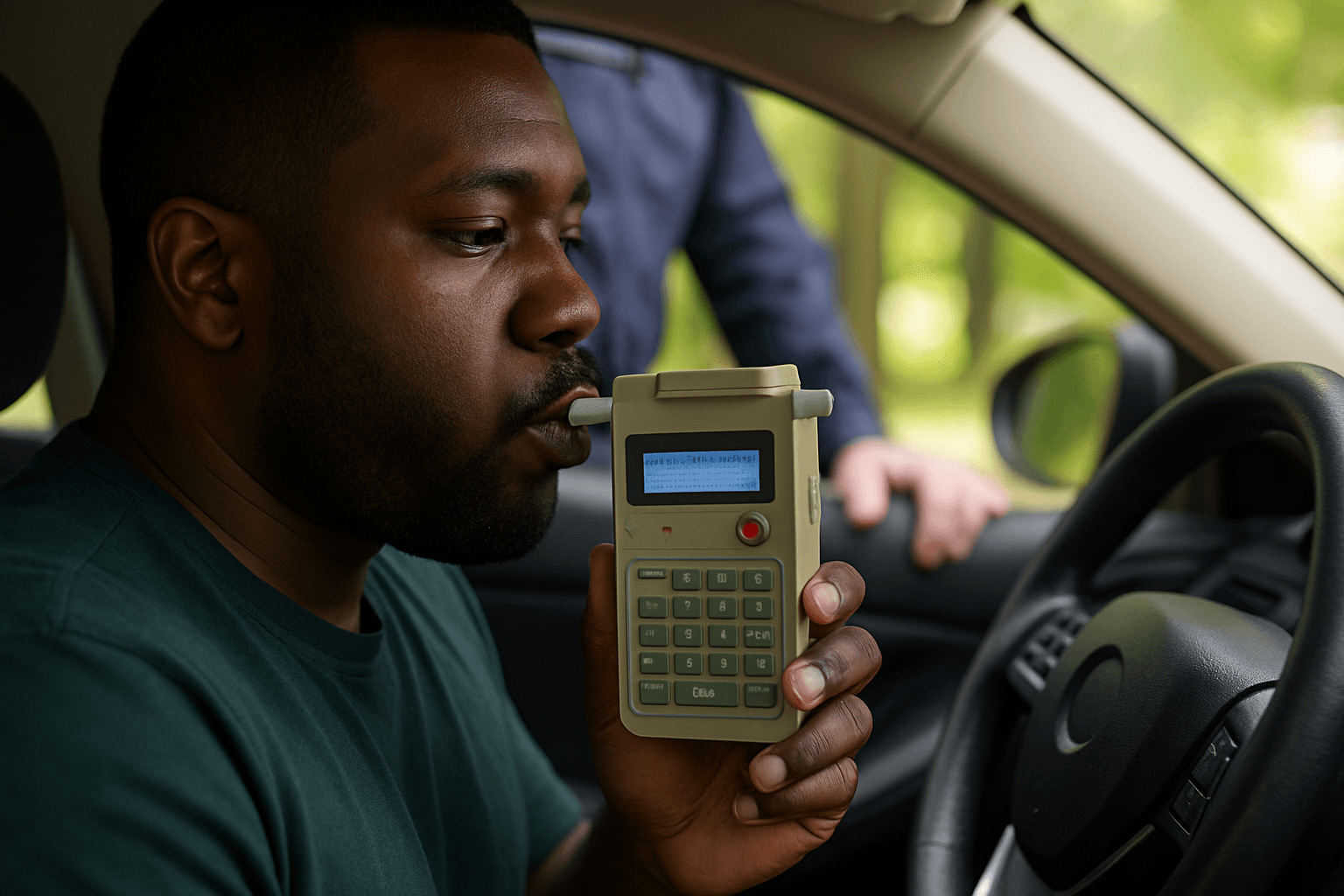
Maine law requires an ignition interlock device (IID) as a condition of any Restricted License issued after an OUI conviction. The IID is installed in your vehicle at your expense and requires you to provide a breath sample before the engine will start. If the device detects alcohol, the vehicle will not start. Random rolling retests occur while you are driving—if you fail a rolling retest or refuse to provide a sample, the device logs the violation and reports it to the court and the BMV.
IID installation costs approximately $100 to $150, with monthly lease and monitoring fees of $75 to $100. You pay for calibration appointments (required every 30 to 60 days) out of pocket, adding another $20 to $40 per visit. Over the course of a typical 150-day OUI Restricted License period, total IID costs run $500 to $700. The Maine BMV maintains a list of approved IID vendors; you must use a state-approved provider or the device will not satisfy your court order.
Violations logged by the IID—failed tests, tampering attempts, or missed calibration appointments—are reported to the court and typically result in immediate Restricted License revocation. The court interprets IID violations as evidence you are not complying with the terms of your restricted driving privilege. Most judges will not grant a second Restricted License petition after an IID violation, meaning you serve the remainder of your suspension with no driving privileges at all.
Timeline from Petition Filing to Restricted License Approval
Maine's court-driven Restricted License process takes longer than administrative hardship programs in other states. After you file your petition with the court, a hearing is scheduled—typically 2 to 4 weeks out, depending on the court's docket. You must appear at the hearing with all required documentation: employer verification letter, proof of SR-22 insurance, proof of IID installation (if applicable), and any other documents the court requested in the petition instructions.
If the judge approves your petition at the hearing, the court issues an order granting restricted driving privileges. That order is sent to the Maine BMV, which processes the Restricted License and mails it to you. BMV processing adds another 5 to 10 business days after the court order is issued. From the date you file your petition to the date you receive the physical Restricted License in the mail, expect 3 to 6 weeks total.
During the waiting period, you cannot drive. The Restricted License is only valid once the physical card is in your possession and the BMV has recorded the court order in its system. Driving on a suspended license while your petition is pending does not help your case—it adds an operating-after-suspension charge to your record and often results in the court denying your petition outright.
What Happens If You Violate Your Restricted License Terms
Operating outside the routes, hours, or purposes approved in your court order results in automatic Restricted License revocation and criminal charges. Maine law treats violations of restricted driving privileges as operating after suspension, a Class E crime carrying up to 6 months in jail and fines up to $1,000 for a first offense. The suspension period that remained on your original license is reinstated in full, and most courts will not consider a second Restricted License petition after a violation.
Violations are easier to trigger than most drivers realize. If your approved hours are Monday through Friday, 6:30 AM to 5 PM, and you are pulled over at 5:45 PM on a Friday, that is a violation—even if you were simply running late leaving work. If your approved route is home to work via Route 1, and you stop at a grocery store on the way home, that is a violation unless "household duties" was listed as an approved purpose in your court order. Maine State Police and local law enforcement can verify restriction terms instantly during traffic stops, and officers are trained to check for compliance.
If you need to modify your approved routes or hours because your work schedule changed, you must file a motion with the court to amend your Restricted License order. Do not assume informal changes are acceptable. The court order is the controlling document, and any driving that falls outside its exact terms is considered a violation regardless of how reasonable your explanation might seem.