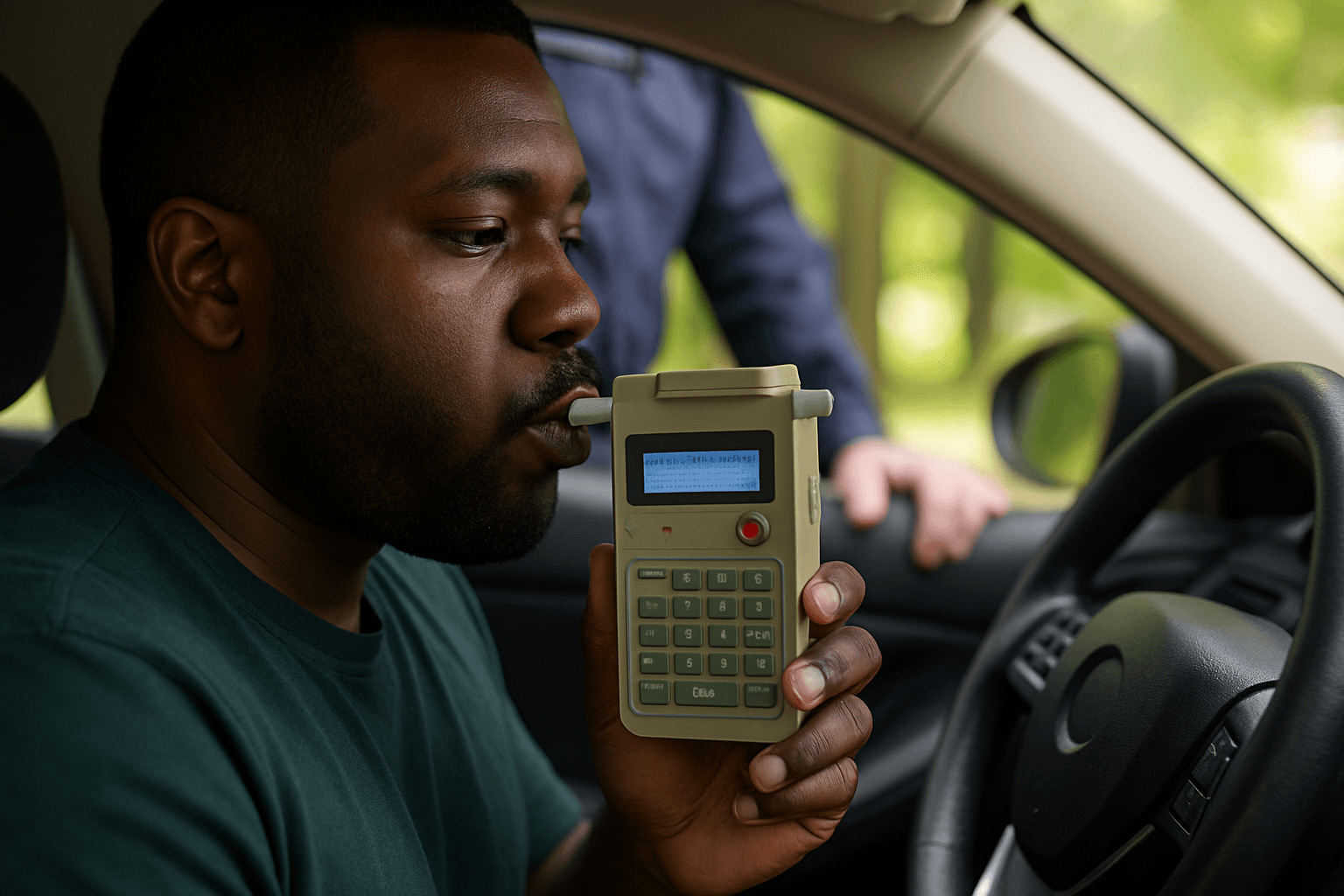
Maine's work-restricted license is court-ordered, not BMV-issued. You petition the judge who handled your case, not the licensing agency, and the court defines your approved routes and hours.
Why Maine's Restricted License Process Is Court-Driven, Not DMV-Driven
Maine requires you to petition the court that handled your suspension case to obtain a restricted license for work. The Maine Bureau of Motor Vehicles does not issue hardship licenses administratively. This is a meaningful procedural distinction from states like Texas or California where the DMV processes hardship applications directly.
You file your petition with the court that suspended your license. For OUI cases, that's the criminal court where your conviction was entered. For administrative suspensions, you petition the same court with jurisdiction over your case. The judge reviews your petition, evaluates your documented need, and defines the specific terms of your restricted license if granted.
The court sets your approved routes, approved hours, and any additional conditions such as ignition interlock device installation. These restrictions are binding. Driving outside approved parameters violates the court order and typically results in immediate revocation of the restricted license and potential criminal charges for violating a court order.
What Documentation Maine Courts Require Before Approving Work-Restricted Licenses
Maine courts require a formal petition that includes proof of your employment need, proof of SR-22 insurance for OUI cases, and statements supporting your hardship claim. The most commonly overlooked document is the employer verification letter.
Your employer must provide a signed letter on company letterhead confirming your job title, work address, work hours, and a statement that driving is required to commute to work or perform your job duties. Courts require this verification because many petitions are denied when the applicant claims a work need but cannot document it. If your job requires driving during work hours, the letter must specify routes and hours for on-the-job driving separately from commute hours.
For OUI-related suspensions, you must provide proof of SR-22 insurance coverage before the court will approve your petition. The SR-22 filing must be active and on file with the Maine BMV at the time of your hearing. Courts will not approve a restricted license without verified insurance compliance. If you have not yet obtained SR-22 coverage, secure it before filing your petition to avoid delays or denial.
Compare car insurance rates in your state
Get quotes from licensed carriers — no obligation, no spam, results in minutes.
Get Your Free Quote✓ No Obligation Required✓ Licensed Carriers Only✓ Available Nationwide✓ Free to Compare
How OUI Hard Suspension Periods Affect When You Can Petition for Work Driving
Maine imposes a mandatory 30-day hard suspension for first-offense OUI before any restricted license petition can be considered. During this hard suspension period, you cannot drive at all, and no hardship license is available. Subsequent OUI offenses carry longer mandatory hard suspension periods before restricted driving becomes an option.
The hard suspension period is measured from your conviction date, not your arrest date. If you are arrested in January and convicted in March, your 30-day hard suspension begins in March. You cannot file a petition for a restricted license until the hard suspension period expires. Courts will not entertain petitions filed before the mandatory hard period is complete.
Once the hard suspension period expires, you may file your petition for a work-restricted license. The court evaluates your petition based on documented need, compliance with SR-22 insurance requirements, and completion of any court-ordered programs such as the Driver Education and Evaluation Program.
What Ignition Interlock Requirements Apply to Maine Work-Restricted Licenses
Maine requires ignition interlock device installation for OUI-related restricted licenses under 29-A M.R.S. § 2412-A. The court orders IID installation as a condition of your restricted license, and the device must remain installed for the entire restricted driving period and often through full reinstatement.
The Maine BMV maintains a list of approved IID vendors. You must use an approved vendor, pay installation and monthly calibration fees, and comply with all maintenance and reporting requirements. Typical IID costs range from $70 to $150 per month, in addition to a one-time installation fee of approximately $100 to $150. These costs are in addition to your SR-22 insurance premiums and court fees.
Violating IID requirements terminates your restricted license. This includes failing to attend scheduled calibration appointments, attempting to bypass the device, or recording failed breath tests. The device logs all activity and reports violations to the court and the BMV. Most violations result in immediate revocation without a second chance.
How Approved Routes and Hours Work in Maine Court-Restricted Licenses
The court defines your approved routes and approved hours when it grants your restricted license. These restrictions are not flexible. You may drive only to and from work during the hours specified in the court order. Driving outside those hours or routes violates the court order and typically results in immediate license revocation.
Most Maine restricted licenses allow commute driving plus on-the-job driving if your employer verification letter documents a need for driving during work hours. The court may also approve essential purposes such as medical appointments, court-ordered programs, or childcare if you document those needs in your petition. However, the court does not approve broad personal-use driving. Grocery shopping, social visits, and errands are not approved purposes unless explicitly included in the court order.
If your work schedule changes after your restricted license is granted, you must petition the court to amend your approved hours. Driving during hours not listed in your court order is a violation even if those hours are legitimately work-related. Employers who change your shift schedule create compliance risk unless you file an amendment petition immediately.
What Happens to CDL Holders Who Petition for Work-Restricted Licenses
Maine work-restricted licenses do not cover commercial driving. If you hold a commercial driver's license and your job requires driving a commercial vehicle, a restricted license does not allow you to perform that work. This is a federal restriction, not a state-level policy choice.
You may use a restricted license to commute to a CDL job in your personal vehicle, but you cannot operate the commercial vehicle itself during your restricted period. Many CDL employers will not retain drivers who cannot perform their primary job function. If your livelihood depends on commercial driving, a restricted license for personal-vehicle commuting may not preserve your employment.
Some CDL holders petition for restricted licenses to commute to non-CDL jobs while their commercial license is suspended. This is permissible, but you must document the non-CDL employment in your petition and employer verification letter. The court evaluates whether the job is legitimate and whether driving is genuinely necessary for that position.
What SR-22 Insurance Costs Look Like for Maine Restricted License Holders
SR-22 filing itself costs approximately $25 to $50 as a one-time fee paid to your insurance carrier. The carrier files the SR-22 certificate with the Maine BMV on your behalf. The more significant cost is the premium increase that comes with being classified as a high-risk driver after an OUI or other serious violation.
Typically, Maine drivers with OUI suspensions pay $140 to $240 per month for minimum liability coverage with SR-22 filing, compared to $70 to $120 per month for clean-record drivers. The premium impact persists for the entire SR-22 filing period, which is typically three years for OUI cases in Maine. Over that period, total insurance costs can reach $5,000 to $8,600 above clean-record baseline rates.
Not all carriers write SR-22 policies in Maine. If your current carrier does not file SR-22, you must switch to a carrier that specializes in high-risk coverage. Carriers that write SR-22 in Maine include Geico, Progressive, Dairyland, Bristol West, The General, National General, State Farm, and USAA. Employment-hardship SR-22 insurance is structured specifically for drivers who need coverage to meet court-ordered restricted license requirements.