Kentucky District Courts grant Hardship Licenses with court-defined route and hour restrictions, mandatory ignition interlock for DUI cases, and SR-22 filing through KYTC — all before the standard reinstatement date.
What Kentucky Calls a Hardship License and Who Grants It
Kentucky uses the term Hardship License, and you get one through District Court petition, not through the Kentucky Transportation Cabinet (KYTC). The Cabinet handles administrative suspensions and reinstatement, but the judge decides whether you qualify for restricted driving during your suspension period.
This matters because your application fee, processing timeline, and required documentation vary by county. Jefferson County (Louisville) and Fayette County (Lexington) process higher petition volumes and enforce stricter documentation standards than rural district courts. Bring incomplete paperwork to a Louisville hearing and you'll be continued to another date. Rural courts may review your petition the same day if the docket is light.
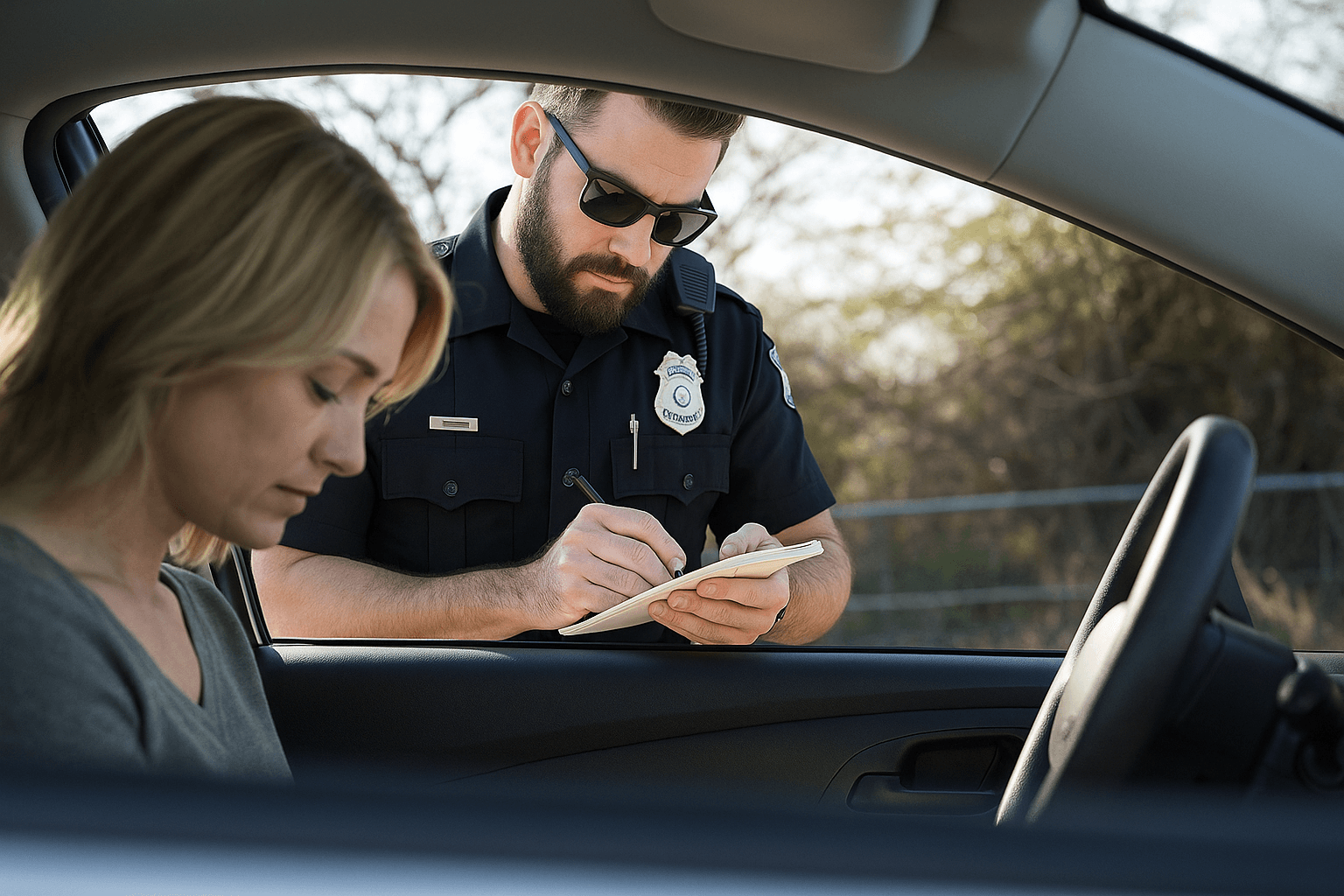
The court grants the license. KYTC enforces it. If you're stopped driving outside approved hours or routes, the officer checks KYTC's database, and you're charged with driving on a suspended license even though you hold a Hardship License. The license is not a clean reinstatement — it's a court order with boundaries.
Approved Routes and Hours: What the Court Actually Restricts
Kentucky Hardship Licenses restrict you to court-defined routes and hours. Typical approved purposes include travel between home and work, school, medical appointments, and other court-approved needs. The court does not grant blanket permission to drive whenever you want as long as you're heading somewhere on the list. The order specifies hours.
Most courts approve commute windows: 30 minutes before your shift starts to 30 minutes after it ends, plus the direct route between home and your workplace. If your employer requires job-site driving during your shift (delivery routes, service calls, sales appointments), you petition for broader work-hours approval. Bring a letter from your employer documenting the job requirement, specific routes if predictable, and typical hours. Courts grant this more often for essential workers and commercial driving roles, but you cannot assume approval without the employer letter.
If you work non-standard hours (overnight shifts, rotating schedules, gig work with variable start times), document that in your petition. Courts can approve time ranges rather than fixed windows, but you must request it explicitly. Arriving at a hearing without shift documentation and expecting the judge to grant open-ended work hours produces a denial or a continuation.
Medical appointments and school attendance require documentation too. The court approves these purposes but wants proof they're recurring and necessary. A one-time doctor visit doesn't justify ongoing driving privileges. Dialysis three times per week does.
Compare car insurance rates in your state
Get quotes from licensed carriers — no obligation, no spam, results in minutes.
Get Your Free Quote✓ No Obligation Required✓ Licensed Carriers Only✓ Available Nationwide✓ Free to Compare
Ignition Interlock Requirement: When You Must Install Before the Petition
Kentucky requires ignition interlock devices (IID) for Hardship License approval in DUI cases. If your suspension stems from a DUI conviction, you must install a certified IID before the court grants your petition. This is not optional. KRS 189A.340 mandates IID for early reinstatement and hardship driving after DUI.
First-offense DUI suspensions carry a 30-day hard suspension period before you're eligible to petition for a Hardship License. You cannot drive at all during those 30 days, even with IID installed. After the hard period ends, you install the device, file your petition, and request approval. Second-offense DUI requires 12 months of hard suspension before hardship eligibility. Third and subsequent offenses generally do not qualify for hardship relief.
Kentucky's 2020 SB 133 created the Ignition Interlock License (IIL) as a separate pathway for first-offense DUI cases. Drivers who install an approved IID may obtain an IIL, potentially bypassing the 30-day hard suspension entirely. This is a distinct process from the traditional Hardship License and carries different eligibility rules. If you qualify for an IIL, you may not need to petition District Court at all — the IIL functions as an administrative reinstatement with IID conditions.
If your suspension is not DUI-related (points accumulation, uninsured driving, unpaid fines, failure to appear), ignition interlock is typically not required unless the court orders it for other reasons. Read your suspension notice carefully. If it mentions IID, install the device before filing your petition.
SR-22 Filing Setup Through KYTC: Required Regardless of Court Approval
The Kentucky Transportation Cabinet requires SR-22 financial responsibility filing for DUI convictions, uninsured accident involvement, and certain other offenses. This filing is separate from the Hardship License itself. Even if the District Court grants your petition, you cannot legally drive until KYTC receives your SR-22 certificate from your insurance carrier.
SR-22 is not a type of insurance. It's a certificate your carrier files electronically with KYTC proving you carry at least Kentucky's minimum liability coverage: $25,000 per person for bodily injury, $50,000 per accident for bodily injury, and $25,000 for property damage. Kentucky also requires personal injury protection (PIP) coverage on all policies, so your SR-22 filing must show PIP compliance as well.
Carriers that write employment hardship SR-22 insurance in Kentucky include Geico, Progressive, Dairyland, Bristol West, National General, and State Farm. Not all carriers file SR-22 in Kentucky — USAA and Allstate, for example, do not use the SR-22 form here. If your current carrier won't file, you'll need to switch before your court hearing.
Typical SR-22 filing fees range $15 to $50 as a one-time charge. Your premium will increase because of the underlying violation (DUI, uninsured driving, points), not because of the SR-22 itself. Expect monthly premiums in the $140 to $220 range for drivers with DUI suspensions, higher in Louisville and Lexington, lower in rural counties. Maintain the SR-22 for the full duration KYTC specifies — typically 3 years for DUI cases.
If your SR-22 lapses because you cancel your policy or your carrier drops you, KYTC is notified electronically within 24 hours and your Hardship License is suspended immediately. You cannot drive legally until a new SR-22 is filed and processed.
Petition Documentation: What You Bring to District Court
Kentucky District Courts require a petition, proof of hardship, proof of SR-22 insurance, and payment of court costs. The petition itself is a written document explaining why you need a Hardship License, what your approved purposes are, and what routes and hours you're requesting. Some counties provide a form; others expect you to draft the petition yourself or hire an attorney to do it.
Proof of hardship means documentation showing you cannot meet your responsibilities without driving. For employment purposes, bring a letter from your employer on company letterhead stating your job title, work address, shift hours, and the driving requirement. If your job involves site visits or deliveries, the letter should describe the routes and typical hours. Courts deny petitions when the employer letter is vague or missing.
If you're requesting approval for school, bring your enrollment verification and class schedule. For medical appointments, bring a letter from your doctor stating the frequency and necessity of the visits. For child care or household duties, document the recurring need and why public transportation or rideshare is not viable.
Proof of SR-22 insurance means bringing your SR-22 certificate or a letter from your carrier confirming the filing has been submitted to KYTC. Do not show up with a quote or a binder — the court wants confirmation that KYTC has been notified. If you're in the ignition interlock window, bring proof of IID installation from the certified provider.
Court costs vary by county but typically range $40 to $150. Some courts collect payment at the hearing; others require prepayment when you file the petition. Check with the clerk's office before your hearing date.
Processing Timeline and What Happens After Approval
Processing times vary by county and court docket load. Jefferson and Fayette counties may schedule your hearing 2 to 4 weeks after you file the petition. Rural courts with lighter dockets may hear your petition within days. Once the judge grants the Hardship License, the court order is transmitted to KYTC, and your driving record is updated to reflect the restricted privileges.
You do not receive a new physical license. Your existing Kentucky license remains suspended, but KYTC's database shows you hold a court-ordered Hardship License with specific route and hour restrictions. Carry a copy of the court order in your vehicle at all times. If you're stopped, the officer will verify your status through dispatch, but having the order on hand speeds the process and demonstrates compliance.
Driving outside approved hours or routes is a violation of KRS 186.620, driving on a suspended license. This is a Class B misdemeanor carrying up to 90 days in jail and a $250 fine, and it extends your suspension period. Courts do not treat hardship violations leniently. If you're stopped at 11 p.m. and your approved hours end at 9 p.m., you're charged regardless of where you were going.
If your work schedule changes after the court grants your Hardship License, you must petition for a modification. Do not assume the original order covers the new hours. Courts expect you to keep the order current with your actual needs.
What Happens If You're Caught Driving Outside Approved Boundaries
Kentucky treats hardship violations as suspended-license violations. If you're stopped driving outside your approved hours or routes, the officer charges you under KRS 186.620. This is a criminal offense, not a traffic ticket. You'll be arrested or issued a summons, your vehicle may be impounded, and your Hardship License is revoked.
Revocation means you lose the court-granted privileges and return to full suspension. You cannot petition for another Hardship License until the original suspension period ends, and some judges will not grant a second petition even after full reinstatement eligibility. Violating a hardship order signals to the court that you cannot follow restrictions, and judges remember repeat petitioners.
The violation also extends your suspension period. If you were six months into a one-year suspension and violated the hardship order, the new conviction adds time to the back end. You'll also face the separate criminal penalties: jail time, fines, and a new conviction on your record.
If you genuinely need to drive outside approved hours for an emergency (medical crisis, family emergency), document the situation and contact your attorney immediately. Courts sometimes grant retroactive approval or dismiss charges when the deviation was unavoidable and documented, but this is not guaranteed. Do not assume goodwill.