Kentucky requires a District Court petition to obtain a Hardship License for work purposes. The process differs sharply from administrative hardship programs in neighboring states, and most applicants don't realize their county court's procedures vary significantly from Louisville and Lexington metro areas.
How Kentucky's Court-Based Hardship License Application Works
Kentucky requires a District Court petition to obtain a Hardship License for work-restricted driving. You file directly with the District Court in the county where you live, not through the Kentucky Transportation Cabinet.
This court-based path differs from administrative hardship programs in Ohio, Indiana, and Tennessee, where drivers submit applications to the DMV. Because Kentucky routes hardship applications through individual courts, processing timelines and filing fees vary by county. Jefferson County (Louisville) and Fayette County (Lexington) may use different administrative procedures than rural district courts.
The petition must demonstrate genuine hardship tied to employment, education, medical treatment, or other court-approved purposes. Most petitions center on work commutes. Kentucky judges evaluate whether losing your license would prevent you from earning a living, and whether alternative transportation (carpools, public transit, family assistance) is genuinely unavailable.
You submit your petition alongside proof of hardship, proof of SR-22 insurance, and payment of applicable court costs. Court costs vary by county and are separate from the Transportation Cabinet's $40 reinstatement fee you'll eventually pay when your full suspension period ends.
Required Documentation for the Hardship License Petition
Kentucky courts require four core documents for every Hardship License petition: the petition itself, proof of hardship, proof of SR-22 insurance, and payment of court costs.
Proof of hardship typically means employment records showing your work schedule, job location, and a verification letter from your employer confirming you need to drive to perform your job. If you're self-employed, bring business registration documents, client contracts, or tax records showing income tied to driving. Medical hardship cases require documentation from a healthcare provider explaining why you need to drive to treatment and why alternative transportation isn't viable. School enrollment verification works for education-based hardship.
The SR-22 certificate must be filed with the Kentucky Transportation Cabinet before your court hearing. Most judges will not approve a Hardship License petition if SR-22 isn't already on file with the state. You obtain SR-22 by purchasing a liability policy from a carrier licensed to file SR-22 in Kentucky and requesting the SR-22 certificate be sent to the Transportation Cabinet. The state receives the filing electronically within 24 to 48 hours.
Court costs are paid at filing and vary by county. Some counties charge flat petition fees around $100 to $150. Others assess additional administrative fees. Call the clerk's office in your county before filing to confirm the exact cost.
Compare car insurance rates in your state
Get quotes from licensed carriers — no obligation, no spam, results in minutes.
Get Your Free Quote✓ No Obligation Required✓ Licensed Carriers Only✓ Available Nationwide✓ Free to Compare
Eligibility for DUI and Points-Based Suspensions
Kentucky allows Hardship License petitions for both DUI offenders and points-based suspensions, but DUI cases face mandatory hard suspension periods before hardship eligibility begins.
First-offense DUI under KRS 189A.010 carries a 30-day hard suspension period. You cannot petition for a Hardship License during those 30 days. After the hard period ends, you become eligible to file. Second-offense DUI within 10 years triggers a 12-month suspension with a longer hard period before interlock eligibility. Third and subsequent offenses generally make hardship unavailable.
Kentucky's 2020 SB 133 created the Ignition Interlock License (IIL) as a distinct alternative to the traditional Hardship License for DUI offenders. Drivers who install an approved ignition interlock device may obtain an IIL, potentially bypassing the hard suspension period entirely for first-offense DUI. This bifurcation means DUI offenders now choose between the traditional court-petition Hardship License (which requires waiting out the hard suspension) and the IIL route (which requires IID installation but may allow earlier driving).
Points-based suspensions qualify for Hardship License petitions without hard suspension periods. If your license was suspended for accumulating 12 points in a two-year period, you can file your petition immediately. The court evaluates whether your driving record suggests you're safe to drive under restricted conditions.
Route and Time Restrictions Imposed by the Court
Kentucky judges impose court-defined route and time restrictions on every Hardship License. Restrictions are not standardized statewide; each judge tailors them to the hardship you documented in your petition.
Typical restrictions limit driving to travel between home and work, school, medical appointments, or other court-approved purposes. If your employer verification letter states you work Monday through Friday, 8:00 AM to 5:00 PM, at a location 15 miles from your home, the judge will likely restrict your Hardship License to that commute window plus a buffer for shift variance. Some judges specify exact routes. Others define geographic boundaries.
Time restrictions typically match the hours necessary for approved purposes. If you work second shift (3:00 PM to 11:00 PM), your Hardship License will authorize driving during those hours plus commute time. If your job requires on-the-road driving during work hours (delivery, sales calls, service appointments), your employer's verification letter must describe that requirement explicitly. Judges scrutinize work-related driving claims closely.
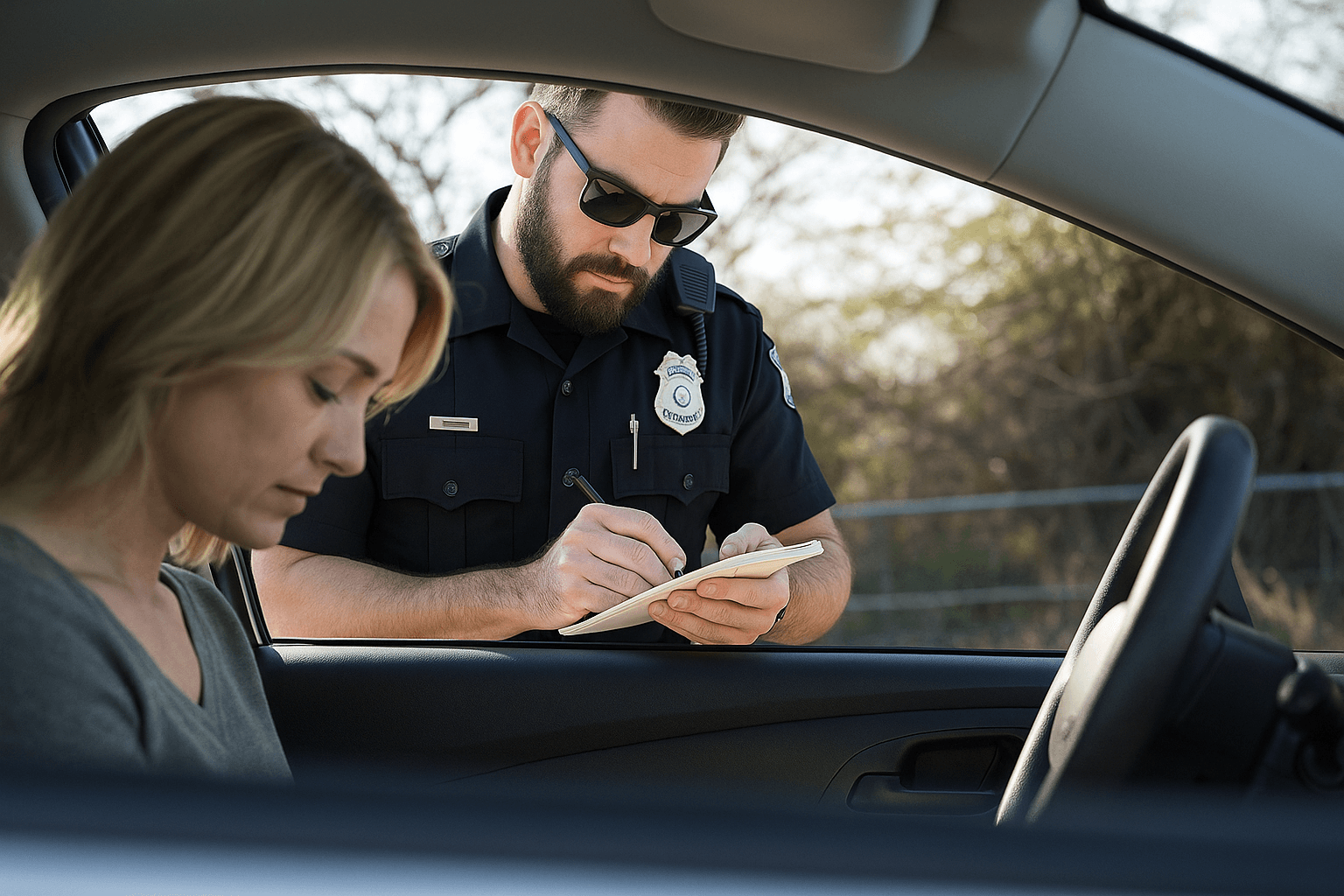
Violating route or time restrictions results in immediate revocation and potential criminal charges for driving on a suspended license. Kentucky State Police and local law enforcement have access to hardship license records. If you're stopped outside approved hours or off approved routes, the officer will see the restriction violation immediately.
Ignition Interlock Device Requirement for Most Cases
Kentucky requires ignition interlock device (IID) installation for most Hardship License approvals, particularly DUI-related suspensions. The IID requirement is separate from the Hardship License itself and applies regardless of which hardship pathway you pursue.
KRS 189A.340 governs Kentucky's IID program. If your suspension stems from DUI, refusal of a chemical test, or certain other alcohol-related offenses, the court will require IID installation as a condition of granting the Hardship License. You pay for installation (typically $70 to $150), monthly monitoring fees (typically $60 to $90), and eventual removal (typically $50 to $100). Total IID costs over a one-year period run $800 to $1,200.
You must use a state-certified IID provider. Kentucky certifies specific vendors; the court or Transportation Cabinet provides the approved vendor list. The device is installed in the vehicle you'll drive under the Hardship License. If you drive multiple vehicles, each requires a separate IID installation.
IID violation (attempting to bypass the device, failing a rolling retest, tampering) triggers automatic Hardship License revocation and potential extension of your underlying suspension. The device logs every violation and uploads it to the state. Monthly calibration appointments are mandatory; missing an appointment counts as a violation.
SR-22 Filing Setup and Duration for Work-Hardship Cases
The Kentucky Transportation Cabinet requires SR-22 financial responsibility filing for the full duration of your underlying suspension, regardless of whether you obtain a Hardship License. SR-22 is proof you carry continuous liability coverage meeting Kentucky's minimum limits: $25,000 per person for bodily injury, $50,000 per accident for bodily injury, and $25,000 for property damage.
You obtain SR-22 by contacting a carrier licensed to file in Kentucky and purchasing a liability policy. Not all carriers file SR-22. High-risk carriers like Geico, Progressive, Bristol West, Dairyland, and National General handle SR-22 cases regularly. The carrier charges an SR-22 filing fee (typically $15 to $50) and transmits the certificate to the Transportation Cabinet electronically.
SR-22 duration matches your suspension period. If you were suspended for two years, you maintain SR-22 for two years. If you were suspended for three years, SR-22 runs three years. Letting your policy lapse or cancel during the SR-22 period triggers immediate notification to the state and potential suspension reinstatement delay.
Some drivers mistakenly believe the Hardship License shortens SR-22 duration. It does not. The Hardship License allows restricted driving during suspension; SR-22 proves you're insured while driving under restriction. Both requirements run in parallel and both must be satisfied for the full suspension term.
What Happens If You're Caught Driving Outside Approved Hours
Driving outside your Hardship License's approved hours or routes is treated as driving on a suspended license under Kentucky law. The Hardship License is valid only during the specific hours and for the specific purposes the court approved. Any driving beyond those boundaries voids the restricted license.
If you're stopped outside approved hours, the officer charges you with operating on a suspended license. This is typically a misdemeanor carrying fines, potential jail time, and automatic revocation of your Hardship License. The court will not reissue a Hardship License after revocation for restriction violation.
Your underlying suspension period may be extended. Kentucky judges have discretion to add time to your original suspension if you violate Hardship License terms. If you were originally suspended for one year and violated your Hardship License six months in, the judge may extend your total suspension to 18 months or longer.
Employers sometimes ask drivers to make unscheduled trips or work overtime without advance notice. If your approved hours don't cover the request, you cannot legally drive. Contact your attorney or the court clerk immediately to request an emergency modification hearing if your work schedule changes. Do not assume flexibility exists.
Commercial Driving License Holders and Work-Hardship Limits
Kentucky's Hardship License does not authorize commercial driving, even if your job requires a CDL. The Hardship License applies only to personal driving for work-related travel. If you hold a CDL and your job involves operating commercial vehicles, the Hardship License will not restore your ability to perform that job.
Federal Motor Carrier Safety Administration (FMCSA) regulations prohibit states from issuing restricted commercial licenses for most disqualifying offenses. If your CDL was suspended due to DUI, refusal of a chemical test, or certain traffic violations, you cannot operate commercial vehicles under a Hardship License. Your personal driving privileges may be restored for commuting to a non-driving job, but your commercial driving authority remains suspended.
Some CDL holders assume a Hardship License will allow them to drive to and from a commercial driving job, even if they can't drive commercially while at work. That assumption is correct only if your employer has non-driving duties you can perform. Your employer verification letter must describe non-driving work responsibilities explicitly. If your job is 100% commercial driving, the Hardship License does not help you keep that job.
CDL reinstatement follows separate federal and state procedures. Contact the Kentucky Transportation Cabinet's CDL unit to confirm what steps you must complete before your commercial driving authority can be restored.