Kansas courts grant restricted driving privileges for work, but most applicants underestimate the documentation burden. Your employer verification letter must specify exact hours, routes, and job-related driving—generic employment letters get petitions denied.
What Kansas Courts Require in an Employer Verification Letter
Kansas restricted license petitions filed under K.S.A. 8-1015 require employer verification letters that document three specific elements: your work address, your scheduled work hours including shift variations, and whether your job requires driving during work hours beyond the commute. Generic employment verification letters stating only that you are employed and work full-time do not satisfy court requirements in most Kansas counties.
The letter must be on company letterhead, signed by a supervisor or HR representative with direct knowledge of your schedule, and include contact information the court can verify. Johnson County and Sedgwick County district courts specifically require that the letter state whether your employer has been notified of your license restriction and whether the company's insurance policy or employment policy prohibits employees from operating vehicles under restricted licenses. If your job requires commercial driving or driving a company vehicle, many employers will not provide the required acknowledgment because their liability carriers exclude restricted-license drivers from coverage.
Kansas courts define work-related driving broadly when approving restricted privileges. Commuting to and from your primary workplace qualifies. Driving between multiple work sites during your shift qualifies. Driving to make deliveries, service calls, client visits, or other job duties during work hours qualifies. Driving to pick up supplies or equipment needed for your job qualifies. The employer letter must detail which categories apply to your position and provide approximate weekly mileage for job-related driving if applicable.
Why Kansas Petitions Get Denied Despite Employment Documentation
Kansas restricted license petitions fail most often because the documentation package does not match the court's interpretation of K.S.A. 8-1015 requirements. Courts deny petitions when the employer letter omits start and end times for commute windows, when the letter does not specify whether weekend or overnight shifts apply, and when the letter states only that driving is required without documenting destinations or frequency.
Second, petitions fail when applicants do not address ignition interlock device installation before filing. Kansas law requires IID installation as a condition of restricted driving privileges for all DUI-related suspensions. The court will not grant restricted privileges until you provide proof that an approved IID provider has scheduled installation. The employer letter must acknowledge that the vehicle you will drive to work will be equipped with an IID, and if you drive a company vehicle during work hours, the employer must acknowledge IID installation on that vehicle or confirm that your job-related driving will be limited to your personal IID-equipped vehicle only.
Third, Kansas courts deny petitions when applicants do not resolve the underlying suspension cause before applying. If your suspension resulted from unpaid traffic fines, the court will not grant restricted privileges until you pay the fines or enter a payment plan with the court clerk. If your suspension resulted from failure to appear for a hearing, the court will not process your restricted license petition until you appear and resolve the underlying case. Administrative suspensions imposed by the Kansas Department of Revenue Division of Vehicles run on a separate track from court-imposed judicial suspensions, and restricted privileges granted by the court do not resolve DOR administrative holds on your license.
Compare car insurance rates in your state
Get quotes from licensed carriers — no obligation, no spam, results in minutes.
Get Your Free Quote✓ No Obligation Required✓ Licensed Carriers Only✓ Available Nationwide✓ Free to Compare
How to Structure the Employer Letter for Kansas Court Filing
The employer letter should open with your full legal name, job title, employment start date, and whether you are a full-time or part-time employee. The second paragraph should state your work address, your scheduled work hours for each day of the week you work, and whether those hours vary by week or season. If you work rotating shifts, the letter should provide the shift rotation schedule. If you work on-call hours, the letter should state the typical on-call window and the frequency of callouts.
The third paragraph should describe job-related driving requirements. If your job does not require driving beyond the commute, state that explicitly. If your job does require driving during work hours, the letter should list the types of destinations, provide examples of typical routes, and estimate weekly job-related mileage. The letter should state whether you drive a personal vehicle or a company vehicle for job-related driving.
The final paragraph should acknowledge your license restriction and IID requirement. Most Kansas employers include language similar to: "We have been notified that [employee name] is applying for restricted driving privileges and will be required to operate a vehicle equipped with an ignition interlock device. The company acknowledges this requirement and confirms that [employee name]'s continued employment depends on their ability to commute to work and perform job-related driving as described above." This acknowledgment signals to the court that your employer understands the restriction and will not terminate you once the restricted license is granted.
What Hours and Routes Kansas Restricted Licenses Actually Allow
Kansas restricted driving privileges are court-defined, not standardized. The court order granting your restricted license will specify approved purposes, approved hours, and approved routes. Typical Kansas restricted licenses approve driving for: travel between home and work during a defined commute window, driving during work hours for job-related purposes as documented in your employer letter, travel to and from court-ordered alcohol education or treatment programs, travel to and from ignition interlock device service appointments, and in some cases travel for medical appointments or essential household errands.
The commute window is typically defined as one hour before your shift starts to one hour after your shift ends. If you work an 8 a.m. to 5 p.m. schedule, your approved driving hours would typically be 7 a.m. to 6 p.m. on workdays. Driving outside this window, even for work-related reasons like picking up a forgotten item or attending a work meeting scheduled outside your normal hours, violates the restriction and can result in immediate revocation and additional criminal charges for driving under suspension.
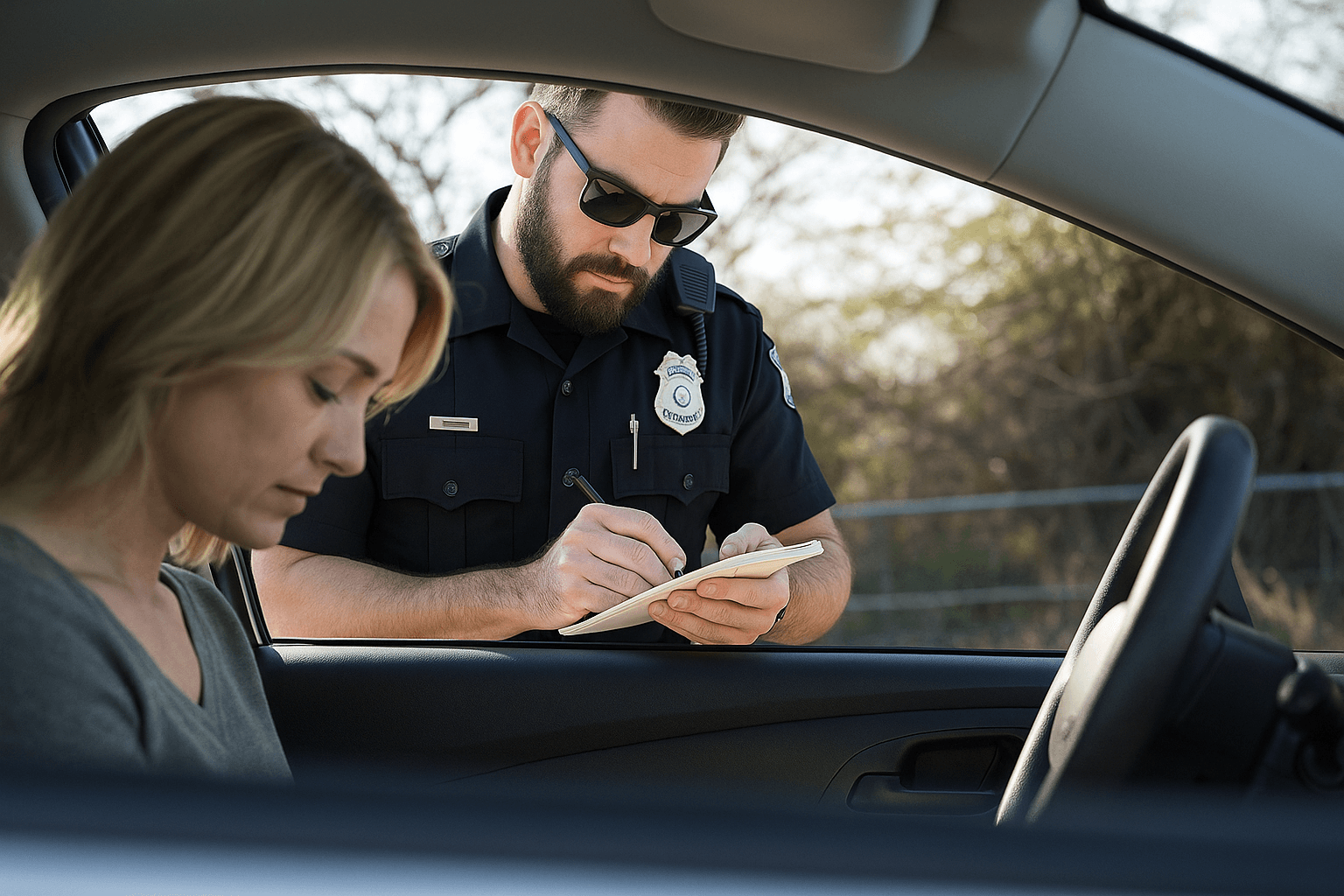
Kansas does not require restricted license holders to carry printed route maps, but the court order may specify approved routes or require that you take the most direct route between approved destinations. Johnson County courts sometimes require applicants to submit a written description of their typical commute route when filing the petition. If you are stopped by law enforcement while driving on a restricted license, you must be able to explain how your current trip fits within the court-ordered purposes and timeframes. Law enforcement will verify your restricted license status through the Kansas driver record system, and they will arrest you on the spot if your explanation does not match the court order.
How Ignition Interlock Installation Timing Affects Your Kansas Petition
Kansas restricted license petitions for DUI-related suspensions require proof of ignition interlock device installation or scheduled installation before the court will approve restricted driving privileges. You cannot drive on a restricted license without an IID installed in the vehicle you will operate. The court will not grant restricted privileges until you provide documentation from an approved IID provider showing that installation is scheduled within 10 days of the court hearing date.
Kansas uses a certified provider network for ignition interlock devices. The provider list is maintained by the Kansas Department of Revenue Division of Vehicles and includes approximately 15 companies with installers located throughout the state. Installation costs typically range from $75 to $150, and monthly monitoring and calibration fees range from $65 to $90. You are responsible for all IID costs; Kansas does not subsidize installation for restricted license holders.
If you drive a company vehicle for work, your employer must consent to IID installation on that vehicle, or you must limit your restricted driving to a personal vehicle equipped with an IID. Most Kansas employers will not allow IID installation on company vehicles due to liability concerns and fleet insurance restrictions. If your job requires driving a company vehicle and your employer will not consent to IID installation, you cannot use a restricted license for that job. The court will not grant restricted privileges for work purposes if the documentation shows you cannot legally perform the driving your job requires.
What Happens If You Are Caught Driving Outside Restricted License Terms in Kansas
Driving outside the approved purposes, hours, or routes specified in your Kansas restricted license order is treated as driving under suspension. Kansas law classifies this as a Class B misdemeanor for a first offense, punishable by up to six months in jail and fines up to $1,000. Law enforcement will arrest you at the traffic stop, impound your vehicle, and revoke your restricted driving privileges immediately.
The court that granted your restricted license will schedule a violation hearing. At that hearing, the state will present evidence that you were driving outside the approved restrictions. You will have the opportunity to explain the circumstances, but Kansas courts rarely reinstate restricted privileges after a violation unless you can prove the violation resulted from a documented emergency. If the court finds that you violated the restriction terms, you will lose restricted privileges for the remainder of your suspension period and face additional suspension time added to your original term.
SR-22 insurance required for your restricted license will also be affected. Most Kansas carriers writing employment-hardship SR-22 insurance include restrictive-use endorsements in the policy that void coverage if you are convicted of driving under suspension. If your restricted license is revoked and you are convicted of the violation, your carrier will cancel your SR-22 filing and report the cancellation to the Kansas Division of Vehicles, triggering an additional administrative suspension that will not end until you complete the full original suspension period without restricted privileges.
How SR-22 Filing Fits Into the Kansas Restricted License Process
Kansas restricted driving privileges for DUI-related suspensions require SR-22 proof of financial responsibility filed with the Kansas Division of Vehicles before the court will grant restricted driving approval. The SR-22 filing must remain active for the full three-year period following your reinstatement date, not just during the restricted license period. If your SR-22 lapses at any point during the three-year filing period, the Division of Vehicles will suspend your license again immediately.
You must obtain SR-22 insurance before filing your restricted license petition. The court order granting restricted privileges is not effective until the Division of Vehicles confirms that an active SR-22 filing is on record for you. Most Kansas drivers applying for restricted licenses obtain SR-22 policies two to three weeks before their court hearing date to ensure the filing is processed and recorded in the state system before the hearing.
Kansas SR-22 policies for restricted license holders typically cost $140 to $220 per month for liability-only coverage. If you do not own a vehicle and only need coverage for the restricted driving period, non-owner SR-22 for commuters policies are available starting at approximately $85 to $130 per month. Non-owner SR-22 policies cover you when driving any vehicle you do not own, including borrowed vehicles and rental cars, but they do not cover vehicles registered in your name. If you own the vehicle you will drive on a restricted license, you must obtain owner SR-22 liability coverage on that vehicle.