Kansas drivers suspended for DUI, points, or uninsured driving can petition the court for restricted driving privileges limited to work hours and routes. Here's the documentation your employer needs to provide and what the court will require before approving the petition.
Kansas Restricts Work Driving Through Court Petition, Not KDOR Administrative Process
Kansas restricted driving privileges for work purposes require a court petition filed in the criminal court that handled your suspension. The Kansas Department of Revenue Division of Vehicles does not issue restricted licenses directly. This creates confusion: KDOR handles the administrative suspension itself, but only a judge can authorize restricted driving during that suspension period.
Most drivers call KDOR first and waste processing time. KDOR will confirm your suspension status and reinstatement requirements, but cannot grant restricted privileges. You need to file a motion for restricted driving privileges in district court in the county where your case was heard. If your suspension stems from a DUI under K.S.A. 8-1015, the criminal court judge who sentenced you has sole authority to approve work driving.
The dual-track system matters here. Kansas DUI arrests trigger two separate suspension processes: an administrative license suspension (ALS) by KDOR under implied consent law, and a judicial suspension imposed by the criminal court as part of sentencing. Your restricted license petition addresses the judicial suspension. The administrative suspension continues unless your attorney successfully challenged it at the ALS hearing within 14 days of arrest. Most drivers face both suspensions running concurrently and need court approval for restricted privileges covering both.
Employer Verification Letter: What Kansas Courts Require and What They Reject
Kansas courts require proof of employment necessity. Your employer must provide a signed letter on company letterhead stating your job title, work address, required work hours including start and end times, and confirmation that driving is essential to continued employment. The letter must specify whether you drive during work hours for job duties or only need commute authorization.
Generic employment verification letters get petitions denied. The court needs route specificity: your home address, work site address, and any regular job-related stops between them. If your job requires driving to multiple sites during the workday, your employer must list each location with frequency and typical travel times. Commission-based roles and gig work require additional documentation: 1099 records showing income earned in the past 90 days, and a detailed explanation of how driving connects to income generation.
The court may request medical provider letters if you need driving privileges for mandatory treatment appointments related to your suspension, such as alcohol evaluation or DUI education classes. Include appointment schedules with addresses and provider contact information. Kansas judges approve restricted privileges more readily when documentation proves narrow, time-bound necessity rather than broad convenience.
Compare car insurance rates in your state
Get quotes from licensed carriers — no obligation, no spam, results in minutes.
Get Your Free Quote✓ No Obligation Required✓ Licensed Carriers Only✓ Available Nationwide✓ Free to Compare
Court-Defined Route and Time Restrictions: What Gets Approved in Kansas
Kansas restricted licenses authorize specific routes and hours only. The court order typically limits driving to direct travel between home and work during your documented work schedule, plus a 30- to 60-minute buffer before and after your shift. Detours for errands, stops at other locations, or travel outside approved hours violate the restriction and trigger immediate license revocation.
Most Kansas courts approve work-only restrictions: home to work, work to home, and driving during work hours if your job requires it. Medical appointments related to your suspension (alcohol evaluation, DUI education, ignition interlock device service) are usually added to the approved purposes list if you submit appointment documentation with your petition. School, childcare, and grocery shopping are rarely approved unless you can prove no alternative transportation exists and dependents are at risk.
The court may impose day-of-week restrictions if your work schedule is irregular. If you work Monday through Friday only, the restricted license will state that explicitly. Weekend driving, even for approved purposes, becomes a violation. Kansas judges sometimes restrict approval to daylight hours for night-shift workers with prior traffic violations, forcing you to prove job necessity outweighs public safety concerns.
Ignition Interlock Device Required for DUI-Related Restricted Licenses
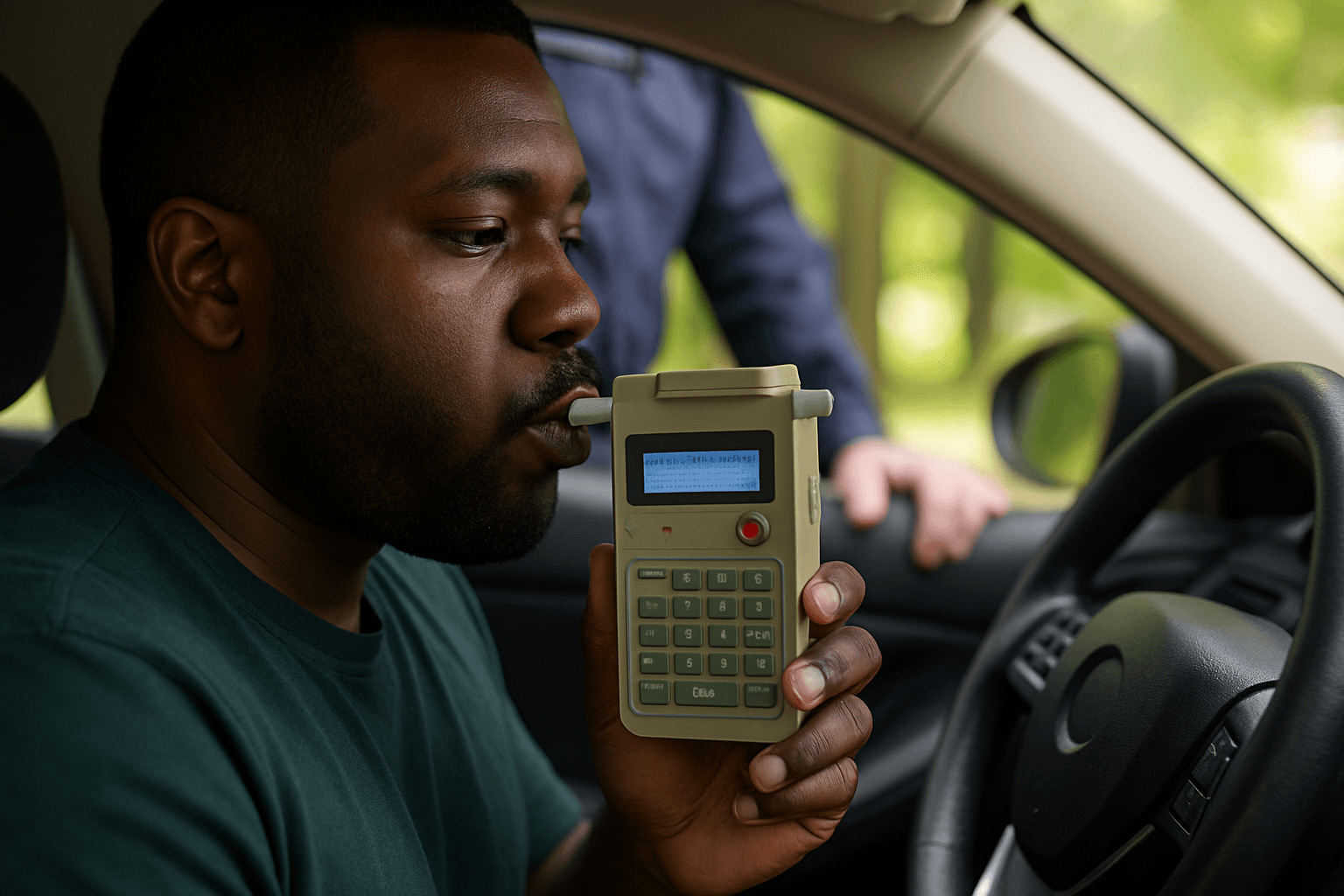
Kansas requires ignition interlock device installation on any vehicle you drive under a DUI-related restricted license. K.S.A. 8-1015 mandates IID as a condition of restricted driving privileges for all alcohol-related suspensions. The court will not approve your petition unless you provide proof of IID installation before the hearing or commit to installation within 3 days of approval.
Kansas-approved IID providers must be used. The Division of Vehicles maintains the approved vendor list. Installation costs typically run $75 to $150, with monthly lease and calibration fees of $60 to $90. Your employer cannot require you to install IID on a company vehicle, but if your job requires driving a company car, you may need to disclose the IID requirement to HR before filing your petition.
IID compliance is monitored electronically. Kansas requires monthly compliance reports submitted by your IID provider to the Division of Vehicles. Failed breath tests, missed calibration appointments, or attempts to tamper with the device trigger violation notices sent directly to the court. Two failed tests within 30 days result in automatic revocation of your restricted license, and your suspension period restarts from zero.
SR-22 Filing Setup: Kansas Work Restrictions Require Proof of Insurance
Kansas requires SR-22 certificate of financial responsibility for most suspensions that qualify for restricted driving privileges. Your insurance carrier files the SR-22 electronically with the Kansas Division of Vehicles, confirming you carry at least the state minimum liability coverage: $25,000 bodily injury per person, $50,000 per accident, and $25,000 property damage. Kansas also requires personal injury protection and uninsured motorist coverage, which most carriers include automatically.
SR-22 filing adds $15 to $25 to your policy as a one-time filing fee. The premium increase comes from moving into non-standard auto insurance underwriting. Kansas drivers with DUI-related suspensions typically pay $140 to $240 per month for liability-only coverage with SR-22, compared to $70 to $110 per month for clean-record drivers. If you do not own a vehicle, non-owner SR-22 for commuters provides liability coverage for borrowed or employer-provided vehicles at lower premiums, typically $50 to $90 per month.
SR-22 lapses restart your suspension. If you cancel your policy, miss a payment, or switch carriers without ensuring continuous SR-22 filing, Kansas DMV receives electronic notification within 24 hours and automatically re-suspends your license. The lapse adds 90 days to your original suspension period, and you must pay a $50 reinstatement fee plus a new SR-22 filing fee to restore restricted privileges. Most Kansas drivers maintain SR-22 for 3 years post-reinstatement for DUI-related suspensions.
Court Petition Timeline: Filing to Approval in Kansas
Kansas restricted license petitions take 2 to 6 weeks from filing to court hearing. You file a motion for restricted driving privileges with the clerk of the district court in the county where your case was heard. Filing fees vary by county but typically range from $50 to $100. Some courts waive fees if you submit an affidavit of indigency proving inability to pay.
The court schedules a hearing after the prosecutor reviews your petition. The prosecutor may oppose your petition if you have prior restricted license violations, recent traffic citations during the suspension, or outstanding fines. Hiring an attorney is not required, but Kansas judges approve represented petitions at higher rates than pro se filings. Attorneys can negotiate broader approved purposes and longer time windows than most unrepresented drivers secure.
If approved, the court issues a written order stating your approved routes, hours, and any additional conditions such as IID installation. You must carry the court order with you whenever driving under restricted privileges. Kansas law enforcement will verify the order during traffic stops, and driving outside the approved terms is treated as driving while suspended, a new criminal charge that extends your suspension and may result in jail time.
What Happens If You Drive Outside Approved Hours or Routes
Violating Kansas restricted license terms results in immediate revocation and criminal charges. Driving while suspended is a Class B nonperson misdemeanor for a first offense, carrying up to 6 months in jail and fines up to $1,000. A second offense within 3 years is a Class A nonperson misdemeanor with up to 1 year in jail. The court revokes your restricted privileges permanently, and your suspension period restarts from the beginning.
Law enforcement verifies restricted license compliance during every traffic stop. If you are stopped outside approved hours or off your documented route, the officer will arrest you on the spot. Kansas does not allow corrective warnings for restricted license violations. The arrest triggers an automatic court appearance, and judges rarely grant second-chance restricted privileges after a violation.
Employers sometimes request broader route or time approvals mid-restriction, such as a schedule change or new work site. You must petition the court for a modification before driving under the new terms. Driving first and filing the modification petition later does not protect you from violation charges. Most Kansas courts allow one modification without penalty if filed before the schedule change takes effect.