Indiana BMV calls it a Probationary License, but the court version is Specialized Driving Privileges. Both require SR-22 proof, employer documentation, and often ignition interlock. Here's how to tell which path applies to your case and what your employer needs to provide.
Why Indiana Has Two Work-Hardship Programs and Which One You Need
Indiana operates two separate restricted-driving programs, and most suspended drivers don't realize they exist on different tracks until their application fails. The BMV Probationary License handles administrative suspensions (insurance lapses, unpaid tickets, points accumulation under IC 9-30-4). The court-ordered Specialized Driving Privilege under IC 9-30-16 covers OWI convictions, habitual traffic violator (HTV) designations, and criminal suspensions. Both allow work-purposes driving. Both require SR-22 proof of financial responsibility. But the application path, documentation burden, and approval authority differ completely.
If your suspension letter came from the Indiana Bureau of Motor Vehicles without a court case number, you apply for a BMV Probationary License through the BMV directly. If your suspension stems from an OWI conviction or a judge's order, you petition the court that issued the conviction for Specialized Driving Privileges. Applying to the wrong authority wastes weeks. Check your suspension notice for the issuing body before starting any application.
OWI cases carry a mandatory hard suspension period before Specialized Driving Privileges become available. First-offense OWI with BAC above 0.15 triggers a 180-day administrative suspension under IC 9-30-6-9, and the court determines when hardship eligibility begins based on prior history. No universal hard-period rule exists across all Indiana suspension types. The court exercises discretion on when to grant driving privileges after conviction. Your attorney or the clerk can confirm your specific waiting period.
What Documentation Your Employer Must Provide for Indiana Work-Route Approval
Indiana requires employer verification on company letterhead stating your work address, scheduled hours (including shift start and end times), and whether your job requires driving during work hours beyond the commute. The BMV or court will reject generic reference letters or HR forms that omit these specifics. The letter must include the employer's contact name, title, phone number, and signature. If you work multiple jobs, you need separate verification letters from each employer.
If your job involves driving during work hours (delivery, sales routes, home health visits, field service), the employer letter must describe the driving requirement explicitly. Indiana restricts Probationary License and Specialized Driving Privileges to approved purposes only. Work-related driving during your shift is permissible if documented and approved at issuance. Routes and hours beyond what the employer letter describes are not covered, even if you later pick up additional shifts.
CDL holders face a separate limitation. Indiana Probationary Licenses and Specialized Driving Privileges do not authorize commercial vehicle operation, even for the job that generated the employer verification letter. If you hold a CDL and your job requires operating a commercial motor vehicle, the work-hardship license will not cover that activity. You can drive a personal vehicle to and from the CDL job site, but you cannot legally operate the commercial vehicle itself under restricted privileges.
Compare car insurance rates in your state
Get quotes from licensed carriers — no obligation, no spam, results in minutes.
Get Your Free Quote✓ No Obligation Required✓ Licensed Carriers Only✓ Available Nationwide✓ Free to Compare
Approved Routes, Approved Hours, and What Happens When You Drive Outside Them
Indiana defines approved purposes at issuance. Work commute and work-hours driving are standard approvals. The BMV or court may also approve driving for medical appointments, DUI education or substance-abuse treatment classes, religious activities, and other essential needs if you request them in the application and provide supporting documentation. Each approved purpose gets route and time boundaries. If your work shift is 7 a.m. to 3 p.m., your approved driving window typically covers a buffer before and after (often 30 minutes each direction) plus the direct route between home and workplace.
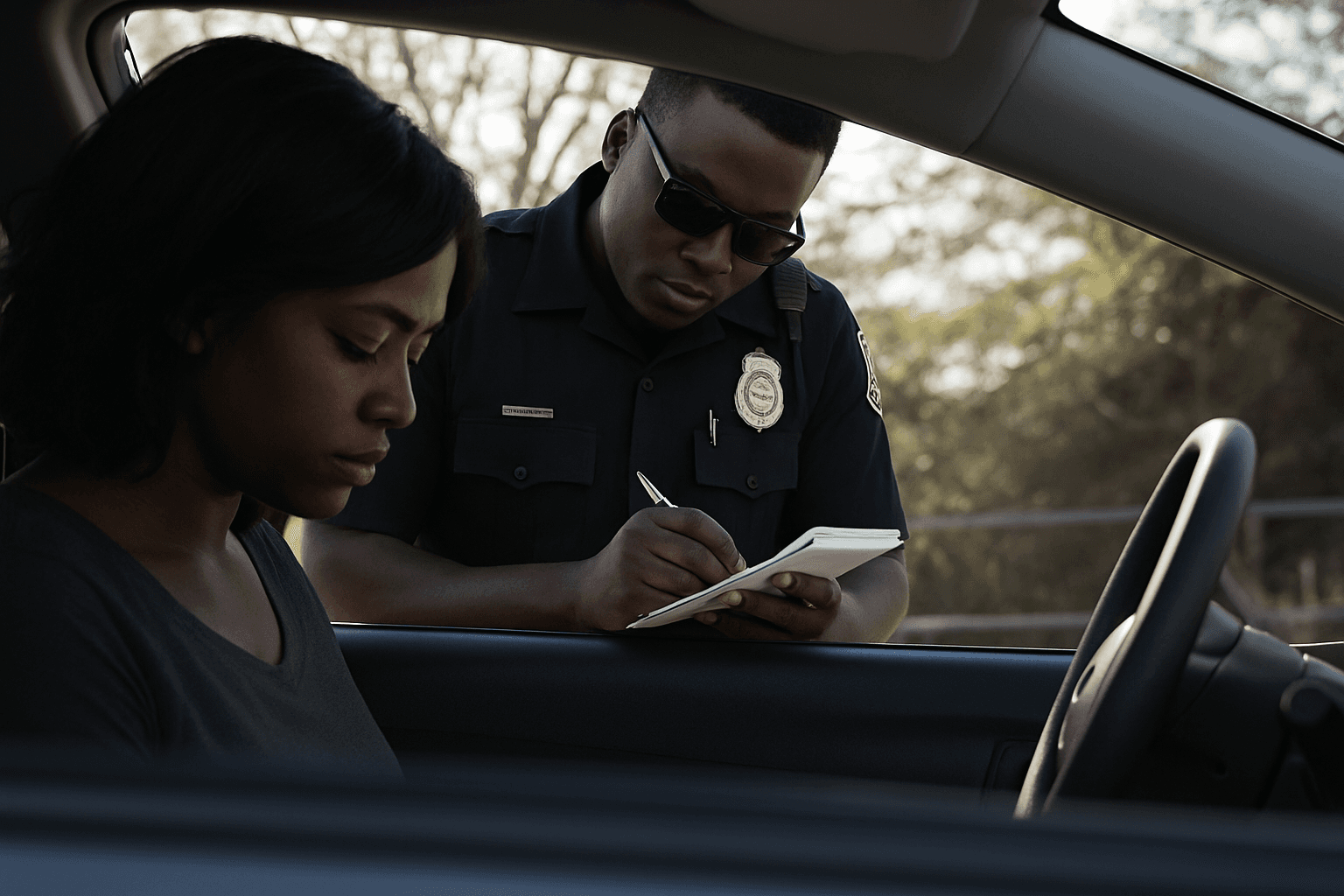
Driving outside approved hours or routes is treated as operating while suspended under IC 9-30-10-16, a Class A misdemeanor carrying up to one year in jail and a fine up to $5,000. Prosecutors routinely charge these cases. The hardship license does not function as a partial restoration of unrestricted driving. It is a narrow exception with defined boundaries, and law enforcement will verify your approved purposes and hours during any traffic stop.
If you need to add an approved purpose after issuance (new medical provider, new job address, childcare pickup), you must file an amendment with the issuing authority. Do not assume flexibility. Indiana enforces route and hour restrictions strictly, and a violation triggers immediate revocation of the restricted license plus additional suspension time.
Ignition Interlock Requirement for OWI and High-BAC Cases
Indiana mandates ignition interlock devices (IID) for OWI-related Specialized Driving Privileges under IC 9-30-8. First-offense OWI with BAC at or above 0.15, any second or subsequent OWI offense, and refusal cases all require IID installation before the court will grant driving privileges. The device must remain installed for the entire restricted-license period, and you must provide monthly compliance reports to the monitoring authority specified by the court.
IID installation costs range from $70 to $150, with monthly monitoring and calibration fees of $60 to $90. These costs are separate from the SR-22 insurance requirement. You pay the IID vendor directly, and the vendor reports compliance or violations to the court. Tampering with the device, failing a rolling retest, or missing a calibration appointment triggers a violation report that results in immediate revocation of your Specialized Driving Privileges.
BMV Probationary Licenses for non-OWI suspensions typically do not require ignition interlock unless a prior OWI conviction exists within the lookback period or the suspension involves alcohol-related conduct outside of driving (public intoxication leading to license suspension, for example). If your suspension notice mentions IID or if your attorney advises it, budget for both IID costs and SR-22 insurance before applying for work-hardship.
SR-22 Filing Setup and What Your Insurer Must File with the Indiana BMV
Indiana requires SR-22 proof of financial responsibility for most suspensions that qualify for Probationary License or Specialized Driving Privileges. The SR-22 is not a separate insurance policy. It is a filing your insurer submits electronically to the Indiana BMV certifying that you carry at least the state minimum liability coverage: $25,000 per person for bodily injury, $50,000 per accident for bodily injury, and $25,000 for property damage.
You must request SR-22 filing from your insurer before submitting your hardship application. The BMV or court will not approve a Probationary License or Specialized Driving Privileges until the SR-22 appears in their system. Most insurers process SR-22 filings within 24 to 48 hours, but the BMV database update can take an additional 3 to 5 business days. Start the SR-22 process first to avoid application delays.
SR-22 filing fees range from $15 to $50 depending on the insurer. Your premium will increase because the SR-22 flags you as high-risk. For drivers with OWI suspensions in Indiana, expect monthly premiums between $140 and $240 for liability-only coverage through non-standard carriers like non-standard auto insurers that specialize in suspended-license cases. If you do not own a vehicle, request non-owner SR-22 coverage, which provides liability protection while driving a borrowed or rented car and satisfies the BMV's proof requirement at a lower cost.
The SR-22 must remain active for the duration specified by the BMV or court, typically 3 years for OWI suspensions under IC 9-25. If your insurer cancels the policy for non-payment or you switch carriers without filing a new SR-22, the old insurer notifies the BMV electronically, and your hardship license is revoked immediately. Maintain continuous coverage and confirm your new insurer files the SR-22 before canceling the old policy.
Application Fees, Processing Time, and What Delays Approvals
Indiana BMV charges a $250 reinstatement fee to process Probationary License applications for most administrative suspensions. OWI-related reinstatement fees escalate with repeat offenses: $500 for a second suspension, and potentially higher for subsequent violations. Habitual Traffic Violator (HTV) reinstatements carry a $1,000 fee under IC 9-30-10. These fees are separate from court filing fees if you petition for Specialized Driving Privileges through the court system.
Processing time for BMV Probationary Licenses varies. If your SR-22 is on file, your employer verification letter is complete, and no unpaid fines or child support arrears appear in the system, the BMV typically processes applications within 10 to 15 business days. Court-ordered Specialized Driving Privileges take longer because they require a hearing date, and court calendars in Indiana's larger counties (Marion, Lake, Allen) often run 30 to 45 days out.
Unpaid tickets and child support arrears block both BMV and court-issued hardship licenses. Indiana BMV will not approve a Probationary License if the driver owes outstanding fines, and IC 31-16-12-7 mandates suspension for child support non-payment. You must clear the arrears or obtain a payment plan approval from the IV-D agency before the BMV will process your application. The hardship license does not bypass these holds.
What Happens If You Lose Your Job or Your Work Schedule Changes
If you lose your job after receiving a Probationary License or Specialized Driving Privileges, your work-purposes authorization becomes invalid immediately. Indiana restricts hardship licenses to the specific approved purposes listed at issuance. Without an active employer, the work-route approval no longer applies. You must notify the BMV or court and request an amendment to add a new employer, or your driving authority lapses.
If you find a new job before your hardship license expires, obtain a new employer verification letter and file an amendment with the issuing authority. The BMV charges an amendment processing fee (typically $25 to $50), and the court may require a brief hearing to approve the new work route. Do not drive to the new job site until the amendment is approved. Law enforcement will verify your approved purposes and hours during any stop, and driving to an unapproved job location is treated as operating while suspended.
Schedule changes at your current job also require amendment. If your shift moves from 7 a.m.–3 p.m. to 11 p.m.–7 a.m., the original approved hours no longer cover your commute. Request an updated employer verification letter showing the new schedule and file the amendment before the schedule change takes effect. Indiana does not allow retroactive approval for hours already driven outside the original authorization.