Indiana's probationary license requires BMV or court approval depending on your suspension cause, and the employer verification letter most applicants forget is non-negotiable for work-purpose eligibility.
Which Agency Controls Your Probationary License Application in Indiana
Indiana operates a dual-track probationary license system that confuses most first-time applicants: the Bureau of Motor Vehicles handles administrative suspensions (uninsured driving, points accumulation, insurance lapse), while courts control OWI and habitual traffic violator cases through specialized driving privileges under IC 9-30-16. Filing with the wrong agency produces an automatic denial and restarts your timeline.
Administrative suspensions — uninsured accidents under IC 9-30-4, chemical test refusals under IC 9-30-6, or points-based actions — go through BMV petition. OWI convictions, even first-offense cases, require a court petition for specialized driving privileges. The 2015 restructure under HEA 1225 moved most OWI-related restricted driving into the judicial track, ending the prior BMV-administered probationary license for DUI cases.
Your suspension notice identifies the issuing authority. BMV notices cite IC 9-30-4 or IC 9-30-6. Court-ordered suspensions cite IC 9-30-5 or IC 9-30-16. If your notice shows a case number and judge's signature, you're in the court track. If it's signed by a BMV hearing officer, you're administrative. Mixing these up costs three to four weeks on average because petitions filed with the wrong body aren't transferred — they're dismissed, and you start over.
Documentation Requirements for Work-Purpose Probationary Licenses
Indiana requires proof of employment or essential need, SR-22 financial responsibility certification, a completed application, and often a hardship affidavit depending on your track. The employer verification letter is the single most common missing document in denied applications.
Your employer letter must include: company letterhead, your full legal name as it appears on your license, your job title, work address, scheduled work hours (start and end times, days of the week), supervisor name and contact number, and a statement that driving is necessary to reach the worksite or perform job duties. Generic letters stating you're employed but omitting hours or route necessity trigger BMV examiner rejections. Indiana does not provide a mandatory template, but the BMV examiner training manual specifies these elements as review criteria.
SR-22 proof must be active before your petition is reviewed. Most applicants file SR-22 after applying for the probationary license — this produces processing holds. Coordinate with your insurer to file SR-22 first, obtain the filing receipt, then submit your probationary application. Indiana BMV receives SR-22 filings electronically through the INSPECT system, but examiners reviewing petitions pull a separate database — allow 48 to 72 hours between SR-22 filing and petition submission for the systems to sync.
Court-ordered suspensions often require an additional court order or hearing transcript showing the judge approved specialized driving privileges. You cannot skip this by filing directly with BMV. If your suspension is OWI-related and you file with BMV, they'll refer you back to the sentencing court, costing you weeks.
Compare car insurance rates in your state
Get quotes from licensed carriers — no obligation, no spam, results in minutes.
Get Your Free Quote✓ No Obligation Required✓ Licensed Carriers Only✓ Available Nationwide✓ Free to Compare
Work-Hours and Route Restrictions Under Indiana Probationary Licenses
Indiana probationary licenses restrict driving to approved purposes during defined hours. Work commute and on-the-job driving qualify, but the BMV or court sets the specific time windows — exceeding them by even 15 minutes risks revocation without warning.
BMV-issued probationary licenses typically approve driving two hours before your shift start, during your entire shift if your job requires driving, and two hours after shift end. If you work 8 a.m. to 5 p.m., your probationary window runs 6 a.m. to 7 p.m. on workdays only. Weekend or second-job driving requires separate approval listed on your restriction card.
Court-ordered specialized driving privileges under IC 9-30-16 carry narrower windows in most counties. Marion County judges commonly approve commute-only privileges: home to work, work to home, no stops except emergencies. On-the-job driving for sales routes, delivery work, or service calls requires explicit court approval and often mandates ignition interlock even when IID isn't otherwise required for your suspension.
Indiana does not allow probationary license holders to drive for rideshare, delivery gig work, or any commercial purpose requiring a CDL. If your job is Uber, DoorDash, or CDL-required trucking, the probationary pathway will not cover it. Even if you obtain a personal-vehicle probationary license, using it for commercial purposes triggers felony charges under IC 9-30-10-16.
Ignition Interlock Requirements and Work-License Eligibility
Ignition interlock is mandatory for probationary licenses tied to OWI suspensions in Indiana, even for first-offense cases with BAC below 0.15. The IID requirement applies during the entire probationary period, not just the initial hard suspension.
Indiana's ignition interlock statute under IC 9-30-8 requires all OWI offenders seeking specialized driving privileges to install a certified IID in any vehicle they operate. The court order granting your probationary license will list the IID serial number and installation vendor. Driving a vehicle without the registered IID — even a work truck your employer provides — violates your probationary terms and triggers immediate revocation plus contempt charges.
Employers occasionally balk at IID installation in company vehicles. Indiana law does not require employers to accommodate IID in fleet vehicles, and most commercial liability policies exclude probationary-license drivers. If your job requires driving a company car and your employer refuses IID installation, your probationary license is functionally useless for that job. Address this before you file: if your employer won't cooperate, a probationary license won't solve your commute problem.
Non-OWI suspensions — points accumulation, uninsured driving, or administrative actions — do not trigger automatic IID requirements. The BMV examiner has discretion to impose IID for high-risk cases, but it's uncommon. If your suspension notice doesn't mention IID and your violation isn't OWI-related, expect approval without interlock in most cases.
Processing Timeline and Fee Structure for Indiana Probationary Applications
Indiana BMV probationary license petitions carry a $250 reinstatement fee and typically process within 10 to 15 business days once complete documentation is submitted. Court petitions for specialized driving privileges vary by county but average three to six weeks from filing to hearing.
The $250 fee applies to the probationary petition itself — it does not cover the underlying suspension reinstatement fee due when your full suspension period ends. If your suspension was administrative and you're seeking early probationary relief, you'll pay $250 now for the probationary license and another $250 later for final reinstatement. OWI cases sometimes stack fees higher: $500 for second-offense reinstatements under IC 9-29-8.
BMV processing days assume zero missing documentation. Each missing item — unsigned affidavit, incomplete employer letter, SR-22 filing lag — adds five to seven business days. Most first-time applicants submit incomplete packets and face 20- to 30-day actual timelines. Double-check your employer letter, confirm SR-22 filing is live in INSPECT, and verify your affidavit is notarized before you submit.
Court petitions require scheduling a hearing before the judge who issued your suspension or, in administrative-transfer cases, a magistrate assigned by the clerk. Marion County and Lake County courts run specialized driving privilege dockets twice monthly. Outlying counties hear petitions during regular motion calls, which may run only once per month. Call the clerk before filing to learn the next available hearing date — missing a docket slot pushes you four to six weeks out in low-volume counties.
SR-22 Insurance Setup for Indiana Probationary License Holders
SR-22 financial responsibility certification is required for all Indiana probationary licenses regardless of suspension cause. You must maintain continuous SR-22 coverage for the entire probationary period plus any remaining suspension time after reinstatement — typically three years total for OWI cases.
Indiana uses electronic SR-22 filing through the INSPECT system. Your insurer files the SR-22 certificate directly with the BMV when you purchase a policy. Paper SR-22s are no longer accepted. If your agent hands you a paper certificate, it's for your records only — the legal filing happens electronically, and you should confirm with BMV within 72 hours that it posted.
Non-owner SR-22 policies cover drivers who don't own a vehicle but need to meet filing requirements for probationary licenses. If you're commuting via carpool, public transit plus occasional borrowed-car use, or relying on a spouse's vehicle titled in their name alone, non-owner SR-22 satisfies Indiana's financial responsibility rule. Monthly premiums for non-owner SR-22 in Indiana typically run $40 to $70 for clean-record drivers, $90 to $160 for OWI cases.
If you own a vehicle, you need standard liability coverage with SR-22 endorsement. Indiana requires minimum $25,000 per person / $50,000 per accident bodily injury liability and $25,000 property damage. Expect monthly premiums of $140 to $240 for standard-risk profiles, $190 to $350 for OWI suspensions. Allowing your SR-22 policy to lapse triggers automatic probationary license revocation and suspension reinstatement — the BMV receives cancellation notices within 24 hours and processes revocations the same day.
What Happens If You Violate Probationary License Restrictions
Indiana treats probationary license violations as independent criminal offenses, not mere administrative infractions. Driving outside approved hours, purposes, or routes triggers immediate revocation, suspension extension, and often misdemeanor charges under IC 9-30-10-16.
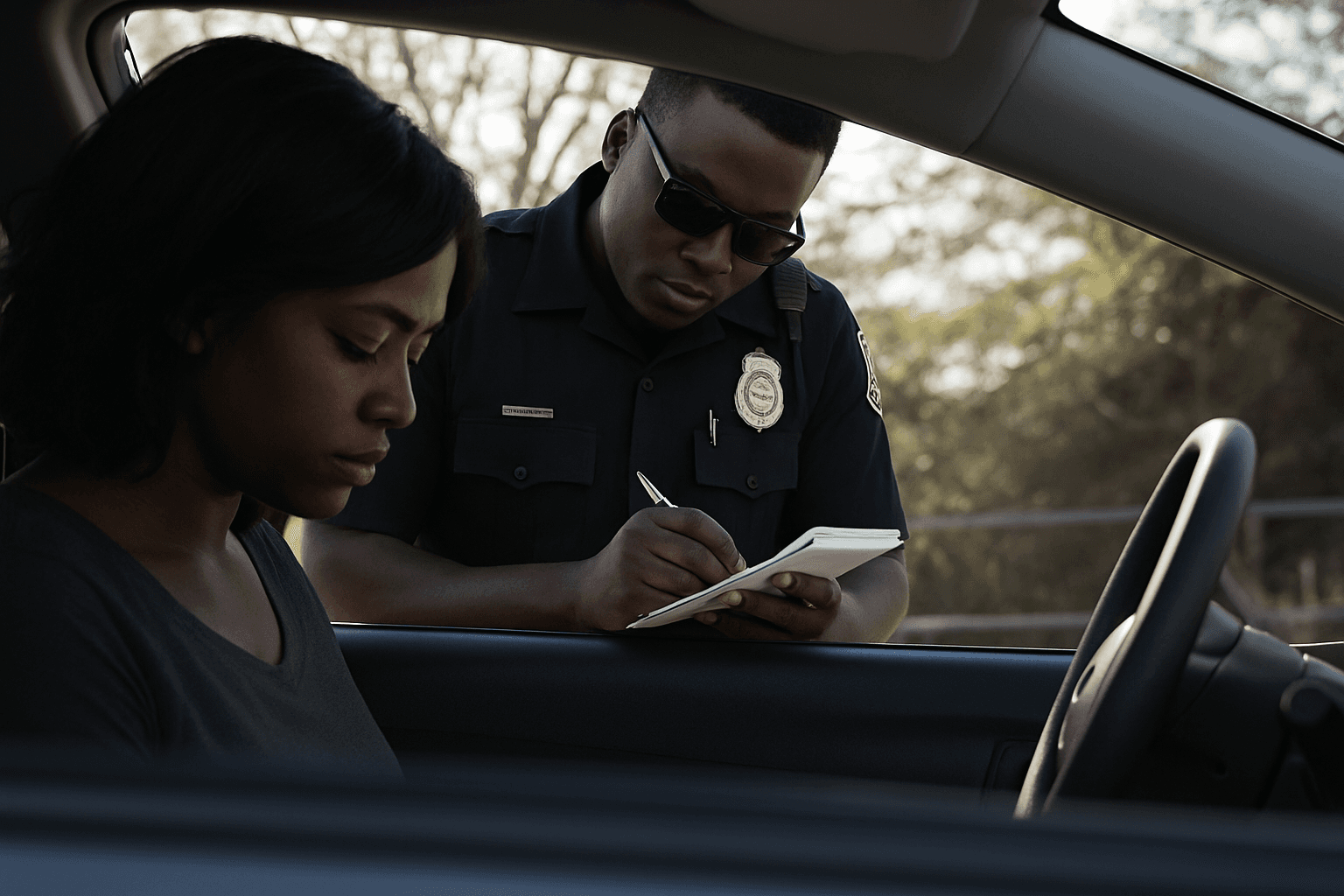
A traffic stop outside your approved window — even for an unrelated minor violation like a taillight — produces a probationary violation when the officer runs your license. The officer will seize your probationary card on the spot, issue a citation for driving while suspended (Class A misdemeanor, up to one year jail and $5,000 fine), and impound your vehicle if you're the registered owner. Your probationary license is revoked immediately, and the original suspension period restarts from the violation date.
Court-ordered specialized driving privileges carry additional contempt exposure. Violating a court order allowing restricted driving can result in contempt sanctions including jail time until your original suspension expires. Marion County judges routinely impose 30- to 60-day contempt holds for first violations, longer for repeat cases.
Employers sometimes ask probationary license holders to run errands or make unscheduled stops during approved work hours. If the stop isn't listed on your restriction card — picking up lunch, stopping for gas on the way home when your employer letter listed direct commute only — it's a violation. The statutory text is strict: Indiana probationary licenses authorize driving for purposes explicitly approved and no others. Treat your restriction card as a literal boundary.