You need to drive to work while your license is revoked after a DUI. Illinois requires a formal hearing before a Secretary of State officer before any Restricted Driving Permit (RDP) can be issued—and the documentation you bring determines whether you walk out approved or denied.
What the Illinois Secretary of State Hearing Actually Decides
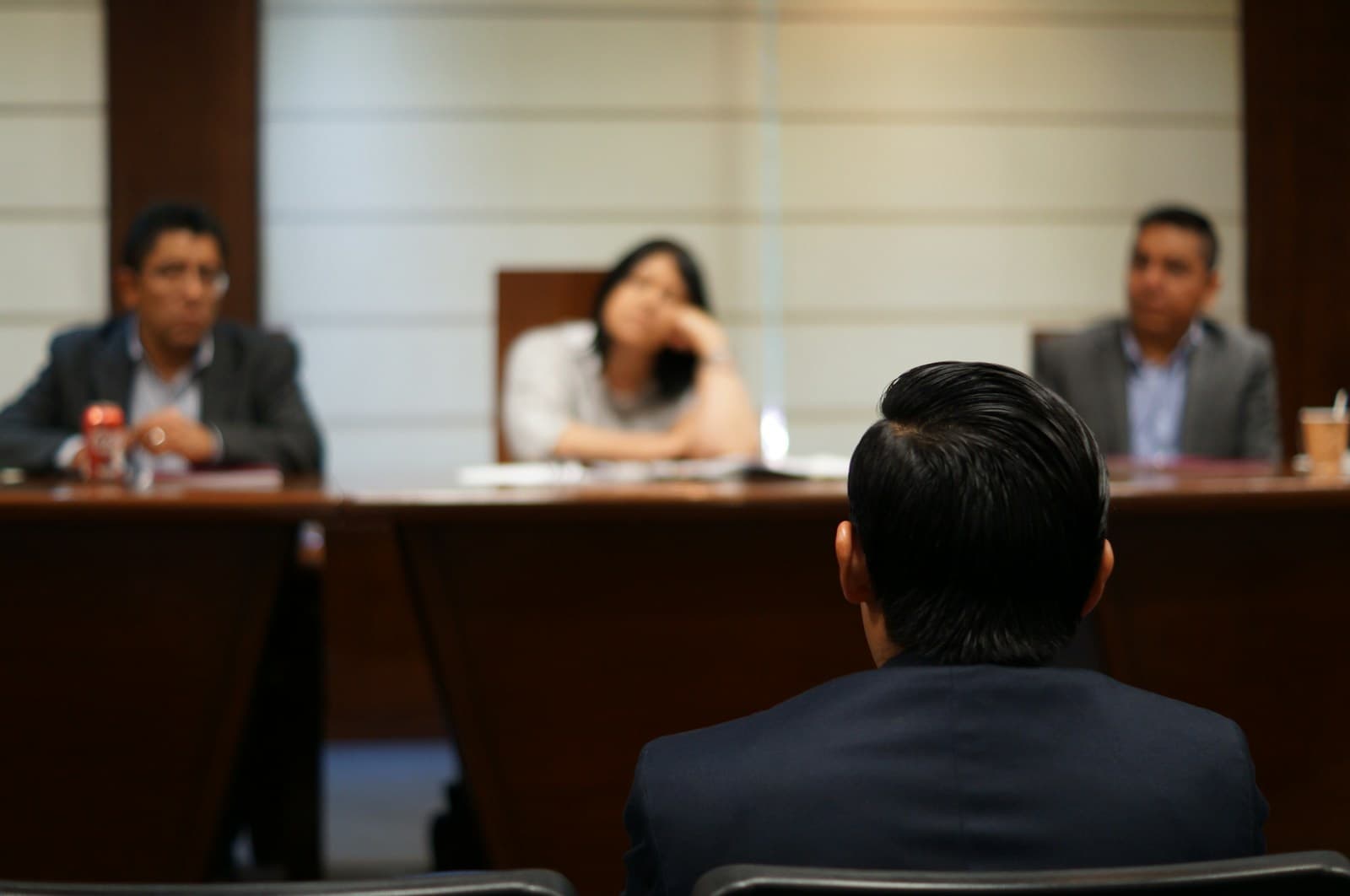
The formal hearing before an Illinois Secretary of State hearing officer is not a review of your DUI conviction. The hearing officer evaluates whether you meet the statutory criteria for a Restricted Driving Permit and whether granting restricted driving privileges serves public safety. Your criminal case is closed. This hearing determines whether you can drive under narrow restrictions while your revocation period runs.
The hearing officer reviews three core questions: Do you have a legitimate hardship need that requires driving? Have you completed required evaluations and treatment programs? Are you a safe candidate for restricted driving with a BAIID installed in your vehicle? Every document you submit addresses one of these questions. Missing documentation on any point produces a denial.
Illinois uses formal hearings for DUI-related RDP applications and informal hearings for some non-DUI suspensions. Formal hearings are scheduled proceedings with a hearing officer who reviews your petition, asks questions, and issues a written decision. Informal hearings are walk-in sessions at Secretary of State offices for less serious suspension types. DUI revocations always require the formal track.
Required Documentation for Employment-Based RDP Approval
Illinois requires proof of employment or other hardship need, proof of SR-22 insurance, a completed RDP application, payment of the $8 hearing fee, and any required evaluation documentation for DUI-related suspensions. The evaluation documentation is typically a drug and alcohol assessment from a state-approved provider showing you have completed or are actively participating in recommended treatment.
The employment verification letter must come from your employer on company letterhead. It must state your job title, work address, scheduled work hours, and confirmation that driving is necessary to reach your workplace or perform job duties. Generic letters that describe your role without specifying hours or driving necessity are frequently rejected. The hearing officer needs to see that your RDP route restrictions and time restrictions can be drawn around a concrete, documented schedule.
If your job requires driving during work hours—delivery routes, service calls, site visits—the employer letter must state this explicitly and describe the geographic area you cover. The hearing officer will restrict your RDP to specific purposes: commute to and from work, driving during work hours if job-required, alcohol or drug treatment appointments, medical appointments, and other essential activities approved on the permit. A vague letter produces vague restrictions or outright denial.
Compare car insurance rates in your state
Get quotes from licensed carriers — no obligation, no spam, results in minutes.
Get Your Free Quote✓ No Obligation Required✓ Licensed Carriers Only✓ Available Nationwide✓ Free to Compare
BAIID Installation Before the Hearing vs. After Approval
Illinois requires a Breath Alcohol Ignition Interlock Device (BAIID) for all DUI-related RDPs. The BAIID prevents the vehicle from starting if it detects alcohol on your breath and logs every test. The Secretary of State monitors BAIID data throughout your RDP period. Violations—failed tests, circumvention attempts, missed rolling retests—trigger immediate RDP revocation.
You do not need to install the BAIID before your hearing, but you must arrange installation with an approved provider and bring proof of the installation appointment or contract to the hearing. Some hearing officers prefer to see the device already installed. Others accept proof of scheduled installation. The safest approach: install the BAIID before the hearing and bring the installation certificate and the first monitoring report. This removes any question about your readiness to comply.
The BAIID must remain installed for the entire RDP period and typically for a monitoring period after your full license is reinstated. Installation costs approximately $100 to $150. Monthly monitoring and calibration fees run $60 to $100. Over a 12-month RDP period, total BAIID costs reach $800 to $1,300. Budget for this before the hearing—inability to afford ongoing BAIID costs after approval can result in violations that revoke your permit.
How the Secretary of State Defines Approved Routes and Hours
The RDP you receive will specify approved purposes, days, and hours. Illinois does not issue open-ended work permits. The hearing officer draws restrictions based on the documentation you provide. If your employer letter states you work Monday through Friday, 7:00 AM to 4:00 PM, your RDP will authorize driving during those days and hours plus reasonable commute buffer time.
Approved purposes typically include: travel to and from work, driving during work hours if employment requires it, travel to and from court-ordered treatment or education programs, medical appointments for yourself or immediate family members, travel to and from school if you are enrolled, and travel for essential household duties such as grocery shopping or childcare. The hearing officer may limit some of these purposes further or require advance approval for non-work trips.
Driving outside your approved hours, routes, or purposes is a Class A misdemeanor in Illinois. It also triggers immediate RDP revocation. If you are stopped by police while driving on an RDP, the officer will verify your current location and time against the restrictions printed on your permit. A stop at 9:00 PM for a non-approved purpose ends your restricted driving privileges on the spot and adds criminal charges.
SR-22 Filing Setup Before the Hearing
Illinois requires SR-22 insurance filing for DUI-related suspensions and revocations. The SR-22 is a certificate your insurer files with the Secretary of State proving you carry at least the state minimum liability coverage: $25,000 per person for bodily injury, $50,000 per accident for bodily injury, and $20,000 for property damage. You must maintain this filing for 3 years from your reinstatement date.
You need SR-22 coverage in place before your hearing. The hearing officer will ask for proof of SR-22 filing as part of your petition. Bring the SR-22 certificate your insurer provides—the pink copy or digital PDF showing the filing number and effective date. If you do not own a vehicle, obtain non-owner SR-22 insurance, which covers you when driving a vehicle you do not own. This satisfies the Secretary of State's insurance requirement and allows you to drive a family member's car or a company vehicle during your RDP period.
SR-22 insurance costs more than standard auto insurance because insurers classify DUI offenders as high-risk drivers. Monthly premiums for SR-22 coverage in Illinois typically range from $120 to $220 per month depending on your age, county, and driving history before the DUI. The SR-22 filing fee itself is $15 to $50 depending on the carrier. If your SR-22 policy lapses or is cancelled, the insurer notifies the Secretary of State within 10 days and your RDP is automatically suspended.
What Happens If Your RDP Application Is Denied
A denial at your first hearing does not end your eligibility. The hearing officer's written decision will state the reason for denial: incomplete documentation, failure to complete required treatment, unresolved violations, insufficient proof of hardship, or concerns about public safety based on your driving record or evaluation results. You can cure most deficiencies and reapply.
If the denial was based on missing documents, gather the required items and request a new hearing. If the denial was based on incomplete treatment, finish the required program and bring a completion certificate to your next hearing. If the denial cited safety concerns based on your evaluation, you may need to complete additional treatment hours or wait for a longer sobriety period before reapplying.
Some DUI offenders face elevated barriers. Drivers with multiple DUI offenses encounter longer mandatory revocation periods and more stringent evaluation requirements before RDP eligibility opens. Second or subsequent DUI revocations carry a $1,000 reinstatement fee compared to $500 for a first offense. These drivers often need to demonstrate longer documented sobriety and more extensive treatment completion before a hearing officer will approve restricted privileges.
Timeline from Hearing to RDP Issuance and Insurance Adjustment
If your hearing results in approval, the Secretary of State processes your RDP and mails it to the address on file. Processing time varies but typically runs 7 to 14 days from the hearing date. You cannot drive legally until the physical RDP card arrives and is in your possession. Driving on the assumption of approval before you receive the card is driving on a revoked license.
Once you receive your RDP, verify the restrictions printed on the card match what the hearing officer approved. Check the approved hours, purposes, and BAIID requirement. If any detail is incorrect, contact the Secretary of State's Safety and Financial Responsibility Division immediately to request a correction. Errors on the card itself do not excuse violations—you are responsible for complying with the printed restrictions even if they differ from what you understood at the hearing.
Your SR-22 insurance must remain active for the entire RDP period and for 3 years after your full license is reinstated. Any lapse triggers immediate suspension. Set up automatic payment with your insurer to avoid accidental cancellation. If you need to switch insurers, coordinate the overlap so your new SR-22 filing is active before you cancel the old policy. A gap of even one day between filings appears as a lapse to the Secretary of State.