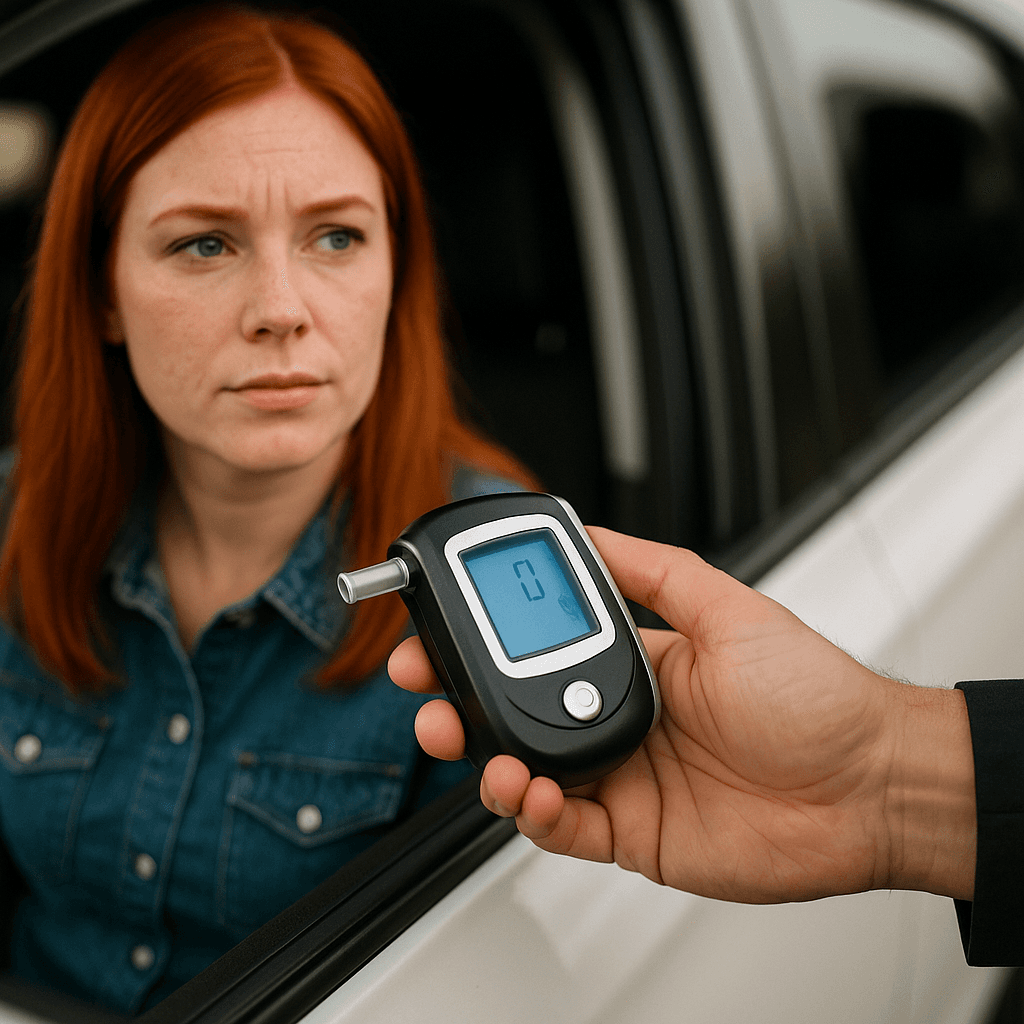
Most states reset your suspension clock the moment your IID registers a violation while driving on a work permit. The reset happens before you receive official notice, and your hardship license revocation follows automatically in most jurisdictions.
What Triggers Automatic Revocation of a Work-Restricted License
Your work permit revokes automatically when the ignition interlock device logs a failed start attempt (BAC reading above 0.02 in most states), a missed rolling retest while driving, or tampering evidence. The state DMV receives IID violation data electronically within 24 to 48 hours in most jurisdictions. Your hardship license status changes in the state system before you receive written notice.
The revocation is administrative, not criminal. You do not need a new conviction to lose driving privileges. The IID monitoring company reports directly to your state licensing authority, and that report alone triggers the action. Some states allow a narrow window to contest the data if device malfunction is documented, but the burden of proof falls entirely on you.
Most drivers discover the revocation when pulled over for an unrelated stop, or when their employer runs a license verification check. By that point, your work permit has been invalid for days or weeks. Driving after administrative revocation converts your situation from a license violation to a criminal charge in many states.
How Suspension Reset Periods Work After IID Violations
States restart your suspension period from the date the IID violation was logged, not the date you were notified. If you were six months into a one-year DUI suspension with a work permit and the IID logs a failed start, your suspension clock resets to zero in most jurisdictions. You now face the full original suspension term again, plus potential added penalties for the violation itself.
The reset is cumulative in tiered-penalty states. Texas, Florida, and Illinois add six months to one year for each verified IID violation during a hardship period. Ohio restarts the entire suspension and adds mandatory jail time if the violation involves actual driving. California treats IID violations during restricted license periods as probation violations, which can trigger resentencing on the original DUI case.
A handful of states (Minnesota, Wisconsin, Michigan) allow petition for restricted driving again after an IID violation, but only if the violation was a missed retest rather than a failed BAC reading, and only after completing an additional alcohol assessment. Most states close hardship eligibility entirely after one verified IID violation during a restricted period.
Compare car insurance rates in your state
Get quotes from licensed carriers — no obligation, no spam, results in minutes.
Get Your Free Quote✓ No Obligation Required✓ Licensed Carriers Only✓ Available Nationwide✓ Free to Compare
What Constitutes a Violation Under State IID Monitoring Programs
Failed start attempts register as violations when your BAC reads 0.02 or higher in most states. Some states use a 0.025 threshold. The device logs the reading, time, and GPS location. Three failed starts within a 24-hour period typically trigger automatic lockout, meaning the vehicle will not start until the device is serviced and the violation data downloaded.
Missed rolling retests count as violations even if no alcohol was present. The IID prompts you to blow into the device while driving, typically every 5 to 15 minutes depending on state requirements. If you do not respond within the prompt window (usually 5 minutes), the device logs a retest violation. The vehicle does not shut off immediately, but the horn honks and lights flash until you turn off the ignition.
Tampering violations include attempts to disconnect the device, blow compressed air into the sensor, or have another person provide the breath sample. The device logs breath volume, pressure patterns, and temperature to detect fraud. Documented tampering results in immediate work permit revocation and criminal charges in most states. Some IIDs include cameras that photograph the person providing the breath sample.
State-Specific Revocation and Reset Rules
Texas adds one year to your suspension for each IID violation during an occupational license period. The violation hearing is administrative, conducted by an ALJ at the Department of Public Safety, and you receive 15 days' notice by mail. Texas does allow petition for a new occupational license after completing the added suspension time, but only if no additional violations occur.
Florida's Business Purpose Only license revokes permanently after one verified BAC failure during the restricted period. You become ineligible for any hardship driving for five years from the revocation date. Missed rolling retests result in 30-day revocation and petition eligibility after completion, but the distinction matters: failed BAC is permanent closure.
Illinois restarts the full suspension term and adds six months for the first IID violation during a Restricted Driving Permit. The second violation during any restricted period results in five-year hardship ineligibility. Ohio operates similarly but requires a mandatory 10-day jail sentence for any IID violation involving actual vehicle operation (not just failed starts in a parked car).
California treats IID violations during restricted license periods as probation violations. The DMV revokes your restricted license administratively, and the court that sentenced you on the original DUI schedules a probation violation hearing. Consequences range from extended probation to resentencing to county jail time, depending on the original plea terms.
What Happens to Your Job and Employer Documentation
Your employer receives no formal notice when your work permit revokes. Most employers discover the change when HR runs a periodic license verification check, or when you are pulled over during work hours. Some employers terminate immediately upon discovering invalid license status, particularly in commercial sectors or jobs involving company vehicles.
You remain legally obligated to notify your employer if your driving privileges change. Failing to disclose a revoked work permit and continuing to drive for work purposes exposes you to criminal charges for driving under suspension and exposes your employer to liability if an accident occurs. Most employment verification letters required for hardship licenses include language stating the employee will notify the company immediately if license status changes.
If you petition for reinstatement of a work permit after an IID violation (in states that allow it), you must obtain a new employer verification letter. The prior letter becomes void when the hardship license revokes. Some employers decline to provide a second letter after learning about an IID violation, particularly in liability-sensitive industries.
Insurance Consequences of IID Violations During Hardship Periods
Your SR-22 filing remains active after an IID violation revokes your work permit, but your insurer receives notice of the revocation from the state. Most carriers do not cancel the policy immediately unless you also receive a new DUI or driving-under-suspension charge. Your premium stays elevated because the SR-22 filing period does not pause during administrative suspension.
If your suspension clock resets due to the violation, your SR-22 filing requirement extends by the same period. Texas requires three years of continuous SR-22 from the date driving privileges are fully reinstated. If your violation adds one year to your suspension, you now owe SR-22 for an additional year beyond your original timeline. The cost compounds: you pay premiums during the full suspension (even without driving), then continue paying elevated rates through the extended filing period.
Some high-risk carriers decline to renew policies after IID violations during restricted periods. You remain legally required to maintain continuous SR-22 even while fully suspended in most states. A lapse during suspension extends your suspension further in Texas, Florida, and Illinois. Employment-hardship SR-22 coverage exists specifically for drivers in this situation, with insurers experienced in IID-violation cases and continuous filing requirements.