Your state approved your work permit, but the IID requirement adds installation fees, monthly calibration costs, and violation penalties most drivers don't budget for until the first bill arrives.
What IID Costs Actually Include on Work-Restricted Licenses
Ignition interlock device costs break into three categories: installation ($75–$150 in most states), monthly lease and calibration ($60–$90/month), and removal ($50–$100 at the end of the restriction period). The monthly calibration fee is the largest component over time. A 12-month work permit with IID costs $795–$1,230 total, with $720–$1,080 of that coming from monthly fees alone.
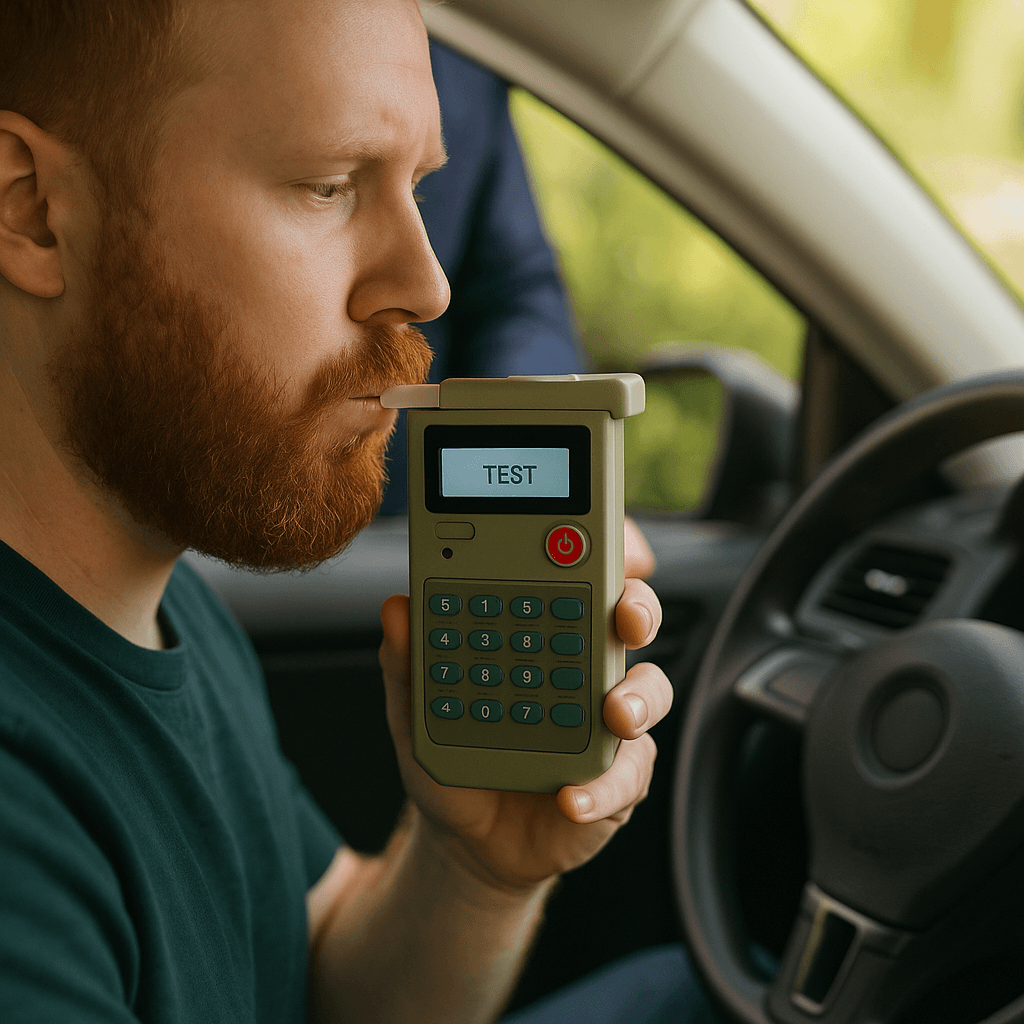
Installation happens once, typically at a state-certified provider within 7–14 days of receiving your work permit approval. The provider mounts the device to your vehicle's steering column, wires it to the ignition system, and calibrates the breath-test threshold to your state's BAC standard (most states use 0.02 for IID programs). You cannot start the vehicle without passing the test.
Monthly calibration appointments are mandatory. The provider downloads your driving log, recalibrates the sensor, and reports compliance to your state's monitoring authority. Miss an appointment and most states suspend the work permit immediately, even if you have not violated any other term. The monthly fee covers the lease, calibration labor, and compliance reporting.
How Monthly Calibration Fees Compound Over Typical Work Permit Durations
Most employment-hardship licenses with IID requirements run 6–24 months depending on the underlying suspension cause. DUI-based work permits in states like Ohio, Texas, and Illinois typically require IID for 12–36 months. Points-based suspensions in states that allow work permits for accumulation triggers (Georgia, Florida, North Carolina) rarely require IID unless the points include an alcohol-related offense.
A 6-month work permit costs $435–$690 total for IID (install + 6 months calibration + removal). A 12-month permit costs $795–$1,230. A 24-month permit costs $1,515–$2,310. The monthly fee is the driver, not the install. Drivers who budget only for the upfront $150 installation discover the first monthly bill 30 days later and realize the true cost structure.
Some states mandate longer IID periods than the work permit itself covers. Texas requires 12 months minimum IID on first-offense DUI occupational licenses, but the occupational license can be granted for the full suspension period (typically 90 days to 1 year for first offense). If your underlying suspension is 180 days but your IID requirement is 12 months, you pay monthly fees for 6 months after full license reinstatement unless you remove the device and accept the restriction violation.
Compare car insurance rates in your state
Get quotes from licensed carriers — no obligation, no spam, results in minutes.
Get Your Free Quote✓ No Obligation Required✓ Licensed Carriers Only✓ Available Nationwide✓ Free to Compare
State-Specific IID Cost Ranges and What Drives Regional Variation
IID provider markets vary by state competition and regulatory oversight. California installation runs $75–$100 with monthly fees of $60–$80 because the state certifies 15+ providers statewide. Texas installation averages $100–$125 with monthly fees of $70–$90. Florida costs run slightly higher: $100–$150 install, $75–$95/month, driven by fewer certified providers in rural counties.
States with single-provider counties (common in Wyoming, Montana, North Dakota, South Dakota) see monthly fees at the top of the national range ($85–$95/month) because no local competition exists. Urban counties with multiple certified providers (Houston, Dallas, Phoenix, Los Angeles, Atlanta) trend toward the lower end ($60–$75/month).
Some states subsidize IID costs for income-eligible drivers. California, Washington, and Oregon offer reduced-fee programs through their interlock device fund, lowering monthly costs to $30–$50 for drivers earning below 200% of federal poverty guidelines. Most states do not subsidize, and work-permit applicants pay full commercial rates regardless of income.
Violation Fees and Lockout Charges Most Drivers Do Not Budget For
Failed breath tests, missed calibration appointments, and tampering attempts trigger additional fees. A failed startup test (BAC above your state's threshold) does not cost money directly, but three failed tests within a rolling calibration period usually trigger an administrative review fee ($50–$100) and mandatory extension of your IID period by 30–90 days depending on state rules.
Missed calibration appointments cost $25–$75 per missed appointment in most states, billed as a compliance violation by the provider. The state monitoring authority also extends your IID requirement by the number of days you were out of calibration compliance. Miss two consecutive appointments and most states suspend the work permit entirely until you complete an in-person reinstatement review.
Lockout mode activates if you ignore a failed test or rolling retest. The vehicle will not start until you bring it to the provider for a manual reset, which costs $50–$100 per reset. Some providers charge a monthly lockout fee ($35–$50) if the device remains in lockout for more than 7 days. Lockouts appear on your compliance report and extend your IID requirement in most states.
How IID Requirements Interact with SR-22 Filing on Work Permits
Most states that require IID on work permits also require SR-22 filing for the same underlying suspension cause. DUI-based work permits in Ohio, Texas, Georgia, Florida, and Illinois require both IID and SR-22 simultaneously. Your carrier files the SR-22 with the state, and your IID provider reports monthly compliance separately. Both must remain active for the full restriction period or your work permit is suspended.
SR-22 filing adds $15–$50 to your premium as a one-time filing fee, then raises your base premium by 30–80% depending on your violation history and state rating rules. A driver paying $140/month for liability coverage pre-suspension typically pays $185–$250/month with SR-22 post-suspension. The IID monthly fee ($60–$90) stacks on top of that premium increase, not instead of it.
Some carriers will not write policies for drivers with active IID requirements, particularly in non-owner SR-22 situations where the driver does not own the vehicle the IID is installed on. Employment-hardship SR-22 insurance becomes harder to place when IID is involved because fewer carriers participate in that combined risk segment. Expect to shop 5–8 carriers to find coverage, and expect premiums at the top of your state's high-risk range.
What Happens If You Cannot Afford Monthly IID Costs During the Work Permit Period
Missing monthly calibration payments triggers a provider hold on your device. The provider will not recalibrate until the balance is current, which puts you out of compliance with your work permit terms. Most states suspend the work permit after 10–15 days of missed calibration, even if you continue passing breath tests. The suspension is automatic in most jurisdictions; no hearing is granted for payment-related noncompliance.
Some states allow hardship exemptions from IID requirements if the driver can prove the cost prevents employment. Texas, California, and Illinois have statutory hardship petition processes that waive IID for work permits if the applicant demonstrates that the monthly cost exceeds 10% of gross household income and no alternative transportation exists. Approval rates for these petitions are low, typically under 20%, and the petition extends your work permit application timeline by 30–60 days.
Payment plans through the IID provider are more common than state waivers. Most certified providers offer biweekly payment schedules or income-based deferrals that spread the monthly cost across two paychecks. The device remains active as long as partial payments continue, but any gap longer than 14 days triggers the compliance hold. Some providers finance the installation fee separately from monthly calibration, allowing drivers to defer the upfront cost over 6–12 months at 8–15% APR.