North Dakota's TRL application processes through the Driver License Division, not the courts—but the timeline varies sharply by whether your case involves DUI interlock requirements or points-based suspension. Most non-DUI applicants see decisions within 7–10 business days; DUI cases requiring 24/7 sobriety program enrollment can stretch 3–4 weeks.
What Processing Timeline North Dakota's Driver License Division Actually Runs
The Driver License Division issues decisions on Temporary Restricted License applications within 7–10 business days for straightforward points-based or unpaid-fines suspensions once all documentation arrives. DUI cases requiring ignition interlock installation and 24/7 sobriety program enrollment push that window to 3–4 weeks because the Division waits for confirmation that both the interlock device is active and the sobriety program enrollment is complete before issuing the TRL.
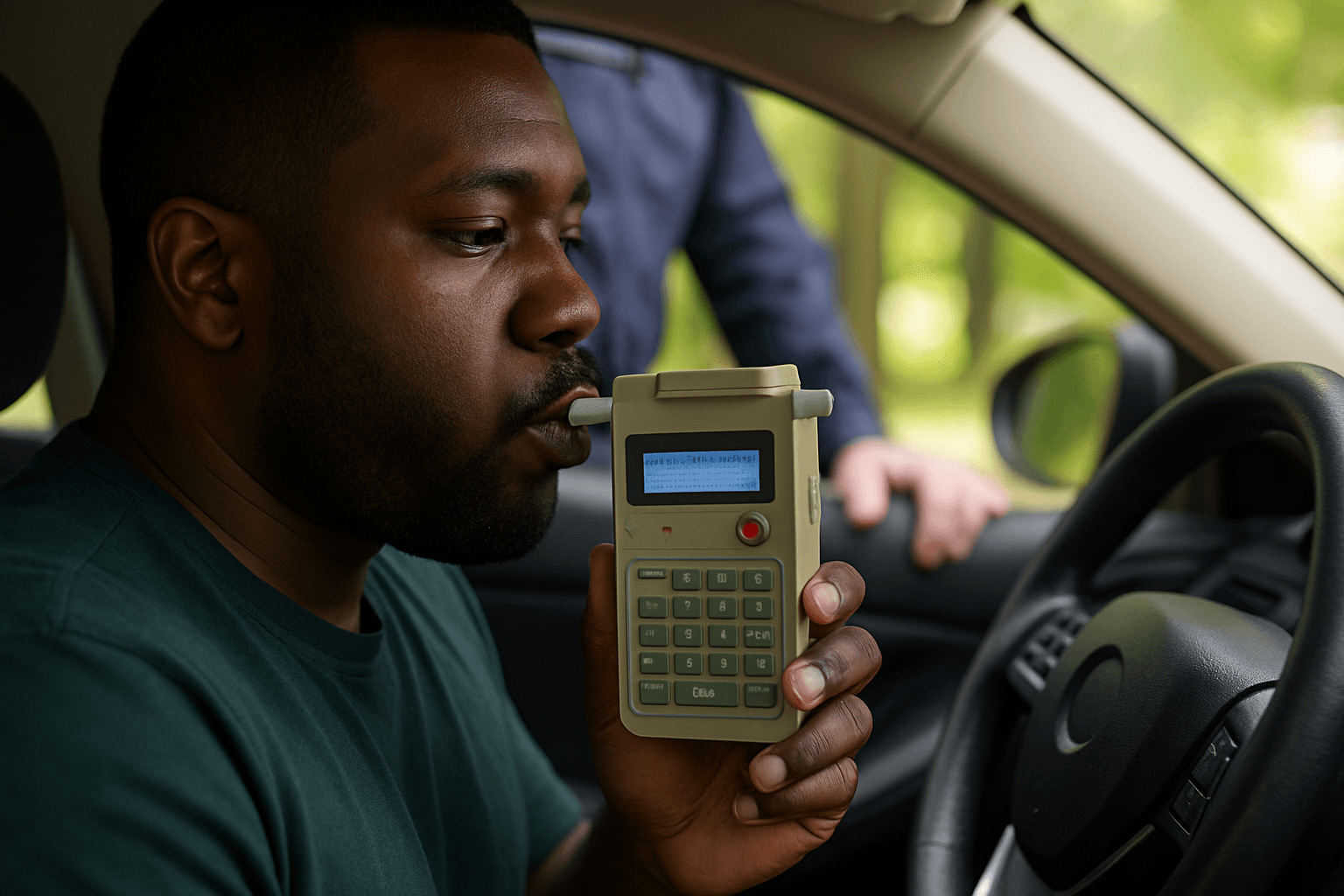
North Dakota operates one of the strictest DUI-monitoring frameworks in the country. The 24/7 sobriety program requires twice-daily breath tests (morning and evening) at a designated testing location, typically a sheriff's office or designated facility. The Division will not approve a TRL until you provide documentation proving you've enrolled and completed the first 72 hours of compliance without a violation. That three-day buffer alone explains why DUI applicants see longer processing windows than points-suspension applicants who only need to show proof of SR-22 filing and pay the application fee.
The Division does not operate on a rolling queue. Applications submitted on Friday afternoon effectively enter the system the following Monday. If any required documentation is missing or incomplete, the clock resets from the day corrected materials arrive. Most delays stem from incomplete employer verification letters or missing interlock installation receipts, not Division backlog.
Why DUI Cases Face a Three-Week Minimum Before Approval
First-offense DUI in North Dakota triggers a mandatory 91-day suspension under NDCC § 39-08-01. You become eligible for a TRL after the first 30 days of that suspension, but eligibility does not mean automatic approval. The Division requires proof of ignition interlock installation, proof of 24/7 sobriety program enrollment, and proof of SR-22 financial responsibility insurance before it will process the TRL application.
The interlock provider must submit installation verification directly to the Division. Most providers transmit that data electronically within 24–48 hours of installation, but paper-based providers can take 5–7 business days. The 24/7 sobriety program operates separately. You enroll through the county sheriff's office or designated testing facility, and that facility reports compliance data to the Division weekly, not daily. If your enrollment paperwork reaches the Division mid-week, the Division may not see your first compliance window until the following week's batch report arrives.
That reporting lag is why DUI applicants who submit complete applications on Day 31 of their suspension often do not receive TRL approval until Day 50 or later. The Division will not issue the license until it has confirmed you are compliant with both the interlock requirement and the sobriety testing schedule. A single missed test resets your eligibility window and triggers a new 72-hour compliance verification period before the Division will reconsider your application.
Compare car insurance rates in your state
Get quotes from licensed carriers — no obligation, no spam, results in minutes.
Get Your Free Quote✓ No Obligation Required✓ Licensed Carriers Only✓ Available Nationwide✓ Free to Compare
What Happens If Your Employer Verification Letter Delays Your Application
North Dakota requires employer verification as part of the TRL application. The letter must include your employer's name, address, and contact information; your job title and work schedule; and a statement confirming that driving is essential to your employment or commute. The Division does not accept handwritten letters or letters on plain paper without a business letterhead. If your employer submits a letter that does not include all required elements, the Division sends a deficiency notice and pauses your application until corrected documentation arrives.
Most deficiency notices cite missing work schedule details or vague statements about driving being "helpful" rather than "essential." The Division interprets "essential" narrowly. If your job can be performed without driving or if remote work is an option your employer acknowledges in the letter, the Division will deny the application. That standard is stricter than many surrounding states apply, and it catches applicants who assume a general employer statement will suffice.
The deficiency-correction loop typically adds 10–14 business days to the total processing timeline. The Division does not begin substantive review of your application until all documentation is complete and flagged as ready for adjudication. If you are approaching a job-loss deadline, request that your employer draft the verification letter using the Division's exact template language, available on the NDDOT Driver License Division website. Submitting a letter that matches the Division's template format reduces the deficiency risk significantly.
How SR-22 Filing Timing Affects Your TRL Approval Date
The Division requires proof of SR-22 filing before it will approve your TRL application. Your insurer must file the SR-22 certificate electronically with the Division, and that filing must be active and on record when your application enters final review. Most insurers transmit SR-22 certificates to the Division within 24–48 hours of policy binding, but budget carriers and non-standard insurers sometimes batch-transmit SR-22 filings weekly, which can delay Division receipt by 5–7 business days.
If your SR-22 filing has not appeared in the Division's system by the time your application reaches final review, the Division will hold your application in pending status until the SR-22 record populates. You will not receive a deficiency notice because the Division assumes the filing is in transit. That silent hold can extend your total processing time by a full week if your insurer uses batch transmission rather than real-time electronic filing.
Call the Division directly at the number listed on your application receipt to confirm your SR-22 filing has been received before you submit your TRL application. If the SR-22 is not yet on file, wait until it appears in the Division's system before submitting the TRL paperwork. Submitting the application prematurely does not hold your place in a queue—it only increases the likelihood your application will be held pending SR-22 confirmation, adding days to your total timeline.
What Documentation You Need to Submit With Your Application
The TRL application requires proof of employment or essential need, proof of SR-22 insurance, and a completed application form. DUI cases require additional documentation: proof of ignition interlock installation (submitted directly by the interlock provider in most cases) and proof of 24/7 sobriety program enrollment (submitted by the testing facility or included as a signed enrollment confirmation from the county sheriff's office).
The employer verification letter is the most common missing document. The Division will not accept a pay stub, employment contract, or offer letter as a substitute. The letter must be on company letterhead, signed by a supervisor or HR representative, and include all required elements outlined in the application instructions. If your employer refuses to provide the letter or provides a letter that does not meet Division standards, your application will not proceed.
Proof of SR-22 filing must appear in the Division's electronic system. A copy of your insurance card or a letter from your insurer is not sufficient. The Division only accepts SR-22 certificates filed electronically by the insurer directly to the NDDOT system. If you are applying for a TRL immediately after purchasing employment-hardship SR-22 insurance, confirm with your insurer that the certificate has been transmitted and processed before you submit your TRL application. Most delays stem from applicants submitting TRL paperwork before the SR-22 filing has populated in the Division's database.
What Happens If You Miss Your Approved TRL Work Hours
North Dakota issues TRLs with strict route and time restrictions. The license specifies approved hours (typically your documented work schedule plus a 30-minute buffer on each end for commute) and approved purposes (work, essential medical appointments, and sometimes school if documented). Driving outside those approved hours or for non-approved purposes is treated as driving on a suspended license, which is a Class B misdemeanor in North Dakota and triggers immediate revocation of the TRL.
Law enforcement officers have access to TRL restriction details through the state's driver license database. If you are pulled over outside your approved hours or outside your approved route, the officer will see the TRL restrictions on their in-vehicle system and will likely issue a citation for driving under suspension. That citation ends your TRL eligibility for the remainder of your suspension period and extends your full suspension by an additional 30–90 days depending on whether the violation is treated as a first or repeat offense.
The Division does not issue warnings or allow one-time exceptions. If your work schedule changes or if you need to add an additional approved purpose (such as a medical appointment series), you must file an amendment request with the Division before you drive outside your original approved hours. Amendment requests typically process within 3–5 business days if the new purpose qualifies under NDCC § 39-06-36. Most denials stem from requests to add recreational or social purposes, which are never approved under North Dakota's TRL framework.