Delaware DMV processes Conditional License applications for work purposes within 7-10 business days after all documents arrive, but most delays stem from incomplete SR-22 proof or missing employer verification letters—not DMV backlog.
What Controls the Delaware Conditional License Timeline
Delaware DMV begins Conditional License review only after three documents reach the same processing queue: your completed application, employer verification letter confirming work need and route, and SR-22 certificate of financial responsibility filed electronically by your insurer. The application fee is $25, paid at submission. Most applicants report 7-10 business days from complete-file status to approval, but the definition of "complete" is where most timelines break.
The SR-22 filing bottleneck dominates. Delaware requires insurers to transmit SR-22 certificates electronically to the DMV's compliance system. Your carrier submits the form, but DMV systems update on a 24-48 hour lag. If you apply before the SR-22 appears in state records, your application sits in a pending queue until the insurance filing syncs. Applicants who secure SR-22 coverage Monday and submit their Conditional License paperwork Tuesday often face a 3-5 day processing delay purely from the electronic reporting lag.
Employer verification delays are the second most common stall point. Delaware requires a signed letter on company letterhead stating your job title, work address, required work hours, and commute route. Generic HR letters citing "employment verification" without route specifics trigger rejection or requests for resubmission. Most resubmissions add 5-7 business days to the approval clock because the file moves to the back of the review queue.
Why DUI Cases Face Ignition Interlock Wait Times
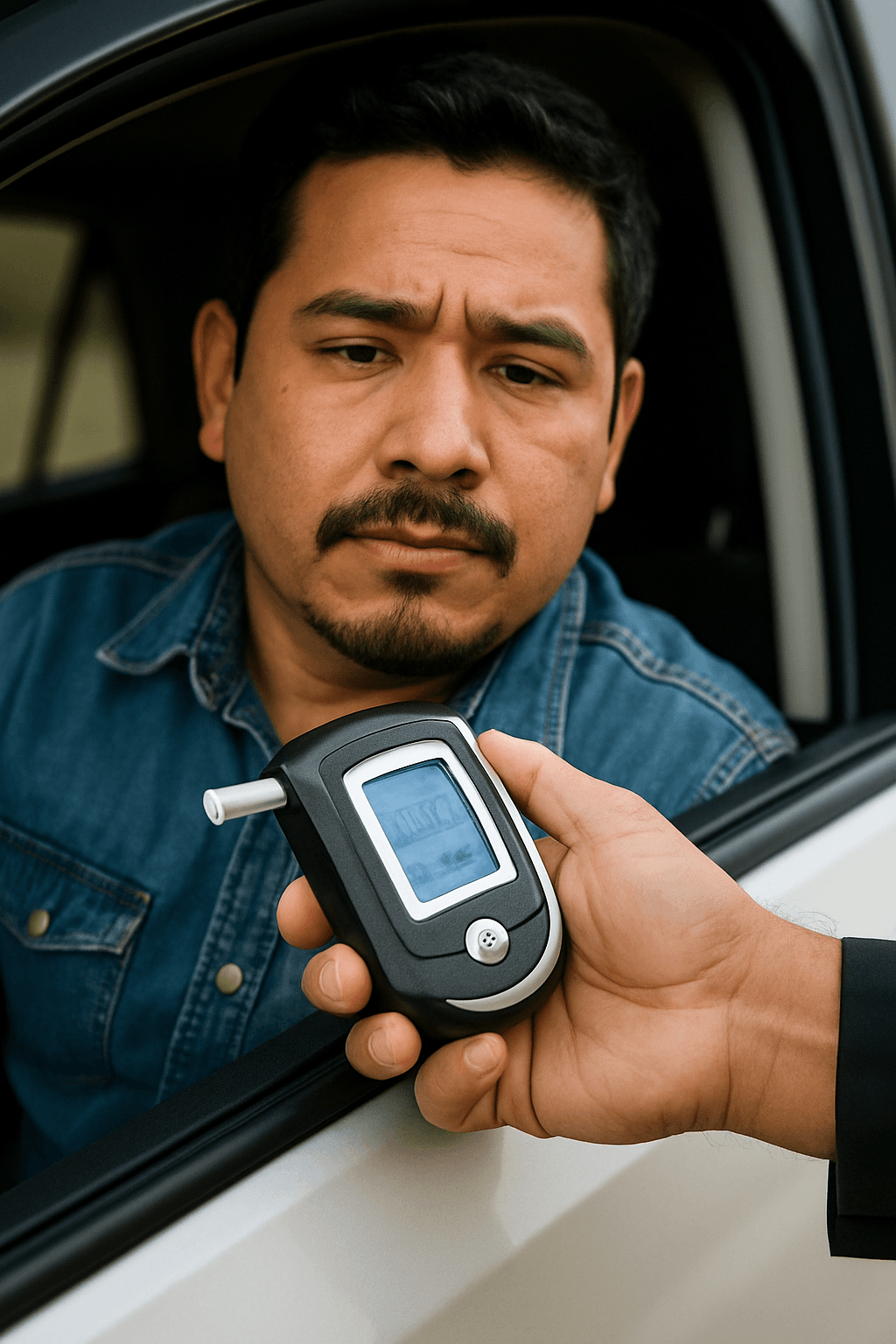
Delaware law requires Ignition Interlock Device installation for DUI-related Conditional Licenses under 21 Del. C. § 2742A. The IID requirement adds a separate timeline layer: you cannot receive Conditional License approval until proof of IID installation reaches DMV records. Installation itself takes 3-5 business days after scheduling with an approved vendor, and most vendors require payment upfront—typically $75-$125 installation plus $75-$90 per month monitoring.
The approval sequence matters. Delaware DMV will not issue Conditional License approval while IID installation is pending. You must install the device, receive the vendor's compliance certificate, and submit that certificate with your Conditional License application. Applicants who apply before IID installation receive a denial letter directing them to complete interlock enrollment first.
Total DUI Conditional License timelines from suspension date to approved work driving typically run 14-21 days: 2-3 days to secure SR-22 insurance coverage, 3-5 days for IID installation, 1-2 days for electronic filings to sync with DMV systems, then 7-10 days for application review. Delays compound when applicants submit paperwork before completing prerequisites.
Compare car insurance rates in your state
Get quotes from licensed carriers — no obligation, no spam, results in minutes.
Get Your Free Quote✓ No Obligation Required✓ Licensed Carriers Only✓ Available Nationwide✓ Free to Compare
How Points and Uninsured Suspensions Process Differently
Non-DUI Conditional License applications—points accumulation, uninsured driving, unpaid fines—do not require Ignition Interlock installation, which shortens approval timelines to the base 7-10 business day window. Delaware treats SR-22 filing as mandatory for uninsured driving suspensions under 21 Del. C. § 2118, but points-based suspensions typically require SR-22 only if the underlying violation carried an SR-22 mandate.
The documentation threshold differs. Points-based applicants need employer verification and SR-22 proof (if applicable), but uninsured-driving cases require additional proof of continuous coverage for 30 days before Conditional License eligibility. This rule catches drivers who let policies lapse mid-suspension and attempt immediate reinstatement—Delaware DMV requires sustained compliance, not spot coverage.
Unpaid-fine suspensions carry the fastest approval pathway when fines are cleared before application. Once the outstanding balance reaches zero in court records and those records sync with DMV systems (typically 48-72 hours), Conditional License applications proceed without SR-22 filing or extended waiting periods. Most unpaid-fine cases resolve within 5-7 business days from application to approval, assuming employer documentation is complete.
What Happens If You Drive Before Approval Arrives
Delaware law treats driving on a suspended license as a separate criminal offense, regardless of pending Conditional License applications. A first-offense conviction carries $500-$1,000 fines and potential jail time, and the underlying suspension period restarts from zero. Drivers caught commuting to work while their application sits in DMV review face prosecution under the same statute that governs intentional suspended-license driving.
Conditional License approval is not retroactive. If you submit your application Monday and drive to work Tuesday through Friday while waiting for approval, those four trips remain violations even if the DMV approves your license the following Monday. Delaware State Police and county officers have real-time access to DMV suspension records during traffic stops—a pending application does not appear as valid licensure in those systems.
The employment risk compounds the legal risk. Employers who discover an employee drove to work on a suspended license often terminate for liability reasons, even when a Conditional License approval follows days later. Commercial driving jobs universally prohibit suspended-license operation, and most employee handbooks classify it as grounds for immediate dismissal.
How to Shorten Your Approval Timeline
Secure SR-22 coverage 3-5 business days before submitting your Conditional License application. Carriers transmit filings within 24 hours of policy binding, but Delaware's electronic verification system updates on a lag. Waiting until the SR-22 appears in DMV records before applying eliminates the most common processing delay.
Request employer verification letters immediately after suspension notice. Delaware requires specific content: job title, work location address, daily work hours (not "full-time" generically), and primary commute route from home to work. Letters missing route details trigger resubmission requests. HR departments unfamiliar with DMV requirements often produce generic employment confirmations that do not satisfy Conditional License documentation standards—provide HR with Delaware DMV's sample letter format when requesting the document.
For DUI cases, schedule IID installation before gathering other documents. Interlock vendors book 3-7 days out during high-demand periods, and you cannot submit a complete Conditional License application without the installation compliance certificate. Installing the device first, then securing SR-22 coverage, then applying produces the shortest total timeline.
Submit applications in person at a Delaware DMV office rather than by mail. Mail processing adds 3-5 business days for document scanning and routing before review begins. In-person submission enters the review queue the same day, and DMV staff can identify incomplete documentation on the spot—allowing immediate correction rather than rejection and resubmission cycles.
What CDL Holders Need to Know About Work-Purpose Restrictions
Delaware Conditional Licenses prohibit commercial vehicle operation, even when the underlying job requires CDL driving. The restriction applies to all vehicles requiring a Commercial Driver's License—tractor-trailers, buses, heavy trucks, and vehicles transporting hazardous materials. CDL holders suspended for personal-vehicle violations cannot use Conditional Licenses to continue commercial driving employment.
The separation between personal and commercial licensure creates an employment dead-end for professional drivers. Delaware does not offer work-purpose hardship driving for CDL holders whose commercial driving privilege is suspended. A truck driver suspended for a DUI in their personal car loses both personal and commercial driving rights, and the Conditional License pathway restores only personal-vehicle commuting—not the commercial operation their job requires.
Non-driving CDL employment offers the only work-continuation option during suspension. Drivers who transition to dispatcher roles, warehouse positions, or other non-driving functions within their company can use Conditional Licenses to commute to those jobs. The license allows personal-vehicle travel to and from work but does not authorize operation of commercial vehicles once at the worksite.