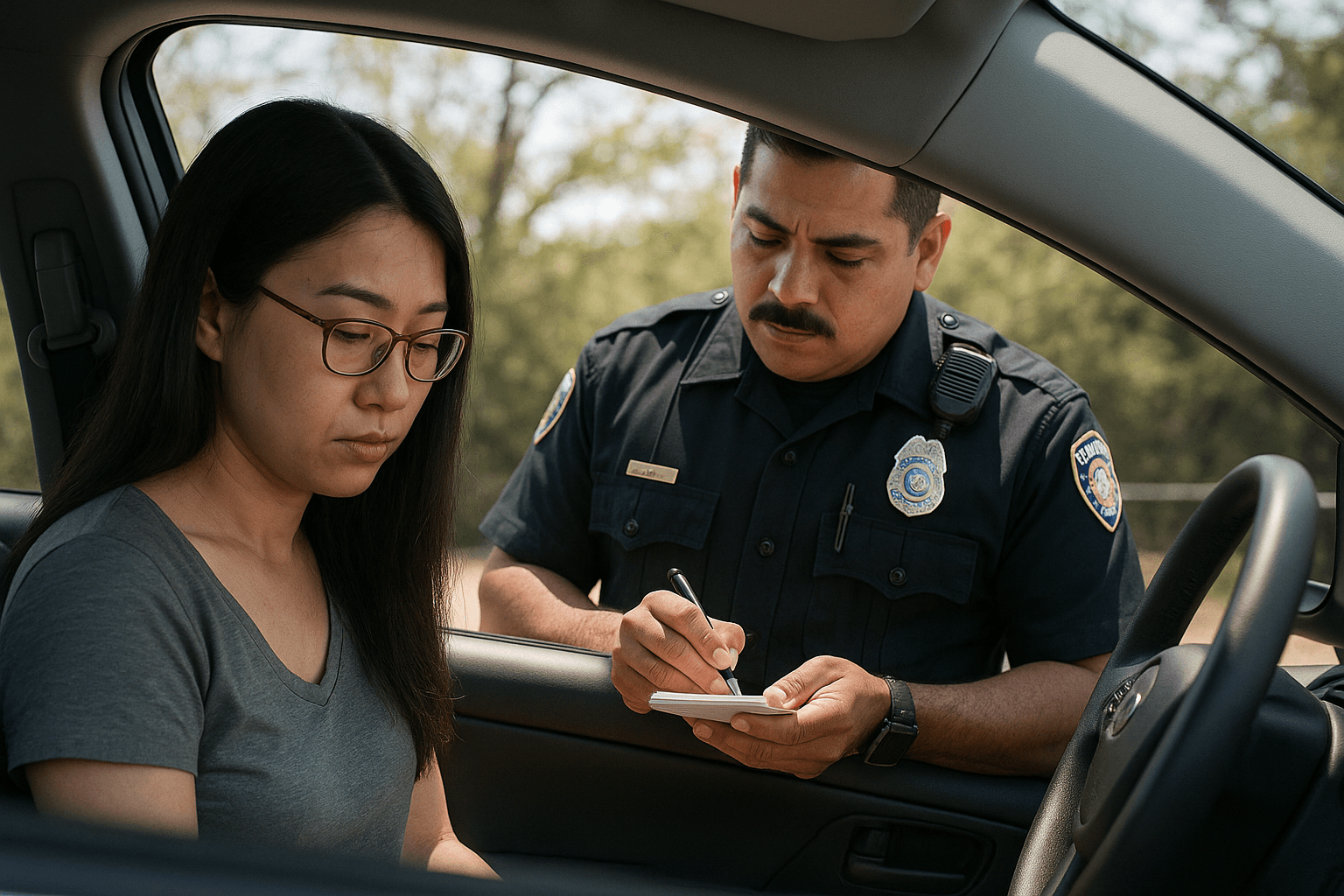
Your ODL petition was denied because your shift rotation wasn't documented correctly. Texas judges require employer-verified shift schedules with route justification for every permitted hour — most healthcare workers miss this until appeal.
Why Your Shift Schedule Documentation Was Rejected
Texas district and county courts require shift-specific route justification for every hour you request ODL driving permission — not just a letter saying you work rotating shifts. Healthcare workers on 12-hour rotations, night shifts, or multi-site assignments face the highest documentation rejection rate because standard HR employment letters don't explain why you need to drive at 2 a.m. on Tuesdays or why your route changes between facilities.
The court order you receive specifies permitted driving hours and routes by day and time block. A generic "Monday through Friday, anytime" schedule won't cover overnight shifts. A statement that you "sometimes work weekends" won't cover on-call rotation. Each shift window needs its own route and purpose justification in the employer documentation you submit with your petition.
Most denials happen because the applicant submits a standard employment verification letter stating "Employee works full-time as RN" without the shift calendar, route map, or facility-specific need attached. Texas Transportation Code §521.242 gives judges discretion to define essential need narrowly. When your documentation is vague, discretion defaults to denial.
What Texas Courts Actually Require in Healthcare Shift Documentation
Your employer must provide a signed letter on company letterhead that includes: your job title, the specific facility addresses you drive between, your shift rotation calendar for the next 90 days minimum, the exact hours you are scheduled to drive to and from each location, and a statement that public transportation or rideshare is unavailable or inadequate for those hours and routes. The letter must be signed by a supervisor or HR manager with direct knowledge of your schedule.
For multi-facility healthcare workers (home health aides, traveling nurses, on-call techs), you need a second document: a route justification map showing the facilities you serve, typical drive times between them, and why patient care timing requires personal vehicle access. Courts deny petitions when applicants list five different clinic addresses without explaining the rotation pattern or patient-visit schedule that requires driving between them during work hours.
If your role includes on-call shifts, document the on-call rotation separately. State the frequency ("on-call every third weekend"), the response-time requirement ("must arrive within 30 minutes of page"), and why that window excludes rideshare as a reliable option. Courts approve on-call ODL hours when the documentation proves the timing constraint, not just the job category.
Compare car insurance rates in your state
Get quotes from licensed carriers — no obligation, no spam, results in minutes.
Get Your Free Quote✓ No Obligation Required✓ Licensed Carriers Only✓ Available Nationwide✓ Free to Compare
The 12-Hour Daily Driving Cap and Shift-Overlap Problems
Texas law caps ODL driving at 12 hours in any 24-hour period, regardless of how many essential purposes you list in your petition. Healthcare workers on 12-hour shifts hit this cap immediately if they add commute time to work-hours driving. A nurse working 7 p.m. to 7 a.m. at one hospital, then driving to a second part-time clinic job from 9 a.m. to 1 p.m., cannot cover both shifts under a single ODL because the total approved driving window would exceed 12 hours.
The court calculates the 12-hour cap from the earliest approved start time to the latest approved end time in your order, not the sum of commute minutes. If your petition requests driving permission from 6:30 p.m. (pre-shift commute start) to 8 a.m. (post-shift commute end), that's a 13.5-hour window even though you're only driving 60 minutes total. Courts will narrow the window or deny the petition outright rather than approve a legally non-compliant order.
Healthcare workers with split shifts or multiple part-time roles need to prioritize which job gets ODL coverage. You cannot petition for all-day driving permission by listing healthcare work as the essential need. Document your primary income source with the most stable shift schedule, then structure other obligations (school, medical appointments, childcare) within the remaining cap hours if the court allows multiple essential purposes.
How Courts Handle Night Shift and Overnight Rotation Requests
Night-shift healthcare workers face stricter scrutiny because courts assume overnight driving hours increase violation risk. Your petition must explain why the shift timing is non-negotiable and attach proof: a signed statement from your employer that the position requires night or overnight hours, a shift bid record showing you were assigned (not volunteering for) the overnight rotation, or a staffing policy document proving the facility operates 24-hour patient care with mandatory night coverage.
If your role allows shift-swapping or scheduling flexibility, the court may deny overnight ODL hours and require you to request day-shift assignment from your employer instead. This denial pattern is most common for LVNs, CNAs, and medical techs in roles where multiple staff cover the same function across shifts. RNs, respiratory therapists, and other licensed roles with specialized night-shift responsibilities have higher approval rates when the documentation shows patient-care necessity.
Texas judges can approve time-of-day driving restrictions within your shift window. A nurse working 11 p.m. to 7 a.m. might receive ODL permission to drive only from 10:30 p.m. to 11:15 p.m. (commute to work) and 7 a.m. to 7:45 a.m. (commute home), with no mid-shift driving allowed even if the hospital is within the approved route list. Read your court order carefully. Driving outside the specified time blocks, even to an approved location, violates the order and triggers revocation.
Multi-Facility and Home Health Route Documentation
Home health aides, traveling nurses, and mobile phlebotomists need patient-visit territory maps attached to the employer letter. The map should show the county or zip codes you serve, typical daily visit counts, average mileage between stops, and patient-scheduling constraints that prevent route consolidation. Courts approve broader geographic ODL permissions when the documentation proves the job requires unpredictable routing within a defined service area.
If your role involves driving to patient homes rather than fixed clinic sites, include a sample week's visit schedule showing addresses, appointment times, and drive-time gaps between visits. Redact patient names but leave enough detail to prove the routing pattern. Courts deny vague requests like "drive anywhere in Harris County for patient visits" without the sample-schedule proof that patient care actually requires county-wide mobility.
Multi-facility documentation must distinguish between scheduled rotation (you work Site A Monday/Wednesday, Site B Tuesday/Thursday) and as-needed deployment (staffing calls you to whichever site needs coverage). Scheduled rotation gets higher approval rates because the court can write specific day-and-location permissions into the order. As-needed deployment often gets denied because the court cannot predict which facilities you'll drive to, making enforcement impossible. If your job is as-needed, petition for the single highest-frequency site only, then request an order amendment later if your assignment becomes more predictable.
What Happens When Your Employer Won't Provide the Documentation
Some healthcare employers refuse to complete detailed ODL documentation due to liability concerns or HR policy restrictions. Texas courts do not require employer participation, but without it your petition will almost certainly be denied unless you can prove essential need through alternative documentation: a signed offer letter stating shift hours and start date, a staffing agency contract showing your assigned facilities and rotation, or payroll records proving your work schedule for the past 90 days.
If your employer provides only a standard employment verification letter without shift or route detail, attach your own sworn affidavit filling the gaps. The affidavit must state your shift schedule, route addresses, commute times, and why the employer could not or would not provide the detail. Courts give affidavits less weight than employer letters, but a detailed affidavit beats a vague employer letter. Include supporting evidence: a photo of your posted work schedule, a screenshot of your facility's shift-bid system showing your assignment, or a map printout with your route and mileage highlighted.
Never falsify employer documentation or forge a supervisor signature. Texas judges compare petition documents against prior filings and employment records during hearings. Submitting fraudulent documentation results in automatic petition denial, potential criminal charges under Texas Penal Code §37.10 (tampering with governmental record), and disqualification from future ODL eligibility.
SR-22 Filing Requirements for Healthcare Worker ODL Holders
Every ODL holder in Texas must maintain SR-22 financial responsibility filing for the entire period the ODL is active, regardless of the suspension cause. Your insurer files Form SR-22 with the Texas Department of Public Safety electronically, proving you carry at least the state minimum liability coverage: $30,000 per person, $60,000 per accident for bodily injury, and $25,000 for property damage.
Healthcare workers often ask whether their employer's commercial auto policy covers the SR-22 requirement if they drive a company vehicle for patient visits. It does not. The SR-22 filing must be attached to a personal auto insurance policy in your name, even if you never drive your own car for work. If you don't own a vehicle, you need non-owner SR-22 insurance that covers you when driving any vehicle, including employer-owned or rental cars.
SR-22 filing adds $15 to $25 to your premium as a one-time or annual fee depending on the carrier, but the bigger cost impact is the underlying high-risk classification. Monthly premiums for Texas drivers with SR-22 filings typically range from $140 to $280 depending on age, county, and violation history. Premiums stay elevated for the entire filing period, which in most DWI cases is two years from reinstatement. If your SR-22 lapses because you miss a payment or cancel your policy, DPS suspends your ODL immediately and you must re-petition the court to regain work-driving permission.