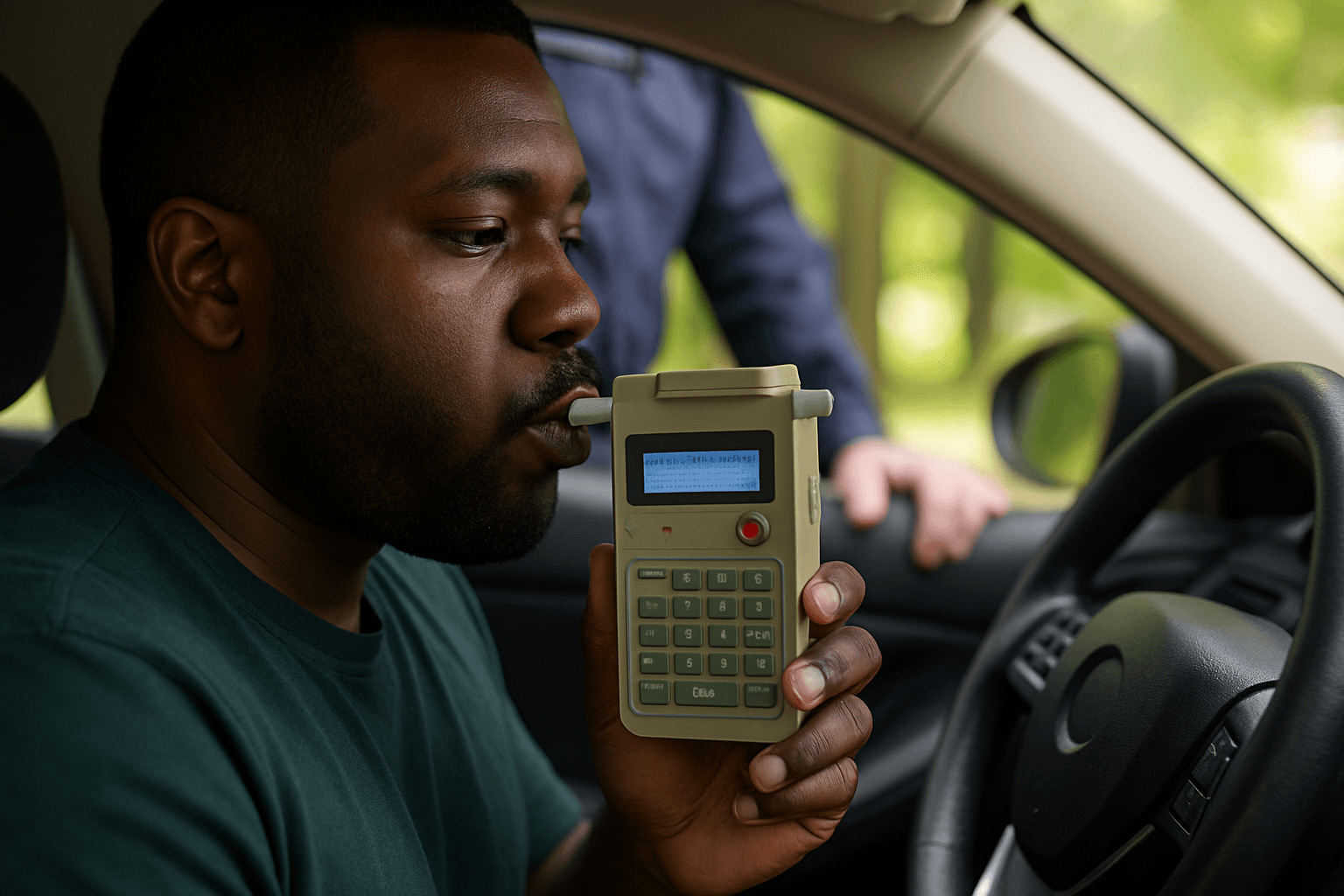
Georgia's 2024 IILDP reform lets DUI arrestees elect ignition interlock immediately instead of waiting through ALS. Most drivers miss the 30-day election window and the court-specific documentation their employer needs.
What Changed in Georgia's 2024 IILDP Law for Work Drivers
HB 205 created a distinct Ignition Interlock Limited Driving Permit (IILDP) track effective July 1, 2024, allowing DUI arrestees to elect IID installation immediately rather than wait through the 30-day Administrative License Suspension (ALS) hearing process. You have 30 days from arrest to either request an ALS hearing or install an ignition interlock device to avoid the administrative suspension.
The election is permanent for that arrest cycle. If you miss the 30-day window, you fall into the standard ALS suspension track with a minimum 120-day hard period before any work permit becomes available. The IILDP pathway bypasses that hard period entirely if you install the device and file SR-22 within the election window.
This is a structural change from pre-2024 Georgia DUI law. Before HB 205, most first-offense DUI drivers faced the full ALS suspension before any limited driving permit became available. The IILDP pathway trades immediate work-driving privileges for mandatory IID installation and court-supervised compliance reporting.
The Paper LDP Problem Your Employer Needs to Understand
Georgia Superior Courts issue Limited Driving Permits as paper documents, not replacement driver's license cards. You carry the paper LDP alongside your suspended license. Many HR departments reject paper permits because they look unofficial compared to standard plastic licenses.
Your employer needs three documents to verify your work-driving authorization: the signed court order granting the LDP, the paper permit itself, and proof of SR-22 filing with Georgia DDS. The court order specifies your approved driving purposes, hours, and routes. Without the court order, the paper permit alone does not prove what you are authorized to drive for.
Request certified copies of the court order when your LDP is granted. Georgia Superior Court clerks charge $1-$2 per certified page. Most employers require a certified copy for their files before allowing you to drive company vehicles or use your personal vehicle for work purposes. Presenting the paper LDP without the court order typically triggers a denial from HR, even when your permit is valid.
Compare car insurance rates in your state
Get quotes from licensed carriers — no obligation, no spam, results in minutes.
Get Your Free Quote✓ No Obligation Required✓ Licensed Carriers Only✓ Available Nationwide✓ Free to Compare
What Routes and Hours Georgia Courts Actually Approve for Work LDPs
Georgia judges define work LDP restrictions on a case-by-case basis rather than applying statewide time windows. Your petition must specify your employer's address, your typical work schedule, and whether your job requires driving during work hours beyond commuting.
Most Georgia courts approve commute-window driving: home to work, work to home, plus a buffer (typically one hour before and after your shift). If your job requires driving during work hours—delivery, sales calls, site visits, rideshare—your employer must submit a verification letter documenting the business need and typical routes.
The court order lists approved purposes explicitly. Driving outside those purposes while holding an LDP triggers revocation and a new criminal charge for driving on a suspended license. Georgia does not allow discretionary trips bundled into work permits. Grocery stops, medical appointments, and childcare pickups require separate petitions for additional approved purposes or do not qualify for inclusion.
IID Installation Timeline Georgia Judges Enforce on IILDP Petitions
Georgia requires IID installation before the Superior Court hearing where your LDP petition is reviewed. You cannot petition for an IILDP without proof of device installation and SR-22 filing already submitted to DDS. The 30-day election window starts at arrest, not at your hearing date.
Installation takes 3-5 business days from the appointment date with a Georgia-approved IID provider. The provider uploads your installation certificate to DDS electronically. SR-22 filing from your insurer must reach DDS within 24-48 hours of policy binding. Both documents must appear in your DDS record before the court will consider your LDP petition.
If your court hearing is scheduled within two weeks of your arrest date, you have fewer than 10 calendar days to complete installation, SR-22 filing, and petition submission. Missing any step pushes your petition to the next available court date, often 30-45 days later. During that delay, you remain under full suspension with no work-driving privileges.
Georgia's Court-Defined Compliance Reporting Rules for Work LDPs
Georgia Superior Courts set IID reporting requirements in the court order granting your LDP. Most courts require monthly compliance reports from your IID provider showing zero failed breath tests, zero lockouts, and zero tampering alerts. The provider submits reports to DDS, but you must verify submission and provide copies to the court clerk.
A single failed breath test does not automatically revoke your LDP, but it triggers a court review. The judge determines whether the violation justifies revocation based on the BAC level recorded, the frequency of violations, and whether you reported the incident proactively. Two failed tests within 30 days typically result in revocation and reinstatement of the full suspension.
Georgia courts also require proof of DUI Alcohol or Drug Use Risk Reduction Program enrollment within 30 days of LDP issuance. Missing two consecutive classes triggers automatic LDP revocation under Georgia Revised Code 4509.45. The program provider reports attendance directly to DDS, but you must provide proof of enrollment to the court at your first compliance review hearing, typically 60-90 days after the LDP is granted.
SR-22 Filing Setup for Georgia IILDP Work Permits
Georgia requires SR-22 filing with DDS for all IILDP petitions, regardless of whether your DUI was in a personal vehicle, a company vehicle, or a non-driving alcohol offense. The SR-22 filing period runs for 3 years from the date DDS receives the filing, not from your conviction date or license reinstatement date.
Non-standard carriers writing SR-22 in Georgia include Acceptance Insurance, Bristol West, Dairyland, Direct Auto, GAINSCO, Geico, Infinity, Kemper, National General, Progressive, The General, and USAA. Monthly premiums for IILDP-eligible drivers with a first DUI typically range from $180-$280/month for minimum liability coverage (Georgia's 25/50/25 state minimums). Full coverage on a financed vehicle adds $90-$140/month.
SR-22 filing fees are $25-$50 depending on the carrier. Georgia charges a $200 license reinstatement fee when your suspension period ends and SR-22 filing is verified. If your SR-22 lapses at any point during the 3-year period, DDS automatically re-suspends your license and you lose your LDP immediately. There is no grace period for missed SR-22 payments in Georgia.
What Happens When Your Employer's HR Department Rejects Your Georgia LDP
Georgia employers are not legally required to accept Limited Driving Permits for employees who drive company vehicles or use personal vehicles for work purposes. Liability concerns drive most HR rejections: if you cause an accident while driving on an LDP, the employer's commercial auto policy may deny the claim based on the driver's restricted license status.
Request a written explanation from HR specifying why your LDP was rejected. If the rejection is based on missing documentation, provide the certified court order and SR-22 proof of filing. If the rejection is based on company policy prohibiting restricted licenses, ask whether the policy applies to personal vehicles used for commuting only or extends to all work-related driving.
Some Georgia employers allow LDP holders to drive personal vehicles for commuting but prohibit driving company vehicles or using personal vehicles for business purposes during work hours. Others prohibit all driving by LDP holders regardless of vehicle ownership. If your employer's policy is absolute, your options are: negotiate a non-driving role temporarily, arrange alternative transportation (carpool, rideshare, family member), or seek employment that does not require driving. There is no Georgia statute requiring employers to accommodate LDP holders.