Georgia's Limited Driving Permit allows CDL holders to commute to work in personal vehicles, but never behind the wheel of a commercial vehicle — even when your job requires one. Court-issued permits carry federal-state split authority most drivers don't understand until their employer rejects the documentation.
Why Georgia's LDP Cannot Cover Commercial Driving
Georgia's Limited Driving Permit is issued by Superior Court judges under state court authority, but federal FMCSA regulations prohibit any commercial motor vehicle operation during CDL suspension periods regardless of state-level hardship permits. The LDP allows you to drive your personal car or truck to and from work. It does not restore your CDL privileges, even partially, even for employment purposes.
This creates a practical trap for CDL holders whose jobs require operating vehicles over 26,001 pounds, carrying hazardous materials, or transporting 16+ passengers. Your Georgia LDP covers the commute to the job site in your Honda Accord. It does not cover the semi you need to drive once you arrive. Most employers in commercial transportation cannot accommodate this restriction.
The split is jurisdictional. Georgia courts control personal driving privileges. The Federal Motor Carrier Safety Administration controls commercial driving privileges nationwide. A state court cannot override federal CDL disqualification rules, which means your LDP cannot authorize commercial vehicle operation under any circumstances.
What Georgia's Court-Defined LDP Actually Covers
Georgia Superior Court judges define LDP terms individually rather than issuing standardized permits. The court orders limited driving for specific approved purposes: employment, school, medical appointments, court-ordered programs, and other essential activities the judge approves during your hearing. You petition the court. The judge evaluates your documentation. The judge issues a paper permit listing your allowed purposes and hours.
For CDL holders, this means the permit will authorize driving to work. It will not authorize driving at work if your job involves commercial vehicles. The distinction matters because Georgia courts lack authority to grant commercial driving privileges during a suspension triggered by state or federal disqualification rules. You can drive yourself to the trucking company office. You cannot drive the company's tractor-trailer.
Route and time restrictions are also court-defined. Georgia does not impose universal statewide time windows. Your permit will list approved hours, typically tied to your work schedule plus a buffer for errands. Driving outside those hours or for unapproved purposes violates the permit and triggers immediate revocation plus potential criminal charges for driving on a suspended license.
Compare car insurance rates in your state
Get quotes from licensed carriers — no obligation, no spam, results in minutes.
Get Your Free Quote✓ No Obligation Required✓ Licensed Carriers Only✓ Available Nationwide✓ Free to Compare
SR-22 Filing and Ignition Interlock Requirements
Georgia requires SR-22 proof-of-insurance filing for virtually all Limited Driving Permit categories. If your suspension resulted from DUI, uninsured driving, or another high-risk violation, the court will require you to file SR-22 with the Georgia Department of Driver Services before the permit is issued. Your insurer submits the filing electronically. DDS matches it to your case. Only then can the court finalize your permit.
Ignition interlock devices are mandatory for DUI-related LDPs in Georgia. If your CDL suspension resulted from a DUI or refusal to submit to a chemical test, you must install an IID in any vehicle you operate under the LDP. This includes your personal vehicle used for commuting. The court order will specify the IID requirement. Driving an LDP vehicle without a functioning IID violates the permit and your probation terms if applicable.
The 2024 HB 205 reform created a distinct Ignition Interlock Limited Driving Permit track for DUI arrestees, allowing immediate IID-equipped permit eligibility rather than waiting through the administrative license suspension process. This means CDL holders arrested for DUI can elect the IILDP pathway and regain personal-vehicle driving privileges faster, but the commercial driving prohibition remains absolute.
Employer Documentation the Court Requires
Georgia courts require employer verification as part of your LDP petition. The employer letter must state your job title, work address, work hours, and confirmation that you need to drive to perform your job. For CDL holders, this documentation step becomes complicated because the job description often includes commercial vehicle operation.
The court needs to see that you have a legitimate work need. The court also needs to understand the scope of driving your job requires. If your employer's verification letter states that you operate commercial vehicles as part of your duties, the judge will approve an LDP for commute purposes only and explicitly exclude commercial driving from the permit terms. This protects the court from issuing an order that violates federal CDL regulations.
Some CDL employers will not retain drivers who cannot operate commercial vehicles, even temporarily. Before you invest in the LDP application process, confirm with your employer whether they can accommodate a personal-vehicle-commute-only arrangement. If your role requires daily commercial vehicle operation and the company has no desk or warehouse duties available, the LDP will not save your job.
How Non-CDL Holders in Commercial Roles Fare Better
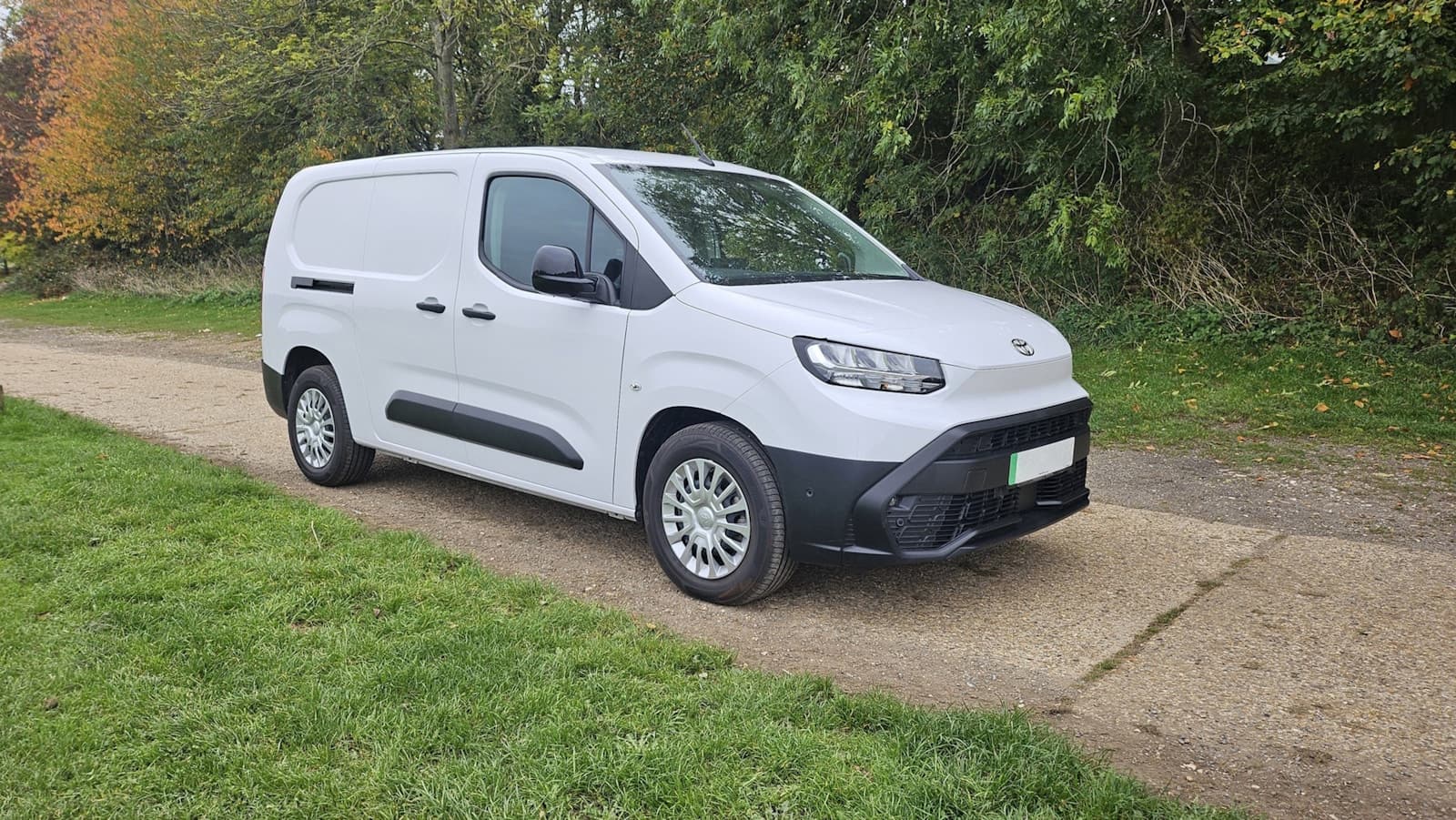
Drivers who operate vehicles under 26,001 pounds without hazmat or passenger endorsements are not CDL holders under federal regulations. Georgia's LDP can cover work-related driving for these drivers if the court approves it. Delivery van drivers, service technicians with company trucks, and sales representatives with fleet vehicles fall into this category when the vehicle does not require a CDL.
The difference is regulatory. Non-CDL commercial driving is governed by state rules. CDL driving is governed by federal FMCSA rules that override state hardship permits. If your job involves a Ford Transit van with a 10,000-pound GVWR, your Georgia LDP can authorize driving that vehicle for work purposes. If your job involves a Freightliner with a 33,000-pound GVWR, your LDP cannot.
This creates an incentive problem for CDL holders. Some drivers consider whether they can perform their job duties using a non-CDL vehicle during the suspension period. This works only if the employer owns or leases appropriate equipment and is willing to reassign you temporarily. Most long-haul trucking companies cannot accommodate this. Local delivery operations sometimes can.
What Happens If You Drive Commercially on an LDP
Operating a commercial motor vehicle while your CDL is suspended constitutes a federal violation and a separate Georgia state offense. The LDP does not provide legal cover. The permit explicitly excludes commercial driving. Violating the permit triggers immediate revocation, additional criminal charges for driving on a suspended license, and potential federal penalties under FMCSA enforcement rules.
Georgia law enforcement and federal DOT officers both have authority to stop and inspect commercial vehicles. If you are caught driving a CMV during a suspension period, the officer will verify your license status. The LDP will appear in the system as a restricted personal-vehicle permit. You will be cited for operating a commercial vehicle without valid authorization. Your employer's vehicle may be placed out of service.
The employment consequence is termination in most cases. Commercial carriers face federal liability and insurance complications when drivers operate without proper licensure. Even if you were trying to save your job, operating commercially on an LDP typically results in immediate dismissal and disqualification from future employment with that carrier.
Finding Coverage That Meets LDP and SR-22 Requirements
Georgia requires SR-22 filing for most LDP applicants, particularly those whose suspensions resulted from DUI, uninsured driving, or high-risk violations. Standard carriers like State Farm and Nationwide write SR-22 policies in Georgia, but CDL holders often face higher premiums due to the commercial driving context and the suspension itself.
Non-standard carriers including GAINSCO, Dairyland, The General, and Progressive's non-standard division specialize in high-risk SR-22 filings. Monthly premiums for SR-22 liability coverage in Georgia typically range from $140 to $240 per month depending on your violation history, age, and county. Estimates based on available industry data; individual rates vary by driving history, vehicle, coverage selections, and location.
If you do not own a vehicle, non-owner SR-22 insurance covers your liability requirement without insuring a specific car. This works for CDL holders who plan to use a borrowed vehicle or rental for their LDP commute. The SR-22 filing remains active as long as you maintain the policy. Letting the policy lapse triggers automatic notification to Georgia DDS and immediate LDP revocation.