Georgia's Limited Driving Permit requires a court petition and employer verification letter. Most first-DUI filers don't realize the 2024 IID reform created a faster track—but it's an either/or choice with the traditional ALS hearing.
Georgia's Two Work-Driving Tracks After a DUI Arrest
Georgia offers two separate Limited Driving Permit paths after a DUI arrest, and the choice you make in the first 30 days determines which one you can access. The traditional path waits through the Administrative License Suspension (ALS) hearing process, then petitions Superior Court for a work-purposes LDP. The new path, created by HB 205 effective July 1, 2024, allows you to install an ignition interlock device and get an Ignition Interlock Limited Driving Permit (IILDP) immediately—but only if you waive your ALS hearing. You cannot do both.
The IILDP track is faster. Install the IID within 30 days of arrest, submit the IID vendor's certificate to Georgia DDS, and you can drive for work, school, medical appointments, and other essential purposes while your DUI case proceeds. The traditional track requires waiting for an ALS hearing (typically 30-45 days after you request it), then filing a separate court petition with your employer's verification letter. If you miss the 30-day window to request an ALS hearing or install an IID, your license suspends automatically and you wait until your DUI conviction is final to petition for a post-conviction LDP.
Most drivers don't realize these tracks are mutually exclusive. Choosing the IILDP path means giving up your right to challenge the arrest at an ALS hearing. If your stop was questionable or the breathalyzer wasn't administered correctly, losing that hearing means losing your best procedural defense. On the other hand, if the facts are solid and you need to drive immediately, the IILDP gets you back on the road weeks faster than the traditional path.
What Your Employer Verification Letter Must Include
Georgia Superior Court judges require an employer verification letter as part of every work-purposes LDP petition. The letter must state your job title, work address, work hours, and whether your job requires you to drive during work (not just to commute). The judge uses this letter to define your approved driving window. A vague letter—"John works for us and needs to drive"—will delay or kill your petition.
The letter should be on company letterhead, signed by a supervisor or HR representative with contact information the court can verify. Include your start date and whether your position is full-time or part-time. If your work hours vary (shift work, commission-based schedule, gig work), the letter must explain the variability and request broader approved hours. Judges typically approve commute hours plus a buffer (6 AM to 8 PM is common for standard full-time work), but they will not approve 24-hour driving windows without documented justification.
If you drive as part of your job—delivery, sales routes, home health visits—the letter must describe the driving requirement explicitly. Judges distinguish between commute-only driving and job-function driving. Commute-only LDPs restrict you to the direct route between home and work. Job-function LDPs allow driving during work hours within a defined geographic area (usually the county where you work, sometimes adjacent counties if your job requires it). If your employer letter omits the job-function driving detail, the judge assumes commute-only and writes the LDP accordingly.
Compare car insurance rates in your state
Get quotes from licensed carriers — no obligation, no spam, results in minutes.
Get Your Free Quote✓ No Obligation Required✓ Licensed Carriers Only✓ Available Nationwide✓ Free to Compare
How the Court Petition Process Works in Practice
You file your LDP petition in the Superior Court of the county where you were arrested, not where you live or work. The petition packet includes the court's standardized form (available from the clerk's office), your employer verification letter, proof of SR-22 insurance filing, proof of IID installation if required, and any receipts showing you've paid court-ordered fines or DUI Risk Reduction Program fees. Georgia judges will not grant an LDP if you owe unpaid fines from the DUI case or any prior traffic matters.
Most counties require you to appear before the judge for a brief hearing. Some counties allow uncontested LDP petitions to be decided on paper if all documentation is complete. Call the Superior Court clerk before filing to confirm the county's process. The hearing is not adversarial—the judge reviews your documentation, confirms your work need is legitimate, and defines the approved driving purposes, hours, and routes. If your documentation is incomplete or your employer letter is vague, the judge will continue the hearing and give you a deadline to submit corrected documents.
The court issues a paper LDP, not a replacement license card. You carry the paper LDP along with your suspended license whenever you drive. If you are stopped outside your approved hours or routes, the LDP does not protect you—you are charged with driving on a suspended license, the LDP is revoked, and you face a separate contempt-of-court charge for violating the court's order. Georgia officers and prosecutors treat LDP violations seriously because the restriction was a court order, not an administrative DDS rule.
SR-22 Filing Setup Specific to Georgia Work LDPs
Georgia requires SR-22 insurance filing for virtually all Limited Driving Permits, including work-purposes LDPs. The SR-22 is a certificate your insurer files with Georgia DDS proving you carry at least the state's minimum liability limits: $25,000 per person for bodily injury, $50,000 per accident, and $25,000 for property damage. The filing itself costs $25-$50 depending on the carrier. The premium increase averages $90-$160/month for DUI-triggered SR-22 filings in Georgia, though rates vary significantly by age, county, and prior driving record.
You must maintain continuous SR-22 coverage for 3 years after your DUI conviction. If your policy lapses or cancels, your insurer notifies DDS electronically and your LDP is automatically suspended. DDS does not send a warning—you discover the suspension when you're stopped. Reinstatement after an SR-22 lapse requires paying a $200 reinstatement fee to DDS, filing a new SR-22, and often waiting 30 days before DDS processes the reinstatement. During that gap, your LDP is invalid and you cannot drive even during approved hours.
Non-owner SR-22 policies cover drivers who do not own a vehicle but need to meet the filing requirement. If you sold your car after the DUI arrest or you commute in a vehicle titled to a family member or employer, a non-owner policy satisfies the SR-22 mandate and costs roughly 30-40% less than standard owner policies. The policy does not cover the vehicle you drive—it covers your liability when you drive someone else's vehicle with permission. If your employer provides the work vehicle, verify with HR whether their commercial policy covers you or whether you need a separate non-owner policy.
Ignition Interlock Device Requirements and Costs
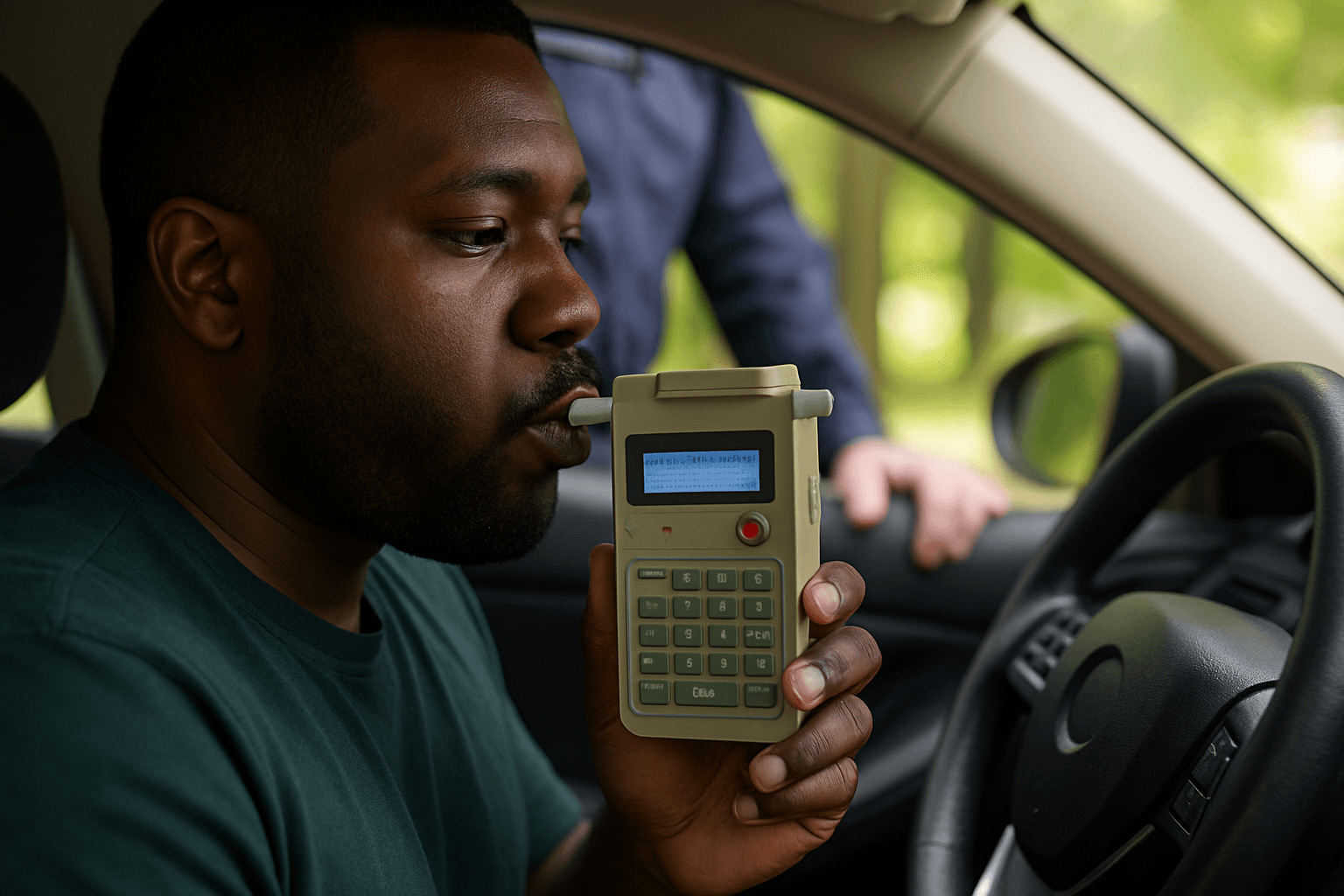
Georgia requires an ignition interlock device for all DUI-related Limited Driving Permits. If you elect the IILDP track, you install the IID within 30 days of arrest. If you go through the traditional court petition path after conviction, the judge's LDP order will specify IID installation as a condition. The device connects to your vehicle's ignition system and requires you to provide a breath sample before starting the car and at random intervals while driving. A failed test (breath alcohol content above the device's threshold, typically 0.02%) locks the ignition and logs the violation.
Installation costs $75-$150. Monthly monitoring and calibration fees run $60-$90. You return to the IID vendor every 30 days for data download and device calibration. Georgia-approved vendors include Smart Start, Intoxalock, LifeSafer, and Guardian Interlock. The vendor uploads your compliance data to DDS. If you accumulate violations—failed tests, missed calibration appointments, tampering attempts—DDS can extend your IID requirement or revoke your LDP.
If you drive multiple vehicles, each vehicle needs its own IID unless you obtain a single-vehicle restriction on your LDP. Most judges grant single-vehicle LDPs for work purposes, meaning you are only allowed to drive the one vehicle equipped with the IID. If your employer requires you to drive a company vehicle, the employer must either install an IID in that vehicle (most employers refuse) or allow you to drive your personal IID-equipped vehicle for work purposes. This is where many work-LDP petitions fail—the job requires driving a company truck or van, the employer will not install an IID, and the judge denies the petition because the work requirement cannot be met under Georgia's IID mandate.
CDL Holders and Commercial Driving Restrictions
Georgia's Limited Driving Permit does not authorize commercial vehicle operation. If you hold a CDL and your job requires you to drive a commercial motor vehicle, the work-purposes LDP will not allow it. Your personal-vehicle LDP covers commuting to your CDL job and personal errands during approved hours, but the moment you get behind the wheel of a commercial vehicle, you are driving without a valid CDL—a federal disqualification.
Georgia suspends your CDL for one year after a first DUI conviction, even if the DUI occurred in your personal vehicle. The CDL suspension runs concurrently with your personal license suspension, but they are separate administrative actions. You can petition for a work-purposes LDP for your personal license and still lose your CDL for the full year. Some CDL holders petition for an LDP to drive to a non-driving job (warehouse work, dispatch, office role at the trucking company), but if the employer expects you to return to driving duties during the LDP period, that expectation is legally impossible to meet.
If your livelihood depends on commercial driving, the one-year CDL disqualification is the hard floor. Georgia does not offer restricted CDLs or work-purpose CDL permits. You either wait out the year and petition for CDL reinstatement after completing all DUI requirements, or you find non-driving work during the disqualification period.
What Happens If You're Caught Driving Outside Approved Hours
Violating your LDP restrictions is not a minor infraction. If you are stopped outside your approved hours or routes, you are charged with driving on a suspended license under O.C.G.A. § 40-5-121. First offense: $500-$1,000 fine, up to 12 months in jail, and a minimum additional 6-month license suspension. The court revokes your LDP immediately. Because the LDP was issued by court order, the violation also triggers a contempt-of-court charge in the Superior Court that granted the permit.
Georgia officers enforce LDP restrictions strictly. If your approved hours are 6 AM to 8 PM and you are stopped at 8:15 PM, the 15-minute overage does not matter—you are outside the window. If your approved route is home to work and you detour to a grocery store, you are outside the restriction. Judges and prosecutors treat LDP violations as evidence that you cannot be trusted with restricted driving privileges, and they rarely grant a second LDP after a violation.
The IID data log compounds the problem. If you violated your LDP restriction and the IID records driving outside approved hours or a failed breath test, the prosecution has timestamped electronic evidence. Even if the officer did not witness the violation, the IID log can be subpoenaed and used against you in the contempt hearing.