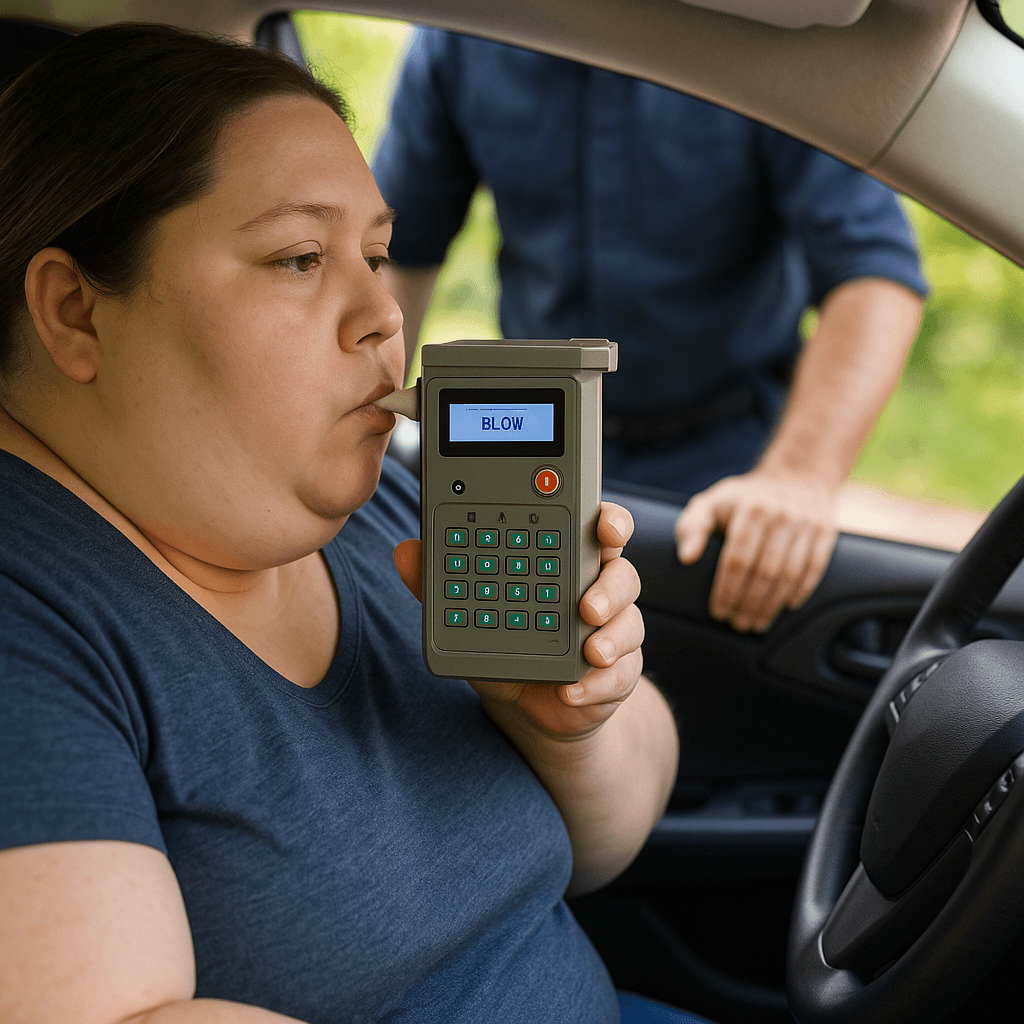
Florida mandates ignition interlock for most DUI-related Business Purpose Only licenses. Installation must complete before DHSMV issues driving privileges—most applicants miss the pre-approval timing window.
When Florida DHSMV Requires Ignition Interlock for BPO Hardship Licenses
Florida Statutes § 322.271 mandates ignition interlock installation for Business Purpose Only licenses following most DUI-related suspensions. The device requirement applies to first-offense DUI administrative suspensions, second-offense DUIs regardless of time elapsed, and any DUI conviction resulting in court-ordered revocation. The timing creates a practical trap: DHSMV will not issue your BPO license until vendor certification confirms device installation and monitoring enrollment, but installing the device before your hardship petition is approved risks paying certification fees for a license you may not receive.
The hardship application process follows a sequential gate structure. You serve the mandatory hard suspension period first—30 days for a first-offense BAC administrative suspension, 90 days for a refusal suspension under Florida Statutes § 322.2615. During that hard period, you cannot drive under any circumstances. After the hard period expires, you become eligible to apply for the BPO license. Your application must include proof of DUI school enrollment, FR-44 insurance filing at 100/300/50 liability limits, employment verification from your employer, and ignition interlock vendor pre-enrollment documentation.
DHSMV processes hardship applications in approximately 7 to 10 business days after receiving complete documentation. If approved, DHSMV issues a conditional approval notice that authorizes you to drive for business purposes only—commute to work, employer-required driving during your shift, travel to DUI education classes, medical appointments, and church. Your employer verification letter must specify your work address, shift hours, and whether your job requires driving beyond the commute. Routes and hours outside those documented purposes remain prohibited even with the BPO license active.
The Installation Timing Problem Most Applicants Face
Florida-approved ignition interlock vendors require an installation appointment scheduled 3 to 7 days in advance. Installation takes 60 to 90 minutes and costs $70 to $150 depending on vehicle type and vendor. The vendor uploads certification to DHSMV's monitoring system within 24 hours of installation. That certification is the final gate: DHSMV will not activate your BPO driving privileges until the system shows an active, compliant ignition interlock device monitored under your name.
The conflict: should you schedule installation before DHSMV approves your hardship petition, or wait until approval arrives and then schedule installation? Installing early means you can drive immediately when approval comes through, but you pay installation fees and monthly monitoring charges—typically $75 to $85 per month—while waiting for DHSMV's decision. If DHSMV denies your petition for unpaid tickets, incomplete DUI school enrollment, or employer verification issues, you have paid for a device you cannot legally use. Installing after approval means you wait an additional week without driving privileges while the vendor schedules, installs, and certifies—a gap many employers will not tolerate.
Most Florida hardship applicants resolve this by pre-enrolling with the vendor and scheduling a tentative installation date aligned with the expected approval timeline, then confirming the appointment only after receiving DHSMV's conditional approval notice. Vendors will hold a tentative slot for 48 to 72 hours without charging installation fees. This approach minimizes the gap between approval and device activation without risking premature costs.
Compare car insurance rates in your state
Get quotes from licensed carriers — no obligation, no spam, results in minutes.
Get Your Free Quote✓ No Obligation Required✓ Licensed Carriers Only✓ Available Nationwide✓ Free to Compare
How Florida's FR-44 Requirement Compounds the IID Setup Timeline
Florida is one of only two states—along with Virginia—requiring FR-44 certificates rather than standard SR-22 filings for DUI-related suspensions. FR-44 mandates $100,000 per person, $300,000 per accident bodily injury liability, and $50,000 property damage liability. That is substantially higher than Florida's standard PIP/PDL minimum coverage and significantly more expensive than SR-22 states' typical 25/50/25 liability floors.
Your FR-44 filing must be active before DHSMV will process your hardship application. Carriers electronically file FR-44 certificates with DHSMV through the Florida Insurance Tracking System within 24 to 48 hours of policy binding. The filing itself costs $15 to $50 depending on carrier, and the elevated liability limits increase your monthly premium by 40% to 90% compared to standard coverage. A driver paying $140 per month for minimum PIP/PDL coverage before suspension typically pays $210 to $280 per month for FR-44-compliant coverage during the 3-year filing period following DUI reinstatement.
You cannot sequence FR-44 filing after ignition interlock installation. DHSMV requires FR-44 confirmation at the time of hardship application submission. The ignition interlock certification is required at the time of BPO license activation, which occurs only after DHSMV approves the petition. The practical sequence: secure FR-44 coverage first, submit your hardship application with all documentation except IID certification, receive conditional approval from DHSMV, schedule and complete ignition interlock installation within 48 hours, and wait for vendor certification to upload before your BPO driving privileges activate in the system.
What Happens If You Drive Before IID Certification Uploads
DHSMV's conditional approval notice explicitly states that driving is not authorized until ignition interlock certification appears in the agency's monitoring system. The notice provides a DHSMV case number you can reference when calling the reinstatement status line at 850-617-2000 to confirm device activation. Certification typically uploads within 24 hours of installation, but system delays of 48 to 72 hours occur during peak filing periods.
Driving during that certification gap—after installation but before DHSMV system confirmation—is legally treated as driving while license suspended. Florida Statutes § 322.34 classifies this as a second-degree misdemeanor carrying up to 60 days jail, $500 fine, and automatic revocation of your hardship petition. Law enforcement officers have real-time access to DHSMV's license status system during traffic stops. If the system shows a suspended license with a pending hardship application but no active IID certification, the officer will cite you for DWLS regardless of the physical device installed in your vehicle.
The safest protocol: complete installation, obtain the vendor's installation receipt showing the certification upload timestamp, wait 48 hours, call DHSMV's reinstatement line to confirm system activation, and only then resume driving under your BPO restrictions. Most vendors provide a tracking portal where you can confirm DHSMV upload status in real time without calling the state line.
How Employer Documentation Intersects with IID Restrictions
Your employer verification letter must account for the ignition interlock device's operational constraints. Florida-approved IID units require a breath sample to start the vehicle and rolling retests every 5 to 15 minutes while driving. If you fail a rolling retest or miss the retest prompt, the device logs a violation and triggers an alarm—headlights flash, horn sounds—until the vehicle is safely stopped and a passing sample is provided. The device does not shut off the engine during a rolling retest failure, but the violation report uploads to DHSMV within 24 hours.
Employers whose business involves client-facing driving—delivery routes, sales calls, patient transport—sometimes refuse to authorize employees with ignition interlock devices due to liability concerns or client perception issues. Your employer verification letter must confirm that your job duties are compatible with IID restrictions and that your employer accepts the monitoring and compliance requirements. DHSMV does not adjudicate employer policies; if your employer states in writing that IID use is incompatible with your role, DHSMV will deny your hardship petition even if the job itself qualifies as a business purpose.
Commercial vehicle operators face an additional constraint: Florida BPO licenses and ignition interlock devices do not authorize commercial driving under a CDL. If you hold a CDL and your personal-vehicle DUI triggered both personal license suspension and CDL disqualification, your BPO hardship license allows commuting to your CDL-required job in a personal vehicle with IID installed, but does not restore your authority to operate commercial vehicles during work hours. That distinction must appear explicitly in your employer verification letter.
Monthly Monitoring Costs and Compliance Failures That Revoke BPO Privileges
Ignition interlock vendors charge $75 to $85 per month for device monitoring, data upload, and compliance reporting to DHSMV. Monthly calibration appointments are mandatory—typically scheduled every 30 days—and cost $10 to $20 per visit. Missing a calibration appointment by more than 5 days triggers a lockout mode where the device prevents the vehicle from starting until calibration is completed. DHSMV receives a violation notice for missed calibration within 48 hours, and two consecutive missed appointments result in automatic hardship license revocation under Florida Administrative Code Rule 15A-10.0381.
Breach of restriction violations—driving outside approved hours, driving to unapproved destinations, or allowing another person to provide breath samples—are uploaded to DHSMV in real time. A single confirmed violation triggers a DHSMV compliance review. Two violations within a 30-day period result in automatic BPO revocation without hearing. After revocation, you must serve the remainder of your original suspension period with no further hardship eligibility.
Alcohol detection violations follow a tiered structure. A startup test failure—breath sample showing 0.025% BAC or higher—is logged but does not prevent the vehicle from starting after a passing retest. A rolling retest failure or three startup failures within 24 hours triggers a violation report. One alcohol detection violation in a 6-month period generates a warning notice from DHSMV. A second violation in 12 months results in hardship revocation and extension of your ignition interlock requirement period by 6 months beyond the original statutory term.