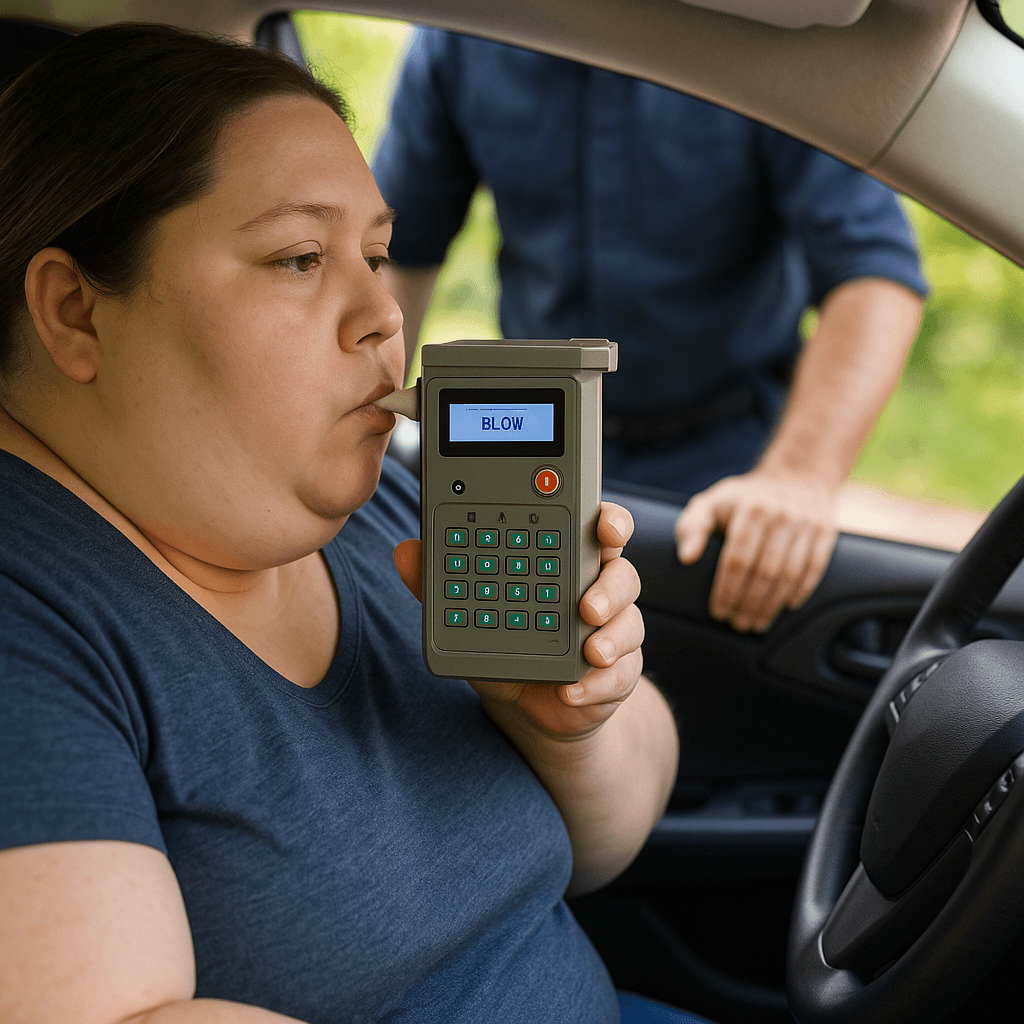
Florida's Business Purpose Only License requires FR-44 filing with significantly higher liability limits than standard SR-22 states. Most drivers don't realize their premium jumps reflect those mandated limits, not just the BPO restriction itself.
Why Florida BPO License Premiums Jump Higher Than Standard Hardship States
Your Florida Business Purpose Only License premium reflects FR-44 filing requirements, not just the restricted license itself. Florida is one of only two states (with Virginia) that requires FR-44 certificates instead of standard SR-22 filing for DUI-related suspensions. FR-44 mandates $100,000 bodily injury per person, $300,000 per accident, and $50,000 property damage — compared to Florida's standard $10,000 property damage and PIP minimums for regular drivers.
Most BPO applicants assume their premium increase reflects the driving restriction or the DUI conviction alone. The larger driver is the liability limit floor. Carriers price FR-44 policies based on those mandated limits, which triple the coverage volume compared to a standard SR-22 state requiring only 25/50/25 minimums. The premium difference between a Florida FR-44 policy and a comparable SR-22 policy in Georgia or Texas typically ranges $40-$85 per month, even when the driver profile and violation history are identical.
Acceptance Insurance, Bristol West, Dairyland, Geico, Progressive, State Farm, and The General all write FR-44 policies in Florida. Not all carriers writing standard auto insurance in Florida offer FR-44 filing capability. Your existing carrier may decline to file FR-44 even if they retained you after the DUI conviction, forcing you into the non-standard market where base rates start higher before the FR-44 surcharge applies.
What the BPO License Actually Covers for Work and Business Driving
Florida's Business Purpose Only License permits driving to and from work, during work hours for employment purposes, to and from school or college, to and from church, and to and from medical appointments. The BPO scope is broader than most states' work-only hardship licenses. Texas's Occupational License allows household duties and child transport in addition to work. Florida's BPO does not.
Business purposes of your employer fall within the approved scope. If your job requires driving between client sites, vendor locations, or branch offices during work hours, the BPO covers those trips. Personal errands during lunch breaks do not qualify. Driving to the grocery store after work on the way home does not qualify. Law enforcement officers stopping BPO holders outside approved hours or routes can arrest for driving while suspended, which converts the restricted privilege back to a full suspension.
The BPO application requires proof of employment, typically an employer verification letter on company letterhead stating your work address, shift hours, and whether your job requires driving during work. DHSMV reviews the employer letter alongside your DUI school enrollment confirmation and FR-44 certificate before approving the BPO. The $12 application fee is collected at the time of filing. Processing typically takes 7-10 business days after all documentation is submitted, though DHSMV does not publish a binding timeline.
Compare car insurance rates in your state
Get quotes from licensed carriers — no obligation, no spam, results in minutes.
Get Your Free Quote✓ No Obligation Required✓ Licensed Carriers Only✓ Available Nationwide✓ Free to Compare
FR-44 Filing Setup: Carrier Selection and Cost Structure
Your carrier files the FR-44 certificate electronically with DHSMV through the Florida Insurance Tracking System. You do not file it yourself. The carrier charges a one-time filing fee, typically $15-$35, separate from the premium. Some carriers bundle the filing fee into the first month's premium. Others bill it separately. Ask your agent to confirm the filing fee line-item before binding the policy.
FR-44 premiums in Florida for BPO holders after a first DUI typically range $140-$260 per month, depending on age, county, vehicle type, and prior insurance history. Drivers under 25 or in high-theft counties (Miami-Dade, Broward, Hillsborough) see the higher end of that range. Drivers over 30 with clean records prior to the DUI see the lower end. Non-owner FR-44 policies for drivers without a registered vehicle cost $35-$75 per month, substantially less than standard policies because they exclude collision and comprehensive coverage.
The FR-44 filing requirement lasts three years from the date DHSMV reinstates your license, not from the date of conviction or the date you obtain the BPO. If you let the policy lapse at any point during those three years, DHSMV suspends your license again automatically. The carrier notifies DHSMV of the lapse within 24 hours through FITS. DHSMV then issues a suspension notice. Reinstatement after an FR-44 lapse requires paying a new reinstatement fee ($150 for first lapse, $250 for second, $500 for third within three years) and filing a new FR-44 certificate before DHSMV will restore the license.
BPO Eligibility Windows and Hard Suspension Periods
Florida imposes a mandatory hard suspension period before BPO eligibility opens. First DUI offense: 30 days hard suspension before you can apply for a BPO license. Second DUI within five years: 90 days hard suspension. Second DUI beyond five years: 30 days hard suspension. During the hard period, no driving is permitted under any circumstances. Ignition interlock installation is required during the BPO period for most DUI cases.
DUI school enrollment must be confirmed before DHSMV will approve the BPO application. Florida requires enrollment in a DHSMV-approved DUI program, which includes both education classes and a substance abuse evaluation. The school provides an enrollment confirmation letter, which you submit with the BPO application. Completion of the full DUI program is required for full license reinstatement after the suspension period ends, but only enrollment confirmation is needed for BPO approval.
Drivers suspended for reasons other than DUI face different eligibility rules. Points-related suspensions qualify for BPO consideration without a hard suspension period in most cases. Uninsured-driving suspensions require proof of current FR-44 filing before BPO eligibility. Unpaid-fines suspensions do not qualify for BPO until all fines and court costs are paid in full. DHSMV does not negotiate payment plans for BPO eligibility — the balance must be cleared before the application is reviewed.
Employer Coordination and CDL Holder Restrictions
Some employers will not retain workers with BPO licenses due to liability concerns. If your job involves driving a company vehicle, transporting clients or customers, or operating commercial equipment, ask your HR department whether the BPO license satisfies their insurance carrier's requirements before applying. Many employers require full unrestricted licenses for positions with driving duties, even if the job falls within BPO-approved business purposes.
CDL holders lose their commercial driving privileges after a DUI conviction, even if the violation occurred in a personal vehicle. The BPO license does not restore CDL privileges. You cannot drive a commercial motor vehicle under a BPO license, even for employment purposes. If your job requires a CDL, the BPO will not prevent job loss. Florida's CDL disqualification periods for DUI are federally mandated: one year for a first offense, lifetime for a second offense (reducible to 10 years in some cases). The BPO license allows you to drive your personal vehicle to and from work, but it does not authorize commercial vehicle operation.
Employers requiring employees to drive during work hours often ask for a copy of the BPO license, the FR-44 certificate, and a letter from DHSMV confirming the approved driving purposes. DHSMV does not automatically provide a restriction-detail letter. You can request one by visiting a DHSMV service center with your BPO license and a written request. Some employers accept the BPO license alone as sufficient documentation. Others require all three documents before allowing the employee to resume job-related driving.
What Happens If You Drive Outside BPO-Approved Hours or Routes
Driving outside approved purposes while holding a BPO license is prosecuted as driving while license suspended, a criminal offense in Florida. First offense: up to 60 days in jail and a $500 fine. Second offense within five years: mandatory 10-day jail sentence and revocation of the BPO license. The underlying suspension period restarts from the date of the new offense.
Law enforcement officers do not have access to your approved BPO routes or work hours during a traffic stop. You are responsible for carrying documentation proving the trip falls within approved purposes: an employer shift schedule, a medical appointment card, a school enrollment confirmation. Officers will arrest BPO holders stopped during non-work hours unless the driver can demonstrate an approved purpose on the spot. Church attendance on Sunday morning is an approved purpose. Grocery shopping on Sunday afternoon is not.
Violating BPO restrictions also triggers FR-44 policy cancellation in most cases. Carriers include a clause in FR-44 policies requiring the driver to comply with all license restrictions. A driving-while-suspended arrest gives the carrier grounds to cancel the policy for material misrepresentation. Once the carrier cancels, DHSMV receives the lapse notice through FITS and suspends your license again, compounding the criminal charge with an administrative suspension.
Timeline and Cost Summary: Application Through Full Reinstatement
Total cost to obtain a Florida BPO license and maintain FR-44 compliance through full reinstatement, assuming a first DUI offense with a three-year FR-44 filing period:
Upfront costs: $12 BPO application fee, $45 reinstatement fee (paid when the full suspension ends, not at BPO issuance), $15-$35 FR-44 filing fee, $300-$800 DUI school enrollment fee, $100-$150 ignition interlock installation (if required).
Ongoing monthly costs: $140-$260 FR-44 insurance premium, $70-$100 ignition interlock monitoring fee (if required).
Three-year total: approximately $6,000-$11,500, depending on premium tier, IID requirement, and whether you maintain continuous coverage without lapses. Non-owner FR-44 policies reduce the three-year total to $2,500-$4,000 for drivers without a registered vehicle.
Timeline: 30-day hard suspension, followed by 7-10 business days for BPO application processing after all documents are submitted, followed by the remaining suspension period (typically 6-12 months for a first DUI) during which the BPO allows restricted driving. Full unrestricted license reinstatement occurs after the suspension period ends, all reinstatement fees are paid, DUI school is completed, and the FR-44 filing remains active for the full three-year period.