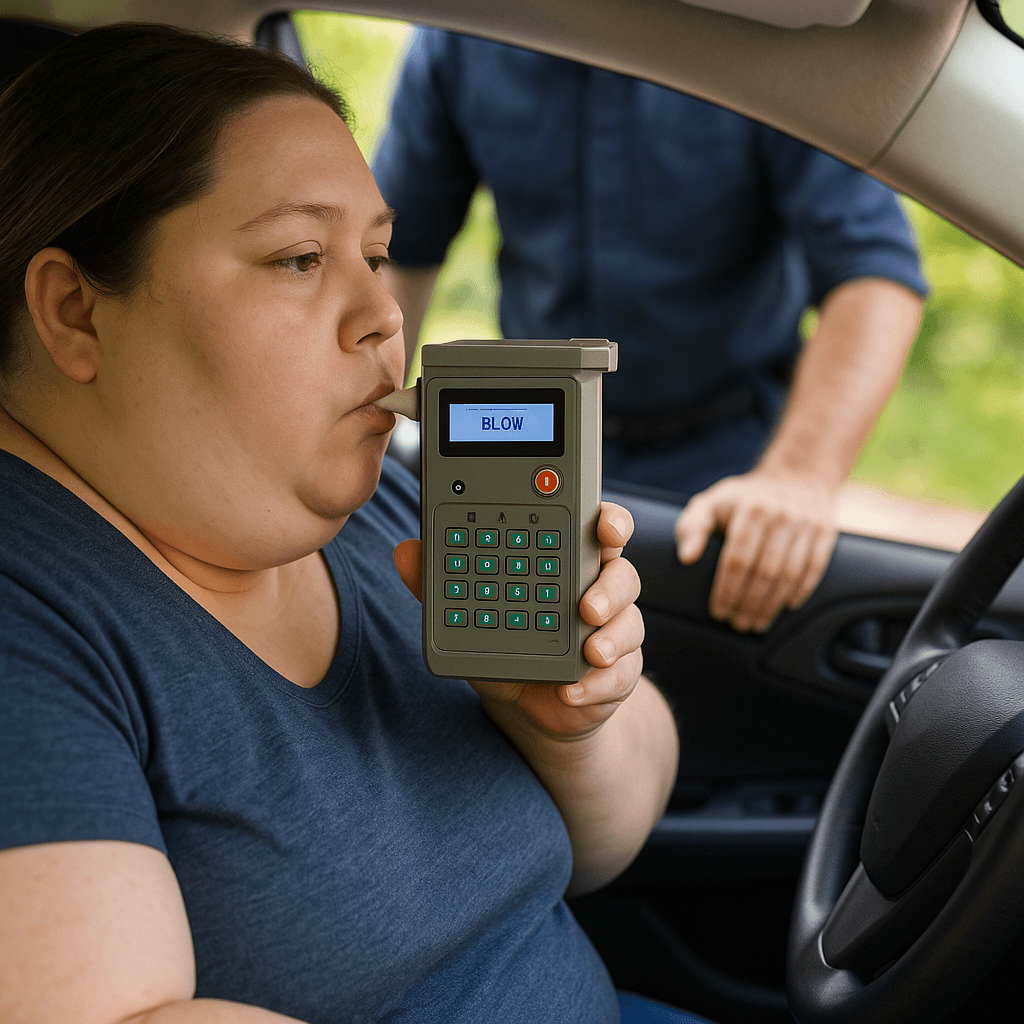
You were caught driving uninsured on the way to work, your license is suspended, and you need to drive again within days to keep your job. Florida's Business Purpose Only License allows restricted work driving during suspension, but only if you file correctly with DHSMV and secure FR-44 or SR-22 coverage first.
Why Florida Requires Pre-Application Insurance Filing for Uninsured-Driving Suspensions
Florida suspended your license because the state's Insurance Tracking System (FITS) flagged you driving without coverage. The Department of Highway Safety and Motor Vehicles will not consider a Business Purpose Only License application until you prove continuous coverage is reinstated. This means securing SR-22 filing and paying the $150 first-offense reinstatement fee before submitting your BPO application.
Most drivers assume the BPO approval comes first, then they buy coverage. Florida's administrative sequence runs the opposite direction. DHSMV cross-references your license number against FITS when your application arrives. If no active SR-22 certificate appears in the system, the application is returned unprocessed. Your $12 application fee is not refunded.
The pre-filing requirement exists because Florida treats uninsured driving as ongoing noncompliance until coverage is restored. The BPO license is not an alternative to insurance. It is a restricted-driving privilege granted only after you demonstrate financial responsibility through SR-22 filing and pay the statutory reinstatement fee.
What Business Purpose Only Driving Actually Covers in Florida
Florida Statutes § 322.271 defines business purposes broadly: driving to and from work, driving during work hours for employment purposes, driving to school or church, driving to medical appointments, and driving for business purposes of your employer. This is wider than most states' work-only hardship licenses. If your job requires client visits, delivery routes, or off-site meetings during your shift, those trips fall under business purposes.
The statute does not restrict BPO driving to specific hours of the day. You can drive at 3 a.m. for a night shift commute or at noon for a medical appointment. What you cannot do is drive for personal errands unrelated to work, school, church, or medical care. Stopping at a grocery store on the way home from work violates the restriction. Law enforcement can revoke your BPO license on the spot if you are pulled over outside approved purposes.
CDL holders face a separate limitation. A BPO license does not authorize commercial vehicle operation. If you drive a semi, bus, or any vehicle requiring a commercial license for work, the BPO will not cover that driving. You can use it to commute to the job site in your personal vehicle, but not to operate the commercial vehicle itself.
Compare car insurance rates in your state
Get quotes from licensed carriers — no obligation, no spam, results in minutes.
Get Your Free Quote✓ No Obligation Required✓ Licensed Carriers Only✓ Available Nationwide✓ Free to Compare
The DHSMV Application Process: Documentation DHSMV Requires Before Approval
Your BPO application requires four core documents: proof of SR-22 filing from your insurer, proof of payment for the $150 reinstatement fee, DHSMV Form 2870 completed with employer verification, and a current Florida driver license or receipt showing you held a valid license before suspension. The employer verification section on Form 2870 must include your work address, your supervisor's contact information, and your typical work schedule.
DHSMV does not accept photocopied employer letters on company letterhead. The verification must appear on the state form itself, signed by your employer or HR representative. If you are self-employed, you must provide a business license or tax filing showing active business operation in Florida. DHSMV will call the employer contact number on the form to verify employment before approving the license.
The SR-22 certificate must show your name exactly as it appears on your driver license. Any mismatch in spelling, middle initial, or suffix will trigger an administrative hold. Your insurer files the SR-22 electronically with DHSMV, but you should request a stamped paper copy to submit with your application as backup. Processing takes approximately 7 business days after DHSMV receives a complete application with all verification documents.
How SR-22 Filing Works for Uninsured-Driving Suspensions Specifically
SR-22 is a certificate your auto insurer files with DHSMV proving you carry at least Florida's minimum liability coverage: $10,000 property damage liability and $10,000 personal injury protection. Florida does not require traditional bodily injury liability for in-state drivers unless the SR-22 filing is for a DUI or serious injury crash. For uninsured-driving suspensions, the SR-22 certifies PIP and PDL coverage only.
Your insurer charges a one-time filing fee between $15 and $50 to submit the SR-22 certificate to DHSMV. This fee is separate from your premium. Your premium itself will increase because SR-22 filing signals high-risk status to the carrier. Drivers with uninsured-driving suspensions typically pay $140 to $220 per month for minimum-coverage SR-22 policies in Florida, compared to $85 to $130 per month for clean-record drivers.
The SR-22 filing must remain active for 3 years from your reinstatement date. If you cancel your policy, miss a payment, or let coverage lapse during those 3 years, your insurer notifies DHSMV electronically within 24 hours. DHSMV automatically re-suspends your license the same day. There is no grace period. Surrendering your license plates before cancelling does not prevent re-suspension when an active SR-22 filing is on file.
Non-Owner SR-22 Coverage: The Lower-Cost Option If You Do Not Own a Vehicle
If you do not own a car but need a BPO license to drive an employer's vehicle, a family member's car, or rental vehicles for work, non-owner SR-22 for commuters provides the required filing without insuring a specific vehicle. Non-owner policies cover liability when you drive any car you do not own. They cost significantly less than standard policies because the insurer assumes lower risk.
Non-owner SR-22 premiums in Florida typically range from $45 to $85 per month for minimum PIP and PDL coverage. This is roughly half the cost of insuring a vehicle you own with SR-22 filing. The policy does not cover physical damage to the vehicle you are driving. It covers your liability for damage you cause to other people and their property.
Employers sometimes require proof that you carry your own liability coverage before allowing you to drive company vehicles. A non-owner SR-22 policy satisfies both the employer's insurance requirement and DHSMV's SR-22 filing requirement. The certificate your insurer files with DHSMV is identical whether the policy is non-owner or vehicle-specific. DHSMV does not distinguish between the two for BPO eligibility purposes.
What Happens If You Are Caught Driving Outside BPO Restrictions
Law enforcement in Florida has real-time access to DHSMV's license database during traffic stops. When an officer runs your license and sees BPO status, the stop triggers additional scrutiny. You must explain where you are coming from, where you are going, and why the trip qualifies as business purposes under your restriction. If your explanation does not align with approved purposes, the officer can issue a citation for driving while license suspended.
Driving while license suspended under BPO restriction is a second-degree misdemeanor in Florida, punishable by up to 60 days in jail and a $500 fine. More critically, DHSMV automatically revokes your BPO license upon conviction. You lose all driving privileges immediately and must wait until your original suspension period ends before you can apply for full reinstatement. The revocation does not count time you already served under the BPO.
If you are stopped outside approved hours or routes and the officer suspects intentional violation, the BPO can be revoked on the spot without a hearing. The officer confiscates your physical license and issues a 10-day temporary permit. DHSMV mails a formal revocation notice within 5 business days. You have 10 days from the notice date to request an administrative hearing to contest the revocation. Most drivers who contest lose because GPS data, traffic camera timestamps, and the officer's testimony establish location and time with precision.
Cost Breakdown: Total Out-of-Pocket Before You Can Drive Legally for Work
The full cost stack to obtain a BPO license after an uninsured-driving suspension includes: $150 reinstatement fee paid to DHSMV before application, $12 BPO application fee, SR-22 filing fee charged by your insurer ($15 to $50 one-time), first month's premium for SR-22 coverage ($140 to $220 for a standard policy or $45 to $85 for non-owner), and potential ignition interlock device installation if DHSMV flags your suspension as requiring IID (which is uncommon for simple uninsured-driving but mandatory for DUI-related cases).
If you do not already have a valid Florida license because it expired during suspension, add $48 for license renewal. Total upfront cost ranges from $365 to $480 for most drivers without IID requirements. If IID is required, add $70 to $150 for installation and $60 to $90 per month for monitoring and calibration.
These costs reflect current DHSMV fee schedules and typical carrier pricing as of late 2024. Reinstatement fees for second or third uninsured-driving offenses within 3 years increase to $250 and $500 respectively under Florida Statutes § 324.0221. The higher the tier, the more carriers decline to write SR-22 policies, pushing you into non-standard markets where premiums run 40% to 60% higher than standard-tier pricing.